
C++ Team Blog
The latest in C++, Visual Studio, VS Code, and vcpkg from the MSFT C++ team
Latest posts

Microsoft C++ Team at CppCon 2019

The Microsoft C++ team will have a booth and many talks covering a wide range of topics at CppCon 2019. Come say hi to our team outside Aurora D and attend our talks to learn what's new in our tooling, dive into new features in the standard, and hear some exciting announcements! We'll also be running a survey on the C++ ecosystem and giving away an Xbox One S to one participant. We'll put the link here when it's available, but you'll also be able to find it by stopping by the booth or coming to any of our talks: Monday, September 16th 14:00 - 15:00: Hello World From Scratch by Sy Brand and Peter Binde...

Build and Debug MySQL on Linux with Visual Studio 2019

The MySQL Server Team recently shared on their blog how to use Visual Studio 2019 to edit, build, and debug MySQL on a remote Linux server. This leverages Visual Studio’s native support for CMake and allows them to use Visual Studio as a front-end while outsourcing all the “heavy lifting” (compilation, linking, running) to a remote Linux machine. “I’ve recently found myself using Microsoft Visual Studio on my laptop as my ‘daily driver.’ I have a history with VS. But I also really like how the product is developing as of late. The pace of innovation is great and the team behind it extremely responsive. T...
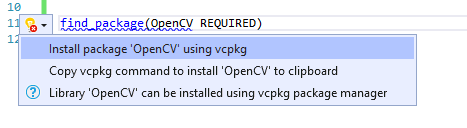
C++ Cross-Platform Development with Visual Studio 2019 version 16.3: vcpkg, CMake configuration, remote headers, and WSL
In Visual Studio 2019 you can target both Windows and Linux from the comfort of a single IDE. Visual Studio’s native support for CMake lets you open any folder containing C++ code and a CMakeLists.txt file directly in Visual Studio to edit, build, and debug your CMake project on Windows, Linux, and the Windows Subsystem for Linux (WSL). Visual Studio’s MSBuild-based Linux support allows you to create and debug console applications that execute on a remote Linux system or WSL. For either of these scenarios, the Linux development with C++ workload is required. Visual Studio 2019 version 16.3 Preview 2 introduc...

Vcpkg: 2019.07 Update

The 2019.07 update of vcpkg, a tool that helps you manage C and C++ libraries on Windows, Linux, and macOS, is now available. This update is a summary of the new functionality and improvements made to vcpkg over the past month. Last month was the first time we created a vcpkg release (Vcpkg: 2019.06 Update). In this post, we will cover caching in Azure Pipelines with vcpkg in addition to many new port and triplet updates, improvements for port contributors, and new documentation. For a full list of this release’s improvements, check out our changelog on GitHub. Caching in Azure Pipelines with vcpkg The publi...
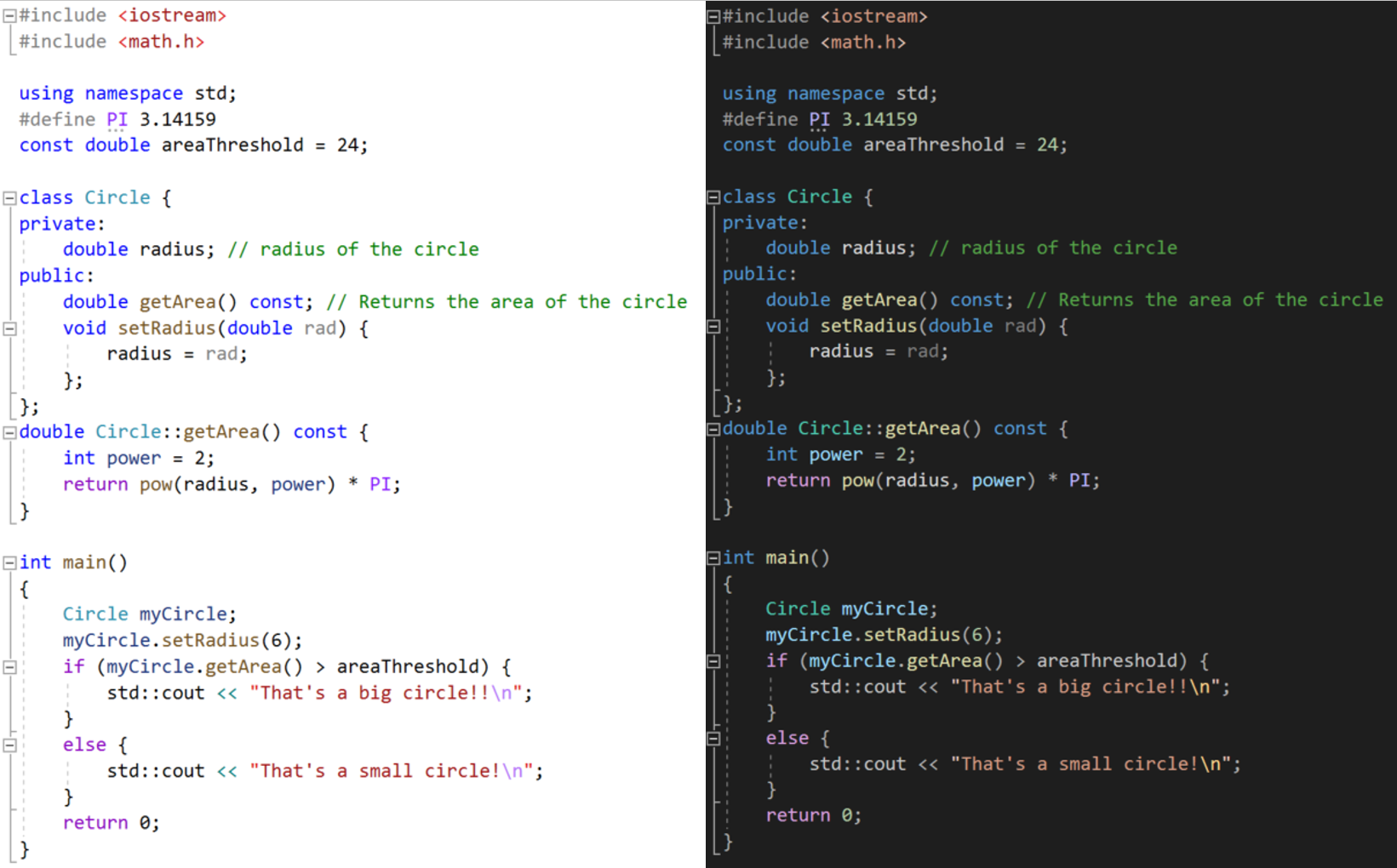
Productivity Improvements for C++: New Default Colorization, Template Argument Filtering in Call Stack Window, and IntelliCode On-By-Default

New Default Semantic Colorization In Visual Studio 2019 version 16.3 Preview 2 we’ve introduced a new default semantic colorization scheme for C++. For a long time, many of the default colors were simply black. However, colorization can help you quickly understand the structure of code at a glance. To take advantage of this, we’ve created two new color schemes, and of course you can still customize your colors further by typing “Change font” in the Ctrl + Q search bar. Under Tools > Options > Text Editor > C++ > View > Color Scheme you can now pick between three presets: Enhanced, Enhanced (Glo...
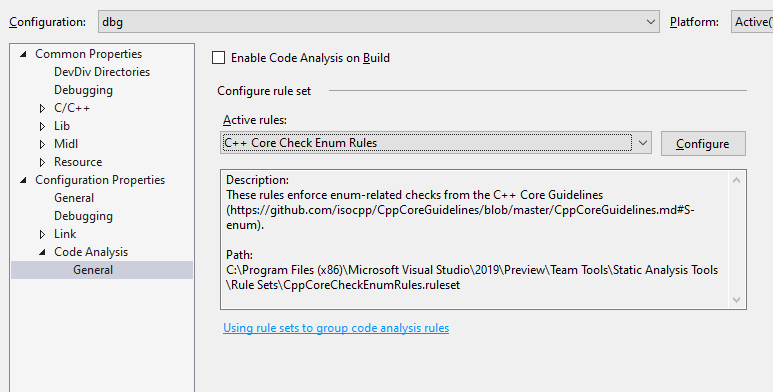
New C++ Core Check Rules

The C++ Core Guidelines Checker receives three new rules with the release of Visual Studio version 16.3 Preview 2. In addition, some warnings published in the warnings.h that ships with Visual Studio have been moved or renamed. Below is a quick summary of these additions. For more detailed information, please see the C++ Core Guidelines Checker Reference documentation. If you’re just getting started with native code analysis tools, take a look at our introductory quick start for Code Analysis for C/C++. New rule set The "Enum Rules" set has been added in this release. It can be enabled by selecting "C++ C...
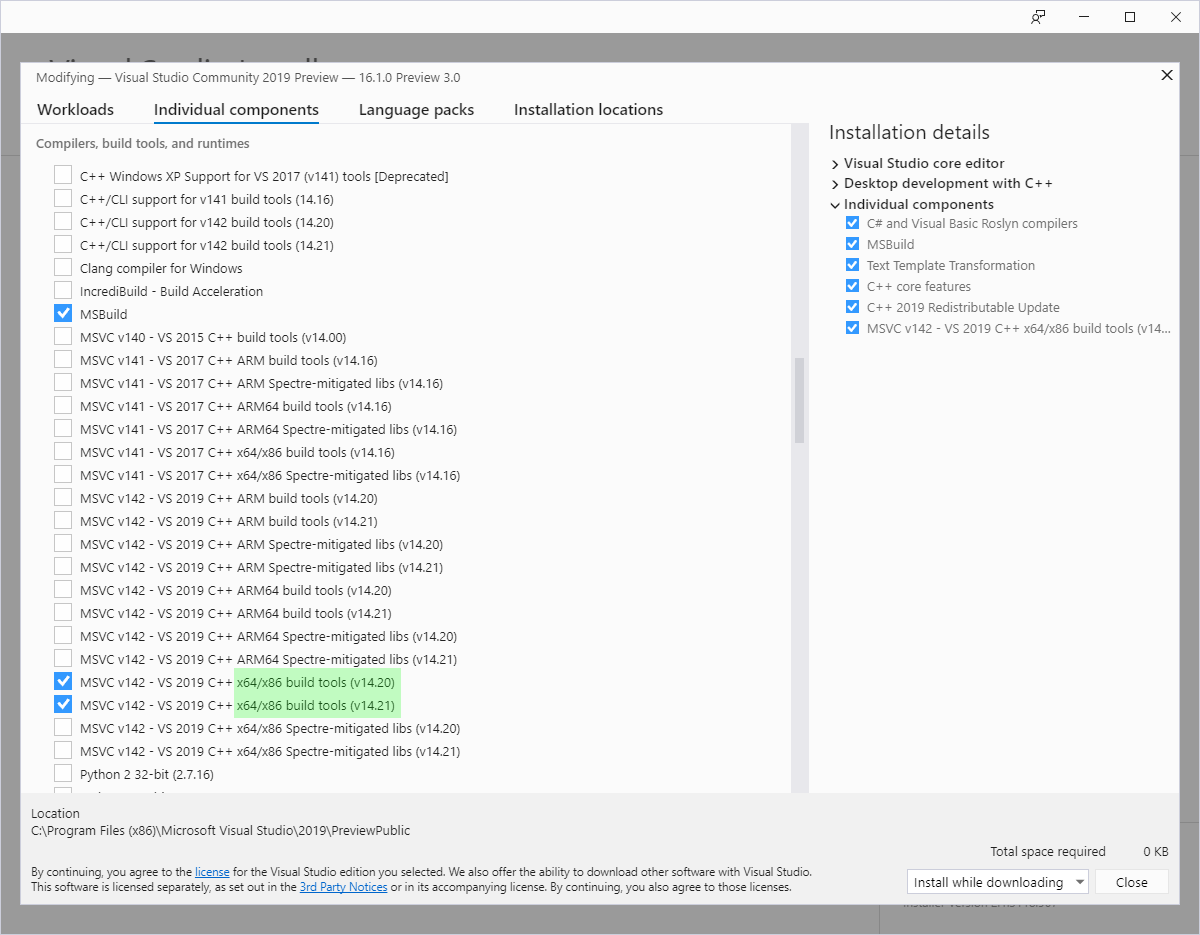
Side-by-side Minor Version MSVC Toolsets in Visual Studio 2019

Visual Studio 2019 version 16.1 Preview 3 ships with the first side-by-side minor versions of the v142 MSVC toolset. We first shipped minor side-by-side versions of MSVC toolsets with Visual Studio 2017, but a few things have changed in 2019. This post covers what’s new; primarily more granular versions of the toolsets in the installer and support for CMake projects. For those not familiar with these minor version MSVC toolsets, I recommend checking out our previous post about minor side-by-side toolsets. It includes many more details about when and how you should use this feature. In general, you should not n...
Game performance improvements in Visual Studio 2019 version 16.2

This spring Gratian Lup described in his blog post the improvements for C++ game development in Visual Studio 2019. From Visual Studio 2019 version 16.0 to Visual Studio 2019 version 16.2 we’ve made some more improvements. On the Infiltrator Demo we’ve got 2–3% performance wins for the most CPU-intensive parts of the game. Throughput A huge throughput improvement was done in the linker! Check our recent blogpost on Improved Linker Fundamentals in Visual Studio 2019. New Optimizations A comprehensive list of new and improved C++ compiler optimizations can be found in a recent blogpost on MSVC Backend Updates i...
Improving the Performance of Standard Library Functions

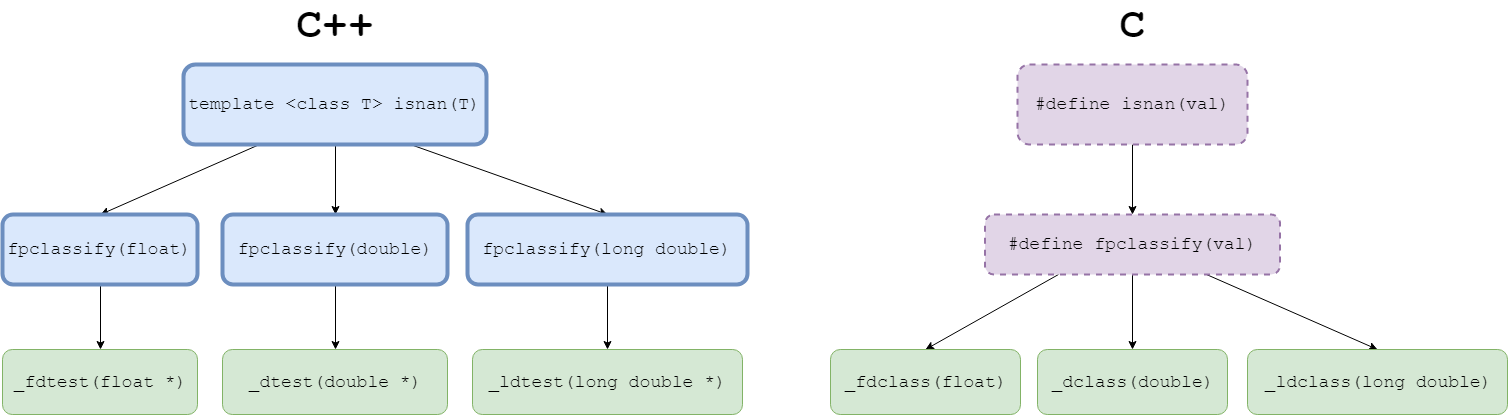
In Visual Studio 2019 version 16.2 we improved the codegen of several standard library functions. Guided by your feedback on Developer Community (Inlining std::lldiv and Improved codegen for std::fmin, std::fmax, std::round, std::trunc) we focused on the variants of standard division (, , ) and . Originally function calls to the standard library, rather than inline assembly instructions, were generated upon each invocation of variations of and , regardless of the compiler optimization flags passed. Since these standard library function definitions live inside of the runtime, their definitions are opaque to th...