DirectX Developer Blog
The latest news on Microsoft's Graphics and Display technology
Latest posts
Celebrating 10 Years of DirectX 12
DirectX12 shipped in 2015 with a simple goal: give developers more control so games run faster, look better, and scale across Windows PC and console. Over the last decade, DirectX 12 delivered on that promise. We added features and made it easier for developers to focus on gameplay & graphics by providing more flexibility and achievable performance wins. We built technologies that dramatically reduce load times and deliver consistently high frames for a polished gaming experience in the most demanding of titles. Our platform’s continuous evolution brought advanced visuals previously unimaginable into the main...
DirectX Graphics Samples Updated to Agility SDK + Enhanced Barriers examples
We’re excited to share all DirectX Graphics Samples have been updated to use the latest DirectX 12 Agility SDK. What’s New: Why Enhanced Barriers Matter: Enhanced Barriers introduce a more expressive and predictable barrier model, reducing synchronization overhead and simplifying resource layout management and aliasing. Get Started: Visit https://github.com/microsoft/DirectX-Graphics-Samples to explore the updated samples.
Agility SDK 1.618: Advanced Shader Delivery and 1.716 out of preview
We are pleased to announce the retail release of AgilitySDK 1.618, available on Agility SDK Downloads today! This release promotes our 1.716 features out of preview and also introduces support for the recently announced advanced shader delivery feature. Advanced Shader Delivery Advanced shader delivery is a new feature that distributes precompiled shaders when downloading a game, eliminating in-game shader compilation stutter and long load times. This solves one of the biggest pain points in PC gaming today, making it easier than ever to deliver a console-quality experience on Windows. Advanced shader delive...
The Silicon, Graphics, Media and AI (SiGMA) team is hiring!
Do you want to be a part of the Silicon, Graphics, Media and AI (SiGMA) platform team? We are hiring for multiple positions – if you’re interested in knowing more about opportunities in SiGMA, please see the below for more details!
Shader Model 6.9 and The Future of Cooperative Vector
Direct3D Cooperative Vector is Evolving DirectX continues to evolve to support the growing demands of AI and machine learning workloads. As part of this effort, we plan to introduce an expanded suite of linear algebra capabilities in a future Shader Model release, unlocking even more robust GPU acceleration for bedrock AI/ML computations within the graphics pipeline. This work extends our experimental Cooperative Vector implementation by introducing accelerated matrix-matrix operations, crucial for scaling AI/ML workloads beyond what lightweight vector-matrix alone can handle. This will unlock new performanc...
Introducing Advanced Shader Delivery
This year at gamescom, Microsoft is highlighting new gaming features coming for Windows, particularly for handheld devices. We want to highlight one of the DirectX team’s most exciting new contributions to the PC gaming ecosystem, which will make its debut on the new ROG Xbox Ally and ROG Xbox Ally X. Advanced shader delivery addresses one of the most frustrating challenges for PC gamers today – long load times and disruptive stuttering during a game’s first launch. These delays are caused by the need to compile graphics shaders and cache them for future use. For a deep-dive on this topic, we recommend reading...
DirectStorage 1.3 is now available
Today we’re releasing DirectStorage 1.3, this update includes a new API and several refinements based on developer feedback. The package is now available for download via NuGet. Read on to learn about what’s new with DirectStorage 1.3. EnqueueRequests – Enhanced I/O Scheduling DirectStorage 1.3 adds a new API called EnqueueRequests. This API gives developers more flexibility and control over how data requests are issued and synchronized with graphics work. EnqueueRequests allows developers to batch multiple requests in a single call and synchronize them using a D3D12 fence to better coordinate DirectStorage wit...
D3D12 Cooperative Vector
Welcome to the preview release for Cooperative Vector support in D3D12. This exposes powerful new hardware acceleration for vector and matrix operations, enabling developers to efficiently drive neural rendering techniques directly from individual shader threads in real-time graphics pipelines. In research and in industry, machine learning based approaches have made their way to mainstream, replacing/augmenting traditional techniques. In graphics, neural network based rendering methods are gaining popularity over traditional methods of image reconstruction, texture compression, material shading etc. Simul...
D3D12 Opacity Micromaps
DirectX Raytracing (DXR) now supports Opacity Micromaps (OMMs), enabling hardware to handle alpha tested geometry more efficiently than relying only on costly AnyHit shader invocations. At GDC 2025 DXR 1.2 was announced including OMMs, and you can see it discussed in this: GDC DirectX State Of The Union YouTube Recording. In the video, Remedy showed the performance wins they achieve using a synergistic combination of OMMs and Shader Execution Reordering in Alan Wake 2. Out of the gate all NVIDIA raytracing capable hardware supports OMMs (currently developer preview drivers). Over time additional hardwa...
D3D12 Shader Execution Reordering
Shader Execution Reordering (SER) is an addition to DirectX Raytracing that enables application shader code inform hardware how to find coherency across rays so they can be sorted to execute better in parallel. At GDC 2025 DXR 1.2 was announced including SER, and you can see it discussed in this: GDC DirectX State Of The Union YouTube Recording. In the video, Remedy showed the performance wins they achieve using a synergistic combination of Opacity Micromaps (OMMs) and Shader Execution Reordering in Alan Wake 2. SER is designed such that when applications use it to give sorting hints to drivers, it is u...
Agility SDK 1.717-preview and 1.616-retail
We are pleased to announce both a retail and preview Agility SDK release with several new features, available on Agility SDK Downloads today! As usual, the features in this release come with Day One PIX support. Please read the PIX blog post for more information. Agility SDK 1.717-preview features Check out the full spec at D3D12 Video Encoding | DirectX-Specs. Agility SDK 1.616-retail features
HLSL Native and Long Vectors
Vectors have been supported as native primitive types in HLSL from the beginning. However, they have been limited to a maximum of 4 elements. This was reasonable for the use cases for which HLSL was designed as 3D vertices, 3D vectors, and RGBA colors can be fully represented using 4 scalar values or fewer. There are other applications in the machine learning (ML) space and for uses of vectors that don't directly map to these concepts that benefit from longer vectors. Sometimes they benefit from much longer vectors! These uses are principally, though not exclusively, through Cooperative Vectors. To meet the...
Announcing DirectX Raytracing 1.2, PIX, Neural Rendering and more at GDC 2025!
Today in the DirectX State of the Union at GDC 2025, we proudly showcased the next evolution in graphics with the announcement of DirectX Raytracing (DXR) 1.2. This update promises groundbreaking performance improvements and breathtaking visual fidelity, marking another milestone in our mission to deliver immersive, realistic experiences to gamers everywhere. We also brought developers the latest and greatest in our DirectX tooling with updates to PIX. In partnership with industry leaders—including AMD, Intel, NVIDIA, and Qualcomm, and game studios like Remedy—we demonstrated how these advancements are set to...
DirectX at GDC 2025
We’re counting down the days until the Microsoft DirectX team will be at the Game Developers Conference 2025 with a lineup of exciting sessions and announcements to push the boundaries of game development. Whether you’re a seasoned graphics developer or just diving into the world of DirectX, our sessions will offer valuable insights into the latest advancements in raytracing, PIX, neural rendering, and more. Mark your calendars and get ready for an inside look at the future of graphics with DirectX! DirectX State of the Union: Raytracing and PIX Workflows When: Thursday, March 20th 9:30am-10:30am Gain essent...
Agility SDK 1.716.0-preview: New D3D12 Video Encode Features
UPDATE 9/25/25: This feature is now supported in retail as of the 1.618 Agility SDK. Today DirectX 12 provides APIs to support GPU video encode acceleration for several applications, as detailed in D3D12 Video Encoding - Windows drivers | Microsoft Learn previous blog posts such as Announcing new DirectX 12 feature - Video Encoding! - DirectX Developer Blog. In this blog post we’re happy to announce a series of new features included in the Agility SDK 1.716.0-preview that provide more control to apps using the D3D12 Video Encode API. These new features help reduce latency and improve quality in several scen...
Agility SDK 1.716.0-preview & 1.615-retail: Shader hash bypass
The D3D runtime as of 1.615 officially supports applications opting to bypass shader hash validation. The historical purpose of the hash that the DX shader compiler embeds in every shader binary was to give the D3D runtime to confidence that shaders being given to it are well formed. The assumption was that a hashed shader likely came from an official compiler that ran its validator run on the code, and also that there was no memory corruption after that. These assumptions still apply by default. Meaning most developers that just want to use DXC to compile shaders and pass them to D3D can continue to do so,...
AgilitySDK 1.716.0-preview and 1.615-retail
We are pleased to announce both a retail release of Shader hash bypass and a preview AgilitySDK release with several new features, available on Agility SDK Downloads today! You can find detailed information about all the features on the individual blog pages:
Agility SDK 1.716.0-preview: Application Specific Driver State
UPDATE 9/25/25: This feature is now supported in retail as of the 1.618 Agility SDK. Today we’re excited to announce the release of a new D3D12 feature: Application Specific Driver State. This feature is intended to be used by capture/replay tools, such as PIX on Windows, to help with issues caused by “app detect” behavior. Background D3D12 drivers occasionally have to perform workarounds for bugs in specific applications. For example, this may occur if an older game shipped with a bug that only affects a new generation of GPUs. The driver may be forced to detect when the application is running and then perf...
Agility SDK 1.716.0-preview: Recreate At GPUVA
UPDATE 9/25/25: This feature is now supported in retail as of the 1.618 Agility SDK. New Recreate At GPUVA Feature After months of effort from both our hardware partners and us, the D3D12 team is happy to announce the preview of the Recreate At GPUVA feature as part of its Agility SDK Downloads 1.716 release. This feature is mostly intended to be used by tooling developers, such as PIX, to simplify capturing and replaying of GPU workloads. The Problem: Resource allocation behaves much like malloc in C, there are no guarantees about what memory address is given to the caller. Within a single process this is us...
Enabling Neural Rendering in DirectX: Cooperative Vector Support Coming Soon
Neural Rendering: A New Paradigm in 3D Graphics Programming In the constantly advancing landscape of 3D graphics, neural rendering technology represents a significant evolution. Neural rendering broadly defines the suite of techniques that leverage AI/ML to dramatically transform traditional graphics pipelines. These new methods promise to push the boundaries of what’s possible in real-time graphics. DirectX is committed to cross-platform enablement of neural rendering techniques, and cooperative vectors are at the core of this initiative. We are excited to share our plans to add cooperative vector support to...
Agility SDK 1.716.0-preview: Tight Alignment of Resources
UPDATE 9/25/25: This feature is now supported in retail as of the 1.618 Agility SDK. We’re pleased to announce that we have a new preview Agility SDK out today, letting developers try out the new Tight Alignment feature! You can find the NuGet package here. Background When placed resources were introduced in D3D12, there was an intentional decision to simplify alignment restrictions and take the greatest common denominator across the hardware ecosystem. There was a desire to migrate to tighter alignment across the ecosystem over time, but this hadn't happened yet. Since D3D12's launch, developers have ...
DirectSR Preview: Now Supporting AMD FidelityFX™ Super Resolution (FSR) 3.1 Upscaler
Following our initial announcement of the DirectSR preview, we are pleased to share an update. DirectSR, our standardized super resolution (SR) API for D3D12 titles, now supports FSR 3.1 (upscaler-only), bringing enhanced upscaling capabilities to further improve your gaming experience. Learn more about FSR 3.1 here. What’s New with FSR 3.1? With this update, developers can leverage FSR 3.1 upscaler alongside other leading SR technologies like Intel XeSS and NVIDIA DLSS Super Resolution through DirectSR’s common interface. This ensures a consistent and high-quality gaming experience across various hardware conf...
DirectX Adopting SPIR-V as the Interchange Format of the Future
Today the Direct3D and HLSL teams are excited to share some insight into the next big step for GPU programmability. Once Shader Model 7 is released, DirectX 12 will accept shaders compiled to SPIR-V™. The HLSL team is committed to open development processes and collaborating with The Khronos® Group and LLVM Project. We’re sharing this information at the beginning of our multi-year development process so that we can be transparent about this transition from the start. We are working with the Khronos SPIR™ and Vulkan® working groups to ensure that this transition benefits the whole development ecosystem. Embracing...
The Silicon Graphics Media and Artificial Intelligence (SiGMA) team is hiring!
Do you want to be a part of the Silicon Graphics Media and Artificial Intelligence (SiGMA) platform team? We are hiring for multiple positions in multiple locations - if you're interested in knowing more about opportunities in SiGMA, please see the below for more details! Note: We have several upcoming positions – stay tuned as we’ll continuously update this blog post as more job opportunities become live!
D3D12 Preview: Mesh Nodes in Work Graphs
Hi everyone, Today we’re excited to announce the newest Preview Agility SDK v1.715.0, download here. Since this is a preview SDK, the new features are not in final state and thus only available via Developer Mode within Windows (see the prerequisites section for more). This preview serves as a first look to explore what might be possible to ship in a future retail Agility SDK. We encourage developers to try out the feature and provide feedback to askd3dteam@microsoft.com which may influence the final design. - DirectX team Contents Overview Work graphs was...
Open Sourcing DXIL Validator Hash
Today the HLSL team is announcing plans to open source the DXIL validator hashing algorithm and include it in the DirectXShaderCompiler sources on GitHub. If you’re wondering what any of that means, strap in! DXIL Validator To understand the DXIL Validator you first need to understand a few basics of what DXIL is. DXIL, the DirectX Intermediate Language, is the format used to provide shader binaries to DirectX drivers. DXIL is based on the LLVM-3.7 IR module format, but is constrained to not support all valid features of LLVM’s IR. The constraints placed on a DXIL module are enforced by the DXIL Validato...
A Step Forward for Gaming on Arm Devices
This year at Microsoft Build 2024 we announced a new set of Windows devices, Copilot+ PCs. Copilot+ PCs are a new class of Windows 11 PCs, including Arm-powered devices that are powered by the Snapdragon® X Series. These new Arm devices have cutting-edge new processing power coming from the CPU, GPU, and NPU (neural processing unit). This new hardware, in combination with innovations in Windows 11, is a step forward for Arm gaming. A few weeks ago, we showed several initiatives that improve the gaming experience on Arm-based Copilot+ PCs: advancements such as Prism emulation, automatic super resolution (Auto SR)...
Automatic Super Resolution: The First OS-Integrated AI-Based Super Resolution for Gaming
Welcome to the latest innovation in gaming graphics with Automatic super resolution (Auto SR)—the first OS-integrated AI super resolution (SR) technique where your games not only play smoother, but look stunning too! Ready for a quick visual challenge? Take a glance at these side-by-side images of Borderlands 3 played natively at 1440p versus one rendered at 720p but enhanced by AI-based Auto SR. Can you spot which one uses AI to boost visual quality? Me neither. And here’s a twist: while one runs at 24 frames per second, the other zips along at 40. Which do you think is which? As you ponder, let me int...
DirectSR Preview Available Now
In the evolving landscape of Super Resolution (SR), GPU hardware vendors have set the stage with their respective technologies – AMD FidelityFX™ Super Resolution, Intel XeSS, and NVIDIA DLSS Super Resolution. These cutting-edge solutions elevate the gaming experience by boosting frame rates while maintaining exceptional visual quality. Yet as the number of SR variants continues to grow, developers are in search of a common SR API that will seamlessly scale across the hardware ecosystem. Today, we are thrilled to announce the preview release of DirectSR, a new API designed to standardize SR support in D3D12 titles...
DXC 1.8.2405 Available Now, Including HLSL 202x
The HLSL team is excited to announce DXC 1.8.2405 which is a packed release! In addition to a healthy assortment of bug fixes and quality of life improvements, this release features two things we’re really excited about. First this is the first DXC release to contain Windows binaries built with Clang alongside the binaries built with MSVC, and it includes the first feature planned for the next HLSL language version, which is ready for user testing. We will dig into a lot more details later in this post, but two quick TL;DRs are: As with all HLSL language versions, once our new language version is fea...
Agility SDK 1.614.0: R9B9G9E5 support for Render Targets and UAVs
Today the DirectX team is excited to announce the release of the Agility SDK 1.614.0 which includes full support for R9G9B9E5_SHAREDEXP (999E5) texture format for render targets and UAV read/writes! This new Agility SDK is also fully supported by PIX. To get the latest release head on over to our Agility SDK downloads page. Understanding the 999E5 Texture Format 999E5 was originally introduced in Direct3D 11 and Direct3D 12 in a limited capacity. Its Direct3D 12 support has now been extended to support render targets and UAVs. A key benefit of the 999E5 texture format is it enables efficient storage and ren...
D3D12 Work Graphs
This is the official release of D3D12 Work Graphs, enabling new types of GPU autonomy, originally available as a preview in 2023. To start, here's what Epic sees: With the proliferation of GPU-driven rendering techniques - such as Nanite in Unreal Engine 5 - the role of the CPU is trending towards primarily resource management and hazard tracking, with only a fraction of time spent generating GPU commands. Prior to D3D12 Work Graphs, it was difficult to perform fine-grained memory management on the GPU, which meant it was practically impossible to support algorithms with dynamic work expansion. Even si...
Agility SDK 1.613.3 Available Now, Including Support for GDC 2024 Showcase Features
We're pleased to announce the release of our latest Agility SDK, complete with features we'll be showcasing at GDC 2024. Get started today with the retail versions of Work Graphs, Shader Model 6.8, GPU Upload Heaps, and more! For previous versions, see our Agility SDK Downloads page. Work Graphs Work Graphs is a cutting-edge API that utilizes the full potential of your GPU. It’s not just an upgrade to the existing models, but a whole new paradigm that enables more efficient, flexible, and creative game development. With Work Graphs, you can generate and schedule GPU work on the fly, without relying...
DirectX Innovation on Display at GDC 2024
Update: Watch the full recording of our GDC 2024 DirectX State of the Union session Ft. Work Graphs and Introducing DirectSR on our Microsoft Game Dev channel. The excitement is building as we finish our preparations for this year's Game Developers Conference, set to kick off on March 18th. Industry leaders, developers, and enthusiasts will converge on San Francisco for a week of innovation, and the DirectX team here at Microsoft has a lot of exciting news to share. We've been gearing up to showcase new functionality in the Windows gaming ecosystem, including features that will define the future ...
Introducing Neural Processor Unit (NPU) support in DirectML (developer preview)
A developer preview of DirectML support for Intel® AI boost With the release of DirectML 1.13.1 and the ONNX Runtime 1.17, we are excited to announce developer preview support for NPU acceleration in DirectML, the machine learning platform API for Windows. This developer preview enables support for a subset of models on new Windows 11 devices with Intel® Core™ Ultra processors with Intel® AI boost. This initial release was developed using open source models and in close partnership with our launch partner, Samsung. "NPUs are emerging as a critical resource for broadly delivering efficient machine learning exp...
DirectML: Accelerating AI on Windows, now with NPUs
We are thrilled to announce our collaboration with Intel®, one of our key partners, to bring the first Neural Processing Unit (NPU) powered by DirectML on Windows. AI is transforming the world, driving innovation, and creating value across industries. NPUs are critical components in enabling amazing AI experiences for developers and consumers alike. An NPU is a processor built for enabling machine learning (ML) workloads that are computationally intensive, do not require graphics interactions, and provide efficient power consumption. These new devices will revolutionize how AI transforms our day-to-day experie...
Boost Your Gen AI Experience with our DirectML extension for Automatic1111’s WebUI
Olive is a powerful open-source Microsoft tool to optimize ONNX models for DirectML. You may remember from this year’s Build that we showcased Olive support for Stable Diffusion, a cutting-edge Generative AI model that creates images from text. We didn’t want to stop there, since many users access Stable Diffusion through Automatic1111's webUI, a popular and versatile interface for Stable Diffusion. Luckily this webUI supports extensions, and today we're thrilled to reveal our DirectML extension! Specifically, our extension offers DirectML support for the compute-heavy uNet models in Stable Diffusion. Th...
Announcing preview support for Llama 2 in DirectML
At Inspire this year we talked about how developers will be able to run Llama 2 on Windows with DirectML and the ONNX Runtime and we've been hard at work to make this a reality. We now have a sample showing our progress with Llama 2 7B! See https://github.com/microsoft/Olive/tree/main/examples/directml/llama_v2 This sample relies on first doing an optimization pass on the model with Olive, a powerful optimization tool for ONNX models. Olive utilizes powerful graph fusion optimizations from the ONNX Runtime and a model architecture optimized for DirectML to speed up inference times by up to 10X! After ...
Enhanced Color Filter Controls for Windows 11
A new feature to help color blind users customize their display settings (top) The Color filter preview without any color filter applied, (bottom) Color filter preview with red-green (protanopia, red-weak) filter applied Introduction At Microsoft, we are committed to making our products and services accessible to everyone. We believe that technology can empower people of all abilities and backgrounds to achieve more. Today, we are proud to announce improvements to the Color Filters on Windows 11: we have added sliders to control intensity and color boost and optimized Color Filters to redu...
Optimizing hybrid laptop performance with Cross Adapter Scan-Out (CASO)
Introduction For an avid gamer, having a robust Graphics Processing Unit (GPU) is non-negotiable for an optimal gaming experience. Hybrid laptops, equipped with both an integrated GPU (iGPU) and a discrete GPU (dGPU), have become a popular choice for many. If you've delved into maximizing your laptop gaming performance, you've undoubtedly heard of specialized hardware solutions like NVIDIA’s Advanced Optimus or AMDs Smart Access Graphics. But what if your laptop lacks these dedicated features? That's where DirectX's Cross Adapter Scan-Out (CASO) comes into play. Without the need for specialized hardware solutio...
HLSL 2021 Migration Guide
The DirectX Shader Compiler Summer 2023 release is live! The most significant change in this release is the enabling of the HLSL 2021 language version by default. HLSL 2021 includes templates, operator overloads, bitfields, short-circuiting, and modernizations to loop variable scope and implicit struct casting. You can read about the details of these features in Chris Bieneman's dog-themed blog post. This post documents the gotchas that you might encounter when compiling your existing shaders with HLSL 2021 to benefit from all this goodness. Specifically, it will focus on: To explain these cha...
D3D12 Work Graphs Preview
Work Graphs is now out of preview. See the launch blog here Contents Introduction to work graphs Work graphs are a system for GPU autonomy in D3D12. Given the increasing prevalence of general compute workloads on GPUs, the motivation is to address some limitations in their programming model, unlock latent GPU capabilities, and enable future evolution. To start, here are some words on the potential: Epic Games has been searching and advocating for a better solution to the GPU generated work problem for a while now. ...
Agility SDK 1.711.3-preview: Work Graphs, Wave Matrix, AV1 Encoding
Hi everyone, Today we’re excited to announce the newest Preview Agility SDK v1.711.3 download; This SDK previews three new features for developers to discover. First is Work Graphs, a new way for the GPU to create work for itself. Second is Wave Matrix support, which allows developers to take advantage of dedicated silicon to speed matrix multiplications commonly used in Machine Learning (ML) and Imaging applications. Finally, we have support for encoding AV1 video on GPUs drastically reducing encoding time. Note that this is a preview SDK, which means not all features are representative of their fina...
OpenGL® on DX12 enables STEEL ASSAULT to launch on Xbox
When we initially introduced our DirectX mapping layers, our goal was to enable applications written in other graphics APIs, including DX9, DX11 and OpenGL, to run on DirectX12 systems if a native driver is not available. We’ve written about the OpenGL mapping layer previously and how we developed it by contributing OpenGL on DX12 (GLon12) to the Mesa 3D open-source project, allowing the graphics community to leverage our work for their needs. This open development approach has proven beneficial for GLon12, with the engagement exceeding our expectations, adding Xbox GDK support to the Mesa project in 2022. On...
DirectML at Build 2023
DirectML shared some exciting announcements at Build this year! We demonstrated a few awesome demos and highlighted new capabilities during the Windows AI Breakout session, Deliver AI-powered experiences across cloud and edge, with Windows. We are also excited to announce the launch of our new product landing page! This new product page provides the information you need to bring performant, cross-hardware AI acceleration into your app. DirectML enables Adobe to scale to Intel’s first VPU to market We partnered with Adobe and Intel to showcase how DirectML makes it possible for developers to integrate machine...
Adobe Premiere Pro leverages DirectML on new AI Silicon
DirectML is ushering in a new wave of machine learning integration capabilities on emerging AI silicon. At the Windows AI Breakout BUILD session, we showcased how ONNX Runtime, powered by DirectML, enables Adobe’s Premiere Pro to leverage Intel’s next generation platform, Meteor Lake with integrated VPU. Adobe Premiere Pro with DirectML Adobe Premiere Pro leverages DirectML today to power many features with AI, such as Auto Reframe and Scene Edit Detection: DirectML with ONNX Runtime empowers Adobe to light up hardware acceleration for these features, with the same code path acro...
Optimize DirectML performance with Olive
Are you ready to revolutionize the way you optimize your AI models? Say hello to Olive (ONNX Live), the advanced model optimization tool that integrates seamlessly with DirectML for hardware acceleration across the breadth of the Windows ecosystem. With Olive, you can easily incorporate cutting-edge techniques like model compression, optimization, and compilation, all in one powerful tool. And the best part? You don't need to be an expert in optimizing models for underlying GPUs or NPUs - Olive does all the heavy lifting for you to get the best possible performance with DirectML! In our Stable Diffusion tes...
DirectML ❤ Stable Diffusion
Text-to-image models are amazing tools that can transform natural language into stunning images. Stable Diffusion is particularly interesting: the base model can create images from text and, since it’s open-source, developers can customize it for their own needs and preferences. With some extra training, developers can fine-tune their model to generate images of any domain, subject, or style they want. We are demonstrating what can be done with Stable Diffusion models in two of our Build sessions tomorrow: Shaping the future of work with AI and Deliver AI-powered experiences across cloud and edge, with Windows...
DirectStorage 1.2 Available Now
Today we’re releasing the 1.2 version of the DirectStorage SDK, where we’ve added new features and made some fixes based on your feedback. The full list of changes can be found on the NuGet page and you can update to the latest version using NuGet update. Visit the DirectStorage landing page for more information about how to get started. If you have any questions or feedback, please reach out to us on the #directstorage channel on the D3D12 Discord Server. Force Buffered IO DirectStorage currently opens files in unbuffered mode. This allows us to avoid unnecessary copies, getting the data ont...
Agility SDK 1.610.3: Updated RenderPasses and minor Vulkan compatibility improvement
Contents: Updated RenderPasses Minor Vulkan compatibility improvements PIX support for these features Download here: Agility SDK Downloads Updated RenderPasses Background RenderPasses are an option for apps to organize rendering commands to be friendly to GPUs that need tile-based rendering to perform efficiently. Ideally, these GPUs can internally loop sequences of commands from the app in order to render surfaces a tile (sub-region) at a time. The tile size is a hidden implementation detail, and data for the current tile sits in small, fast memory close to the GPU's processors. The Rende...
Agility SDK 1.710.0-preview: GPU Upload Heaps and Non-normalized Sampling
We’re pleased to announce that we have a new preview Agility SDK out today, letting developers experiment with two new features: GPU Upload Heaps and Non-normalized Sampling! Head to Agility SDK Downloads to grab it. GPU Upload Heaps Introduction Historically a GPU’s VRAM was inaccessible to the CPU, forcing programs to have to copy large amounts of data to the GPU via the PCI bus. Most modern GPUs have introduced VRAM resizable base address register (BAR) enabling Windows to manage the GPU VRAM in WDDM 2.0 or later. With the VRAM being managed by Windows, D3D now exposes the heap memory access dir...
Video acceleration API (VA-API) now available on Windows!
Introduction What's VA-API? Originally developed by Intel, VAAPI (Video Acceleration API) is an open-source library and API specification, which provides access to graphics hardware acceleration capabilities for video processing. It consists of a main library and driver-specific acceleration backends for each supported hardware vendor. Apps can use it to access video hardware acceleration capabilities via its interface specification for workloads such as decode, encode, processing, etc. The libva library -an Intel implementation for VA-API- is used along with a VA-API driver, to which the video operations are d...
Navigating the Redesigned Graphics Settings page
In the settings app, the graphics page lets you adjust settings related to ‘GPU Preference,’ ‘Auto HDR,’ ‘Optimizations for windowed games’, and more to get the most out of your graphics experience on your PC. Aligning with the new Windows 11 UI design, we’ve redesigned the graphics settings page to help you get to the settings you want faster. These UI changes are now available to Windows Insiders in Build 25281 or above. Click here to learn more about the Windows Insider Program. In this article, we will walk through the new design and explain what each setting can do to help you get the best experience f...
Updates in d3dx12.h: Nuget Packaging, Header Bloat Reduction, and D3DX12GetCopyableFootprints
Hey everyone, we recently updated our file! Previously, users were required to head to DirectX-Headers repo to grab the nice helper files. The recent Agility SDK 1.608.2 release bundles this repo with the Nuget packages! There are no differences between the two packages. Header Bloat Reduction Next, users of the DirectX-Headers repo may notice that no longer contains 5500 lines of code (hooray)! Previously, users would include all 5500 lines of code despite being only interested in one function provides. Today, developers can potentially reduce compile times by choosing to include from a...
DirectStorage GDeflate Reference Implementation Now Available
The GDeflate reference implementation is now available from the DirectStorage repo on GitHub. Developers can use this to easily integrate GDeflate into their asset compression tool chains and build compatible compressors. The compression and decompression algorithms are open sourced under the Apache 2.0 license. How to Build: The GDeflate directory contains the codec source and sample code. The repo uses submodules, so be sure to pass to the git clone command. If you already cloned this repo, then you can run . Once cloned: Note: This code can be built using Linux as long as you have CM...
Agility SDK 1.608.0: Enhanced Barriers and more
We’ve published another Agility SDK, version 1.608.0. This Agility SDK has support for Enhanced Barriers, and a few minor DX12 features. That’s right: these features no longer require developer mode to run on your machine! Head to Agility SDK Downloads to grab it. Enhanced Barriers For an overview of Enhanced Barriers, please see here for our Enhanced Barriers preview announcement describing EBs in more detail. Minor Features This release contains support for Independent Front/Back Stencil Refs and Masks and Triangle fan primitives (see here for more) Dynamic Pipeline State: Depth Bias and the Index Bu...
DirectStorage 1.1 Now Available
The DirectStorage team is pleased to share that GPU decompression with DirectStorage 1.1 is available now. This new version of DirectStorage contains everything a developer needs to get started with GPU decompression. For more information on this feature and how it benefits gamers, check out our previous blog post: DirectStorage 1.1 Coming Soon. Getting Started with DirectStorage 1.1 For all the necessary resources to get started, please check out aka.ms/directstorage. This includes the NuGet repository with the redistributable package, the GitHub repo with samples and documentation, as well as links ...
Opening HLSL Planning
Since early 2017, the DirectX Shader Compiler (DXC) has been open source and available on GitHub. DXC is based on the LLVM 3.7 release of Clang, which enables compiler-driven IDE integrations, powerful language tooling, and has empowered HLSL to grow as a language to include highly requested features like C++ templates and operator overloading. In the years since DXC's release on GitHub the HLSL compiler team has valued and appreciated many contributions from contributors across the industry. Earlier this year, the HLSL compiler team announced the start of an effort to bring HLSL support to Clang. This ongoing...
DirectStorage 1.1 Coming Soon
When we shared our first public release of DirectStorage on Windows to reduce CPU overhead and increase IO throughput, we also shared that GPU decompression was next on our roadmap. We are now in the final stretch of development and plan to release DirectStorage 1.1 with GPU Decompression to developers by the end of 2022. This is one of our most highly requested features, so in the meantime, we want to share a sneak peek at what we’ve been up to and what developers can look forward to later this year! For Gamers: What is asset compression and how does GPU decompression change games? Games require massive amo...
Advancing the State of Color Management in Windows
If you're an app developer who cares about color accuracy, this is the right place to learn about some changes we made in the Windows 11 2022 Update! Let’s start by talking about color management – it is the technology and practice of ensuring accurate and consistent color reproduction across devices. If you're a creative professional/enthusiast or digital content creator, it is crucial to have fully accurate and calibrated colors all the time, and for the colors in your visual content to appear consistently and at its best quality on both your own display and on your audience's wide variety of displays. Wi...
Announcing WARP preview with Shader Model 6.7 support
The D3D team is pleased to announce the availability of a downloadable preview version of WARP, also known as Microsoft Basic Render Adapter. What is WARP? This software rasterizer is a key component of Windows and is leveraged for rendering 2D and 3D graphics on Windows PCs that don’t have any GPU available or don’t have a suitable GPU driver, as well as for offloading rendering work to the CPU to free up GPU resources. You can read more about WARP and how to use it in your application here: Windows Advanced Rasterization Platform (WARP) Guide - Win32 apps | Microsoft Learn. But WARP is more than just a fal...
Celebrating 20 Years of DirectX 9
The last 20 years have brought countless hours of play to millions of gamers via the DirectX 9 graphics API, with 2,500+ games still being enjoyed today. For the first time, developers experienced the power of high-level shader language (HLSL) combined with pixel and vertex shaders, paving the way for the future of DirectX Raytracing and high-precision floating point color, which would bring new levels of quality and depth to every pixel. Microsoft is committed to bringing you a great gaming experience and in honor of the 20th anniversary of DirectX 9, we’re happy continue our dedication to the API through D...
The Windows HDR Calibration app is here
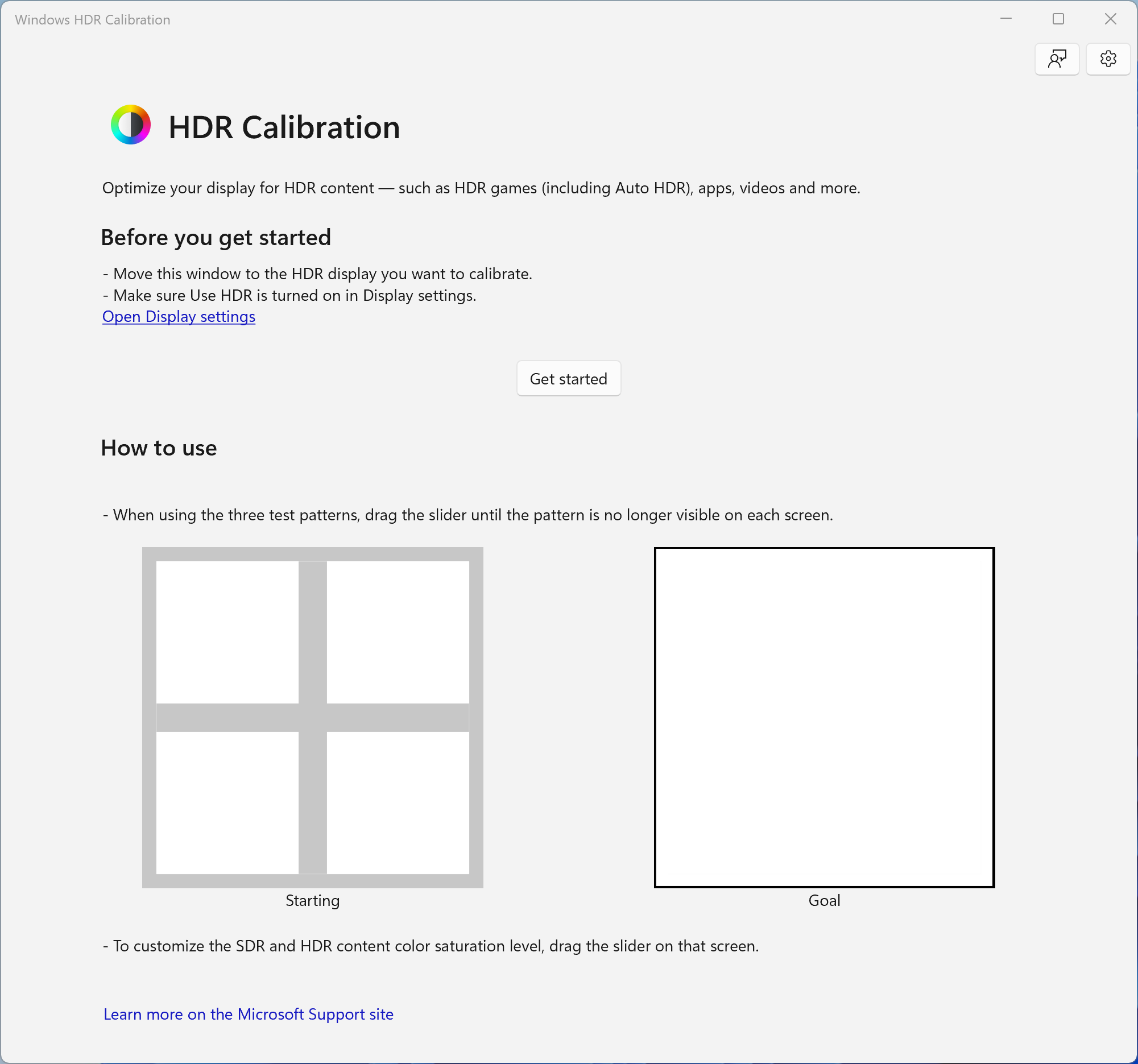
The wait for the Windows HDR Calibration app is over! If you're on Windows 11 and want to calibrate your HDR-capable device, you can now go to the Microsoft Store and download the app. 😊 As we shared in our announcement blog post, the Windows HDR Calibration app will feature three test patterns which will help you calibrate your display by improving the color accuracy and consistency of your HDR panel. Besides that, we also added additional functionality - the app will allow you to customize the color saturation of all content when HDR is turned on! Benefits of calibrating your HDR device In some c...
Announcing our summer Agility SDKs
We’re pleased to announce that we have two new Agility SDKs available today! Agility SDK 1.606.3 contains support for Shader Model 6.7, which we announced was in the works earlier this year. Today, Shader Model 6.7 is ready for you to try! We also have another preview Agility SDK out today: 1.706.3-preview, see here for our blog. In addition to SM 6.7 support, this SDK contains a new and improved preview for Enhanced Barriers, plus a few smaller features. The addition of Enhanced Barriers support in this preview also makes Shader Model 6.7 is even more useful by letting developers access the full capabiliti...
Agility SDK 1.606.3: Shader Model 6.7 is now publicly available!
The DirectX Compiler Team and our partners are pleased to announce the release of Shader Model 6.7! Shader Model 6.7 expands texture fetching, quad querying, and wave capabilities to enable ever more complex (and compatible) new shader-driven features! Advanced Texture Operations SM 6.7 adds a collection of useful texture capabilities that fill in gaps the capabilities of existing texture operations as well as adding versatile new ones collectively referred to as Advanced Texture Operations. This will be an optional feature. Integer Sampling Textures with integer components can now be sampled. To enable ...
Preview Agility SDK 1.706.3-preview: SM 6.7, Enhanced Barriers and more
In addition to support for Shader Model 6.7, this preview Agility SDK contains improved support for Enhanced Barriers and some smaller features For more on the public release of Shader Model 6.7, please see our 1.606.3 announcement. With the addition of preview Enhanced Barriers and Relaxed Format Casting support, raw gathers will achieve their full utility by allowing casting of a wide range of formats to unsigned integer views to grant direct access to the elements using raw gathers. For more details please see here. When using this developer preview agility SDK, set D3D12SDKVersion to D3D12_PREVIEW_SDK_...
Agility SDK 1.602.4
This is a bug-fix-only update to 1.602.0. No new features. NuGet Gallery | Microsoft.Direct3D.D3D12 1.602.4 Bug Fixes
DirectStorage SDK 1.0.2
Thank you to everyone who tried out the DirectStorage SDK - we've really enjoyed interacting with you on the #directstorage channel on the D3D12 Discord Server, and on github. Today we're releasing an update to the SDK where we've addressed some of the feedback you've sent us! You can update to the latest using NuGet update. Visit https://aka.ms/directstorage for more information about how to get started. Changelog
Windows Graphics News – 2022 Q1
The first quarter of 2022 has gone by, so let’s talk about what the Graphics team has been up to! On this blog post we talk about: We’re hiring! We still have a lot of PM and SWE roles open for several teams in Graphics! Check out aka.ms/graphicsjobs for a full list of our open jobs - we look at every application that we get. We also have several new roles since our previous blog update! Have any questions about any of the roles? Please get hold of us at discord.gg/DirectX New features Optimizations for windowed games Optimizations for windowed games (OWG) was released t...
Agility SDK 1.602.0
The Agility SDK 1.602.0 has been published, which fixes bugs related to depth and stencil buffer resource state validation and contains a first round of new D3D12 features aimed at quality-of-life improvements and alignment with other graphics APIs. Head over to Agility SDK Downloads to try it out. New Minor Features Each of the following features is behind a capability flag which can be queried and checked with the CheckFeatureSupport API. Call CheckFeatureSupport on an ID3D12Device with D3D12_FEATURE_D3D12_OPTIONS13 and a pointer to a D3D12_FEATURE_DATA_D3D12_OPTIONS13. Buffer/Texture ...
Exciting additions to your Auto HDR experience on PC
Last year, we brought Auto High Dynamic Range (HDR) to your PC gaming experience, letting you breathe new life into your existing games by giving them an entirely new range of vibrant colors. Today, we’re excited to talk about the additional improvements to your Auto HDR experience on PC that are currently available on Windows 11 and the latest version of Game Bar. We have been listening to your feedback around Auto HDR and have added new adjustments that give PC gamers more control over their experience. Game Bar Auto HDR Intensity Slider Available to all Windows 11 users today if you download latest...
DirectStorage API Now Available on PC
Starting today, Windows games can ship with DirectStorage. This public SDK release begins a new era of fast load times and detailed worlds in PC games by allowing developers to more fully utilize the speed of the latest storage devices. In September 2020, we announced DirectStorage would be coming to Windows, and after collecting feedback throughout our developer preview, we are making this API available to all of our partners to ship with their games. Check out the announcement blog for an in-depth exploration of the inspiration for DirectStorage and how it will benefit Windows games. Getting Started - Develope...
Updates in Graphics and Gaming
Today we are excited to announce new updates in graphics and gaming. New features are available to improve the gaming experience.
The Windows HDR Calibration app will soon be coming to PCs
We heard your feedback and requests to bring the Xbox HDR Game Calibration app to Windows. In a not-so-distant future, you will be able to improve color accuracy and consistency of your HDR display via the upcoming Windows HDR Calibration app.
In the works: HLSL Shader Model 6.7
It's that time again! Microsoft and its partners are excited to announce the ongoing development of the latest HLSL Shader Model, 6.7! Shader Model 6.7 expands texture, quad, and wave shader capabilities in response to requests from HLSL users. It is still a work in progress and not yet available in any release, but implementation and updates will be showing up in the DXC Github Repository. Feature Details Advanced Texture Operations SM 6.7 adds a collection of useful texture capabilities that fill in gaps the capabilities of certain texture operations as well as adding versatile new ones collectively...
Windows Graphics News – 2021 Q4
2021 has come to an end and it’s time to reflect on what the Graphics team has been busy with in the last quarter of the year - we’ll brief you on hiring, DirectX in Gaming, new graphics features, as well as graphics industry news.
Agility SDK 1.600.10 – minor bugfix release
This minor release contains a fix for a raytracing related threading bug in previous Agility SDK releases. There were intermittent crashes in the runtime for apps doing multithreaded creation of raytracing state objects.
Announcing HLSL 2021
Today we are excited to announce the release of HLSL 2021! HLSL 2021 brings an assortment of new language features that we think will make shader authoring in HLSL more familiar and productive. Enabling HLSL 2021 is as easy as passing the `-HV 2021`, and you can immediately start enjoying all the new language features like: We intend to make HLSL 2021 the default language version in a future release after giving time for developers to test adopt and migrate code, and for us to perform more testing and integration. Once it is made the default you can use the `-HV` flag to specify an older l...
Agility SDK 1.700.10 – our first Agility SDK preview!
We’re pleased to announce that we’re releasing our first Agility SDK preview today, Agility SDK version 1.700.10-preview! Head to Agility SDK Downloads to grab it. Agility SDK version 1.700.10-preview contains support for the following features: This is our first preview version of the Agility SDK, meaning that your machine must be in developer mode to access these features. Roadmap and release availability The Agility SDK allows the DirectX team to make features available on every OS Windows 10 version 1909 (Windows 10 November 2019 Update) and up. For more on the OS versions that support...
Announcing new DirectX 12 feature – Video Encoding!
Introduction Today DirectX 12 provides APIs to support GPU acceleration for several video applications such as Video Decoding, Video Processing and Motion estimation as detailed in Direct3D 12 Video Overview. We are happy to announce that D3D12 has added a new Video Encode feature to the existing video API families, with a new set of interfaces that allow developers to perform video encoding using GPU accelerated video engines. This feature provides a new way for apps to implement video encoding consistently with the DirectX 12 principles and style. Video Encode API Remarks In terms of data flow, the...
D3D12 Enhanced Barriers Preview
Good news for developers frustrated by confusing and inefficient D3D12 resource barriers, Enhanced Barriers are coming soon to D3D12, and are available now for experimental preview. Enhanced Barriers are a new set of D3D12 API’s that give developers independent control over GPU work synchronization, texture layout transitions, and cache flushing (“resource memory access”). Enhanced barriers replace resource state barriers with more expressive barrier types. Enhanced barriers offer less latency, support for concurrent read and write (including same-resource copy), diverse aliasing topologies, and better concurrenc...
Windows Graphics News – 2021 Q3
The third quarter of 2021 has passed, which means it’s time for another Windows Graphics News update where we show you what we have been up to! On this blog we will talk about opportunities to join the team, new graphics features, updates on existing features and graphics industry news.
Introducing a New API for Checking Feature Support in Direct3D 12
Background Direct3D can perform a lot of different operations. We use “capability” or “cap” to describe what the library can do. Direct3D 12 has a single API, ID3D12Device::CheckFeatureSupport, which tells us whether a cap is supported and its level of support in the runtime environment. Here's the function signature: To make use of this API, you must provide a D3D12_FEATURE enum to identify the feature group you're querying. You must also provide a pointer to one of the D3D12_FEATURE_DATA_* data structures specific to that feature and its size. You may find this API hard to use for the following reasons: ...
Guide on how to get the most out of your HDR display
In this blog post, we’ll provide information you need to optimize your device and start enjoying HDR content. We’ll walk you through different settings and explain how to set things up.
Windows 2021 HDR getting started guide
This blog will give you the information you need to purchase the right HDR device for you, whether you want to enjoy an HDR cinematic experience or have an awesome time playing games in HDR.
Open Sourcing Direct3D 9 on 12 and the Release of the DXBC Signer NuGet Package
It’s been a while since we last mentioned the D3D9On12 mapping layer. As a quick refresher, it maps D3D9 commands to D3D12 by acting as the D3D9 Device Driver Interface (DDI). Having this mapping layer enables older D3D9 applications to run on modern systems that may not have a D3D9 driver. Since the last blog post, we’ve added support for Alpha to Coverage extensions, done some bug fixing, and cleaned up the code base for open sourcing. Why Open Source? D3D9On12 has been a part of Windows 10 for a few years now, and over that time it has grown in stability and usage. Making it open source will: ...
DirectStorage Developer Preview now available!
Late last year, we announced that we would be bringing DirectStorage to Windows PCs, and in June, we told the world how DirectStorage would improve the gaming experience on Windows 11. Since then, the DirectX team has been hard at work bringing this state-of-the-art tech from Xbox’s Velocity Architecture over to Windows, empowering game developers on both platforms to create new immersive gaming experiences with vastly reduced load times. If you are a developer that watched our GSL talk and signed up to be part of our NDA developer preview program, you’ll be happy to know that we have started rolling out our...
Windows Graphics News – 2021 Q2
Hi there! Another 3 months have passed since our last update, and we would like to bring you up to speed on what the Windows Graphics team has been up to! On this blog we will talk about: We’re hiring! Do you want to help shape the future of graphics? If so, the Xbox Graphics, PIX, and HLSL teams are hiring! We are looking to fill engineering positions across all levels of experience to help develop the technology critical to making the most visually stunning and performant Xbox games. Click here to learn more! New graphics features Dynamic refresh rate - smooth inking...
The Xbox Graphics, PIX, and HLSL teams are hiring!
Do you want to be part of the team building the next generation of gaming technologies for Xbox? Are you passionate about Graphics, GPUs, or Gaming? Do you want to work on the teams that enable game developers to make the most graphically advanced games on Xbox possible? If so, the Xbox Graphics, PIX, and HLSL teams are hiring engineering roles across all levels of experience to help develop the technology critical to making the most visually stunning and performant Xbox games. Machine Learning on Xbox Engineering roles are available to direct the future of machine learning...
Dynamic refresh rate – Get the best of both worlds
Dynamic refresh rate is a new feature that can be found in Windows Insider builds (Dev channel) on supported devices. Like the name suggests, DRR lets your device set the refresh rate dynamically. This means that Windows 11 will seamlessly switch between a lower refresh rate and a higher refresh rate based on what you’re doing on your PC.