
Microsoft
Developer Blogs
Get the latest information, insights, and news from Microsoft.
Highlights
Are You Getting Everything You Can from Your Visual Studio Subscription?
Introducing Agentic Autofix for code and dependencies
Azure DevOps available in Microsoft Copilot Cowork
Latest posts
Announcing Azure AI Speech LLM 09-2026: Broader locale support

Learn how Azure AI Speech LLM 09-2026 improves multilingual language and locale support with improved quality and latency.
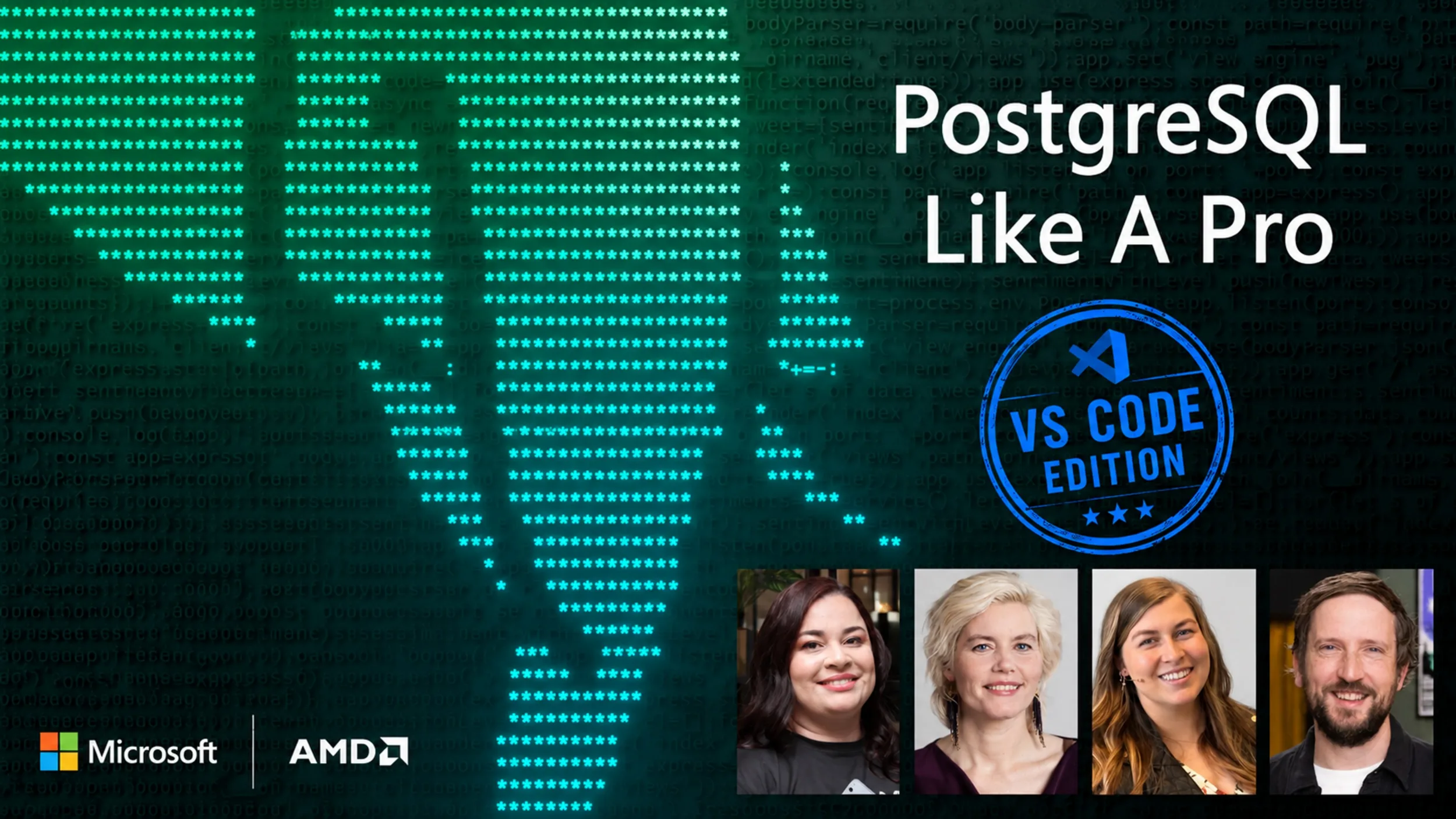
PostgreSQL Like A Pro: Build, query, and troubleshoot without leaving VS Code


Build, query, and troubleshoot without leaving VS Code.

Puzzling out why a program doesn’t work when run from a batch file, but works when double-clicked from Explorer

Mimicking the operation more accurately.
PHP2Shell and Azure DevOps: what to check

On October 21, 2026, PHP disclosed two critical vulnerabilities that can allow remote code execution. Neither Azure DevOps Services, our cloud-hosted offering, nor Azure DevOps Server, our on-premises product, uses PHP to handle customer requests. PHP runtimes used by pipelines, containers, and deployed applications have their own patching requirements. Deployment scope: cloud and on-premises Azure DevOps Services (cloud). Microsoft operates and updates the service. You remain responsible for PHP installed by your pipeline steps or bundled into custom images and applications. Azure DevOps Server (on-premises)...

Keep your investigation between sessions


Start a standalone Markdown note and use the opt-in Hot Exit preview to resume unsaved work next session.

.NET October 2026 Out-of-Band Security Updates

Out-of-band security updates for .NET address the Brotli decoder vulnerability and tarball ownership vulnerability.
The paper that split the database in four: inside Azure SQL Database Hyperscale, aka Socrates

Under the Hood: The Research Behind Microsoft SQL, part 1 The Microsoft SQL team is always innovating. They do this in day-to-day efforts, but there are also brand new efforts that are constantly being explored, investigated, tested, and researched. Our engineering team partners closely with MSR (Microsoft Research) on some of these efforts. The team writes papers, submits these papers to conferences, and generally gets high recognition for their ingenuity in the databases and cloud space. One thing I’ve been thinking about recently is how little I actually have read the papers being written, and what scena...

Code with Cosmos: Build a Production-Ready AI App in Four Episodes

Follow an AI application from a blank folder to a system built for production AI application development often starts with a promising prototype. A real application has to do more than produce an answer: it needs current operational data, the ability to take actions and complete transactions, memory that carries across sessions, coordination between specialized agents, and enough visibility for developers to understand and improve how the system behaves. Today, we're introducing Code with Cosmos, a new four-part Azure Cosmos DB video series that follows one app – an AI travel planner – from a blank folder...
Why didn’t we use the COM static store to clean up the unmarshalable delegate?
It cleans up at the wrong time.

From Local Development to CI Workflows with the Azure Cosmos DB Emulator

When you change a database-backed feature, a successful HTTP response isn't enough. You need to know that the write reached storage, the application retrieved the updated record, and the next answer reflects it. The Azure Cosmos DB Emulator runs locally in Docker and lets us use the SDK we'll use in production. We'll develop against it first, then carry our tests into GitHub Actions. Each update to an open pull request must pass against a fresh emulator before we merge. Building on Theo van Kraay's local development walkthrough, we'll use FleetCharge, a Python demo built with Microsoft Agent Framework and F...

Are You Getting Everything You Can from Your Visual Studio Subscription?

What if you could experiment with a new Azure service without requesting additional budget, prepare for your next technical certification using learning resources you already have, or build a dashboard without creating every UI component from scratch? If you're a Visual Studio subscriber, you may already have benefits that can help you do all three. Here’s a few possibilities you may not have considered: 1. What could you build with your Azure credits? Have you been curious about an Azure service but haven't had the opportunity, or the budget, to try it? Maybe you want to experiment with an AI-powered a...
Why didn’t we use CoRegisterInitializeSpy to clean up the unmarshalable delegate?
Looking more closely at the function's behavior and requirements.
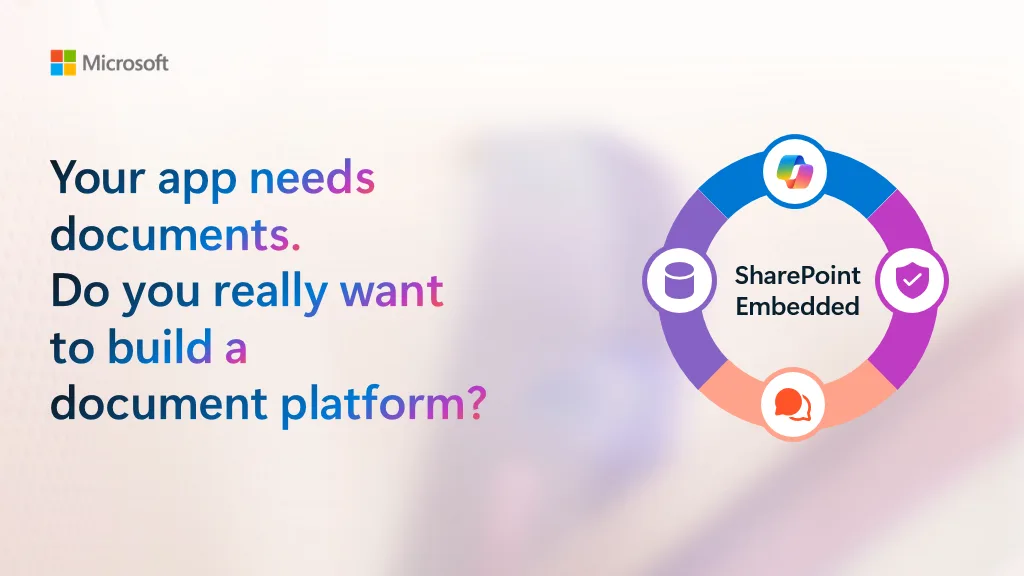
Develop enterprise-grade apps with SharePoint Embedded

Taking an enterprise application from development to production requires confidence that it can scale, stay reliable, and be governed effectively. Recent SharePoint Embedded updates give developers clearer guidance for making those decisions, from understanding limits and managing throttling to choosing the right permissions. In this blog post, we highlight updates that help you: Read on to get more details and watch the SharePoint Embedded presentation below to learn more about these updates: Plan for scale with clearer baselines and limits We updated the container st...

Embeddings and vector search in Microsoft Agent Framework for Go

Build semantic search with Go structs, generate embeddings through a common API, and connect vector retrieval to agent context and memory.

🚀 React Native Windows v0.85 is here

We're excited to release React Native Windows 0.85.0, built on React Native 0.85.3. React Native Windows v0.85 completes the move to the New Architecture, updates the Windows build toolchain, and adds new component capabilities along with touch, text, accessibility, and rendering fixes. 🔥 What's New in RNW v0.85? New Architecture only The legacy architecture has been removed. Apps still on the old architecture must migrate to Fabric before upgrading to 0.85. New projects already target the New Architecture. 🔗 New vs. Old Architecture · React Native for Windows Updated toolchain React Native Windows ...
Microsoft CppCon 2026 Trip Report

CppCon 2026 is a wrap! Microsoft returned to Aurora, Colorado, for a week of talks, technical discussions, and conversations with developers from across the C++ community. Microsoft C++ @ CppCon At our booth, we met people building games, financial systems, developer tools, embedded software, scientific tools, and other applications. Some were working with the latest language features, and others were maintaining and modernizing systems that have been in production for decades. Many talked to us about debugging, performance, build systems, or modern C++, and a growing number were experimenting with ways AI can ...
Microsoft.UI.Reactor: a C#-first way to build WinUI apps

If you caught our session at Microsoft Build 2026 or you've been watching the repo, you've seen this one taking shape in public for a while now, and a lot has changed since Build. Here's the longer tour: Microsoft.UI.Reactor, an experimental C# framework that brings the MVU (Model-View-Update) pattern to WinUI desktop apps. No XAML files, no code-behind, no ViewModels. Two things before the fun part. Reactor is experimental: no support policy, no API guarantees, published this early on purpose because we'd rather hear we got the design wrong now than once people have shipped on it. And it is not a replacemen...
Advanced Shader Delivery is Available Now Across Hardware and Coming Soon to Other Storefronts

A few weeks ago, we announced that Advanced Shader Delivery (ASD) is available for Gears of War: E-Day and teased that the feature is coming to devices across Windows 11. Today, we’re proud to announce that Advanced Shader Delivery is broadly available across the Windows ecosystem on devices powered by AMD, Intel, Nvidia, and Qualcomm! ASD addresses a PC ecosystem wide challenge by delivering shaders at download of a title- reducing overall loading time, reducing shader stutter in game, and saving on power consumption. Check out the system requirements below for supported hardware and graphics drivers. &nbs...
Pylance + Pyrefly: bring your preferred type checker to Visual Studio Code

Announcing the Type Server Protocol and our partnership with Meta

Introducing Agentic Autofix for code and dependencies

Fixing a vulnerability takes more than knowing where it is. You need a change that follows your coding standards and works with the rest of your code. Copilot Autofix for GitHub Advanced Security for Azure DevOps now runs on an agentic foundation. It also supports dependency vulnerability fixes and code scanning alerts from third-party tools. Select the alert to address, Autofix works in the background on a proposed change in your existing Azure DevOps workflow, and your team keeps the final decision on what to merge. Agentic fixes use your repository context Your team might require a shared validation helper...
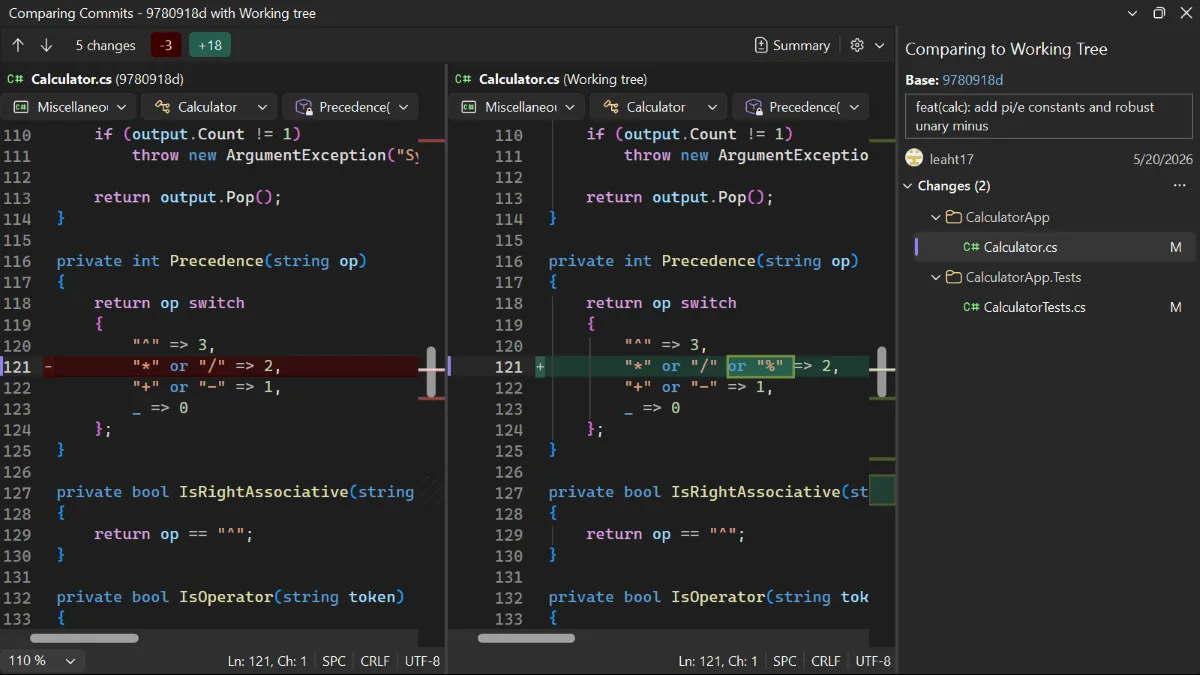
Compare today’s code with an earlier commit

Compare a historical commit with your working tree without checking out the commit or leaving your branch.

Announcing GA of Safe Key Rotation in Azure Cosmos DB

In our previous post, we introduced the private preview of Safe Key Rotation, a feature that helps Azure Cosmos DB customers avoid service disruptions during key rotations. By showing when each account key was last used, it helps teams make informed decisions before rotating keys or moving to Entra ID. This capability addresses a common challenge: keys that appear unused may still support critical applications, which can lead to unexpected outages if they are rotated too soon. What is new? With general availability, we are expanding this capability to give you even more control and confidence when managi...
Why didn’t we use RoRegisterForApartmentShutdown to clean up the unmarshalable delegate?
Too many requirements, some of which bring us full circle.
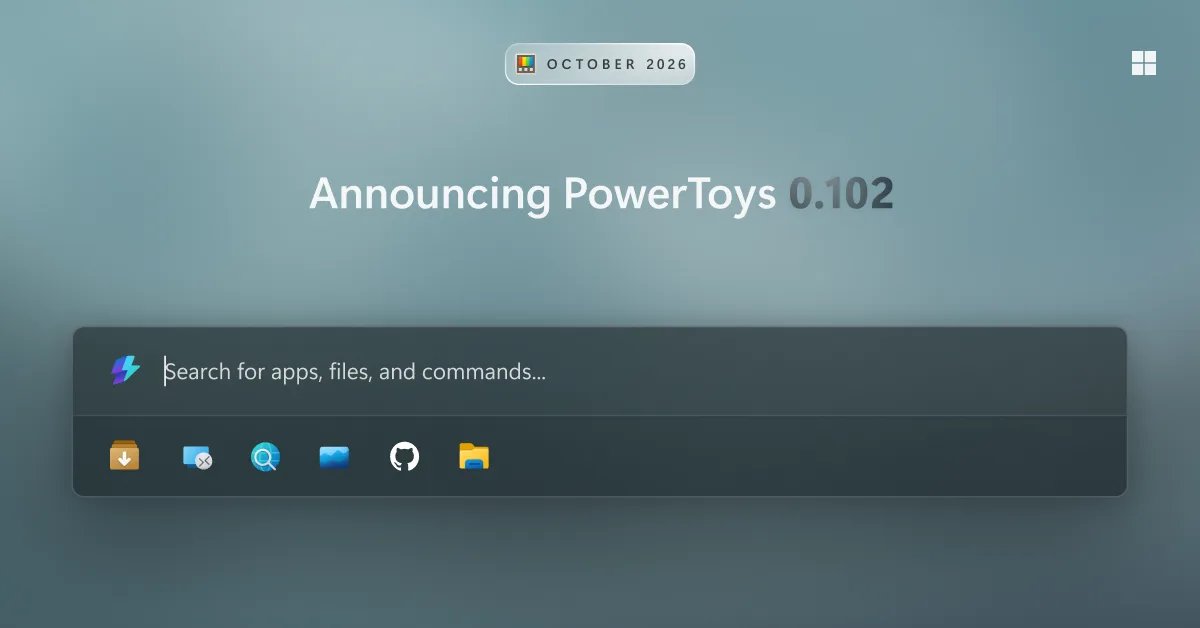
PowerToys 0.102 is here: new mouse utilities, Command Palette improvements and much more

We're back with a fresh PowerToys release! This one brings two new mouse utilities, Mouse Button Lock and CursorHide, an optional quick-access shelf for Command Palette, snip dictation in ZoomIt, and a set of new command-line tools for automating PowerToys. Color Picker and Text Extractor also move to WinUI 3, and Keyboard Manager picks up some long-requested remapping features. Get the update by checking for updates in PowerToys or by heading to the release page. Let's dive in! 🖱️ Mouse Button Lock and CursorHide Holding a mouse button down during a long drag or selection can be tiring. With Mouse Button Loc...

Go 1.27.3-1 and 1.26.10-1 Microsoft builds now available

A new release of the Microsoft build of Go including security fixes is now available for download.
Announcing TypeScript 7.1 Beta

Today we're excited to announce the beta release of TypeScript 7.1! Let's take a look at what's new in TypeScript 7.1! Support for Import Attributes in Ambient Modules Import attributes are metadata that are attached to import statements. Typically, they're meant to instruct runtimes and bundlers on how to interpret the content of an import, as well as the shape of the resulting module. For example, Everything in the object following the keyword is an import attribute. Environments like browsers can't simply decide how to deal with an import based on file name extensions like . Specifying tells what...
Activatable Extension Points

We often talk about "running an application", "launching an app", or "starting an app". This conjures up visions of spinning up a new process, giving the application life. For packaged applications, Windows has a specific term for bringing an application to life: activation. Bringing a packaged process to life involves more than ordinary unpackaged process creation. Windows calls this machine "activation". Activation does more than simply create a process. Among other things, it creates the new process with the appropriate package identity. Activation also verifies the package is in an appropriate state befor...

Azure DevOps available in Microsoft Copilot Cowork

The Azure DevOps Plugin is now available in Microsoft Copilot. It brings Azure DevOps directly into Copilot Cowork, so you can work with your projects, work items, pull requests, test plans, pipelines, and more without switching to Azure DevOps. The plugin also includes built-in skills to help with everyday development tasks. You can quickly see what needs your attention, triage bugs, and turn ideas or feature requests into structured backlogs with epics, features, user stories, and acceptance criteria. All of this can be done directly from Copilot. Copilot Cowork with Azure DevOps One of the biggest advantage...
Can a local git remote replace GitHub in your agent eval?

We swapped GitHub for a local git remote in our agent evals. Rebasing and pushing on request were unaffected, but the agent pushed on its own 11 points less often. Here's when a local remote is a safe shortcut, and when it isn't.
Microspeak: Drain the slide, back-up slides
PowerPoint presentation jargon.

Work IQ: the new retrieve tool

The new Work IQ Retrieve tool grounds agents in the context of work, helping them reason over the right information and deliver more relevant, trustworthy responses. With one retrieval layer across work sources, developers can give agents richer organizational context without building separate search systems. Retrieve: grounded answers across work sources The new MCP tool named searches a user's workplace data—including email, files, meetings, Teams messages and people, as well as connected enterprise sources. As with any other tool offered by Work IQ, each user will be able to retrieve information only fr...
Go 1.27.2-2 Microsoft build now available
A new release of the Microsoft build of Go is now available for download.

Get Your .NET MAUI App Ready for Xcode 27

Use an agent skill to prepare your existing .NET MAUI app for Xcode 27, with the scene lifecycle changes and manual migration steps explained.

Bring Your Own Model to the GitHub Copilot SDK with C#

The GitHub Copilot SDK gives your application an agent runtime. BYOK lets you keep that runtime while sending model requests to your own Microsoft Foundry or Azure OpenAI deployment. Here is the complete C# setup.
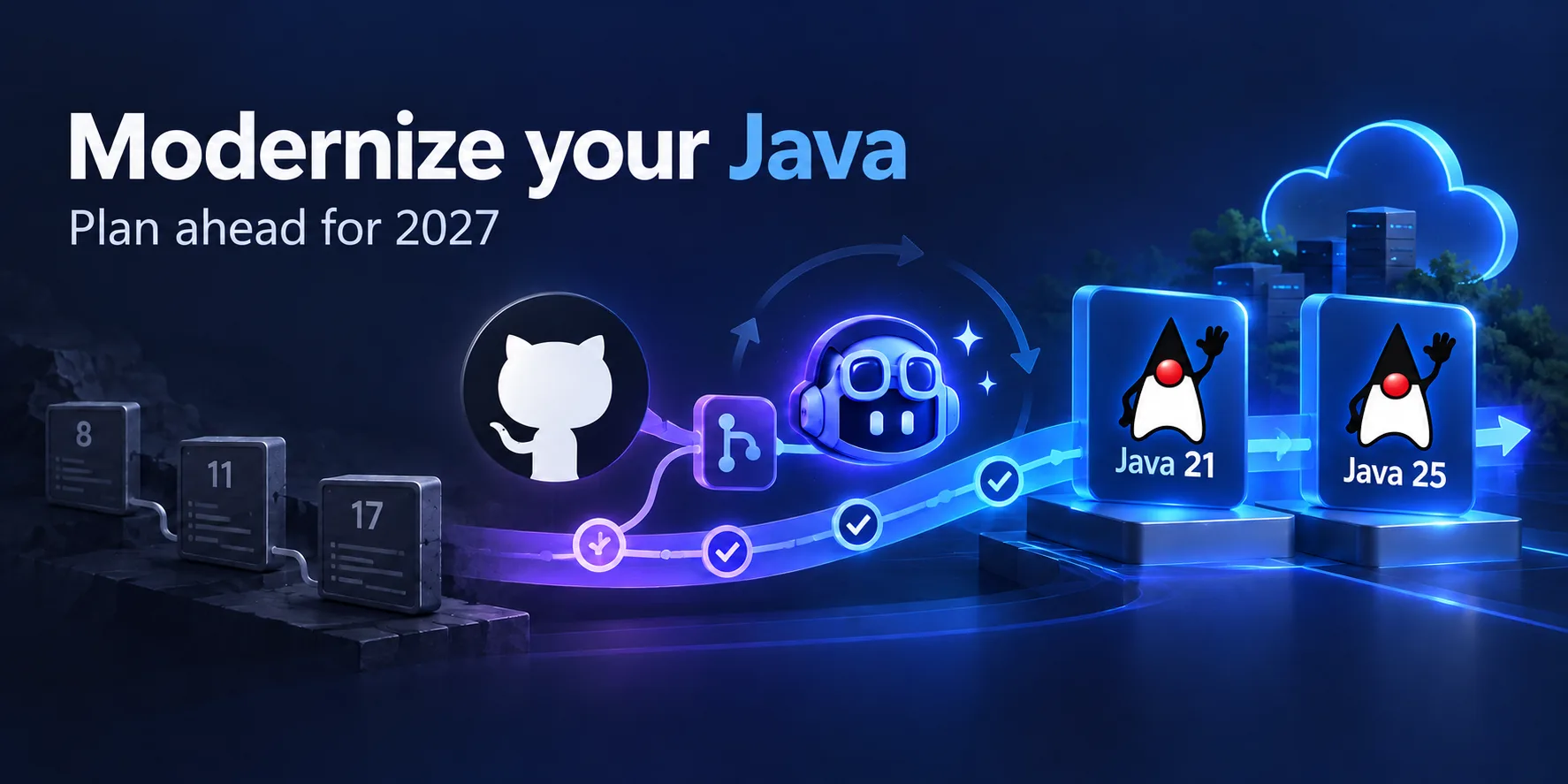
Plan Your Java Upgrade Ahead of Microsoft’s 2027 Support Milestones

In April 2021, we announced the Microsoft Build of OpenJDK. We were starting with a preview of our Java 11 builds for Windows, Linux, and macOS. Today, if you're planning a Java upgrade on Azure, you have several generations of that work to build on: 11, 17, 21, and now 25. Java 8 has been part of that work too, with help from the fine folks at the Eclipse Foundation's Eclipse Adoptium project. Microsoft has supported Java 8 on Azure using their Eclipse Temurin builds of OpenJDK 8, rather than producing a Microsoft Build of OpenJDK 8. That collaboration goes back to the launch: our first Java 11 builds also used...
Organize and revisit tabs with the keyboard
Reorder your document tabs and return to them by visual position with new keyboard shortcuts.