
Microsoft
Developer Blogs
Get the latest information, insights, and news from Microsoft.
Highlights
Are you getting everything you can from Your Visual Studio Subscription?
Introducing Agentic Autofix for code and dependencies
Azure DevOps available in Microsoft Copilot Cowork
Latest posts

Deprecation notice: Low-trust SharePoint add-ins in SharePoint Server Subscription Edition

Support for low-trust SharePoint Add-ins in SharePoint Server Subscription Edition ends on January 12, 2027. The January 2027 public update will disable these add-ins by default. Organizations should identify affected solutions and plan their migration to supported alternatives, such as SharePoint Framework (SPFx). SharePoint REST, CSOM, and JSOM APIs are not affected.

Give your coding agent a head start with Microsoft Agent Framework skills for .NET and Python


We have added installable Microsoft Agent Framework builder skills for .NET and Python. They give coding agents Microsoft-maintained guidance for building and modifying Agent Framework applications, from choosing the right pattern to wiring tools, sessions, workflows, and hosting. These are development-time skills for your coding assistant, not runtime skills loaded by the application you ship. Use a coding agent that supports the Agent Skills format. With GitHub CLI, install the .NET skill from : For Python: Both examples use for the latest repository guidance. Pin ...
Keep learning, keep building! Make the most of VSLive! with your Visual Studio Subscription

Keeping up with new technology is one thing. Finding worthwhile opportunities to explore what matters most to your work is another. That's where VSLive! can help. It brings technical learning, hands-on experience, expert guidance, and a community of developers together in one place, giving you focused time to explore evolving technologies and decide what’s worth bringing back to your team. And if you're an eligible Dev Essentials member, Visual Studio Professional subscriber, or Visual Studio Enterprise subscriber, you have benefits that can provide a significant discount for these in-person events. D...

Your voice shapes SPFx: take our developer survey

Help shape the future of SPFx. Share your developer experience in our survey, open until December 9, 2026, and help guide future investments. Explore highlights from a year of updates, including Copilot UX components, and discover what’s next on the roadmap and how to get involved in the community.

GitHub Copilot is now a default agent in JetBrains Air


GitHub Copilot is now available in the JetBrains Air as a default agent. Select GitHub Copilot as your agent, delegate coding tasks, and work through results without leaving your IDE. All you need to get started is a GitHub Copilot subscription: Built in collaboration with JetBrains and powered by Agent Client Protocol (ACP), this integration brings GitHub Copilot into Air's native agent experience. Developers can select GitHub Copilot from the agent picker, sign in with their existing GitHub Copilot subscriptions, and start delegating coding tasks, managing parallel agent sessions, and reviewing changes wi...

Announcing XAML IntelliSense Support in the WinApp VS Code Extension

From creating your first project to writing UI and debugging with package identity, the WinApp extension helps you build Windows apps right in VS Code. It combines language support for app manifests with tools to create, run, debug, package, and sign your app, bringing more of your everyday development workflow into the editor. Get it now: Install the WinApp extension from the VS Code Marketplace. We're excited to announce the release of v0.4. This release introduces an experimental preview of project-aware IntelliSense for your WinUI XAML, adds a command for creating new WinUI apps, and lets you build and ru...

My Favorite Undocumented Feature in SQL MCP Server

Deploy Microsoft's SQL MCP Server in minutes without a configuration file. Learn how DAB_CONNSTRING enables fast deployment using Docker, Azure Container Apps, ACI, or AKS.

Modernize MongoDB applications with Azure DocumentDB: From assessment to what’s next

Migrating an existing MongoDB application shouldn't mean starting over. The application code, data models, APIs, and integrations you've already built represent years of investment. The challenge is moving forward while preserving what works. For many organizations, modernization is about more than moving a database to the cloud. It's an opportunity to simplify operations, optimize costs, build on open-source technologies, and prepare applications for new requirements, including AI-powered experiences. Azure DocumentDB provides a path forward. Microsoft's fully managed, MongoDB-compatible database service i...
Delivering Skills in NuGet packages

Agent skills can be delivered in NuGet packages as a way to deliver up-to-date library documentation to models.

Get Ready for .NET Conf 2026!

.NET Conf is one week away! Join us November 10-13 for the launch of .NET 11, two days of Microsoft sessions, and two days of Community Days.

Sparse Package

We recently discussed External Location and how it lets Windows find files referenced in but installed by some other (not-MSIX) installer. Many people call this kind of package a "Sparse package". Many even think sparse packages are the important feature, and External Location is a minor implementation detail. But...what is a sparse package? First, let's create one. HOWTO create a sparse package At its simplest, a sparse package contains and other footprint files, and no payload files.1 For example, here's a simple manifest for a HelloWorld application: The manifest declares , indicating it is intended ...
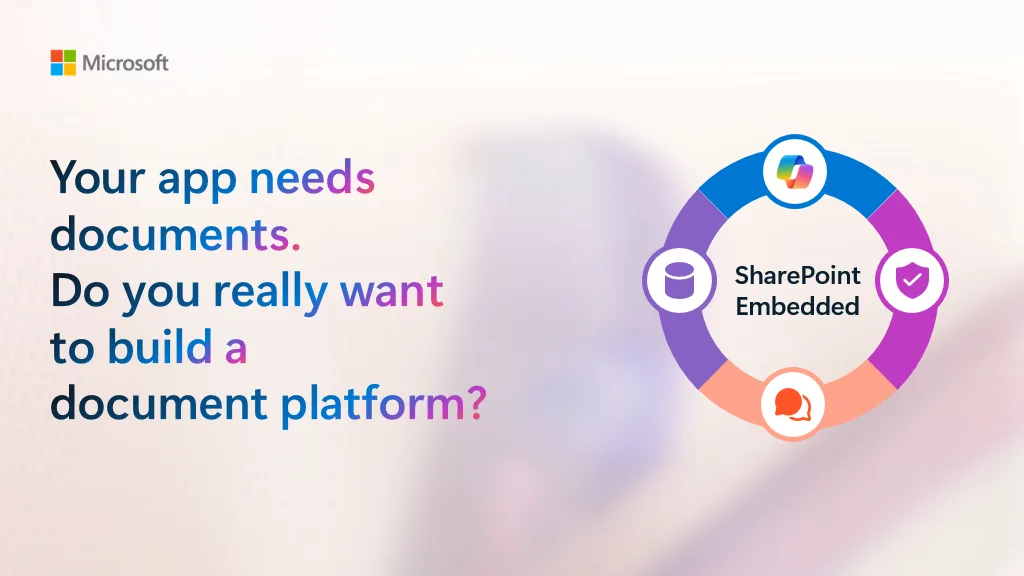
Your app needs documents. Do you really want to build a document platform?

File storage is rarely just file storage. Imagine your team is building a contract management application. At first, the document requirement looks straightforward: upload a file, organize it, retrieve it, and let the right people open it. Then the real requirements from your customer, security, and operations teams arrive, and the scope quickly expands to collaboration, authentication, permissions, governance, and administrative controls. What began as a feature has become a document platform. And now your team is spending cycles on content services instead of adding unique customer value. SharePoint ...

Go beyond the basics: Explore specialized Azure plugins for your AI agent

Explore six specialized Azure plugins for AKS operations, cost management, Advisor recommendations, Kusto graph analysis, Azure Local, and Foundry IQ, with example prompts and installation commands.

How do you implement a random-access database when you don’t have random-access external storage?

You just store it all in memory, in your own program.

ChatGPT runs on Azure Cosmos DB. Prove you can build what’s next.

Take the newly AI-focused DP-420 exam free at Microsoft Ignite—or take the certification exam today and save 50% through Data Days. OpenAI’s storage platform uses Azure Cosmos DB to help serve products used by more than one billion people each week. If you want to build AI applications at that kind of scale, the newly updated DP-420 certification gives you a way to validate your expertise—and registered, in-person Microsoft Ignite 2026 attendees can take the exam onsite for free. DP-420 now centers on Building AI Applications with Azure Cosmos DB, in...
Sneaking into the auditorium for the Windows 2000 launch rehearsal
Wait, that's not him.

My Team Is Growing, How Do I Structure Who Gets Access to What?


Your project started with one or two people. Now developers, operators, analysts, and applications all need access to Azure Cosmos DB. Giving everyone the same permissions might feel efficient, but it makes every identity more powerful than its job requires. As your team grows, organize access around jobs, not people. Separate management access from data access, assign roles to groups and workload identities, and use the smallest practical scope. You do not need a complicated permission model for every person. You need a small set of repeatable access patterns. Separate managing the account from using i...
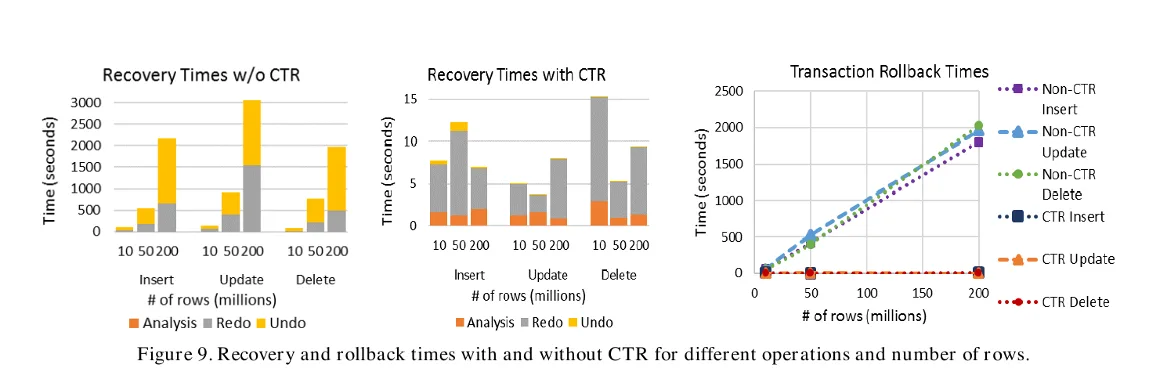
How Microsoft SQL learned to recover without undoing everything first

Under the Hood: The Research Behind Microsoft SQL, part 2 Here’s a scenario that used to be genuinely frightening: you kick off a bulk load of a few hundred million rows in a single transaction. Somewhere in the middle, the server goes down. Not because of your load, just an unlucky reboot. When SQL Server comes back, it has to undo everything that transaction did before anyone can touch those tables. Row by row (I think I’ve heard probably Bob Ward say “row by agonizing row” to describe this). Working backwards through the log. That exact thing happened to an Azure SQL customer, and the team wrote it in...

Everything released in October 2026 for Azure Developer CLI

The October recap for the Azure Developer CLI (`azd`). Preview service deployments before making changes, deploy to Container Apps express, remove stored environment values, and use extension-defined infrastructure providers in generated pipelines. Extension APIs gain stable contracts, and provisioning validation, cancellation, and upgrade recovery improve.
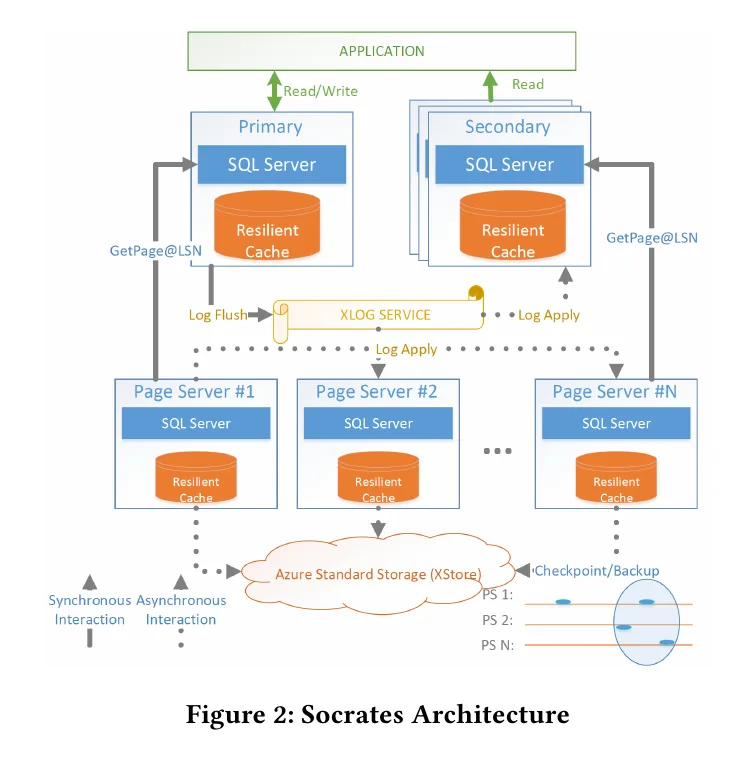
Is Azure SQL Database Hyperscale “distributed SQL”?
In my last post, I broke down the Socrates paper, the research that became Azure SQL Database Hyperscale. Writing it made me want to tackle a question I think trips a lot of people up when they're choosing a database: is Azure SQL Database Hyperscale "distributed SQL"? It's a fair question. "Distributed SQL" has become shorthand for "the relational database that scales in the cloud," and anything outside that bucket tends to get filed under "the relational one my company already has." I'd rather not leave that to assumption, so here's how I think about it. What people usually mean by "distributed" When ar...
The Microsoft building that was reportedly haunted
Lots of rumors, little confirmation.

Does ‘eval’ in the workspace path change what your agent does?

Your eval might be telling the agent it's a test before the agent reads a single instruction. Eval tools need a fresh folder for every run, and the easiest way to get one is a temp directory with a random name like . The agent sees that path on every turn, in the system prompt as its working directory and in the output of every tool call. If models can tell when they're being tested, a folder literally called is about the easiest giveaway there is. So we checked whether the folder name changes what agents do. Across about 900 runs and four models, it made them more convinced they were being tested, but it didn'...

What’s New in vcpkg (Oct 2026)

This blog post summarizes changes to the vcpkg package manager as part of the 2026-10-16 registry release and the 2026-09-26 tool release. These updates include configurable binary-cache compression, improved cache reliability and diagnostics, Boost 1.92, and other improvements and bug fixes. vcpkg changelog (2026.10.16 release) Tool improvements Notable port updates Documentation updates The following documentation changes were published recently: Total ports a...

Blazor Welcomes Open-Source Contributions from Syncfusion

Microsoft and Syncfusion are collaborating on Blazor through a free, open-source component toolkit, framework contributions, and developer tooling.
The support case of a customer who said that all they could see was a black screen
Then again, that is what they asked for.
Preparing for your next certification could start with your Visual Studio Subscription
Are you thinking about earning a Microsoft certification to help advance your career, build on your existing skills, or meet new requirements at work? If so, you may already be wondering where to start. Which courses, labs, and hands-on exercises will help you prepare? How much time will it take to find the right resources, and how much will that training cost? Here's something you may not be aware of: Eligible Visual Studio Subscriptions already include many of the learning resources you need to prepare for your next certification. Visual Studio subscribers can access training from Cloud Academy ...

PIX 2610.28 – the biggest release of 2026

Today we released PIX 2610.28, available for download here. This release supports all the new retail and preview D3D12 features released today in DirectX Agility SDK 620 and 721. This is the first PIX build combining support for both retail and preview Agility SDKs, simplifying the user experience. Beyond that, 2610.28 brings many new features and improvements since the last regular PIX release, PIX 2603.25, including all the features previewed in the May and June preview builds. It also includes the most bug fixes we've ever released in a single version of PIX. Contents ...

DirectX Dump Files are now ready for your retail games


At GDC 2026, we shared our vision for bringing console-level GPU developer tools to Windows, and in June we released the DirectX Dump Files public preview. Thank you to everyone who tried the preview and sent us feedback. Today, DirectX Dump Files are ready for your retail games. Starting with Agility SDK 1.620 and PIX 2610.28, you can capture GPU crashes on your players' PCs and on your own machines, then investigate them in PIX using one consistent workflow across hardware vendors. We couldn't have done this alone. DirectX Dump Files bring together data from Windows, Direct3D, and each hardware vendor's d...
Announcing Agility SDK 1.620 Retail and 1.722 Preview: DirectX Dump Files, Partial Graphics Programs, and So Much More!


Today, we are pleased to announce the release of Agility SDK 1.620 retail and Agility SDK 1.722-preview! Agility SDK 1.620 brings DirectX Dump Files to retail, along with Fence Barriers Tier 1, the Batched Asynchronous Command List APIs, and Partial Graphics Programs. Meanwhile, Agility SDK 1.722-preview introduces major updates to DirectX Raytracing capabilities for highly detailed, dynamic scenes. Here's the list of everything in Agility SDK 1.620: And here's what's new in Agility SDK 1.722-preview: Quick note: Shader Model 6.10 remains in preview for t...
Publish Visual Studio Marketplace extensions securely with Trusted Publishing

Publish Visual Studio Code and Visual Studio extensions from GitHub Actions or Azure Pipelines without storing a long-lived personal access token.
[PREVIEW] Raytracing: Clustered Geometry, Partitioned TLAS, Indirect Acceleration Structure Builds

Today we're introducing a preview of DirectX Raytracing (DXR) Clustered Geometry and Partitioned Top-Level Acceleration Structures (PTLAS), with a unified GPU-driven API for building and updating them. This is part of a larger AgilitySDK release described in the parent post: https://devblogs.microsoft.com/directx/agilitysdk-1-620-retail-and-1-722-preview/ For DXR this is the most significant update since its debut in 2018. Here's the motivation for Clustered Geometry and Partitioned TLAS: At object level scope within a scene, animation, streaming, and generated geometry can repeatedly incur the cost...
Async Commands Fallback Layer

We're pleased to announce that Agility SDK 1.620.1 includes a fallback layer for Batched Async Commands, letting developers use the new commands on hardware that doesn't support them natively. You can find the NuGet package here. Background Batched Async Commands were introduced in the Agility SDK 1.720 Preview as a new set of copy, fill, clear, and resolve commands. The legacy versions of these operations are implicitly serialized, since the original resource barrier model has no way to say that two copies don't depend on each other. The batched versions drop that implicit serialization and take many operation...
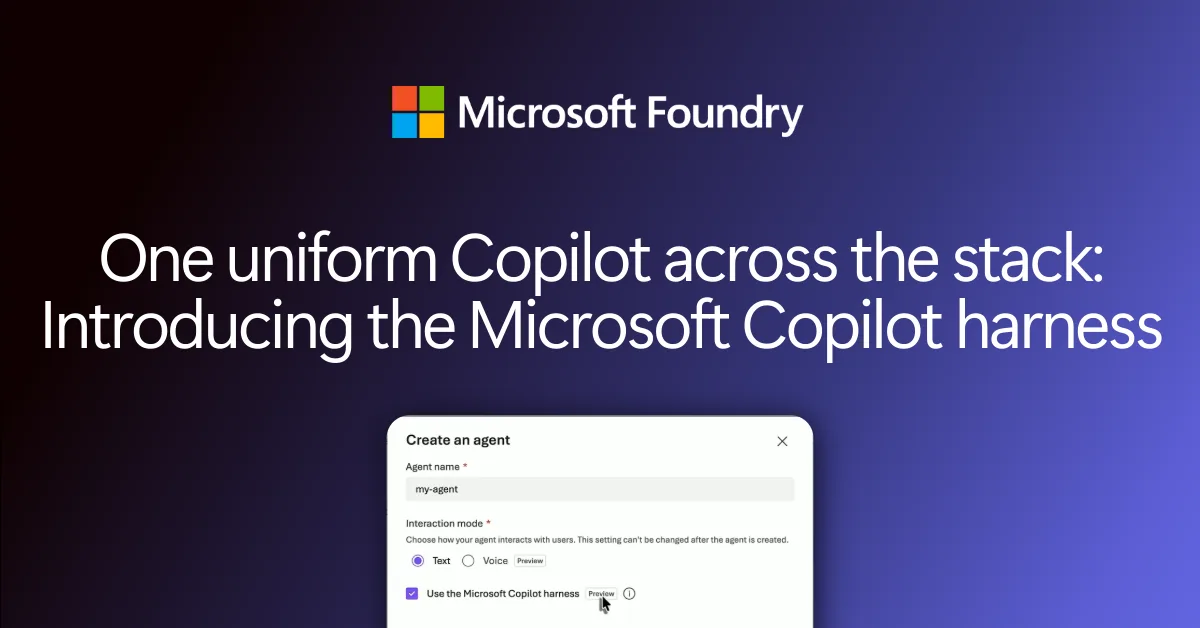
Introducing the Microsoft Copilot harness in Foundry Agent Service


A model can reason about a task. Completing that task takes more: the right context, tools, execution environment, and controls, and an agent loop that brings them together. Microsoft’s unified harness strategy brings a shared execution foundation across our agent experiences while preserving customer choice. In Microsoft Foundry, that means you can choose a supported model and decide how much of the agent stack to build yourself, without having to assemble every layer around it. Today, we’re introducing the Microsoft Copilot harness in Foundry Agent Service in public preview. It gives developers a fully manage...
Azure SDK Release (October 2026)

October's Azure SDK highlights include Azure Core authentication updates, managed identity improvements for Python and Java, and the first stable Cosmos DB libraries for Rust.
C++/WinRT overcorrection: Using make_self and immediately converting it to the projected interface
You are taking the scenic route.
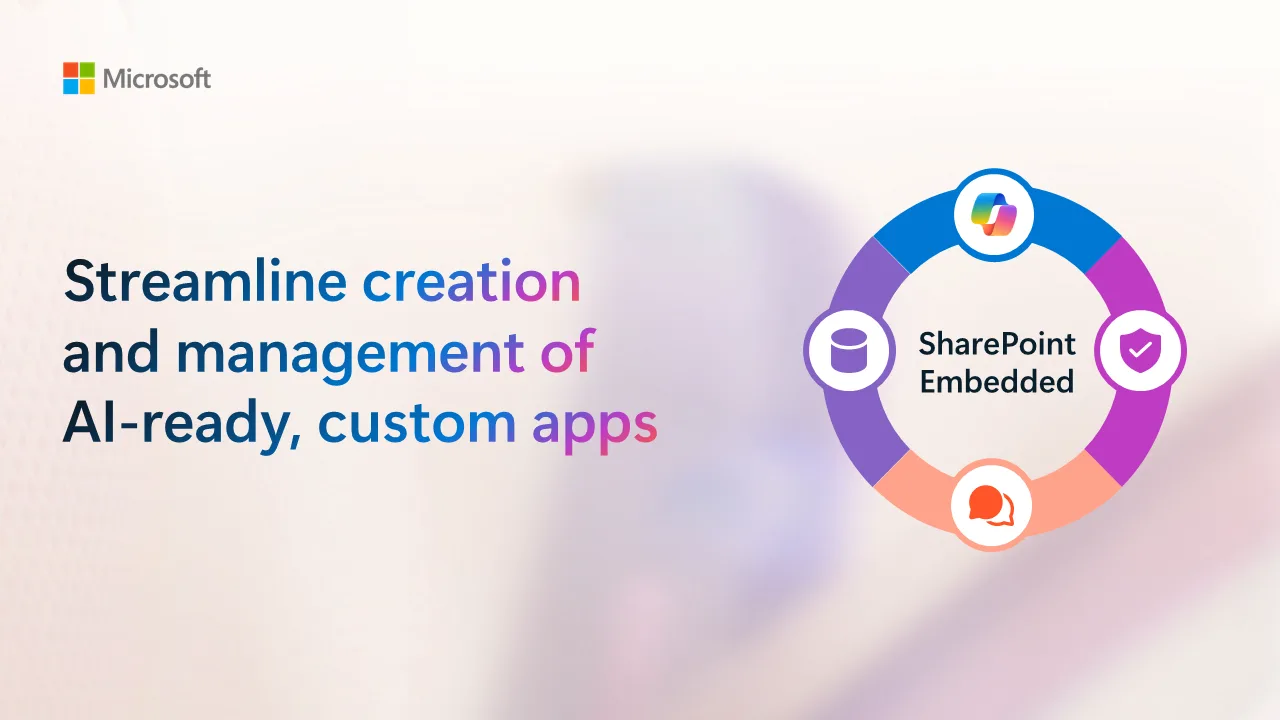
Streamline creation and management of AI-ready, custom apps with SharePoint Embedded
SharePoint content isn’t limited to sites and document libraries. Increasingly, organizations are bringing Microsoft 365 content capabilities directly into the custom apps their users rely on. That’s where SharePoint Embedded comes in. SharePoint Embedded is a cloud-based, API-only document management platform that enables developers to bring Microsoft 365 content capabilities into custom applications, including Office collaboration, Microsoft Purview security and compliance, and Copilot experiences. The application provides the user experience, while SharePoint Embedded provides the content platform behind i...

Agentic CI/CD with Azure Cosmos DB: Isolated Environments for a Swarm of AI Agents

Give each coding task its own disposable database environment, then merge the reviewed changes - not the test database. When parallel coding agents share a database In From Local Development to CI Workflows with the Azure Cosmos DB Emulator, we used FleetCharge to make local development and CI repeatable. Start the emulator, seed known data, run the checks, and clean up afterward. Now consider several AI coding agents working on the same application at once. One is changing dispatch behavior. Another is adding a depot rule. A third is updating tests. Each has its own branch, and perhaps its own Git worktree,...

Copilot UX components are generally available: bring interactive experiences into Copilot
Copilot UX components are generally available with SPFx 1.24. Bring interactive dashboards, forms, and business actions directly into Microsoft Copilot, so people can complete tasks in context using experiences built on existing web skills and systems.
Azure DevOps Server RC (26H2) Is Now Available

Today we're releasing the release candidate (RC) of the next Azure DevOps Server release. It brings new features previously available in our hosted version, along with security and quality improvements. You can download Azure DevOps Server RC (26H2) today. A direct upgrade to Azure DevOps Server RC is supported from any version of Team Foundation Server, including Team Foundation Server 2015 and newer. Direct upgrade from this RC release to the eventual RTW will be supported. If you prefer to wait until RTW to upgrade your servers, trying out this RC on a test deployment is a great first step. Note: Extended ...
External Location
We talked recently about PackageVolume as one of the ways to stage packages. Let's turn our gaze to External Location, which plays a distinct role in MSIX, with similarities to - and important differences from - other options. Why is External Location? MSIX deployment provides a full-service software installation stack. The process is simple: collect your content, describe your package in an , and run makeappx.exe and signtool.exe to create a signed .msix to distribution and install. But...what if you already have a product with an existing installer? What if you need to extend your product with features uniq...

Visual Studio October Update – Compare Commits to Your Code, Resolve Conflicts in Bulk, Keep Coding

Compare commits with your working tree, resolve merge conflicts in bulk, and keep coding with refreshed Copilot chat, Hot Exit, keyboard tab controls, and Fonts and Colors.

Blazor Welcomes Open-Source Contributions from Infragistics
Microsoft and Infragistics are collaborating on Blazor through free, open-source components, new .NET 11 analyzers, and developer tooling.
Why don’t we run the taskbar and Task Manager at high priority, so they can remain responsive?
Hurry up and wait.

Inspecting Local Data with Azure Cosmos DB Shell
Explore local data from the terminal with Azure Cosmos DB Shell. Connect to the emulator, inspect FleetCharge documents, run queries, and point-read depot partitions.

Announcing Azure AI Speech LLM 09-2026: Broader locale support

Learn how Azure AI Speech LLM 09-2026 improves multilingual language and locale support with improved quality and latency.
PostgreSQL Like A Pro: Build, query, and troubleshoot without leaving VS Code


Build, query, and troubleshoot without leaving VS Code.
Puzzling out why a program doesn’t work when run from a batch file, but works when double-clicked from Explorer
Mimicking the operation more accurately.
PHP2Shell and Azure DevOps: what to check

On October 21, 2026, PHP disclosed two critical vulnerabilities that can allow remote code execution. Neither Azure DevOps Services, our cloud-hosted offering, nor Azure DevOps Server, our on-premises product, uses PHP to handle customer requests. PHP runtimes used by pipelines, containers, and deployed applications have their own patching requirements. Deployment scope: cloud and on-premises Azure DevOps Services (cloud). Microsoft operates and updates the service. You remain responsible for PHP installed by your pipeline steps or bundled into custom images and applications. Azure DevOps Server (on-premises)...
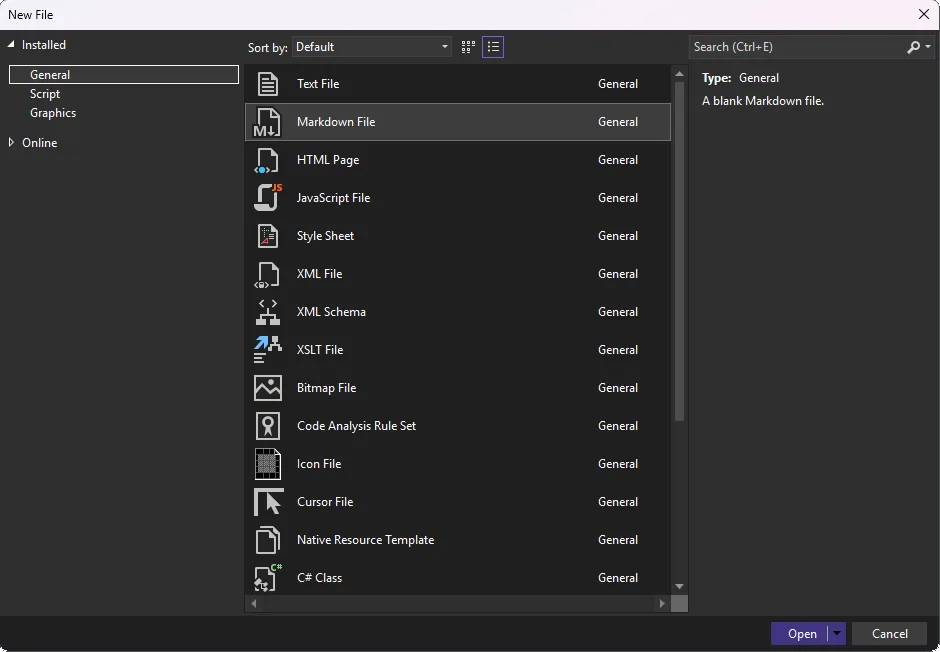
Keep your investigation between sessions


Start a standalone Markdown note and use the opt-in Hot Exit preview to resume unsaved work next session.

.NET October 2026 Out-of-Band Security Updates

Out-of-band security updates for .NET address the Brotli decoder vulnerability and tarball ownership vulnerability.
The paper that split the database in four: inside Azure SQL Database Hyperscale, aka Socrates
Under the Hood: The Research Behind Microsoft SQL, part 1 The Microsoft SQL team is always innovating. They do this in day-to-day efforts, but there are also brand new efforts that are constantly being explored, investigated, tested, and researched. Our engineering team partners closely with MSR (Microsoft Research) on some of these efforts. The team writes papers, submits these papers to conferences, and generally gets high recognition for their ingenuity in the databases and cloud space. One thing I’ve been thinking about recently is how little I actually have read the papers being written, and what scena...

Code with Cosmos: Build a Production-Ready AI App in Four Episodes
Follow an AI application from a blank folder to a system built for production AI application development often starts with a promising prototype. A real application has to do more than produce an answer: it needs current operational data, the ability to take actions and complete transactions, memory that carries across sessions, coordination between specialized agents, and enough visibility for developers to understand and improve how the system behaves. Today, we're introducing Code with Cosmos, a new four-part Azure Cosmos DB video series that follows one app – an AI travel planner – from a blank folder...
Why didn’t we use the COM static store to clean up the unmarshalable delegate?
It cleans up at the wrong time.

From Local Development to CI Workflows with the Azure Cosmos DB Emulator
When you change a database-backed feature, a successful HTTP response isn't enough. You need to know that the write reached storage, the application retrieved the updated record, and the next answer reflects it. The Azure Cosmos DB Emulator runs locally in Docker and lets us use the SDK we'll use in production. We'll develop against it first, then carry our tests into GitHub Actions. Each update to an open pull request must pass against a fresh emulator before we merge. Building on Theo van Kraay's local development walkthrough, we'll use FleetCharge, a Python demo built with Microsoft Agent Framework and F...
Are you getting everything you can from Your Visual Studio Subscription?
What if you could experiment with a new Azure service without requesting additional budget, prepare for your next technical certification using learning resources you already have, or build a dashboard without creating every UI component from scratch? If you're a Visual Studio subscriber, you may already have benefits that can help you do all three. Here’s a few possibilities you may not have considered: 1. What could you build with your Azure credits? Have you been curious about an Azure service but haven't had the opportunity, or the budget, to try it? Maybe you want to experiment with an AI-powered a...
Why didn’t we use CoRegisterInitializeSpy to clean up the unmarshalable delegate?
Looking more closely at the function's behavior and requirements.
Develop enterprise-grade apps with SharePoint Embedded
Taking an enterprise application from development to production requires confidence that it can scale, stay reliable, and be governed effectively. Recent SharePoint Embedded updates give developers clearer guidance for making those decisions, from understanding limits and managing throttling to choosing the right permissions. In this blog post, we highlight updates that help you: Read on to get more details and watch the SharePoint Embedded presentation below to learn more about these updates: Plan for scale with clearer baselines and limits We updated the container st...
Embeddings and vector search in Microsoft Agent Framework for Go

Build semantic search with Go structs, generate embeddings through a common API, and connect vector retrieval to agent context and memory.

🚀 React Native Windows v0.85 is here

We're excited to release React Native Windows 0.85.0, built on React Native 0.85.3. React Native Windows v0.85 completes the move to the New Architecture, updates the Windows build toolchain, and adds new component capabilities along with touch, text, accessibility, and rendering fixes. 🔥 What's New in RNW v0.85? New Architecture only The legacy architecture has been removed. Apps still on the old architecture must migrate to Fabric before upgrading to 0.85. New projects already target the New Architecture. 🔗 New vs. Old Architecture · React Native for Windows Updated toolchain React Native Windows ...
Microsoft CppCon 2026 Trip Report

CppCon 2026 is a wrap! Microsoft returned to Aurora, Colorado, for a week of talks, technical discussions, and conversations with developers from across the C++ community. Microsoft C++ @ CppCon At our booth, we met people building games, financial systems, developer tools, embedded software, scientific tools, and other applications. Some were working with the latest language features, and others were maintaining and modernizing systems that have been in production for decades. Many talked to us about debugging, performance, build systems, or modern C++, and a growing number were experimenting with ways AI can ...
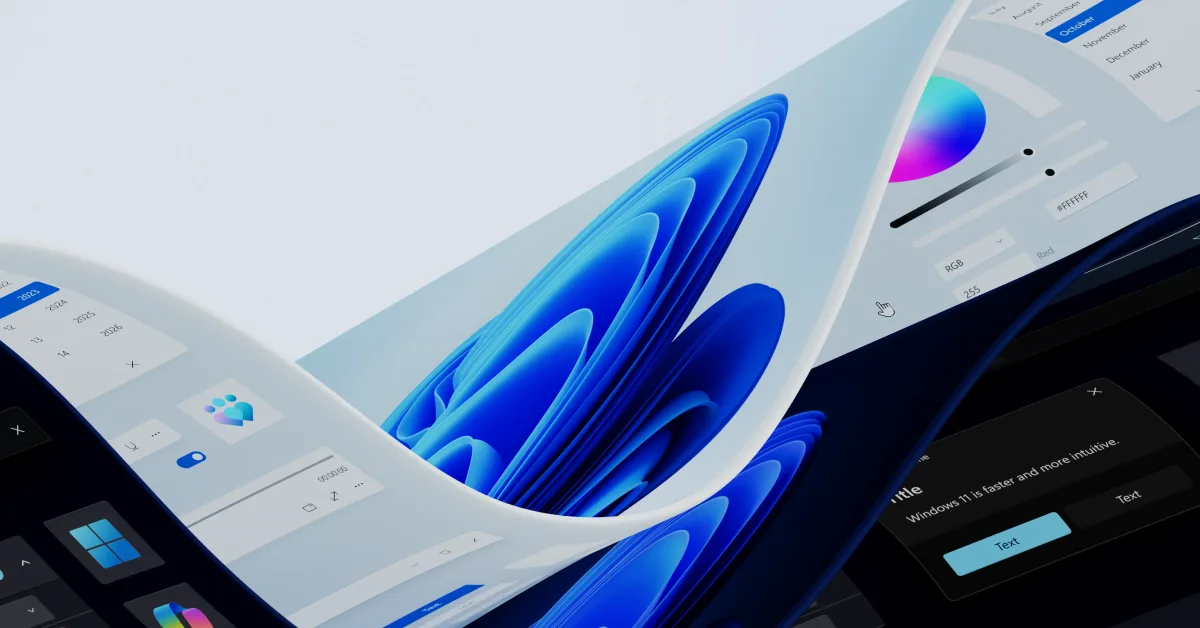
Microsoft.UI.Reactor: a C#-first way to build WinUI apps

If you caught our session at Microsoft Build 2026 or you've been watching the repo, you've seen this one taking shape in public for a while now, and a lot has changed since Build. Here's the longer tour: Microsoft.UI.Reactor, an experimental C# framework that brings the MVU (Model-View-Update) pattern to WinUI desktop apps. No XAML files, no code-behind, no ViewModels. Two things before the fun part. Reactor is experimental: no support policy, no API guarantees, published this early on purpose because we'd rather hear we got the design wrong now than once people have shipped on it. And it is not a replacemen...
Advanced Shader Delivery is Available Now Across Hardware and Coming Soon to Other Storefronts

A few weeks ago, we announced that Advanced Shader Delivery (ASD) is available for Gears of War: E-Day and teased that the feature is coming to devices across Windows 11. Today, we’re proud to announce that Advanced Shader Delivery is broadly available across the Windows ecosystem on devices powered by AMD, Intel, Nvidia, and Qualcomm! ASD addresses a PC ecosystem wide challenge by delivering shaders at download of a title- reducing overall loading time, reducing shader stutter in game, and saving on power consumption. Check out the system requirements below for supported hardware and graphics drivers. &nbs...
Pylance + Pyrefly: bring your preferred type checker to Visual Studio Code

Announcing the Type Server Protocol and our partnership with Meta

Introducing Agentic Autofix for code and dependencies

Fixing a vulnerability takes more than knowing where it is. You need a change that follows your coding standards and works with the rest of your code. Copilot Autofix for GitHub Advanced Security for Azure DevOps now runs on an agentic foundation. It also supports dependency vulnerability fixes and code scanning alerts from third-party tools. Select the alert to address, Autofix works in the background on a proposed change in your existing Azure DevOps workflow, and your team keeps the final decision on what to merge. Agentic fixes use your repository context Your team might require a shared validation helper...
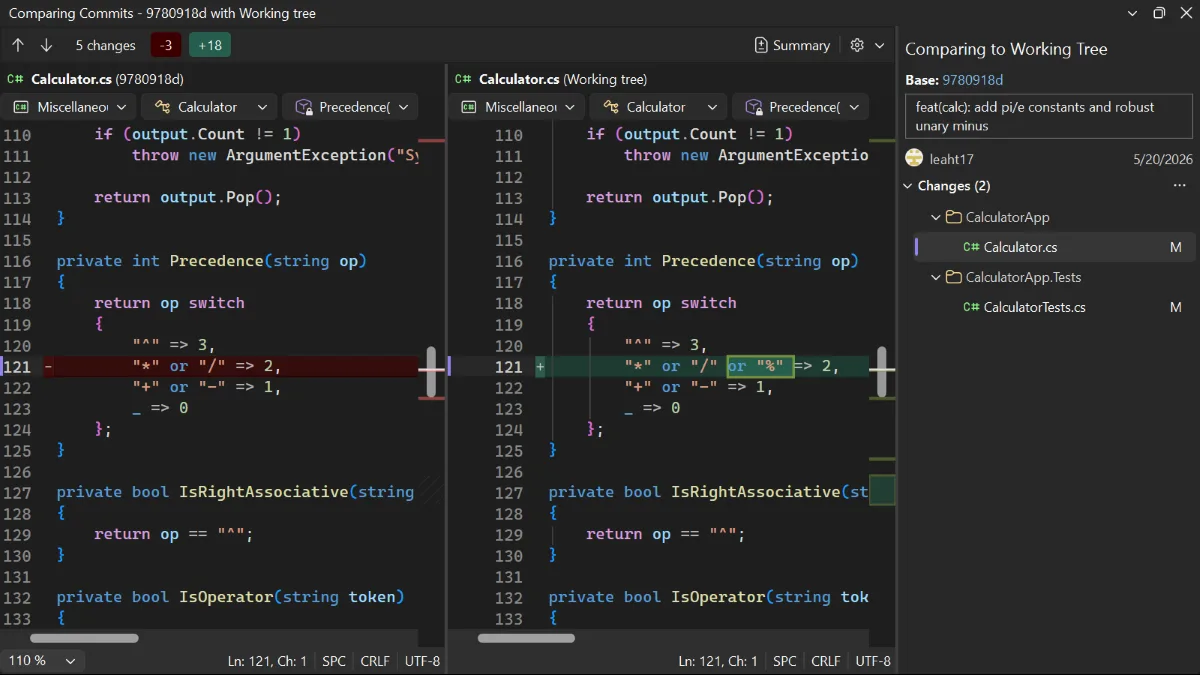
Compare today’s code with an earlier commit

Compare a historical commit with your working tree without checking out the commit or leaving your branch.

Announcing GA of Safe Key Rotation in Azure Cosmos DB
In our previous post, we introduced the private preview of Safe Key Rotation, a feature that helps Azure Cosmos DB customers avoid service disruptions during key rotations. By showing when each account key was last used, it helps teams make informed decisions before rotating keys or moving to Entra ID. This capability addresses a common challenge: keys that appear unused may still support critical applications, which can lead to unexpected outages if they are rotated too soon. What is new? With general availability, we are expanding this capability to give you even more control and confidence when managi...
Why didn’t we use RoRegisterForApartmentShutdown to clean up the unmarshalable delegate?
Too many requirements, some of which bring us full circle.
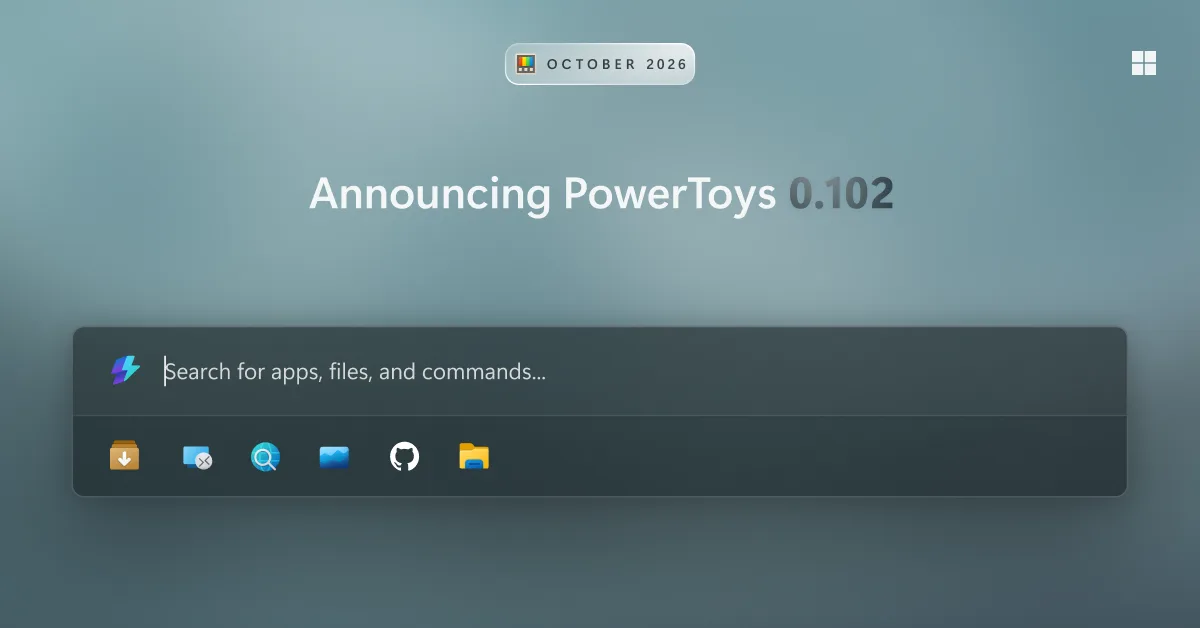
PowerToys 0.102 is here: new mouse utilities, Command Palette improvements and much more

We're back with a fresh PowerToys release! This one brings two new mouse utilities, Mouse Button Lock and CursorHide, an optional quick-access shelf for Command Palette, snip dictation in ZoomIt, and a set of new command-line tools for automating PowerToys. Color Picker and Text Extractor also move to WinUI 3, and Keyboard Manager picks up some long-requested remapping features. Get the update by checking for updates in PowerToys or by heading to the release page. Let's dive in! 🖱️ Mouse Button Lock and CursorHide Holding a mouse button down during a long drag or selection can be tiring. With Mouse Button Loc...

Go 1.27.3-1 and 1.26.10-1 Microsoft builds now available

A new release of the Microsoft build of Go including security fixes is now available for download.
Announcing TypeScript 7.1 Beta

Today we're excited to announce the beta release of TypeScript 7.1! Let's take a look at what's new in TypeScript 7.1! Support for Import Attributes in Ambient Modules Import attributes are metadata that are attached to import statements. Typically, they're meant to instruct runtimes and bundlers on how to interpret the content of an import, as well as the shape of the resulting module. For example, Everything in the object following the keyword is an import attribute. Environments like browsers can't simply decide how to deal with an import based on file name extensions like . Specifying tells what...
Activatable Extension Points
We often talk about "running an application", "launching an app", or "starting an app". This conjures up visions of spinning up a new process, giving the application life. For packaged applications, Windows has a specific term for bringing an application to life: activation. Bringing a packaged process to life involves more than ordinary unpackaged process creation. Windows calls this machine "activation". Activation does more than simply create a process. Among other things, it creates the new process with the appropriate package identity. Activation also verifies the package is in an appropriate state befor...

Azure DevOps available in Microsoft Copilot Cowork

The Azure DevOps Plugin is now available in Microsoft Copilot. It brings Azure DevOps directly into Copilot Cowork, so you can work with your projects, work items, pull requests, test plans, pipelines, and more without switching to Azure DevOps. The plugin also includes built-in skills to help with everyday development tasks. You can quickly see what needs your attention, triage bugs, and turn ideas or feature requests into structured backlogs with epics, features, user stories, and acceptance criteria. All of this can be done directly from Copilot. Copilot Cowork with Azure DevOps One of the biggest advantage...
Can a local git remote replace GitHub in your agent eval?
We swapped GitHub for a local git remote in our agent evals. Rebasing and pushing on request were unaffected, but the agent pushed on its own 11 points less often. Here's when a local remote is a safe shortcut, and when it isn't.
Microspeak: Drain the slide, back-up slides
PowerPoint presentation jargon.

Work IQ: the new retrieve tool

The new Work IQ Retrieve tool grounds agents in the context of work, helping them reason over the right information and deliver more relevant, trustworthy responses. With one retrieval layer across work sources, developers can give agents richer organizational context without building separate search systems. Retrieve: grounded answers across work sources The new MCP tool named searches a user's workplace data—including email, files, meetings, Teams messages and people, as well as connected enterprise sources. As with any other tool offered by Work IQ, each user will be able to retrieve information only fr...
Go 1.27.2-2 Microsoft build now available
A new release of the Microsoft build of Go is now available for download.

Get Your .NET MAUI App Ready for Xcode 27

Use an agent skill to prepare your existing .NET MAUI app for Xcode 27, with the scene lifecycle changes and manual migration steps explained.

Bring Your Own Model to the GitHub Copilot SDK with C#

The GitHub Copilot SDK gives your application an agent runtime. BYOK lets you keep that runtime while sending model requests to your own Microsoft Foundry or Azure OpenAI deployment. Here is the complete C# setup.
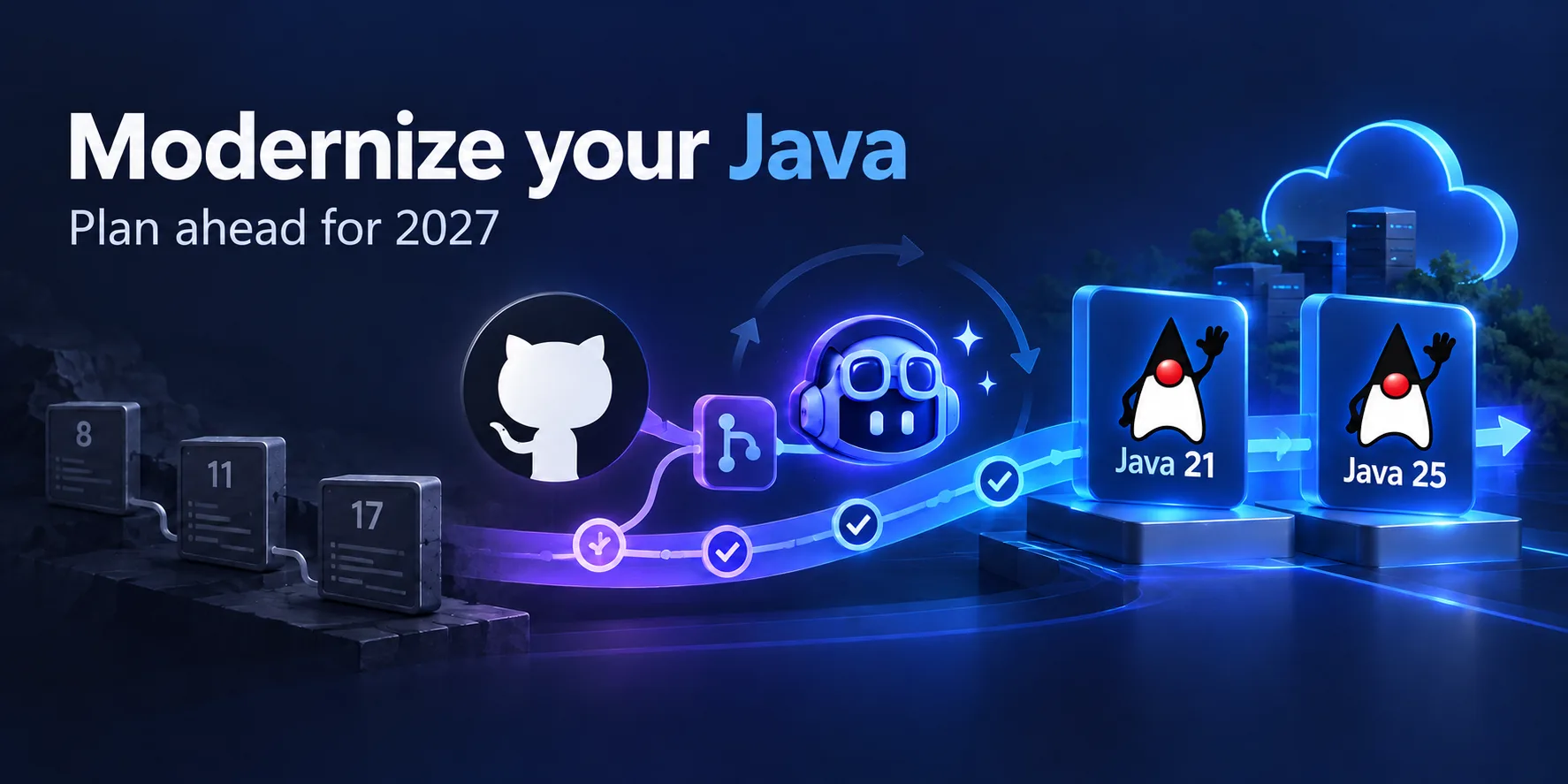
Plan Your Java Upgrade Ahead of Microsoft’s 2027 Support Milestones

In April 2021, we announced the Microsoft Build of OpenJDK. We were starting with a preview of our Java 11 builds for Windows, Linux, and macOS. Today, if you're planning a Java upgrade on Azure, you have several generations of that work to build on: 11, 17, 21, and now 25. Java 8 has been part of that work too, with help from the fine folks at the Eclipse Foundation's Eclipse Adoptium project. Microsoft has supported Java 8 on Azure using their Eclipse Temurin builds of OpenJDK 8, rather than producing a Microsoft Build of OpenJDK 8. That collaboration goes back to the launch: our first Java 11 builds also used...
Organize and revisit tabs with the keyboard
Reorder your document tabs and return to them by visual position with new keyboard shortcuts.
Why do we need ud2 when int 6 is right there?
An interrupt is not a fault.
Browser automation tool in Microsoft Foundry is now GA

Build agents that automate tasks across public and private websites with managed browsers, native toolbox integration, Live View, and human control.
C++ futures part 5: std::future and std::shared_future
Getting the results back out.
MSVC Build Tools Version 14.52 Release Candidate Now Available

We are pleased to announce the availability of the release candidate for Microsoft C++ (MSVC) Build Tools version 14.52. With this release, C++23 is ready for production use and available through the /std:c++23 compiler option; see below for details. This is the last MSVC v14.52 preview before it moves to stable status and full support. You can download it from the Visual Studio 2026 Insiders Channel. As this is the release candidate, it is now the default toolset installed with C++ workloads in this channel. To check if it’s installed simply make sure one or both of these components are checked in the installer:...

What’s new in Microsoft Foundry | September 2026

Explore September's models, Routines, Tool Search, Model Router, and Insights through one two-agent workflow that turns public releases into a Foundry developer changelog.

Introducing dotnetup: A toolchain manager for .NET

Learn how the new dotnetup tool helps macOS and Linux developers install, manage, and update user-local .NET SDKs and runtimes.
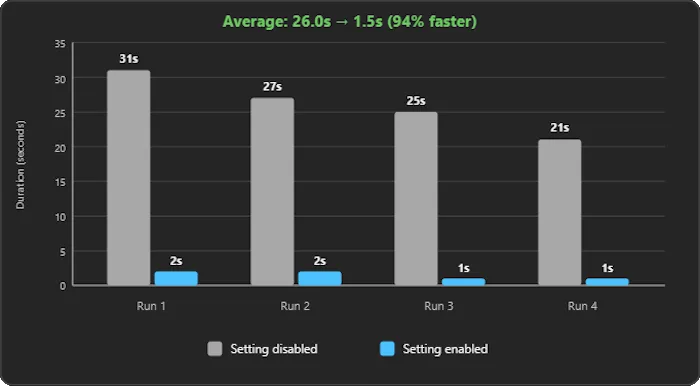
Stop waiting on a failed build
Stop solution builds after the first project failure so you can return to fixing the error sooner.
C++ futures part 4: What if I want an immediate on-thread std::async?
Providing the case that the C++ language won't do.
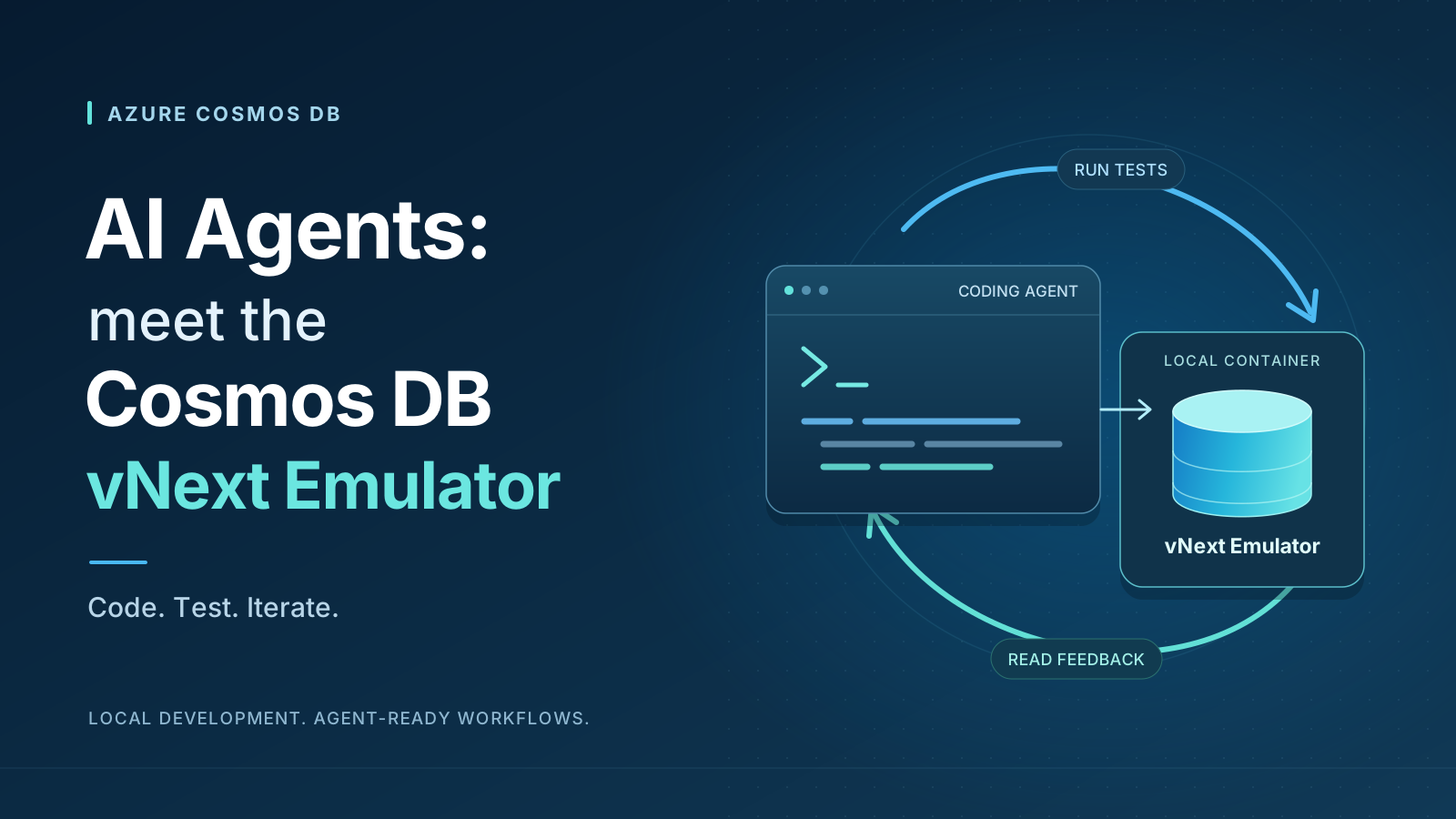
AI Agents: Meet the Azure Cosmos DB vNext Emulator

Over a typical 2 day window, we record 10 times as many emulator sessions lasting more than 30 minutes for vNext as for the legacy emulator. Our bet is that agentic development is helping drive the difference! The appeal is straightforward: coding agents need a database they can run anywhere. They also need a database they can start, seed, test against and debug as they work. Our vNext emulator fits that workflow naturally. A different kind of developer With the vNext emulator, we're building for a broader idea of the developer: a person at a keyboard, a coding agent, or the two working together. The...
Vector stores in Agent Framework for Python: familiar foundations, streamlined for agents
Vector stores have been part of the Python experience in Semantic Kernel for some time. With Microsoft Agent Framework, we have ported that work forward rather than starting over. This post focuses on Python. For the .NET equivalent, see Use vector stores in .NET AI apps. The foundation remains familiar: typed record definitions, stores and collections, batch storage and retrieval, embedding generation, vector search, and a growing set of integrations. If you have used Semantic Kernel's vector-store APIs, you will recognize the overall model. At the same time, this is more than a straight p...
Canada’s 2026 time zone updates: guidance for Microsoft SQL

Affected locations in British Columbia, Alberta, and Manitoba will not turn their clocks back at 02:00 local time on November 1, 2026. They will remain at UTC−07:00, UTC−06:00, and UTC−05:00, respectively. Microsoft’s interim guidance for British Columbia, Alberta, and Manitoba describes the new Windows time zones and temporary workarounds. SQL Server on Windows requires the applicable Windows update—not a separate SQL Server product update. For SQL Server on Linux, Azure SQL Database, and Azure SQL Managed Instance, the following guidance applies when the new regional time zones are not yet available in ...
Azure MCP Server 3.0 stable release: More tools. More possibilities
Explore the new Azure MCP Server 3.0 stable release, with AI agent tools for Terraform, backup, recovery, and troubleshooting, plus stronger security defaults.
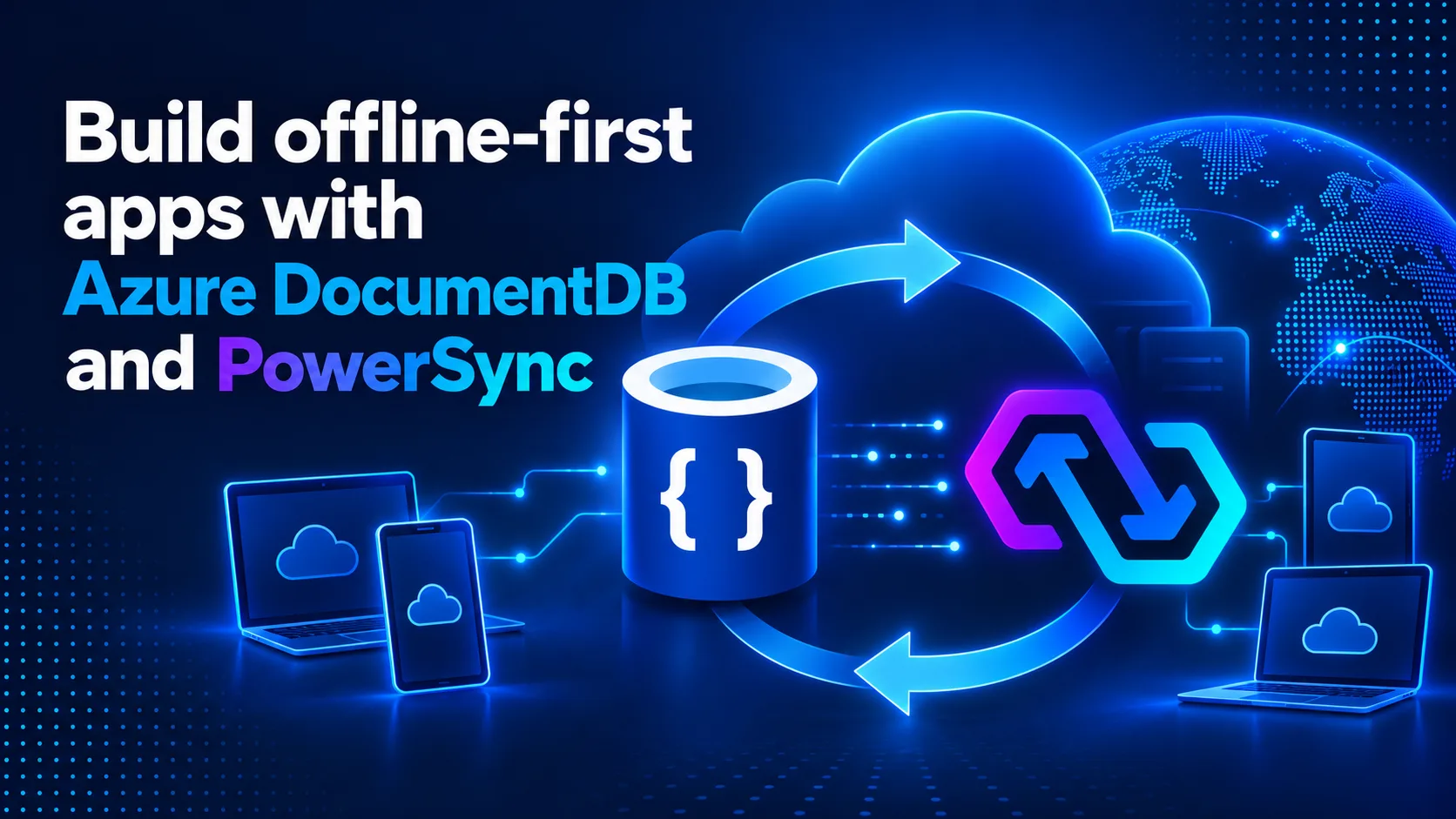
Build offline-first apps with Azure DocumentDB and PowerSync
Modern applications often need to work in places where network connectivity is slow, intermittent, or unavailable. Field service, retail, logistics, healthcare, and mobile SaaS applications are common examples. PowerSync recently introduced alpha support for Azure DocumentDB, giving developers a way to combine Azure DocumentDB as the cloud operational database with local SQLite databases on client devices. Applications can remain responsive and continue working offline while PowerSync synchronizes relevant data in the background. Note: PowerSync support for Azure DocumentDB is currently an alpha release. Be...
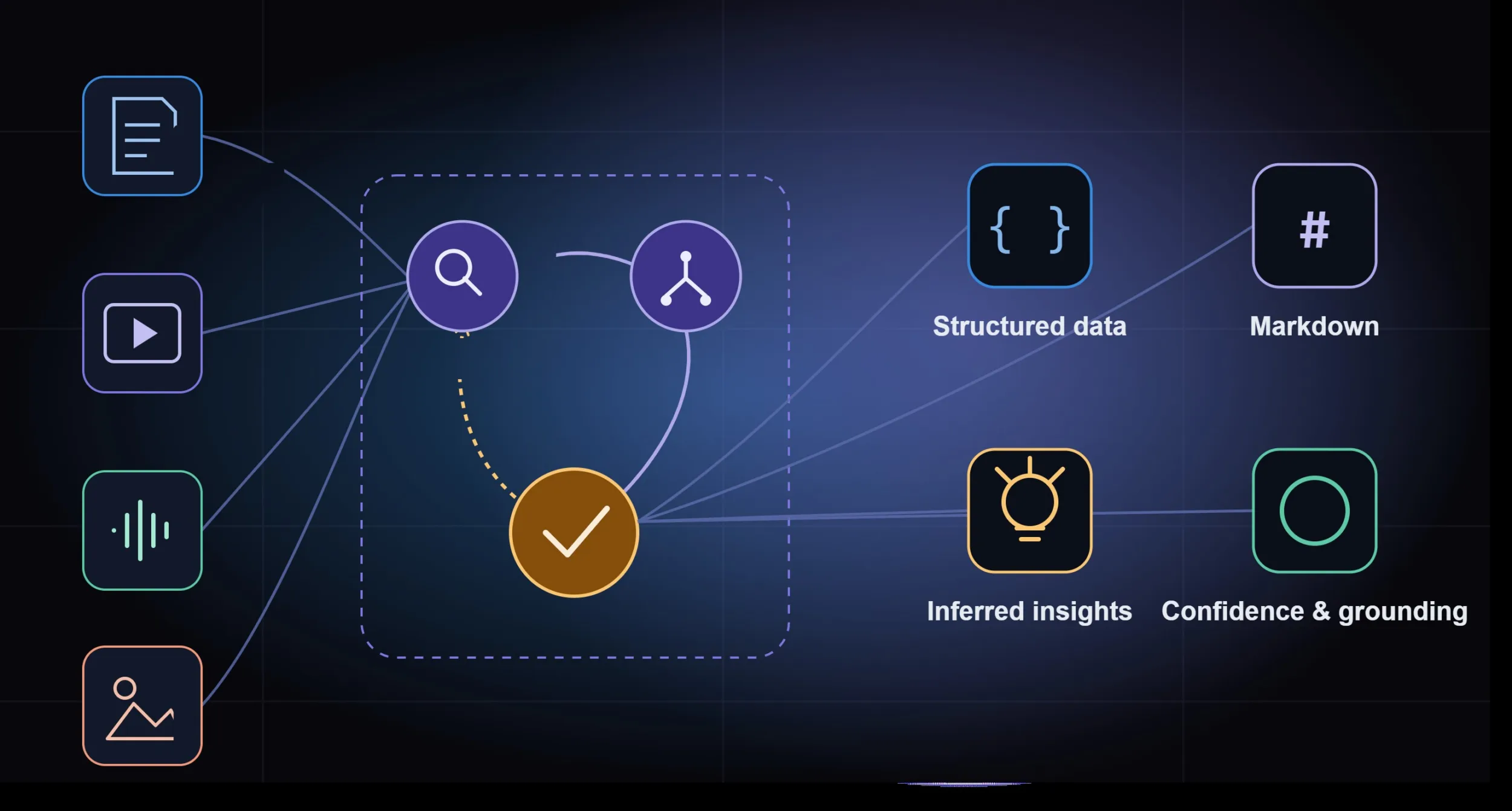
From extraction to action: Using grounding and confidence to build reliable document workflows


Learn how Azure Content Understanding grounding, field-level confidence, and calibration help teams prioritize human review and build reliable document workflows.
New tools, new workflows and the value of the Visual Studio Subscription: What we learned at VSLive! San Diego
What happens when developers who have spent decades working with Visual Studio start rethinking how they write code, learn new skills, and expand their access to development tools? At VSLive! San Diego, we had an opportunity to find out as developers gathered for five days of technical sessions, hands-on learning, and conversations about Visual Studio, .NET, AI, cloud, data, and modern application development. One of the most interesting things we heard in San Diego was how readily experienced developers are adopting new tools and workflows. GitHub Copilot is part of that story, and developers aren't...
C++ futures part 3: The mental model for std::async
Doing things later in different ways.

Announcing .NET 11 Release Candidate 2
.NET 11 Release Candidate 2 is available with improvements across libraries, runtime, SDK, MSBuild, NuGet, F#, ASP.NET Core, .NET MAUI, and Windows Forms.
October Patches for Azure DevOps Server
We are releasing new patches for our self‑hosted product, Azure DevOps Server. We strongly recommend that all customers stay up to date with the latest, most secure version of Azure DevOps Server. The most recent release, Azure DevOps Server, is available on the download page. The following versions have been patched. For more details on these updates, see the release notes: ⬇️Azure DevOps Server Patch Download ✅Verifying Installation To verify that the patch is installed, run the following command on the Azure DevOps Server machine using the patch installer you downloaded: Replace with the name of the...

Is it MSIX? Part 3: Find Package and Application Identity with TASKLIST and PowerShell
We previously determined how to programmatically retrieve a packaged process' package and application identity. Now let's find MSIX package identity using existing tools. TASKLIST.EXE Using the packaged app from our previous example, we know the "image name" (aka executable filename) and that its PID (process ID) is 7664. lists packaged processes and their package names: That's overkill when we're interested in a specific process. We can use the (filter) option to limit the output to our target process: Or we can specify the image name and get the same result: The column is actually the package fu...
Azure Content Understanding Prebuilt Analyzers: packaging domain knowledge for document AI

Learn how Azure Content Understanding prebuilt analyzers combine domain knowledge with grounding and confidence, and what Advanced Contextualization preview benchmarks show about quality, modeled cost, and latency.
C++ futures part 2: The mental model for std::promise, std::packaged_task
Building things out of the state.
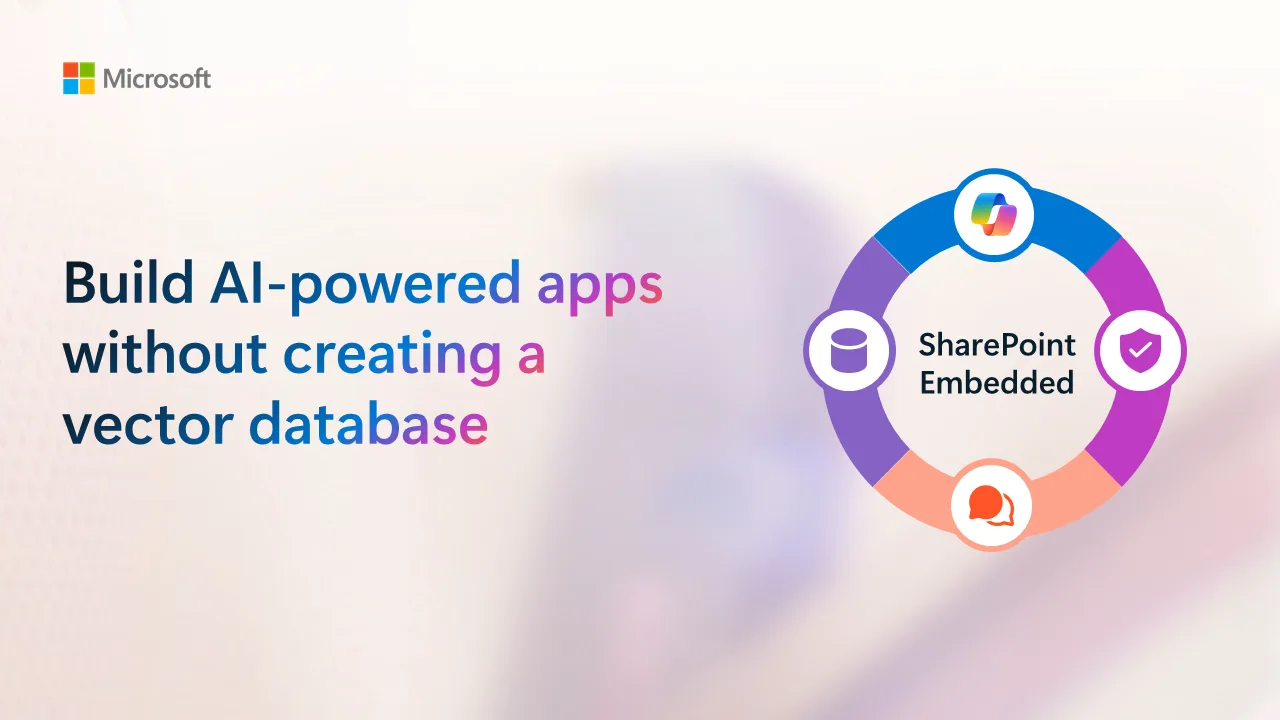
Build AI-powered apps without creating a vector database
Developers building AI applications face a familiar challenge: how do you ground AI experiences in enterprise content while maintaining security, compliance, and governance? You can use the Microsoft 365 Copilot Retrieval API for SharePoint Embedded, which helps you add Microsoft 365 Copilot and agent experiences to your SharePoint Embedded apps when you want to control the grounding step, the prompt, and the model yourself. In addition, you can use the SharePoint Embedded Model Context Protocol (MCP) server, now available in public preview, to build and manage apps with a coding agent. Together, the...
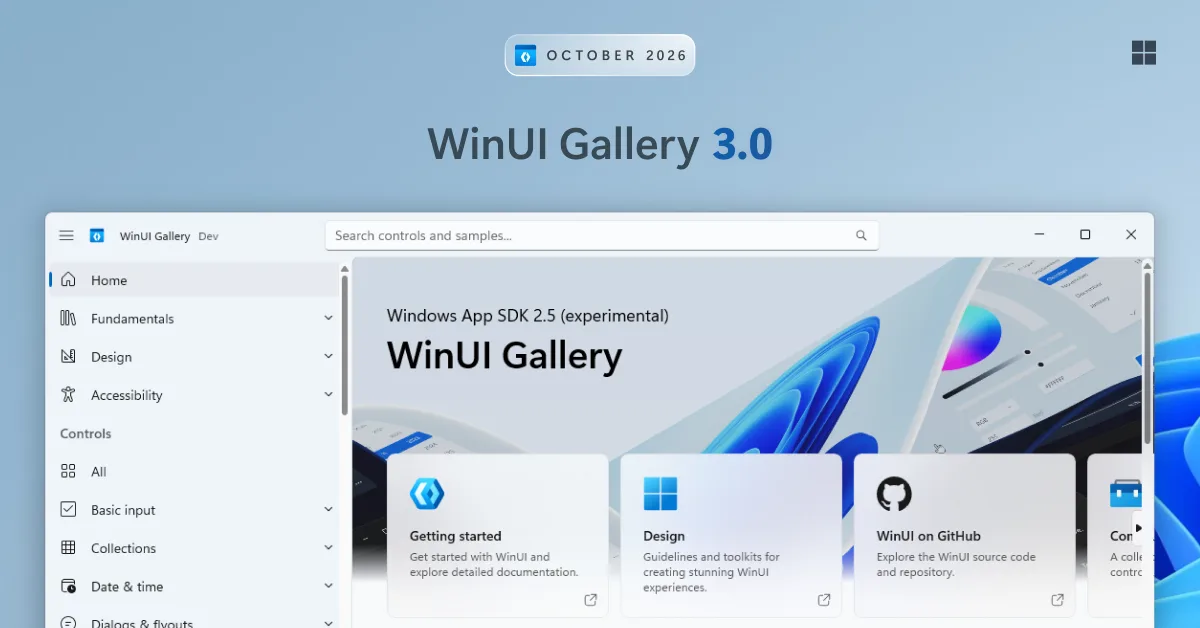
WinUI Gallery 3.0 is here: TableView, Charts, InkCanvas and more

Hey WinUI developers! If you're new around here, WinUI Gallery is the go-to app for exploring WinUI 3 controls, samples, design guidance, and handy tools, all in one place. Today, we're excited to announce WinUI Gallery 3.0, the first version of the Gallery built on the experimental channel of the Windows App SDK. That means you can try upcoming WinUI controls and APIs in the Gallery as soon as they ship in an experimental release. 🧪 Embracing experimental Until now, new controls usually showed up in the Gallery after they reached a stable Windows App SDK release. By then, the APIs were mostly locked, and t...

.NET and .NET Framework October 2026 servicing releases updates

A recap of the latest servicing updates for .NET and .NET Framework for October 2026.

Durable Task in the Real World: What Problems Does It Actually Solve?

Five practical examples of when durable execution makes sense, when it does not, and what it means for AI agents.
C++ futures part 1: The mental model
Managing a value that is produced later.
Go 1.27.2-1 and 1.26.9-1 Microsoft builds now available

A new release of the Microsoft build of Go including security fixes is now available for download.
One way of thinking about access specifiers in C++/WinRT implementation types
Mapping them to concepts from C# and the now-defunct C++/CX.
Introducing the Agent Experience (AX) Practitioner Playbook
AI coding agents now pick the SDK, the version, and the pattern for your developers. The AX Practitioner Playbook is our method for finding out whether they get your technology right, and for fixing the sources they rely on when they don't.
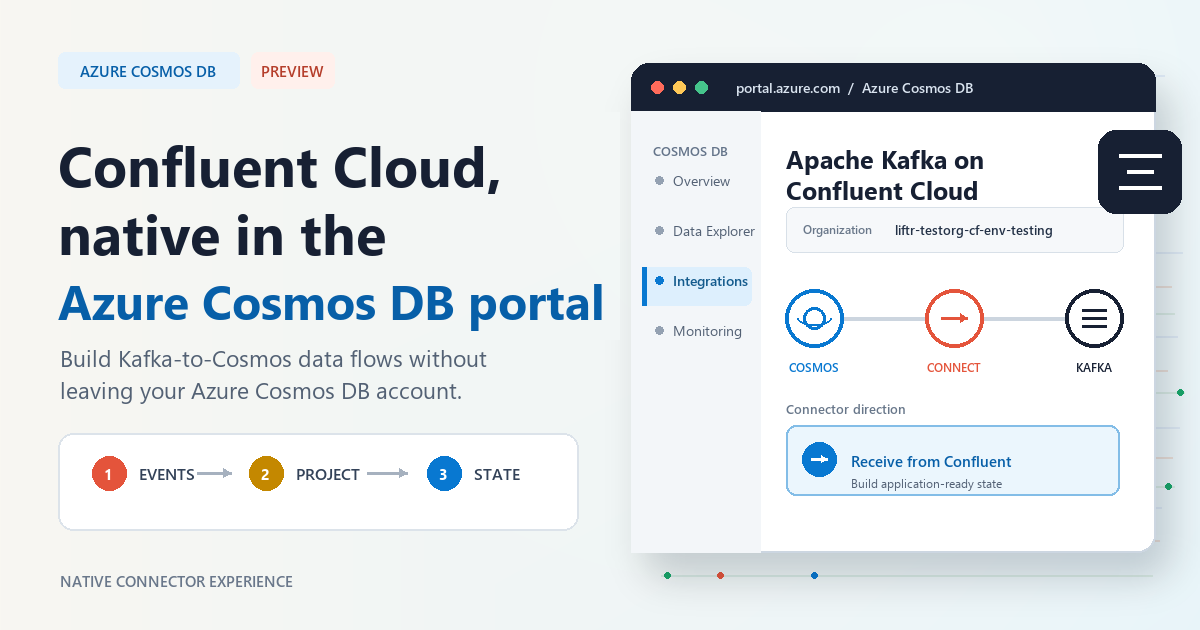
Introducing the Native Confluent Cloud Connector Experience in Azure Cosmos DB!
Co-authored with Praveen Raja P Azure Cosmos DB already includes a powerful event foundation: change feed provides a durable, ordered record of item changes within each logical partition. It is ideal for reacting to operational data as it changes, building projections, and driving workflows directly from the database. Confluent Cloud adds a complementary event layer rather than replacing change feed. Kafka topics can carry database changes alongside explicit business events from many systems, retain them independently from the operational database, and let multiple consumer groups process and replay each s...
Dynamic Workflows in Azure Functions Hosted Skills: Durable, AI-Led Work for Event-Driven Apps

Azure Functions is the event-driven application platform, and Hosted Skills adds AI reasoning to your app. Dynamic Workflows give the app a durable way to carry out AI-led, multi-step work after the triggering invocation is finished. The model writes a plan (a DAG) one time, and Durable Functions runs it. In our benchmark, token use decreased by 56-93% and end-to-end latency decreased by 77-95%, with the same output quality.
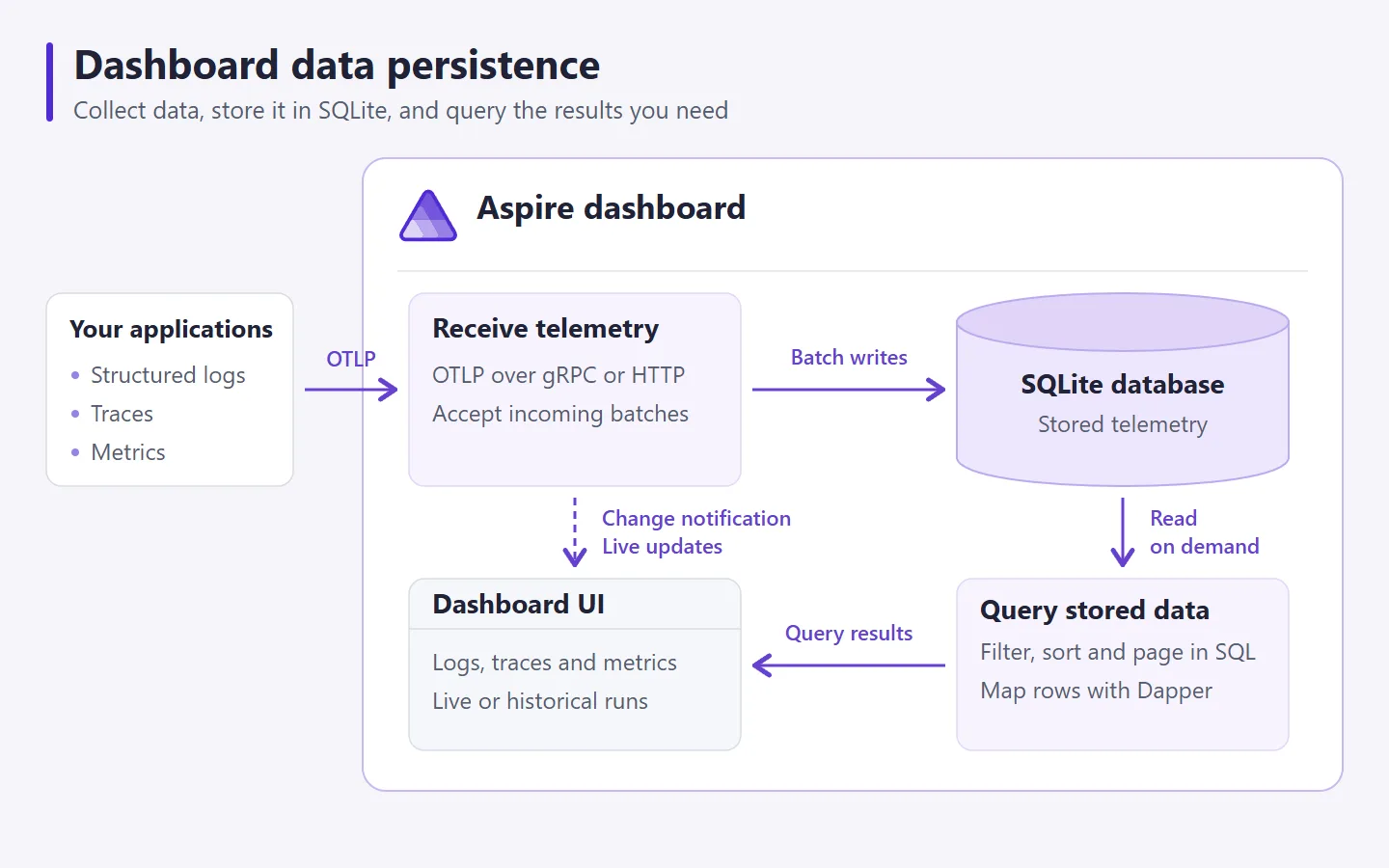
Adding persistence to the Aspire dashboard

Aspire 13.6 adds dashboard persistence and run history. Revisit telemetry after a restart, retain more data, and explore the SQLite and Dapper implementation behind it.
If one anti-malware software is good, does that make two better?
Not always.
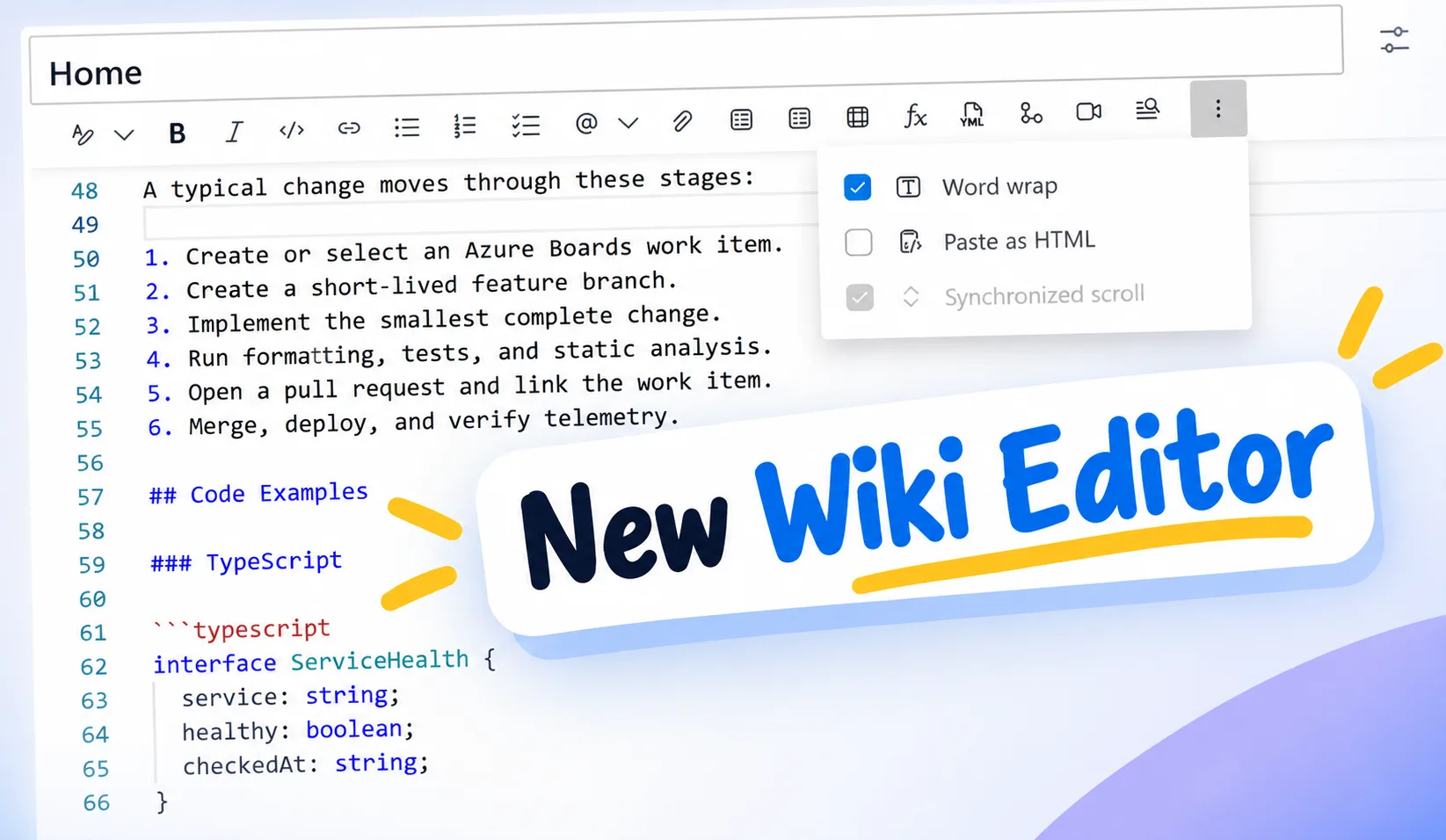
New Wiki Editor Experience
We are excited to announce a new editing experience for Wiki pages. We are replacing the existing editor with a new editor built on Monaco Editor, the same editor technology that powers Visual Studio Code. Monaco brings many of the editing capabilities familiar to Visual Studio Code to Wiki pages, while preserving the functionality of the existing Wiki editor. New features The new Monaco based editor includes: If you are already familiar with Visual Studio Code, the new editor should feel familiar and provide a better experience for creating and editing Wiki content. Enable the Public Preview To e...
Pre-authenticated (tempauth) URLs are retiring: move to Microsoft Entra ID tokens before April 1, 2027
Starting April 1, 2027, affected Microsoft Graph file APIs will no longer return pre-authenticated URLs. Applications using these APIs must authenticate requests with Microsoft Entra ID access tokens.

Faster by Design: Performance engineering in the Microsoft JDBC Driver for SQL Server

A database driver sits on the critical path of many applications. When a frequently executed path performs unnecessary work, even a small amount of overhead can compound across millions of operations. Over the past several releases, we have systematically profiled frequently executed paths across the Microsoft JDBC Driver for SQL Server, identifying opportunities to improve efficiency without changing application behavior. What began with ResultSet processing expanded into bulk copy operations, parameter metadata, Always Encrypted, and authentication. The work followed a consistent principle: measure where the ...
Azure Document Intelligence and Azure Content Understanding: a practical guide
Compare Azure Document Intelligence and Azure Content Understanding across extraction architectures, workload fit, Layout capabilities, deployment options, and practical evaluation criteria.

AI Development on Windows: from PyTorch and llama.cpp to Windows ML


Today we are highlighting improvements across a few key open-source projects many of you already use, as well as updates to Windows ML. To empower developers, we must support the broad range of tools for experimentation and exploration across inference and training, in addition to our production grade native inference stack. Available today, Windows adds experimental llama.cpp support to Windows ML so you can run GGUF models locally through new task-specific APIs. Windows ML is the unified, high-performance local AI inferencing framework for Windows. Our experimental Windows-native Runtime API is now in preview ...
From Spec-First to Enterprise-Ready: Extending GitHub Spec Kit

How presets, extensions, bundles, workflows, and governed catalogs make Spec-Driven Development adaptable at scale This article continues Spec-Driven Development: A Spec-First Approach to AI-Native Engineering, which introduced the principles and lifecycle of SDD. Here, we focus on the next challenge: adapting that workflow to the standards, domains, tools, and governance needs of a large engineering organization. When a good workflow meets organizational reality Spec-Driven Development (SDD) gives teams a durable source of truth: structured specs that carry intent through requirements, design, implementatio...
How can undefined opcodes ud0 and ud1 have parameters? How undefined were they?
They weren't defined, not even as undefined.
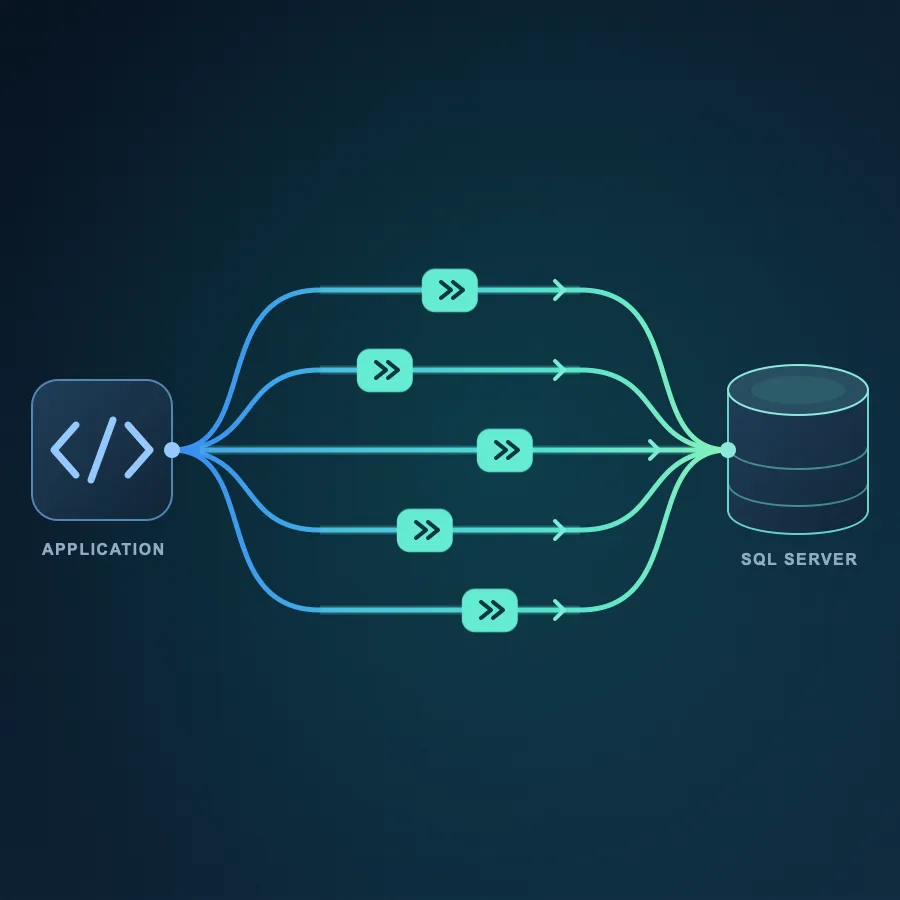
Try SqlClient’s new connection pool for faster parallel connections

You told us that applications using can take too long to establish the database connections they need. When many requests need connections at the same time, waiting for the connection pool to grow can delay application readiness and increase latency. This can happen even in common situations like querying several pieces of metadata during startup or receiving a burst of traffic after a quiet period. ’s new connection pool (Pool V2) is designed to address this problem by establishing new connections concurrently, allowing the pool to respond more quickly when multiple requests need new connections at the same tim...
Upcoming SQL and AI Events to Put on Your Calendar
Developers, database administrators, data professionals, architects and technology decision makers have several opportunities to connect, learn and gain hands-on experience this fall. 2027 Q4 SQL Events Get hands-on with SQL and AI The Friday workshops are led by the SQL product group! They provide a full day of practical learning before the community conferences begin. This AI workshop is designed for SQL developers, database administrators, application developers, architects and other data professionals who want to build AI-powered applications without abandoning the SQL tools and security model they alr...
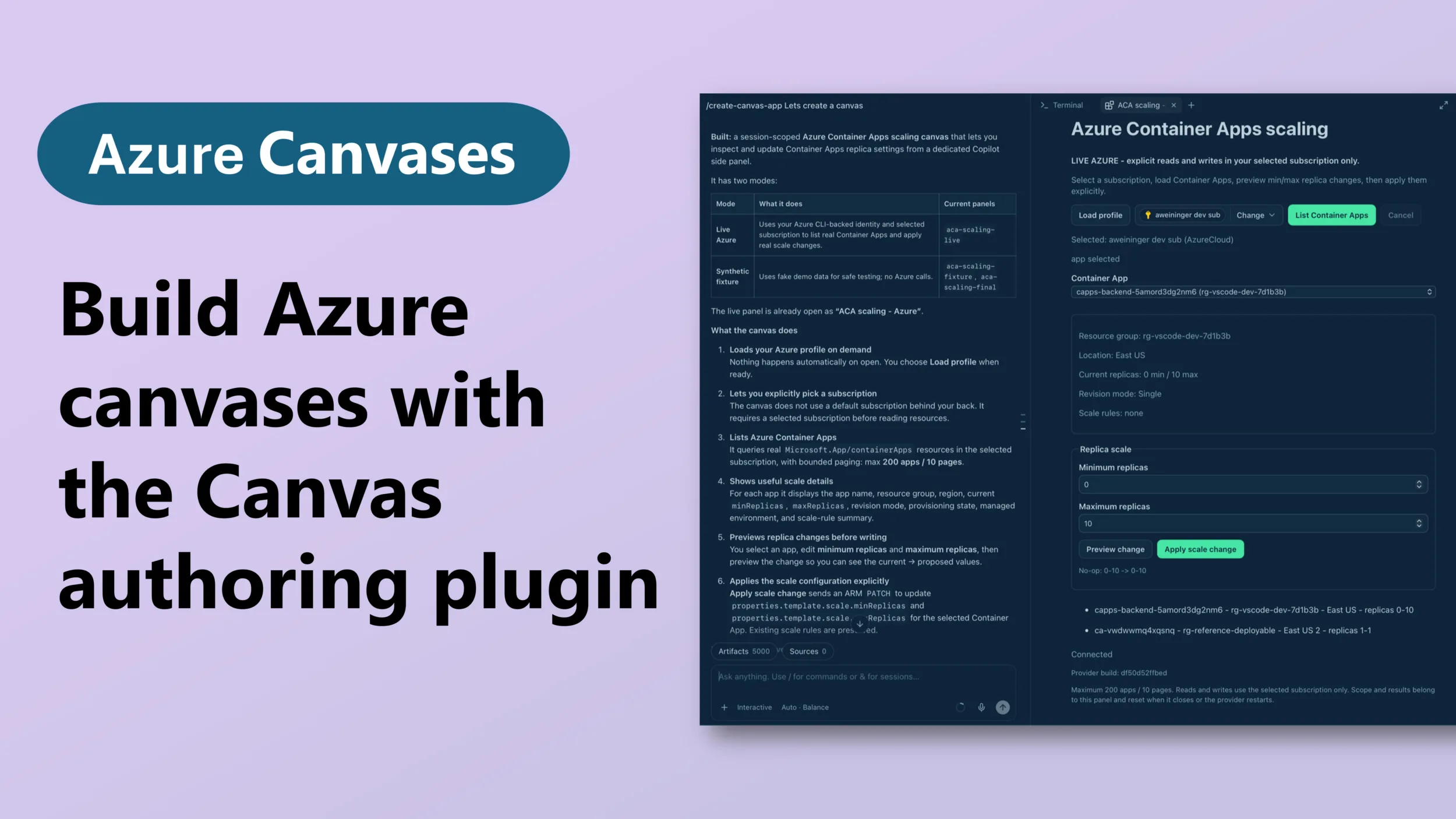
Build Azure canvases with the Canvas authoring plugin

Learn how the Canvas authoring plugin helps you build Azure canvases with Microsoft Canvas Toolkit, from a read-only starter to a working app you can inspect, test, and adapt.
Introducing WinDbg MCP: Debug with natural language, grounded in evidence

Debugging rarely starts with a clear answer. An app crashes, a service hangs, a driver fails, or a kernel dump offers few clues. Whether you’re working with a live target, crash dump, or Time Travel Debugging (TTD) trace, the first question is the same: Where do I start, and what should I investigate next? Today we’re introducing WinDbg MCP, a natural-language interface for WinDbg built on Model Context Protocol (MCP). It connects AI clients such as GitHub Copilot CLI and Visual Studio Code to an active WinDbg session, so you can investigate user-mode and kernel-mode crashes and hangs in plain language, groun...

A faster, lighter C# Dev Kit

C# Dev Kit has been rebuilt to open solutions in about a second and run on a fraction of the memory, and this post walks through what changed for you.
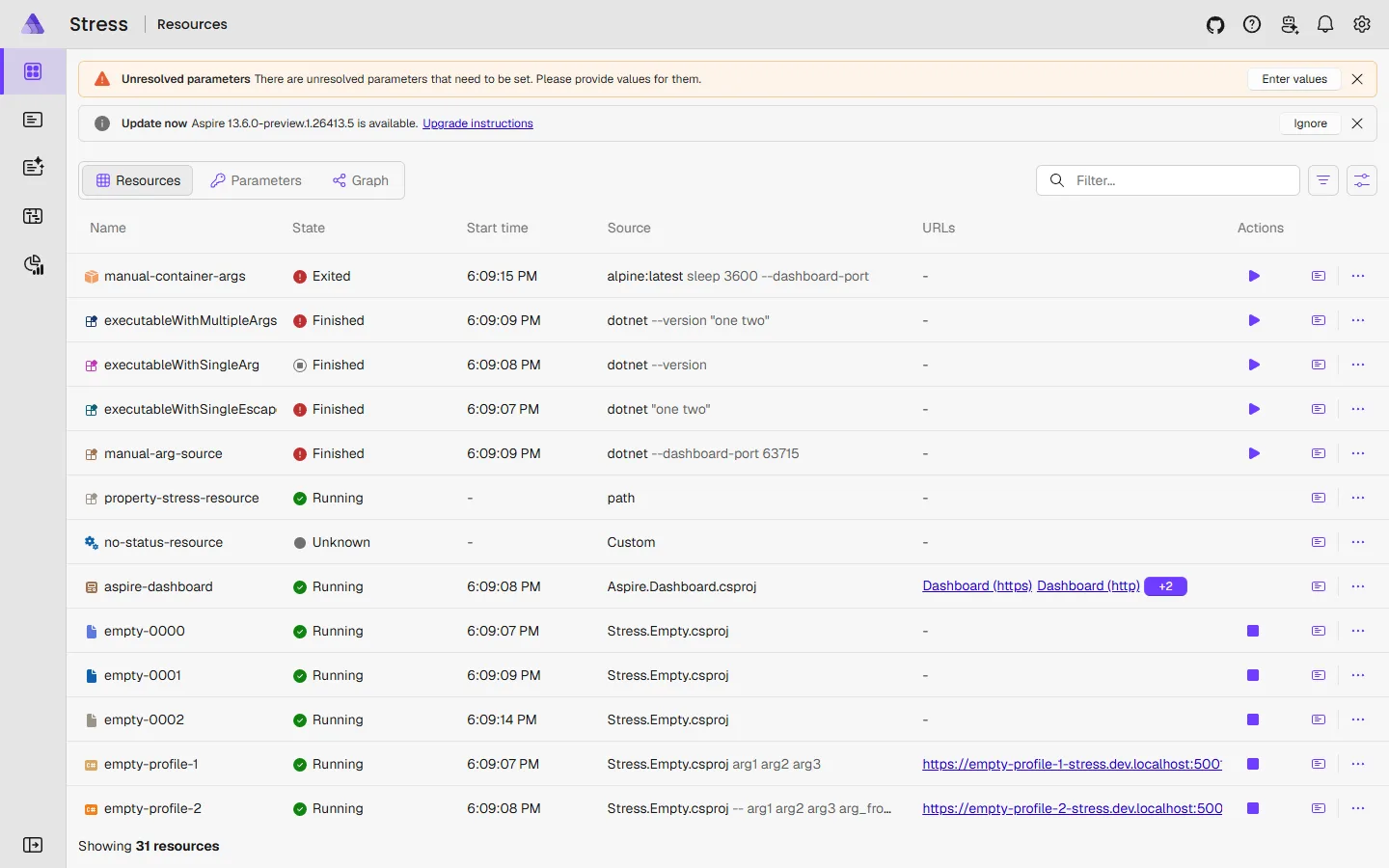
Bringing Native AOT to the Aspire dashboard
Aspire 13.6 brings Native AOT to the dashboard. Explore the startup and deployment benefits, plus the Blazor, Fluent UI, JSON, and Dapper changes that made it possible.
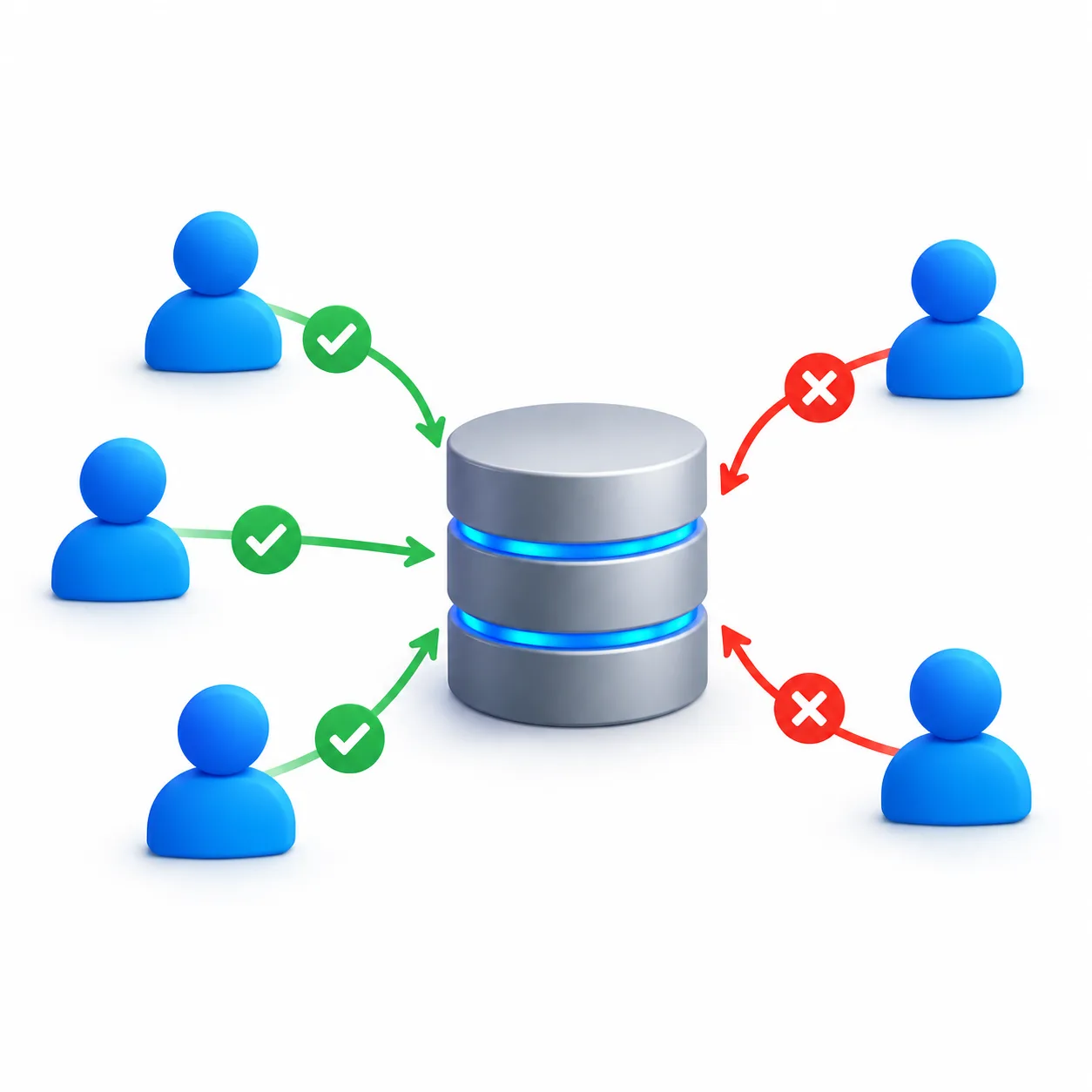
PostgreSQL to SQL Field Notes: Connections
Welcome to SQL First, welcome to SQL! You’re going to like this. Moving from PostgreSQL is real work, and depending on your old database, this process will vary widely in complexity. I am confident that you’re going to love the mindful and modern features of SQL. Take your time, make the most of the resources built to help you in Microsoft Learn, and know there is a huge community of SQL developers ready to help along the way. This blog is for the PG developer Good news! The SQL standard is shared across both engines; that should help you get up to speed quickly. However, there are differences, and ther...
Is it MSIX? Part 2: Finding Package Identity with APIs
We previously determined how to tell if a process is packaged or unpackaged using Task Manager. Now let's find its package and application identity in code. Windows provides APIs to retrieve package and application identity for a process: If you prefer WinRT: Kernel mode What about kernel mode? Nearly all MSIX APIs require a user-mode caller. The Windows Driver Kit (WDK) provides RtlQueryPackageIdentity() and RtlQueryPackageIdentityEx() for querying package identity from a token. Tools? What about tools to do the same? Onward to Part 3... 1 returns but provides only the Package-Relative Application...
Bring agentic reasoning to Python function apps with Azure Functions Agent bindings (preview)

Add bounded AI reasoning to Python function apps with Azure Functions Agent bindings, while keeping deterministic application code in control.
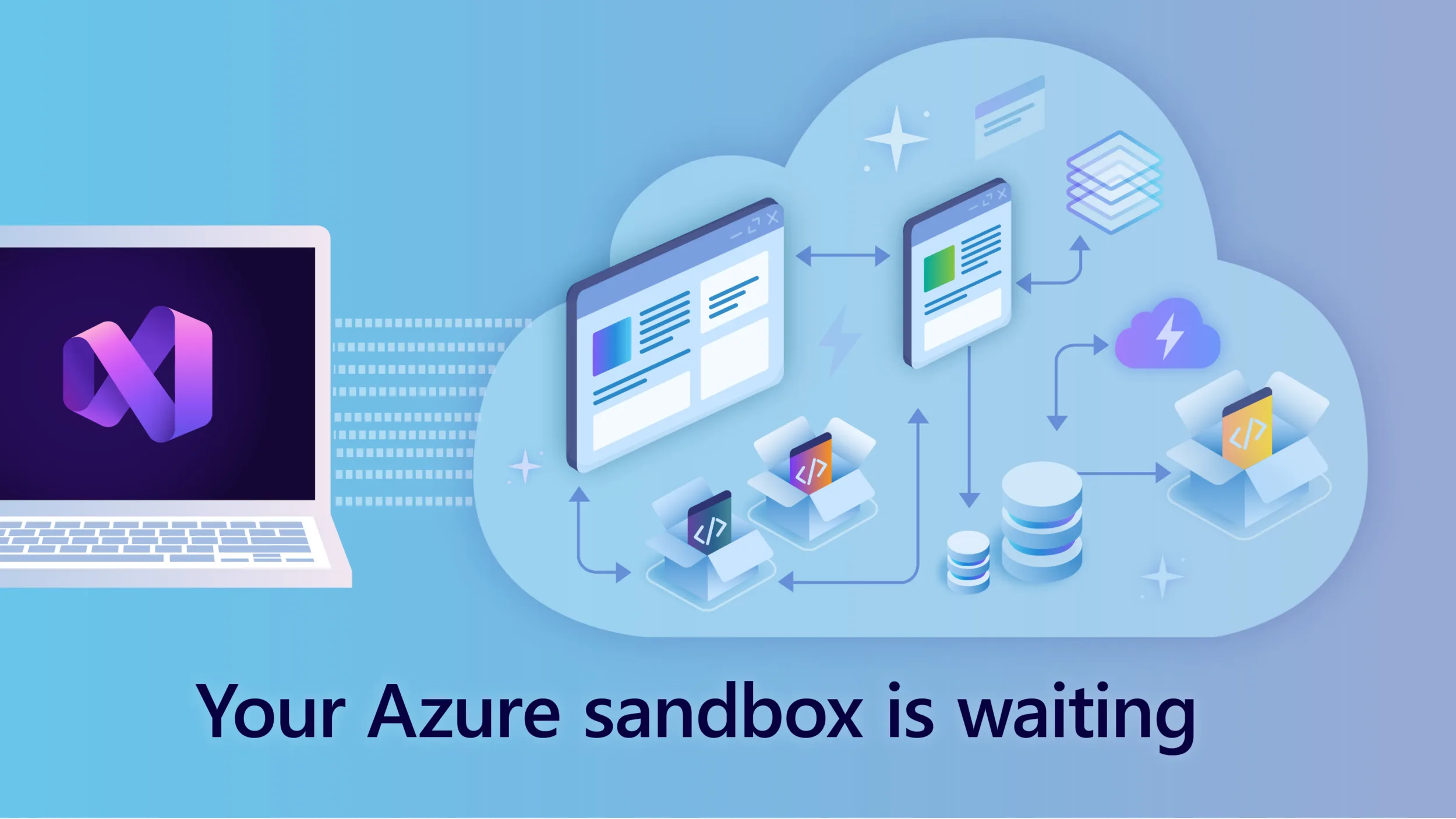
What would you build in Azure if you didn’t have to ask for a budget first?
Maybe you’d deploy that .NET application you’ve been working on. Try a serverless architecture. Experiment with containers. Build a proof of concept. Or spend some time exploring an Azure service you haven’t used yet. If you’re an eligible Visual Studio subscriber, you may already have a personal Azure sandbox waiting for you. Many Visual Studio Subscriptions include Azure credits, giving developers a simple way to explore Azure, build skills, develop applications, and experiment with cloud services without first needing a separate Azure budget. If you haven’t activated yours yet, it’s a Visual St...
Why does the compiler sometimes use ud2 and sometimes int 3 for code that shouldn’t execute?
It shouldn't execute, but for different reasons.
What is Agent Experience (AX)?
Your agent says it's done, and the code compiles, but did it pick your technology? Did it use it correctly? Learn what Agent Experience (AX) is, how to measure it, and why the obvious fix isn't always the right one.
Connect Azure Functions to more services with managed connectors

Learn how Azure Functions managed connectors provide access to 1,700 services, with triggers and typed clients available for supported service connectors, and walk through a sample that automates RFP intake across SharePoint, Azure Content Understanding, and Teams.

UWP and WinUI 3 apps: UI testing with MSTest

Learn how to test UWP and WinUI 3 apps with MSTest and Microsoft.Testing.Platform across packaged, unpackaged, and AppContainer hosts.
From an Empty Folder to an AI Agent: Meet create-cosmos-agent

The first few minutes of a new AI project often feel productive. Create a chat endpoint, connect a model, send a prompt, and display the answer. Then the real questions arrive. Where should the agent store memory? How do we keep one customer's data away from another? How do we trace the source of an answer? What happens when an action requires approval? How do we test the application locally before creating cloud resources? And how do we move to Azure without rebuilding the project? Those questions inspired me to build create-cosmos-agent, an open-source CLI for creating production-oriented TypeScript AI...
If somebody tries to hot-patch an already-hot-patched function, how do they avoid conflicts?
Hot-patching is for Windows, not for you.
I’m the Only Developer on This Project. Do I Really Need RBAC?
You own the account, wrote the application, and would be the one fixing it if something broke. So role-based access control (RBAC) can sound like an answer to a problem you do not have: managing other people. You do not need RBAC for your app to function; account keys still work while key-based authentication is enabled. But for a live Azure Cosmos DB for NoSQL project you intend to keep, identity-based access is the better default, even if you remain its only developer. The reason is not team size. It is reducing the secrets you maintain and giving your code only the access it needs. Neither benefit requir...
Why is there no Windows hot-patching support for other architectures like 32-bit ARM and MIPS?
They either predate hot-patching or never needed it.
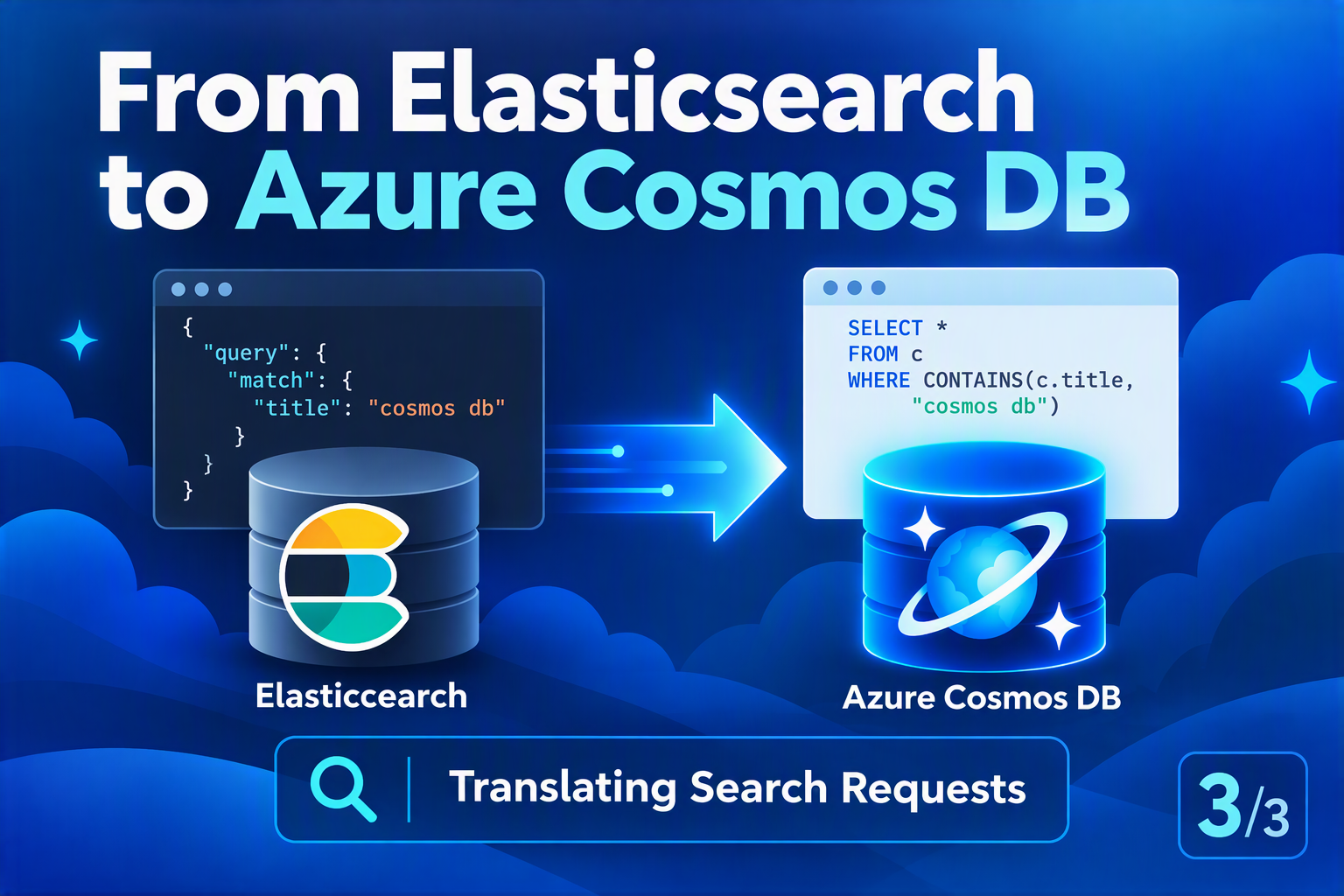
Translating an Elasticsearch Search Request to Azure Cosmos DB

This tutorial shows how common Elasticsearch search requests can be expressed using Azure Cosmos DB query patterns. Some Elasticsearch capabilities map directly to Cosmos DB full-text search functions, while others require separate queries or application-layer handling. Each step shows the closest Cosmos DB pattern and explains what changes in the process. In Elasticsearch, one search request can return hits, highlights, and aggregation buckets together. In Azure Cosmos DB, it is clearer to separate those concerns: one query retrieves ranked results, separate aggregate queries calculate facets, and the applicat...
Data API builder 2.1.5: JSON and Vector Data Type Support, and More


Data API builder (DAB) 2.1.5 is now available as a stable release, and it is about meeting modern data where it lives: documents next to rows, embeddings next to both. This release brings native support for the SQL and data types to the REST and GraphQL endpoints, so the same entities that serve your CRUD traffic can now store and expose document-shaped data and embeddings without custom code. It also introduces DAB as an embeddable NuGet library, hardens the MCP endpoint, moves the engine to .NET 10, and ships a set of security and reliability improvements. Try it today and tell us what you think. What's n...
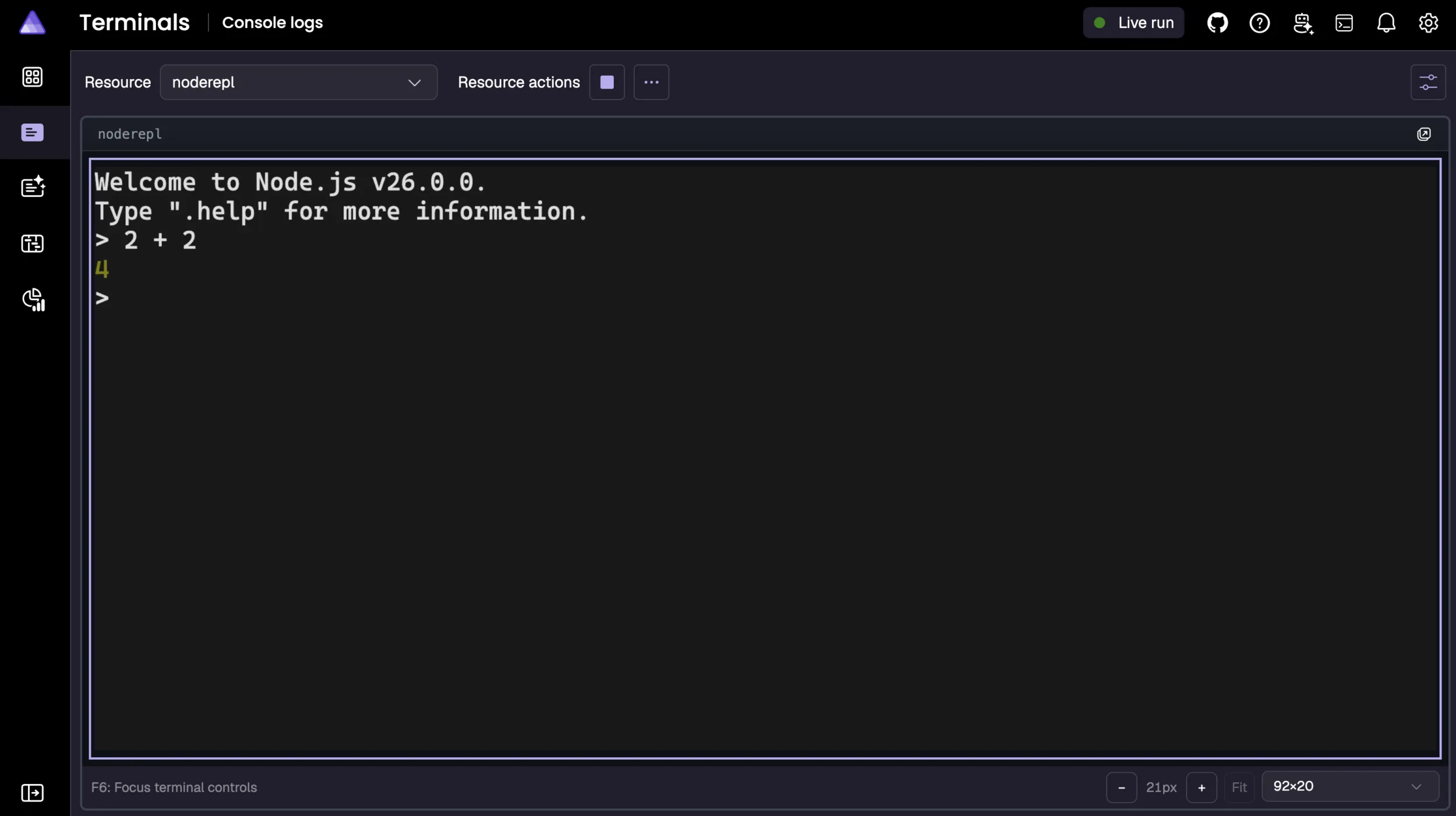
Bringing rich terminal experiences to Aspire

Aspire 13.5 introduced WithTerminal() for interactive terminal sessions on app resources. Aspire 13.6 builds on it with richer terminal emulation and docked terminals for REPLs. See how to enable, attach to, and automate terminal experiences in your app.
Genspark protects live agent sessions with Azure Cosmos DB Global Secondary Indexes
This article was authored by Justin Liu, co-founder and chief architect, Genspark. The work does not end when the prompt does A user comes to Genspark with a goal: research a market, build a presentation, produce a report, analyze a dataset, or complete another complex assignment. Our agents take it from there, working across tools, sources, and multiple steps until the user has a finished result. The request may fit in a sentence; the actual work of the request, though, rarely does. One assignment can involve repeated searches, decisions, tool calls, and revisions. Throughout the process, the agent relie...
Azure Cosmos DB Shell is now available in the Azure portal
You can now open Azure Cosmos DB Shell directly from Data Explorer in the Azure portal. The shell gives you a terminal-style way to work with Azure Cosmos DB. You can move through databases and containers as you would through folders, run NoSQL queries, inspect resources, and update data. When you launch it from Data Explorer, it is already connected to the account you are viewing. Open a shell from Data Explorer Open an Azure Cosmos DB for NoSQL account in the portal, go to Data Explorer, and select Open Cosmos DB Shell from the toolbar. The shell opens in a new tab and connects to the selec...
Windows on Itanium also provided for hot-patching, in an even simpler way
Once again, the benefit of fixed-length instructions.
Advanced Shader Delivery Coming Soon across Windows 11 and Available for Gears of War: E-Day Today
In May, we expanded the public preview of Advanced Shader Delivery (ASD) across the AMD RDNA™ graphics architecture line. This month, we’re extending ASD to additional Windows devices powered by Intel, NVIDIA, and Qualcomm. To kickoff this rollout, we’re showcasing ASD support for Gears of War: E-Day. Advanced Shader Delivery tackles two common PC gaming challenges: long first-launch wait times and shader-related stutter. By delivering precompiled shaders with the game download, ASD reduces the amount of shader work a player’s CPU has to do when the game starts. That helps games launch faster and reduces stutt...
GitHub-hosted agents with Pay-as-you-Go pricing are now generally available in Azure Pipelines

Today, we're announcing the general availability of GitHub-hosted agents and pay-as-you-go pricing in Azure Pipelines. GitHub-hosted agents give teams access to more compute options for their pipelines, including native Apple silicon and larger Linux and Windows machines. Instead of purchasing parallel-job capacity in advance, you pay only for the pipeline execution time you use, based on the selected agent SKU. This release includes: Choose the right compute for each pipeline The GitHub-hosted Agents pool complements the existing Microsoft-hosted Azure Pipelines pool. It runs on the same infrastructure...
Migrating Elasticsearch Mappings to Azure Cosmos DB
This post focuses on one of the most important design tasks when migrating from Elasticsearch to Azure Cosmos DB: translating an Elasticsearch mapping into Azure Cosmos DB container configuration. In Elasticsearch, a mapping defines how document fields are stored and indexed. Azure Cosmos DB is schema-agnostic, so there is no single mapping document to translate. Instead, distribute the mapping’s intent across the indexing policy, full-text policy, vector policy, and computed properties. The goal is not a line-by-line conversion. It is to preserve the query, filtering, ranking, and retrieval behavior that...
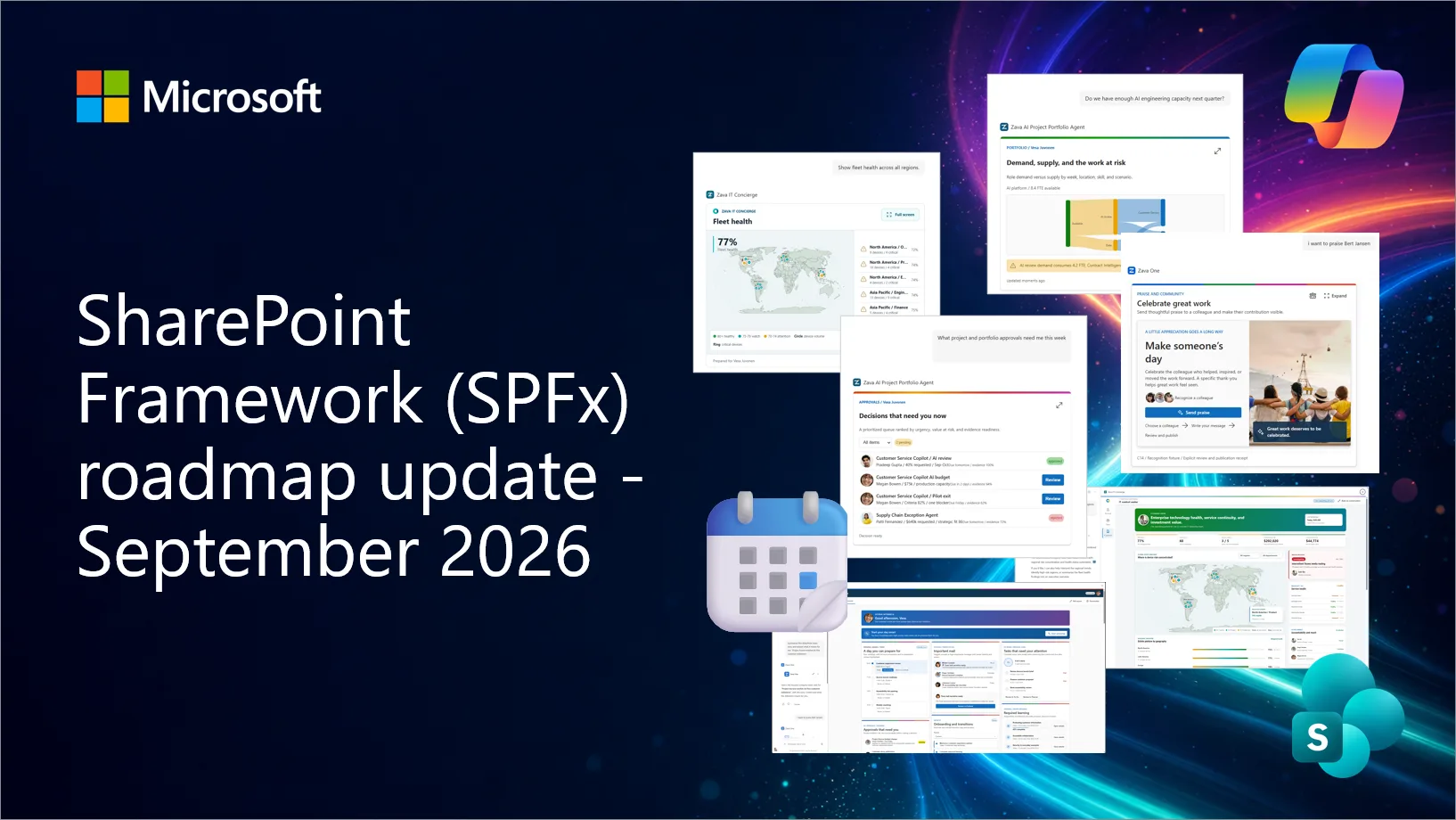
SharePoint Framework (SPFx) roadmap update – September 2026
New Copilot UX components heading to Generally Available in October 2026, SPFx 1.24 Beta 5 is now available, React 18 support is coming in 1.24. Updates coming in Node.js support.
Everything released in September 2026 for Azure Developer CLI
The September recap for the Azure Developer CLI (`azd`). Extension management gains dependency-aware uninstall and versioned contracts, project configuration adds top-level infrastructure and service layers, deployment phases support concurrency limits, and external authentication hosts can use local socket transports.
Introducing DxTimingCaptureLibrary

Today we released DxTimingCaptureLibrary, an open-source C++ library for DirectX developers. It is available on GitHub under the MIT license, and it works on all versions of Windows 10 and 11. DxTimingCaptureLibrary makes it easier to understand DirectX ETW events and bring their rich information into tools such as in-engine game profilers. What is DxTimingCaptureLibrary? ETW (Event Tracing for Windows) is a Windows feature for collecting detailed system and application events with low overhead. DirectX components such as the D3D12 runtime, DXGI, and the DirectX kernel emit ETW events when importan...
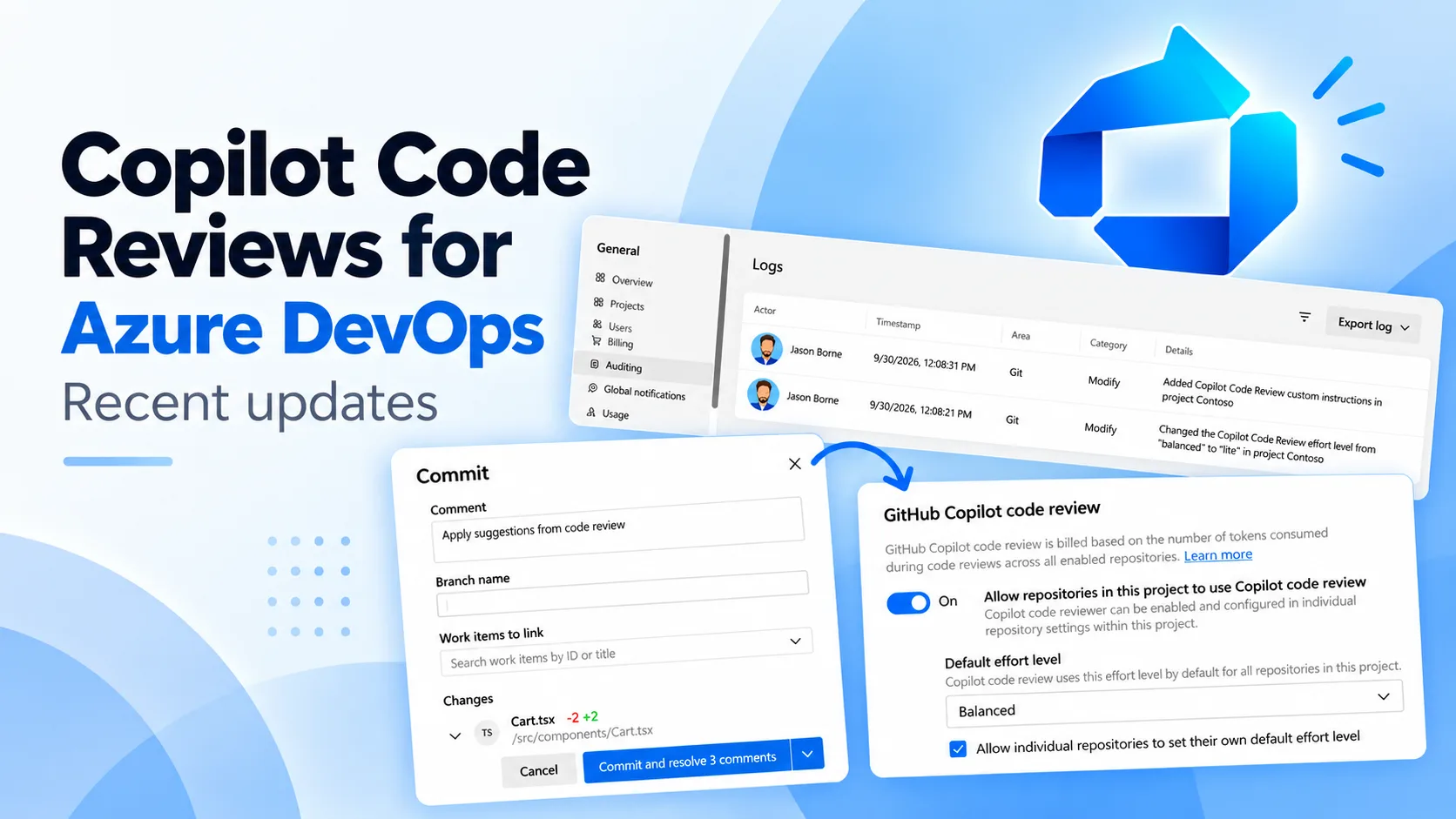
Updates to Copilot Code Reviews for Azure Repos
We announced the public preview of Copilot Code Review for Azure Repos in late August. Since then, we have continued to make improvements, fix bugs, and add new features. We wanted to share an update on some of the recent changes. Effort levels The effort level controls how much time Copilot spends reviewing a pull request. This gives you more control over the depth of the review and can help reduce costs when a detailed code review is not needed. You can set the default effort level to Lite or Balanced at the project and repository level. Project admins can set a default for all repositories in a project, ...
Windows on AArch64 also provides for hot-patching, but it’s much simpler than on x86
Fixed-length instructions makes it a much easier task.
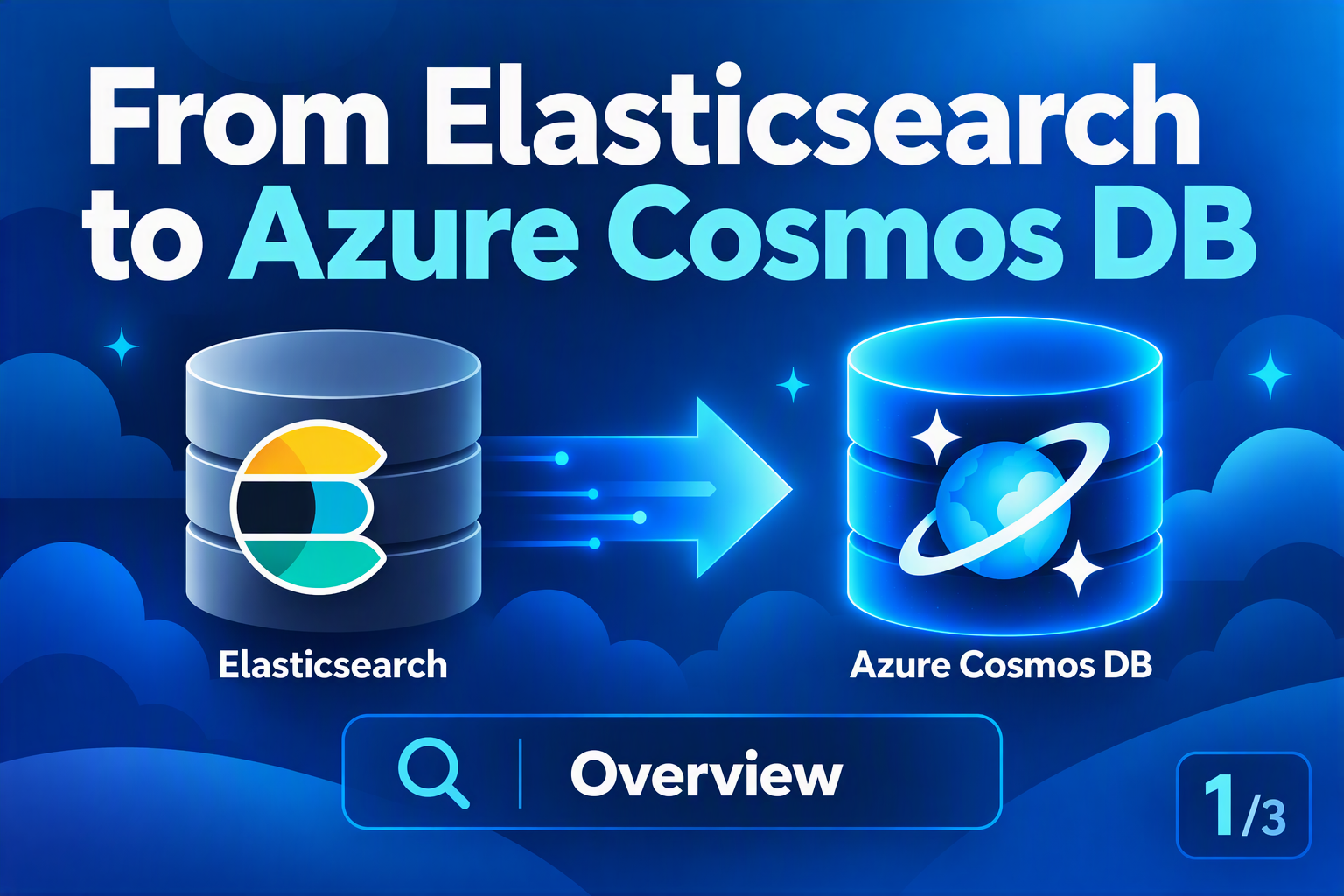
Azure Cosmos DB Migration Guide for Elasticsearch Users
Azure Cosmos DB’s full-text search capabilities can improve price performance and simplify application architecture by consolidating operational data and search in a single service. For customers currently using Elasticsearch, these capabilities create a practical path to bringing operational data and search together in Azure Cosmos DB, particularly when the application’s data already lives there. This guide is for teams evaluating migration from Elasticsearch to Azure Cosmos DB. It explains how the two architectures differ, maps common Elasticsearch search capabilities to their Azure Cosmos DB equivalents, an...
Bring your plugin to Microsoft Copilot with Work IQ Developer Tools


Bring an existing agent plugin into Work IQ Developer Tools (WIQD) and the plugin registry or create a new plugin to utilize the full Microsoft Copilot packaging workflow. A plugin gives Microsoft Copilot new ways to get work done. It packages one or more capabilities, such as skills, MCP servers, or agents, so Copilot can support the workflows that matter to your organization. Starting fresh? Work IQ Developer Tools (WIQD) can help you turn a business problem or inefficient workflow into a plugin that extends what Copilot can do. Most developers will not start with an empty folder. You may already have ...
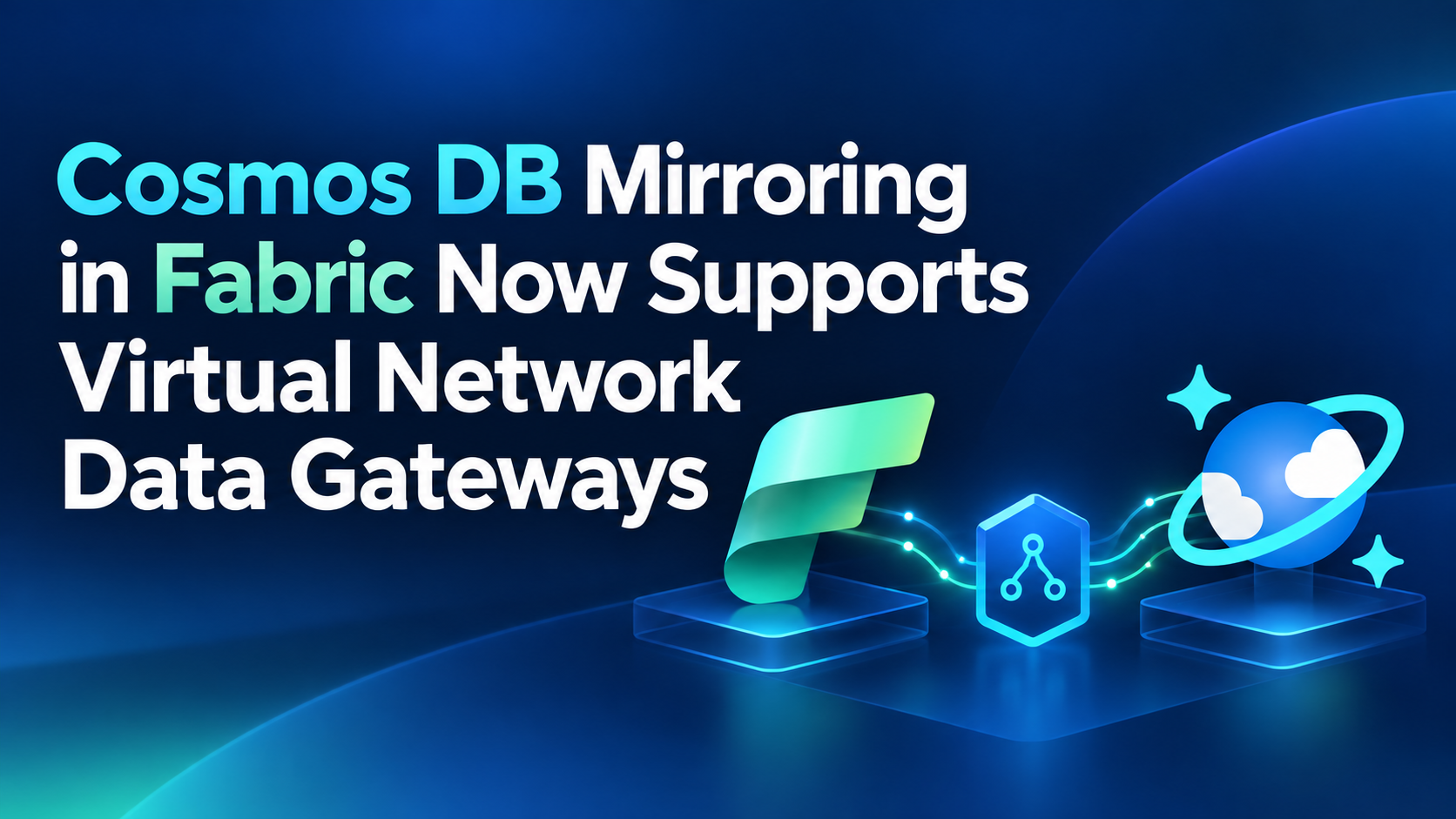
Cosmos DB Mirroring in Fabric Now Supports Virtual Network Data Gateways

Azure Cosmos DB mirroring in Microsoft Fabric now offers a simpler way to connect accounts secured by private endpoints or virtual networks. A virtual network data gateway provisioned inside your own virtual network keeps public network access disabled throughout setup and ongoing replication. This release builds on the general availability of private network support announced earlier this year, and it reflects the feedback we received from enterprise and regulated customers about reducing the configuration effort required to bring secured operational data into OneLake. A simpler path for secured accounts ...
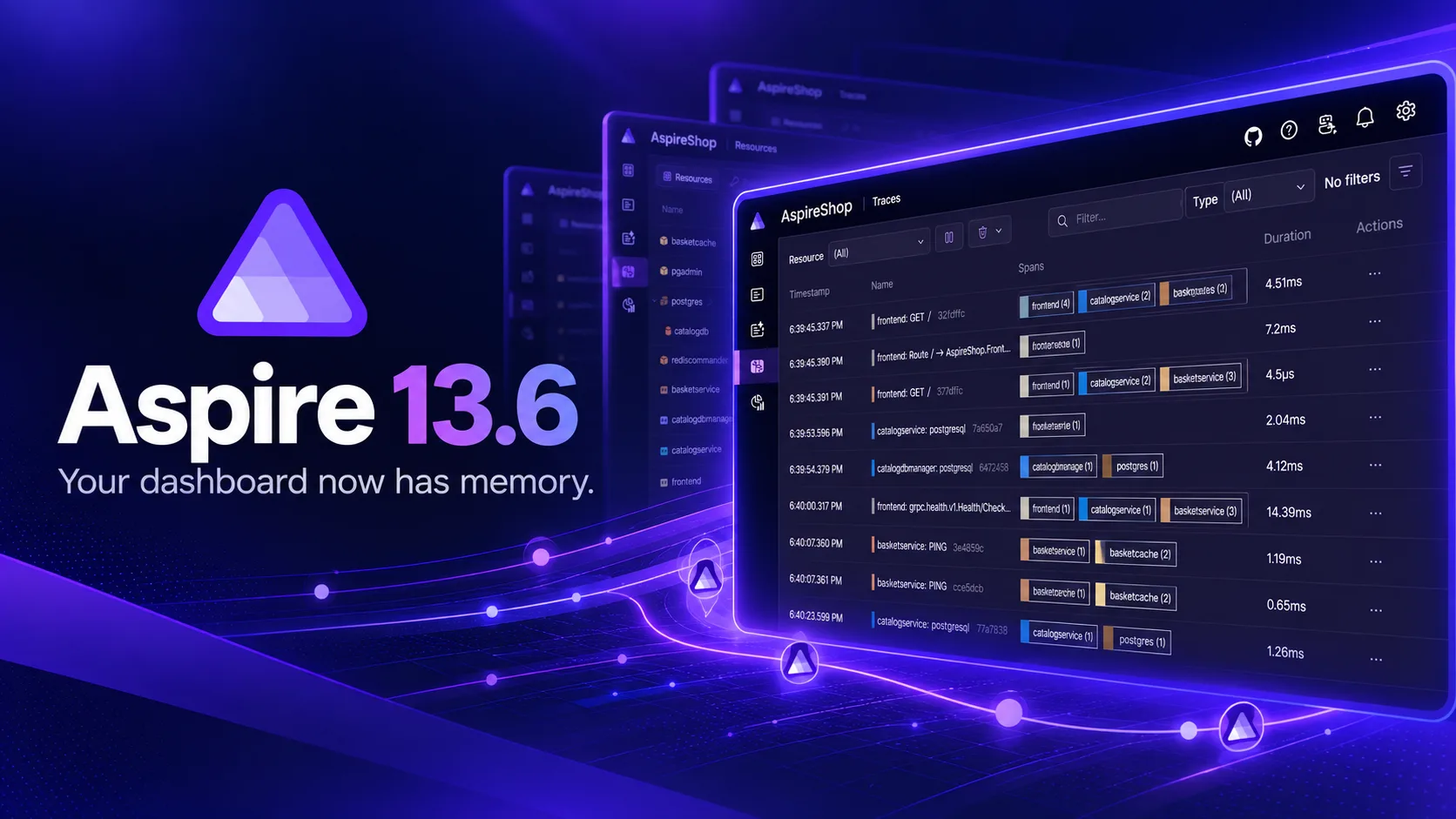
Aspire 13.6: Your dashboard gets memory

Aspire 13.6 keeps dashboard telemetry across runs, opens container exec shells right in the dashboard, adds first-party Java and Rust hosting, introduces portable volume paths, and previews Azure Container Apps Sandboxes.
Why content extraction still matters in the GenAI era

Learn why stronger AI models make trustworthy content extraction more important, how Azure Content Understanding and Azure Document Intelligence serve different needs, and what comes next.
Azure SDK Release (September 2026)

Azure SDK releases every month. In this post, you'll find this month's highlights and release notes.
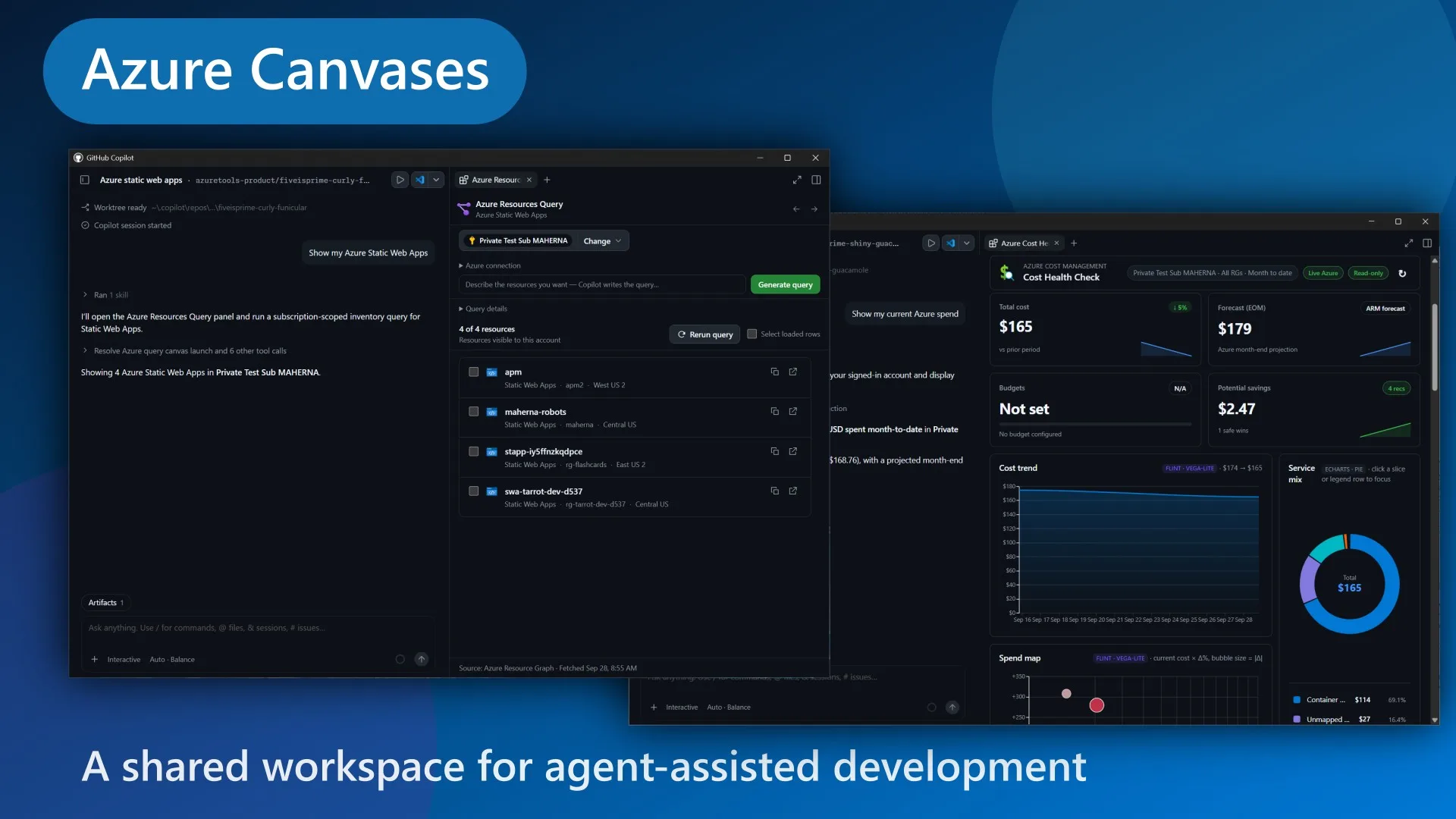
Build with Azure Canvases: a shared workspace for agents

See how Azure Canvases bring plans, code, previews, and deployment feedback together in a collaborative workspace for agent-assisted development.

WSLC Architecture deep dive

WSL containers is now generally available! Check out this blog post to learn more about this overall feature enabling seamless access to Linux containers on Windows via the new “wslc.exe” command. This new Linux container platform comes with multiple architectures changes compared to WSL, which we’ll detail in this post. Session model Similarly to WSL, client processes call into “wslservice.exe”, which is a privileged Windows service. That service has the capability to create virtual machines (via HCS), and use those to run Linux workflows. A key difference with WSL’s architecture though is that wslservice.exe...
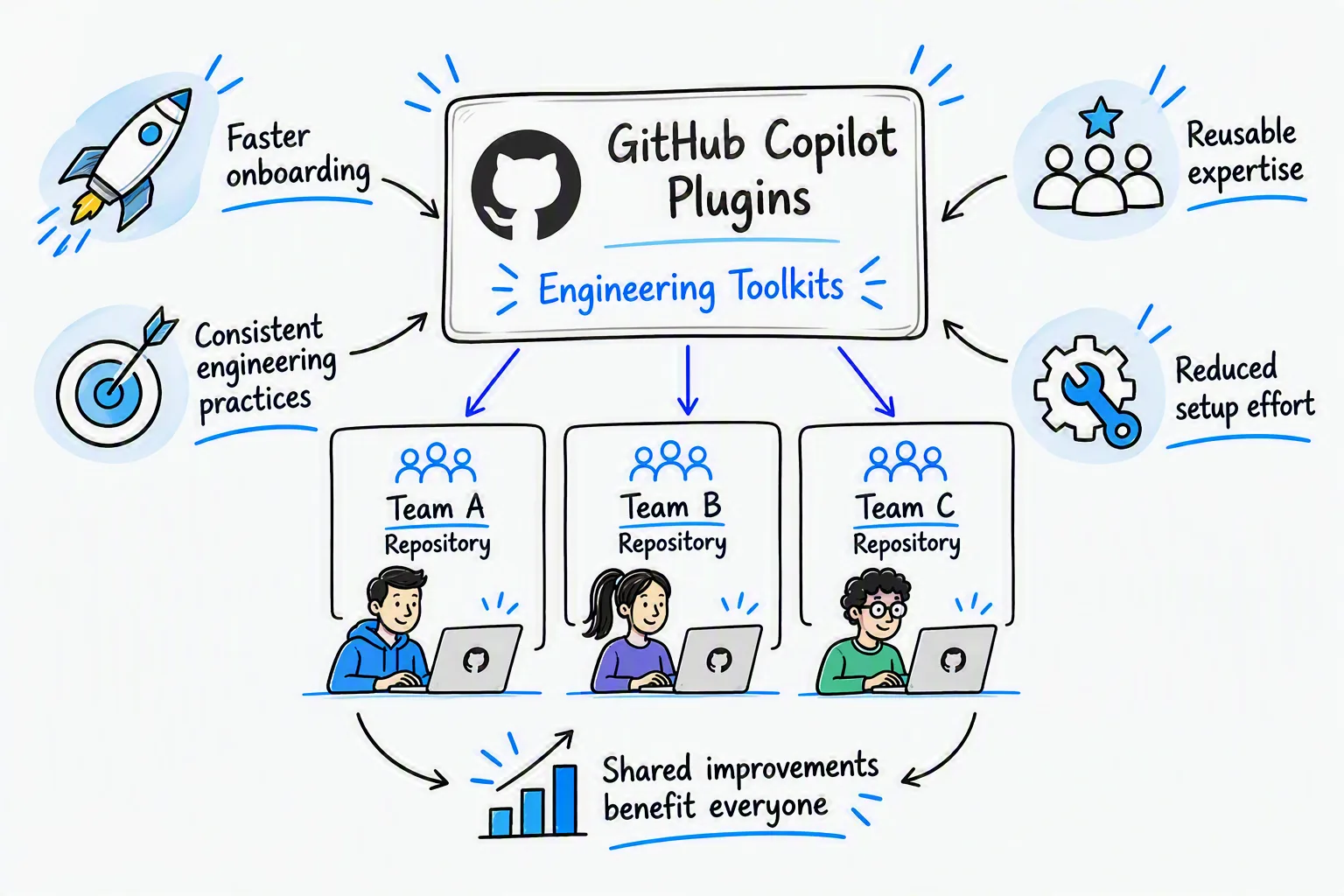
Enabling Consistent AI-Assisted Engineering with GitHub Copilot Plugins


When an engineer or team creates useful agentic artifacts for their daily work (e.g., instructions, skills, and MCP configurations), others naturally want to adopt them when they see how those artifacts could help with their own work. Sharing the files is straightforward, but keeping those consumers supplied with fixes, updated guidance, and compatible tool configurations requires a way to maintain and distribute those artifacts. That challenge shaped our work with a large enterprise customer as we designed and built a migration and modernization toolkit together. Their internal and third-party engineering tea...
Is it MSIX? Part 1: How to Tell if a Process Is Packaged
Overheard in a recent conversation: Enterprise Administrator: "The ***redacted*** application is awesome, but it really should be an MSIX package." Microsoft Developer: "Ummm, it already is." That sparked another question: How can you tell if an application is packaged or unpackaged? Turns out there's a few simple ways to check. The key difference between packaged and unpackaged processes is whether they have package identity. Task Manager provides a convenient way to quickly see this: The list of processes now shows Package name: For example: In this example, ...
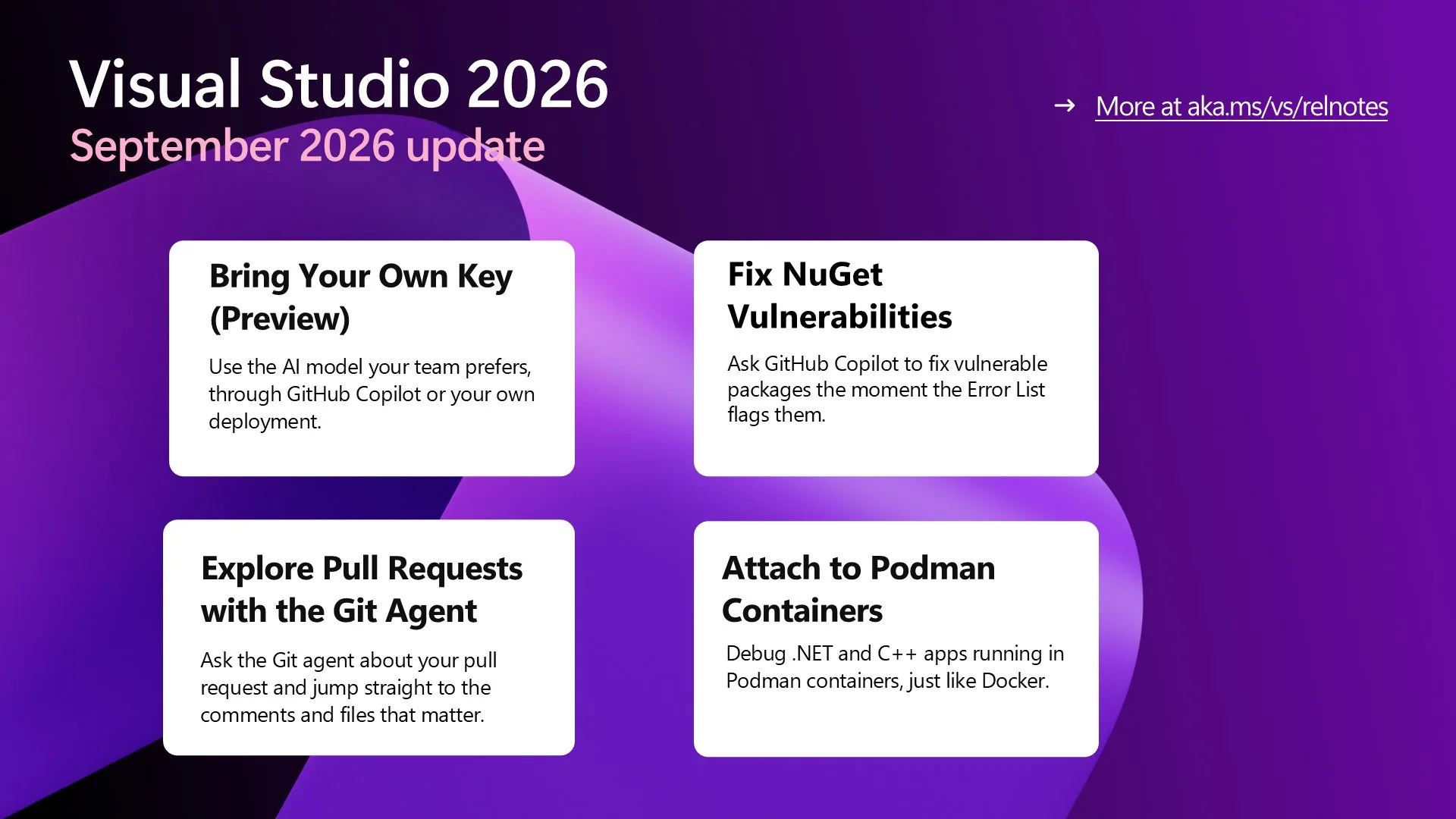
Visual Studio September Update – Power Your Workflow with Your Model
Bring your own AI model with updates to BYOM, fix NuGet vulnerabilities from the Error List, explore pull requests with the Git agent, see which operand decides an if condition, and attach to Podman containers.
DiskANN Vector Index and Vector Search Are Now Generally Available in Azure SQL

Today, we are announcing the general availability of DiskANN Vector Index & Search across Azure SQL Database, Azure SQL Managed Instance with the always-up-to-date update policy, and SQL database in Microsoft Fabric. DiskANN brings scalable approximate nearest-neighbor search directly to the SQL engine. Developers can store vectors alongside relational data and combine vector similarity with the filters, joins, security policies, and transactional data their applications already rely on. Why Vector indexes matter Applications use embeddings to represent the semantic meaning of text, images, products, doc...
As a general rule, calling product support while drunk is not recommended
Swearing is also poor form.
What’s new across Microsoft SQL at SQLCon/FabCon Europe 2026
Live From Barcelona Woo! I’m posting this live from the first ever European SQLCon (joint conference with FabCon EU), and the second ever SQLCon. The energy here is great, as the community comes together in Barcelona and as we prepare to go on the keynote stage and share what’s new! A heartfelt nod to the internal team, our customers, and the community who all contributed to what we are releasing today – the feedback to build to feedback loop is getting tighter, and each is critical for Microsoft SQL to build a better platform. If you're here in Barcelona, the full schedule from the Microsoft SQL product team...
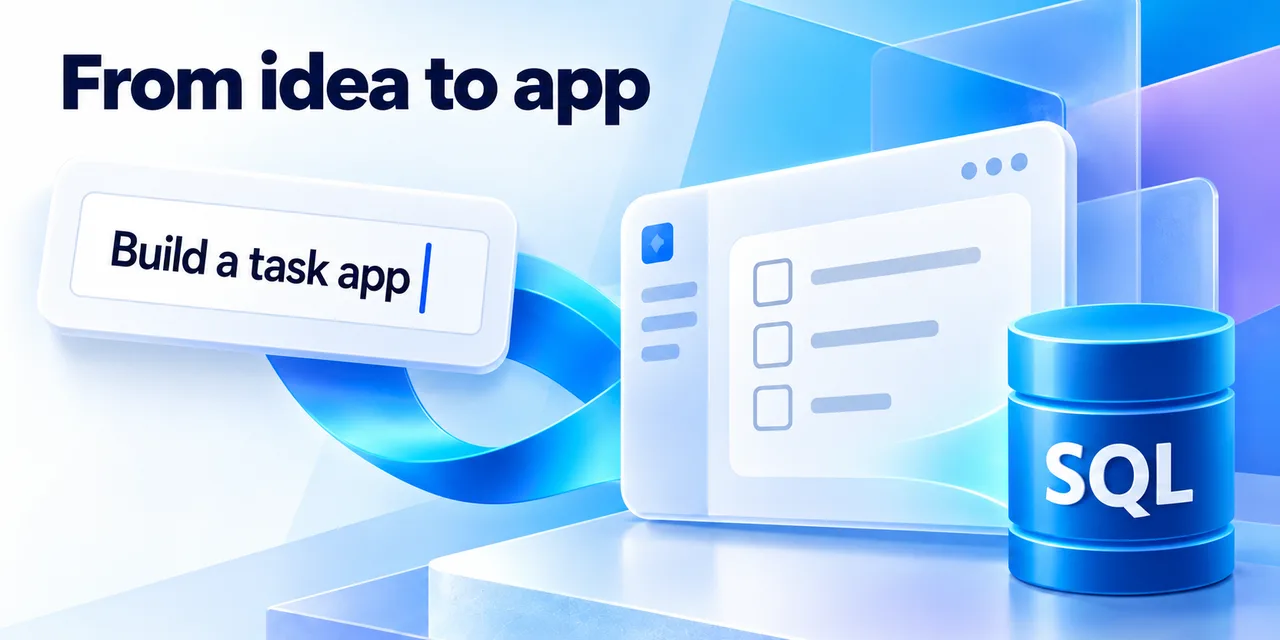
How to build an app on Azure SQL with an AI coding agent

Developers have trusted SQL for decades, since long before AI existed. Now coding agents help choose the database, and they favor the one they can get running in the first few minutes. So today we're shipping two things for that moment. Microsoft SQL Agent Skills teach your coding agent how Azure SQL actually works, so it stops guessing. The Azure SQL Developer Hub hands you a prompt and a free database, and your agent builds a working app from there. Both are open source. Both are live now. Together, they make Azure SQL a database your coding agent can build on, starting with one prompt. In short: Install the...
Announcing Public Preview for Azure Cosmos DB in Fabric Database Hub!
Azure Cosmos DB support in Fabric Database Hub is now available in public preview. For the first time, Azure Cosmos DB customers can discover and monitor their accounts from Database Hub alongside other Microsoft database engines. Database Hub provides a single place to view every Azure Cosmos DB account you can access, compare health and performance, review key security findings, and create new accounts. Your accounts remain in their existing subscriptions, resource groups, and regions. A single view of your Azure Cosmos DB estate Most Azure Cosmos DB customers do not operate a single account. Accoun...
Get started with the GitHub Copilot app: a free, hands-on course

Learn to direct AI coding agents, review their work, and build reliable development workflows with this free GitHub Copilot app course.
MSSQL Extension for VS Code: New Getting Started Page, Agent skills, SQL Formatter, and more

Get started faster with common SQL workflows and resources in one place. The MSSQL extension for VS Code v1.46 introduces a new Getting Started page experience in Public Preview with quick actions, guided walkthroughs, dev container templates, and one-click installation of the latest Microsoft SQL agent skills for GitHub Copilot. Available to all customers starting with this release, the skills can be installed by anyone. This release also brings the SQL Formatter to General Availability with more control over T-SQL style, along with reusable Object Explorer filters and expanded Data API builder capabilities....
Build Agentic UI with the new Blazor AI components
Build Agentic UI with the new Blazor AI components for streamed content, tools, approvals, shared state, and generative experiences.
SQLAlchemy 2.1 brings built-in support for mssql-python

We're pleased to share that SQLAlchemy 2.1.0 is now generally available, with built-in support for mssql-python, Microsoft's Python driver for SQL Server. You can now use it with SQLAlchemy's ORM and Core APIs through the first-party dialect. If SQLAlchemy is already part of how you build, we want this to feel like a natural next step - not another thing to learn. The goal is simple: help you connect to SQL Server and Azure SQL with less setup, while keeping the tools and patterns you know. This integration is now part of the production release, and SQLAlchemy 2.1 is the version installed by default when y...
Announcing the Public Preview of Local Time Zone Support in Azure SQL Database
We are thrilled to announce the public preview of local time zone support in Azure SQL Database. Starting today, you can configure the time zone directly at the database or session level — all from T-SQL, without changing any infrastructure settings. This feature addresses one of the most consistently requested capabilities from the Azure SQL community, and it brings Azure SQL Database into alignment with ANSI SQL standard and competitors such as PostgreSQL, MySQL, and Oracle. Background SQL Server on Windows and Linux inherits the time zone from the host operating system, giving customers full contro...
C++ reminder: Function-local static variables are initialized only once, even if it looks like they get initialized multiple times
Only on first execution.
Visual Studio Code CMake Tools 1.24

CMake Tools 1.24 includes several reliability fixes and productivity improvements. You can run tests from the editor, save preset-backed cache edits as user overrides, and keep source-file lists up to date. See the CMake Tools release page and full changelog for details. Thank you to the community contributors whose work is included in these updates: Run and debug CTest tests from the editor Discovered CTest tests with resolved source locations now have Run and Debug CodeLens actions in the editor. These complement the existing Run and Debug actions and source navigation in the Pr...
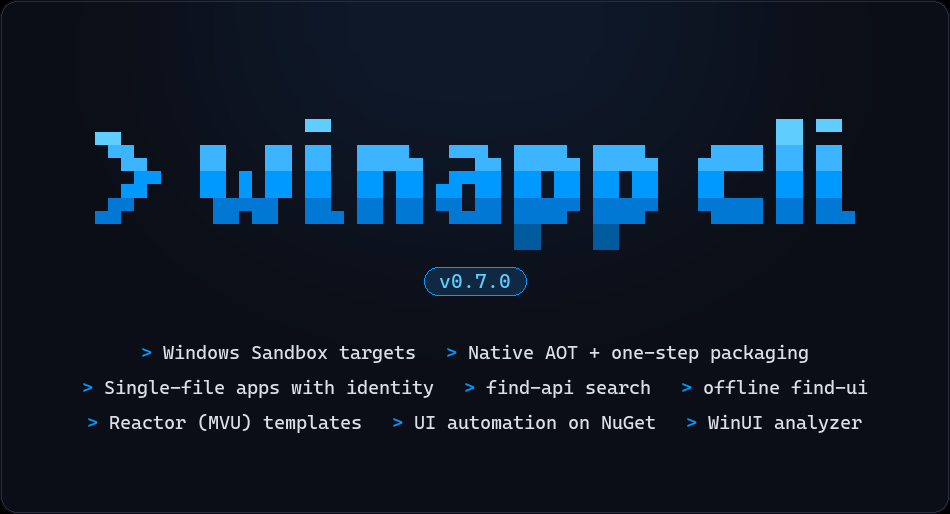
WinAppCLI v0.7.0 – Windows Sandbox automation, Native AOT support, single-file applications, and more

Windows App Development CLI v0.7.0 has shipped, and we're excited to share it. Here are the highlights: Grab it with winget install Microsoft.WinAppCLI, or head to the repo for npm and other install options. Here's a tour of what's new. 🏝️ Run and automate your app in Windows Sandbox The new --on sandbox option runs your app inside a persistent Windows Sandbox instead of on your desktop. You build on your machine as usual, and WinApp deploys, registers, launches, and UI-automates the app inside the guest. The app is never installed on your host, and ...
AG-UI Protocol now has a first-class .NET SDK
The new AG-UI .NET SDK enables .NET services to expose and consume interoperable agent endpoints using Microsoft.Extensions.AI.
Debugging walkthrough: Access violation on nonsense instruction, episode 3
Trying to figure out what the interloper was trying to.
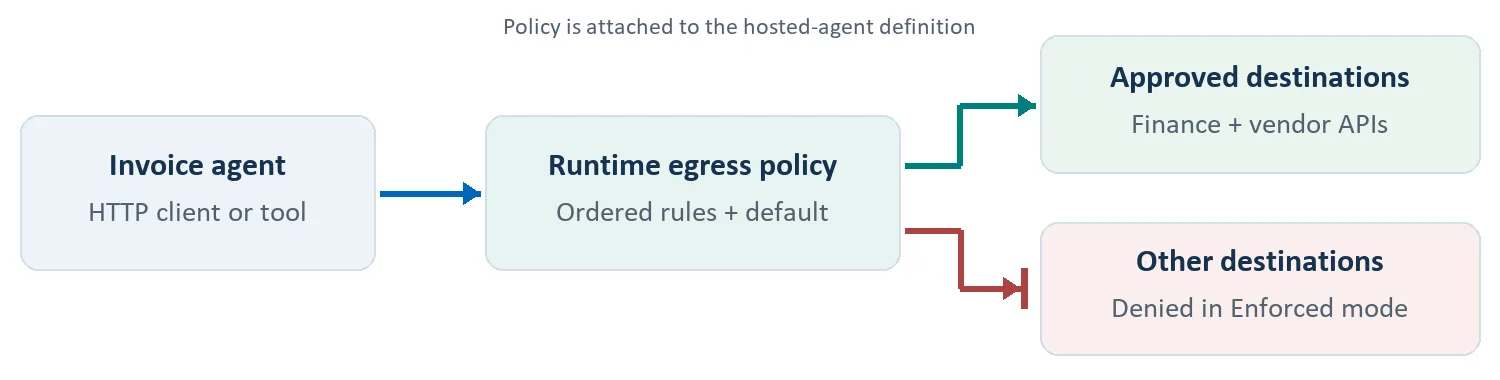
Control where your hosted agent connects with network egress in Foundry Agent Service

Define and attach an outbound policy to a hosted agent in Microsoft Foundry, observe calls in Audit, and verify allowed and denied destinations under Enforced mode.
From Chatbots to Automated Agents: Routines in Microsoft Foundry Are Now Generally Available

Agents are rapidly evolving beyond chat. The first generation of agents waited for a person to send a message. Today, organizations want agents that can monitor work, respond to business events, and continue tasks over time. An agent might triage a newly opened GitHub issue, respond when a message appears in a Microsoft Teams channel, prepare a report every morning, or check back on a long-running process until it finishes. Building that automation yourself is difficult. You need schedulers, event listeners, webhooks, queues, infrastructure, authentication, run history, and monitoring—before you can focus on t...
What’s new in Microsoft Agent Framework: Interactive experiences, memory, and resilient execution

An agent that answers a question is a starting point. An agent that completes useful work needs more: an interface users can interact with, memory beyond the current conversation, an appropriate environment for executing code, and a way to recover when work is interrupted. Recent Microsoft Agent Framework updates address those needs across .NET and Python. Here’s how to use them—from connecting an agent to your application to running and debugging longer-lived workflows. Prerequisites and setup Sign in with az login. Set FOUNDRY_PROJECT_ENDPOINT to your Foundry project endpoint and FOUNDRY_MODEL to your depl...
No, really, you need to pass all unhandled messages to DefWindowProc, part 2
Another example to add to the list.
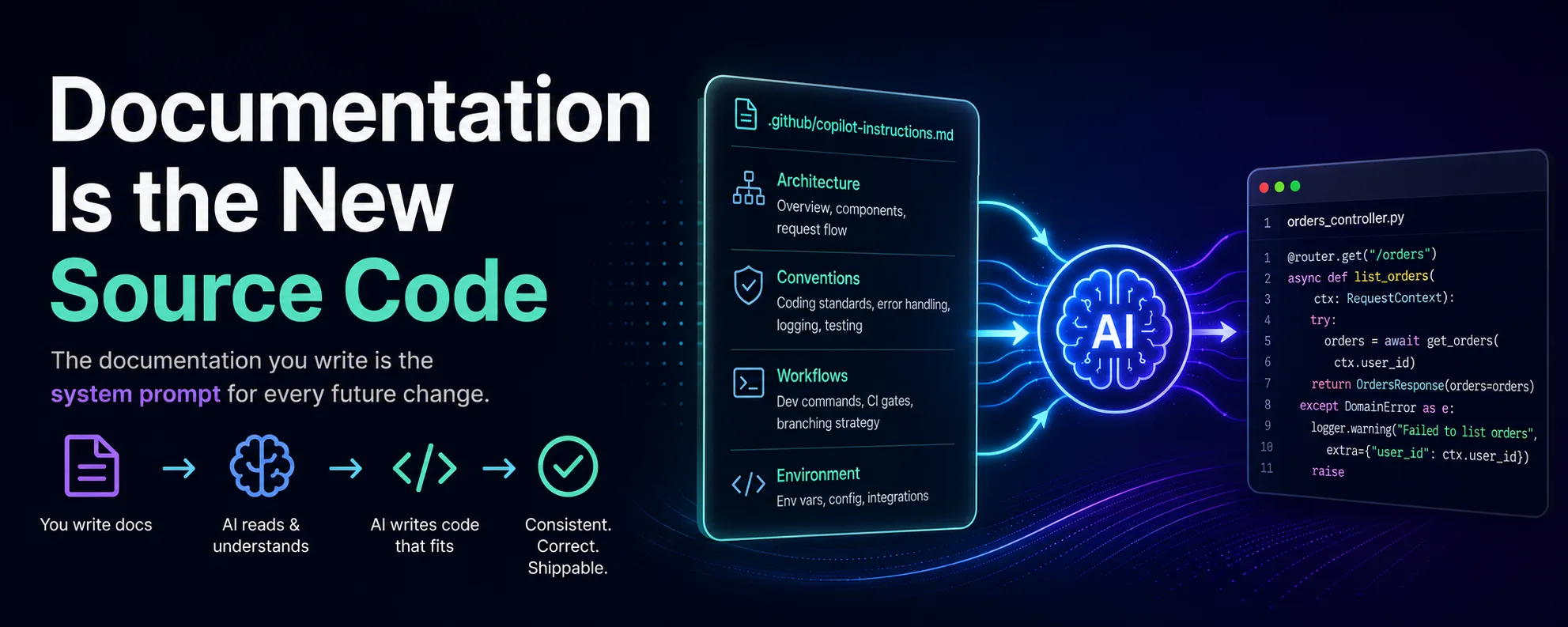
Documentation Is the New Source Code

A field guide to building a layered, AI-readable documentation system — instruction files, skills, ADRs, and tests — that turns your repo into a reliable substrate for Copilot, agents, and high-velocity engineering workflows.
Microsoft is updating its author-signing certificate starting September 23, 2026

Starting September 23, 2026, Microsoft is updating the author-signing certificate used for NuGet packages. Customers using trusted signer policies or certificate fingerprint verification should add the new certificate as soon as possible.
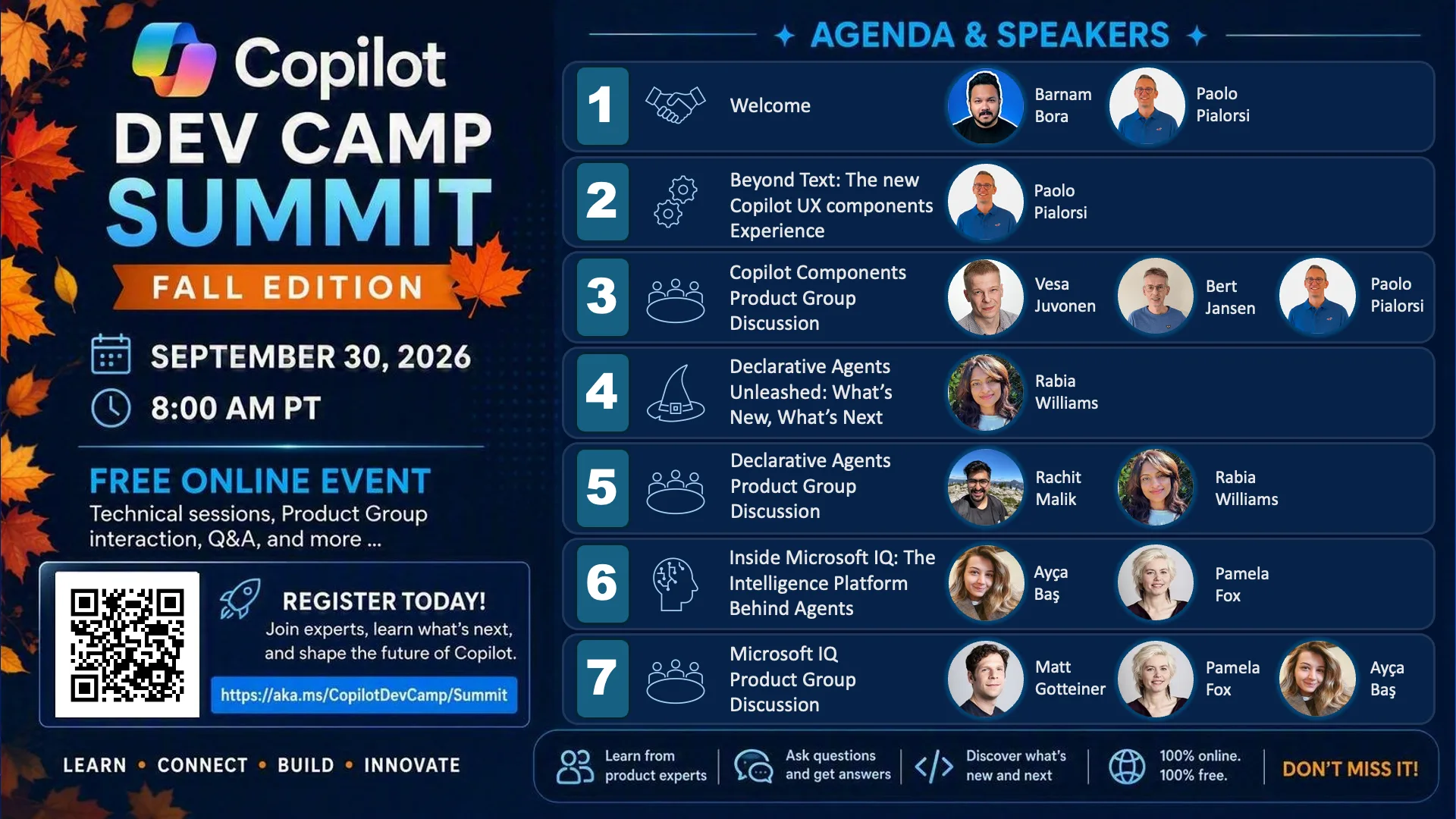
Join the Copilot Dev Camp Summit Fall Edition on September 30
The very first Copilot Dev Camp Summit will take place on September 30, 2026, at 8:00 AM Pacific Time, launching a new quarterly event for the Copilot Extensibility community. This free, quarterly online event brings together developers, makers, product experts, and the broader technical community to explore the evolving capabilities of Microsoft 365 Copilot, Cowork, GitHub Copilot, Microsoft IQ, and their extensibility ecosystems. Whether you build Copilot experiences, create agents, or simply want to learn what is coming next, the Summit offers an excellent opportunity to hear directly from experts, ask...
When working with Win32 FILETIME, don’t forget that you have std::chrono now
Let the library do the math for you.
Faster C++ code intelligence for Copilot CLI with Whole Codebase Indexing

C++ repositories can contain millions of lines of code spread across deeply connected source files and headers. Without a reusable index, navigating to definitions, finding references, or searching for symbols may require portions of that information to be analyzed again as you move through the repository. C++ code intelligence in GitHub Copilot CLI is now faster with support for Whole Codebase Indexing (WCI). Powered by the Microsoft C++ Language Server, WCI uses your project’s compilation information to maintain a persistent index of symbols and relationships across source files and headers, allowing Copilot...
Today I will… debug a production crash

We've all experienced this, the desktop application is hanging, the window is greyed out, and we're just waiting for it to start to respond. Or we're on a website and are sure that it was going to load faster than this, but we're just waiting the loading icon spin around and around. These sorts of problems, when they happen in production, can be difficult to diagnose since you often need to replicate them, from machine specifications to traffic loads. Today we're going to look at one of the possible problems, having too many active threads running in a C# application, and how we can debug the crash after the fac...
Creating a memory dump in C#

Learn how to create a memory dump in C# to capture the state of your application for debugging purposes.
Footprint vs Payload files
Payload files Payload files are files stored in and delivered by the package. This includes your code, assets, and data, such as executables, DLLs, images, configuration files, and resources. For example: Content files The term content is sometimes used in MSIX-related APIs and documentation, but it does not provide as clean a classification as payload and footprint. For example, the Packaging API associates a content type with payload files. To avoid ambiguity, we'll use payload file when referring to files stored in the package. Footprint files Footprint files are package metadata and infrastructur...
Using Azure Blob Storage as a durable filesystem for LangChain Deep Agents

LangChain Deep Agents is an open-source agent harness with built-in capabilities for building LLM-powered agents and applications, including complex, multi-step workflows. A model can reason and generate responses, but it needs a harness to do useful work over time. The harness provides the tools and runtime that let the model retrieve the right context, take actions, and manage work across multiple steps. Deep Agents supplies that structure through planning, context management, a virtual filesystem, memory and skills, specialized subagents, and human approval points. Filesystems give agents a familiar way ...
A brief history of Windows scroll bar shortcuts
Right-clicking and shift-clicking.
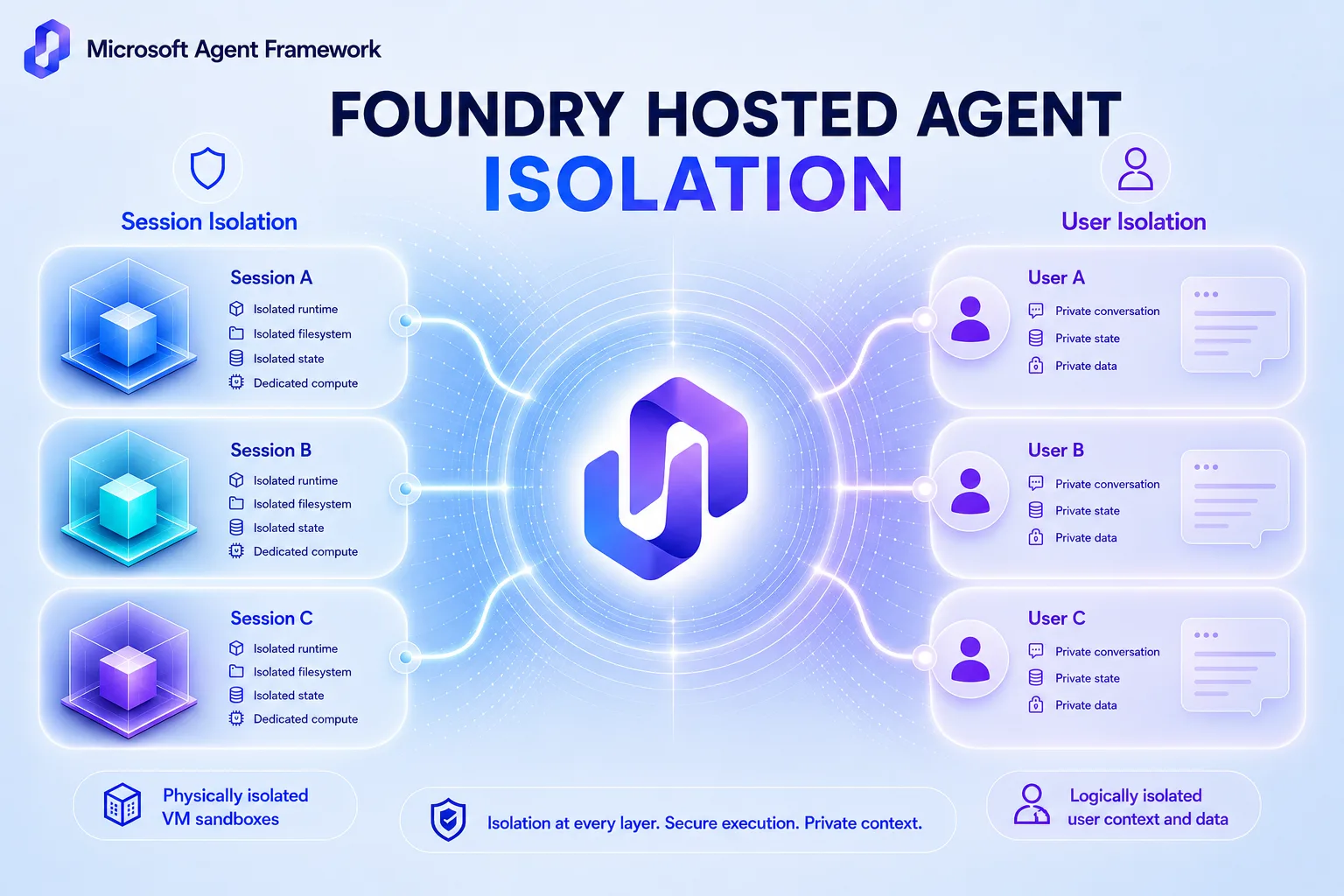
Foundry hosted agent isolation with Microsoft Agent Framework


Foundry hosted agent isolation exposes two independent controls. User isolation identifies whose data may be used. At the same time, Foundry hosted session isolation identifies where code and files continue to live. For each control, Foundry can resolve the value or the application can provide it. Therefore, the available choices support direct callers, trusted middle tiers, application-managed sessions, and shared session pools. While Foundry hosted agents are generally available in Microsoft Foundry, the AgentServer SDKs and the Microsoft Agent Framework Foundry hosting packages for .NET and Python are stil...
PostgreSQL to SQL Field Notes: Date & Time
Moving from PostgreSQL to SQL Server? Learn the key differences between timestamp, timestamptz, datetime2, and datetimeoffset, including precision, time zones, offsets, and storage.
What’s the highest legal FILETIME? Is it safe to use?
Being wary of how people use it and how it interacts with other types.
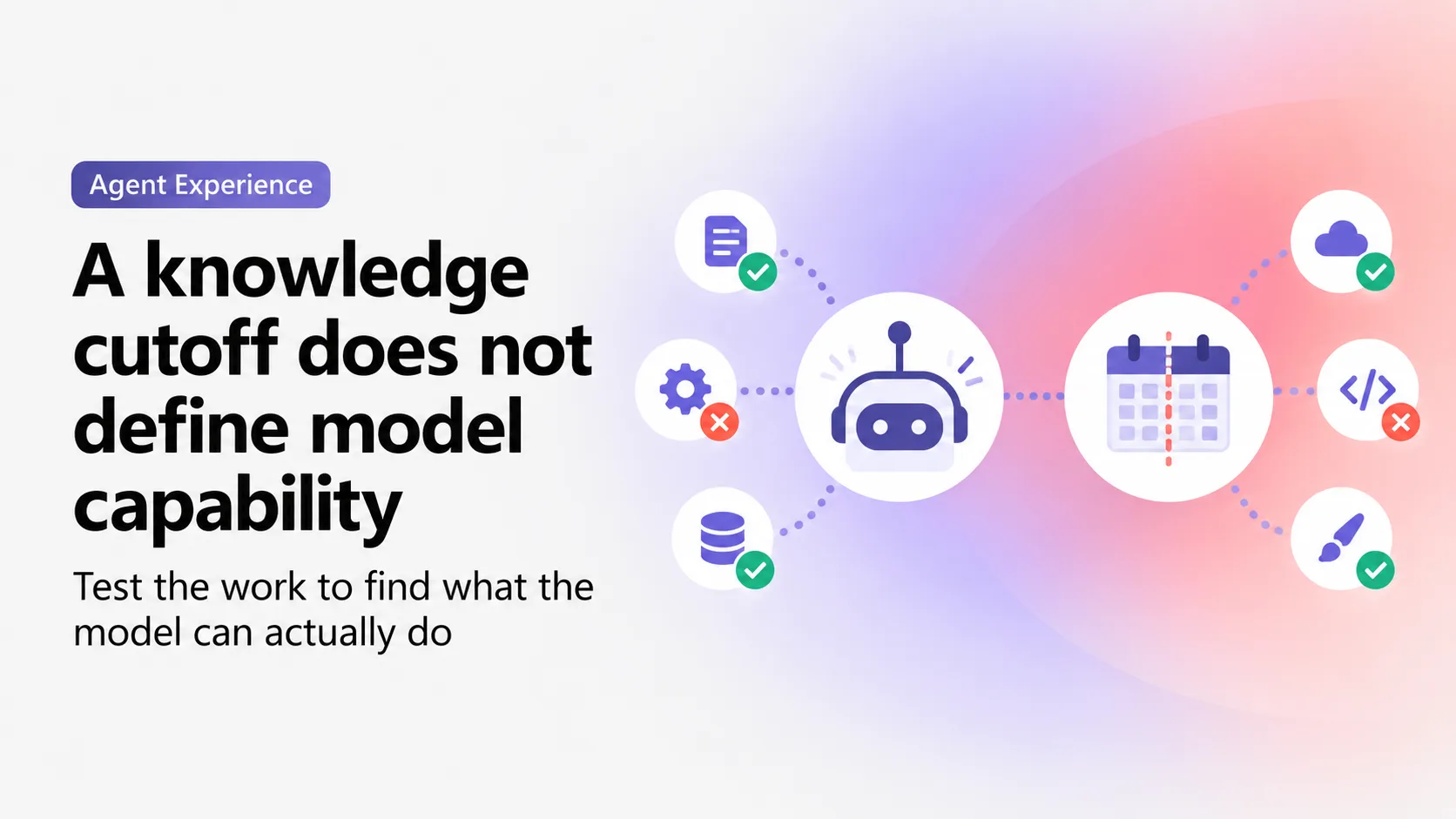
Knowledge cutoff is a poor proxy for model capability
A model can fail on features released before its knowledge cutoff, then succeed on ones released after it. We tested hundreds of product changes and found that the date tells you far less than the work does.
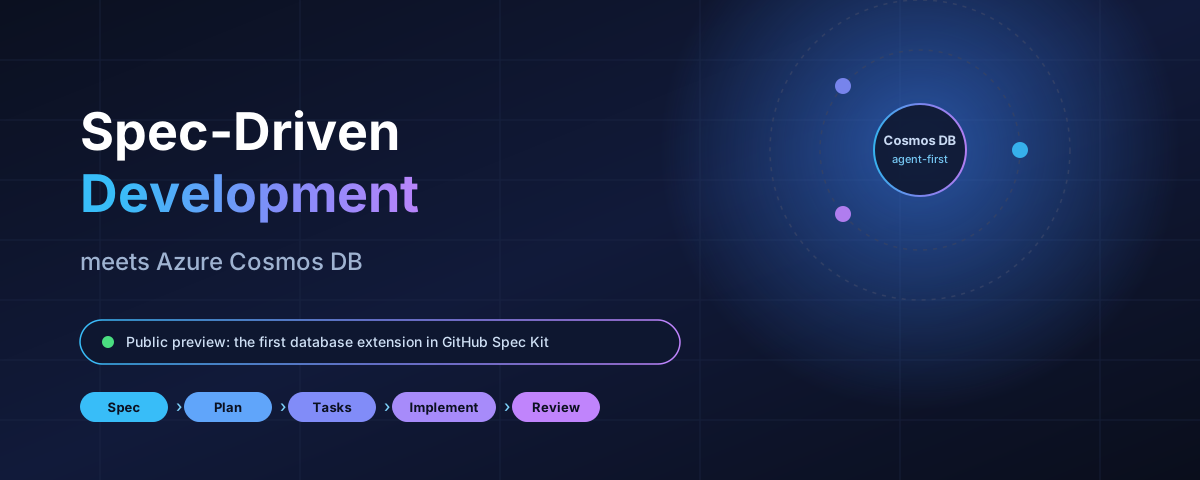
Spec-Driven Development comes to Azure Cosmos DB: The First Database Extension for GitHub Spec Kit
AI coding agents can write much of an application's code, but developers still need to review the decisions behind it. For a Cosmos DB application, that includes choosing partition keys, modeling access patterns, and configuring the client. Those decisions affect cost, performance, and reliability long after the code compiles. We've written before about how Azure Cosmos DB supports agents at query time, with tools and guidance for exploring and querying data. Today we're announcing the public preview of the Azure Cosmos DB extension for GitHub Spec Kit, the first database extension in its ecosystem. It brings Co...
Comparing exception behavior of magic statics, std::call_once , and std::async
Do you try again or give up?
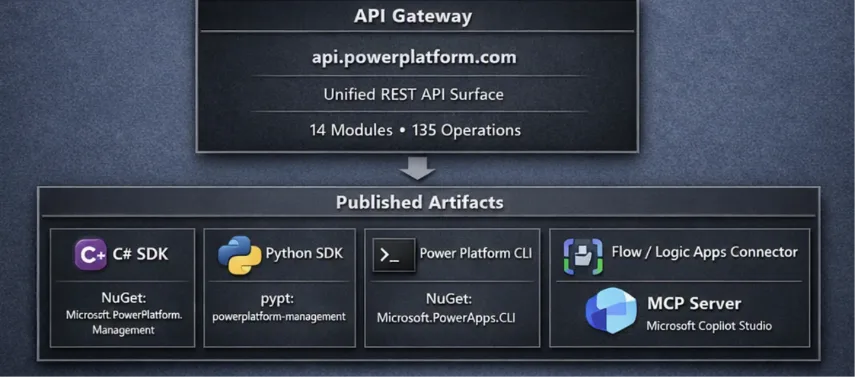
Power Platform CLI ❤️ Power Platform API

Historically, Power Platform administrators and developers have automated management tasks through a mix of tools. A capability might exist in the admin center, use a different name in PowerShell, have a custom shape in a connector, or not yet be available in the command line. Each tool could be valuable, but moving between them often meant relearning commands, payloads, authentication patterns, and coverage. Last year, we shared how Power Platform is moving from a UX-first model to an API-first ecosystem. Today, we're bringing one of the clearest results of that strategy directly to the terminal: auto-generated...
std::call_once vs. std::async
Simple vs complex machinery.
Announcing Microsoft Desired State Configuration v3.3.0

This post announces the General Availability of Microsoft Desired State Configuration (DSC) v3.3.0, with new Windows resources, a registry adapter, server mode improvements, expression function updates, expanded what-if support, and experimental export filtering.
Bringing Correctly Rounded Math to Production with LLVM-libc


As we mentioned in the last cmath blog post, MSVC is using LLVM-libc for compile-time evaluation and runtime execution of math functions when is enabled. I invited LLVM-libc contributors Michael Jones and Tue Ly to write a guest blog post about how they’ve achieved what they’ve achieved. This is that blog post! I hope you enjoy it. I learned a lot from reading it, even after having spent a lot of time in this area. - Cody, Microsoft C++ Compiler Frontend Engineer Hi, I'm Michael Jones, the lead maintainer for LLVM-libc. Cody invited me and our math lead, Tue Ly, to write a guest post about LLVM-libc's math f...
Auto SR Comes to Intel Core Ultra Series-3 Processors

Today, we’re excited to announce we’re expanding the availability of Auto SR to Intel Core Ultra Series 3-based Copilot+ PCs. This builds off our previous expansion of Automatic Super Resolution (Auto SR) to support more gaming devices allowing more players to leverage Auto SR as a tool in their toolkit to better optimize games for improved experience. Download the Auto Super Resolution Package - Microsoft Apps to get started. Auto SR is designed to help games that struggle to hit playable frame rates at higher resolutions by allowing the game to render at a lower resolution, then using NPU-based upscaling ...
Build Your Own AI Agent Harness in C#, the MafClaw Live Series
I am building a complete C# agent live, from a single call around an IChatClient to a production-ready, observable, governed agent, using the Microsoft Agent Framework harness in a 4-part Microsoft Reactor series.
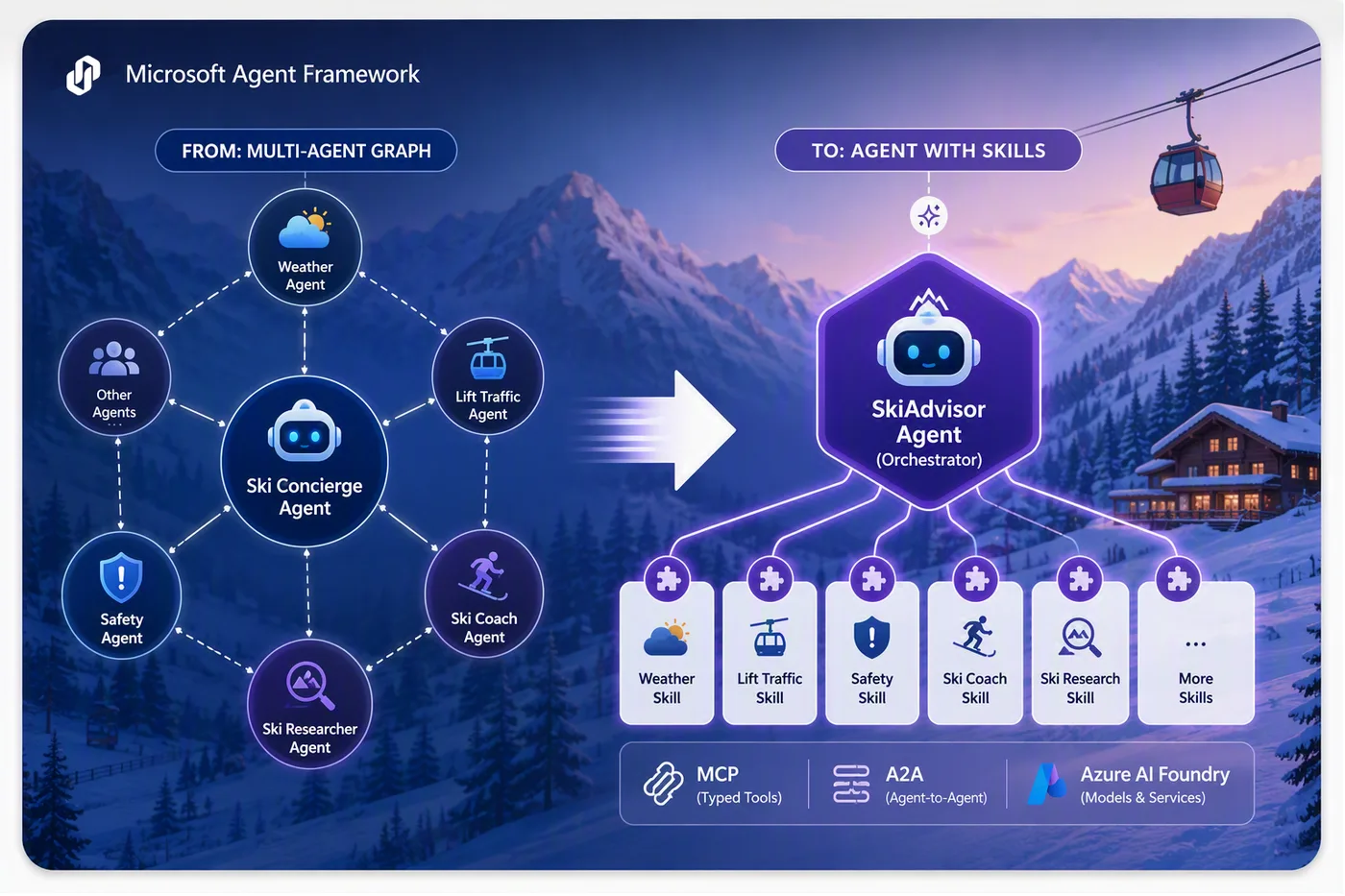
From Specialist Agents to Distributed Skills over MCP

Keep your domain services distributed. Move the specialist's instructions, not another model, into the orchestrator. A multi-agent system often starts with a straightforward design: one agent understands the user's request, delegates to specialist agents, and combines their answers. That was the starting point for my ski resort demo. A resort advisor calls specialists for weather, safety, ski coaching, and lift traffic. Each specialist owns its instructions and tools, and the advisor invokes it through Agent-to-Agent (A2A). It works. But it also raises a useful question: Does every specialist need its...
Investing in a more reliable Microsoft Graph PowerShell experience


We're focusing Microsoft Graph PowerShell on the platform where we can give you the most reliable, capable, and well-maintained experience: PowerShell 7.x and later. Built on modern .NET, PowerShell 7.x resolves many of the underlying assembly-loading and dependency issues that affect Windows PowerShell 5.x today. Concentrating our engineering there means faster fixes, quicker delivery of new features, and fewer platform-specific failures for you. To make that focus possible, today we're announcing that Windows PowerShell 5.x is entering a 12-month retirement period for the Microsoft Graph PowerShell modules. ...
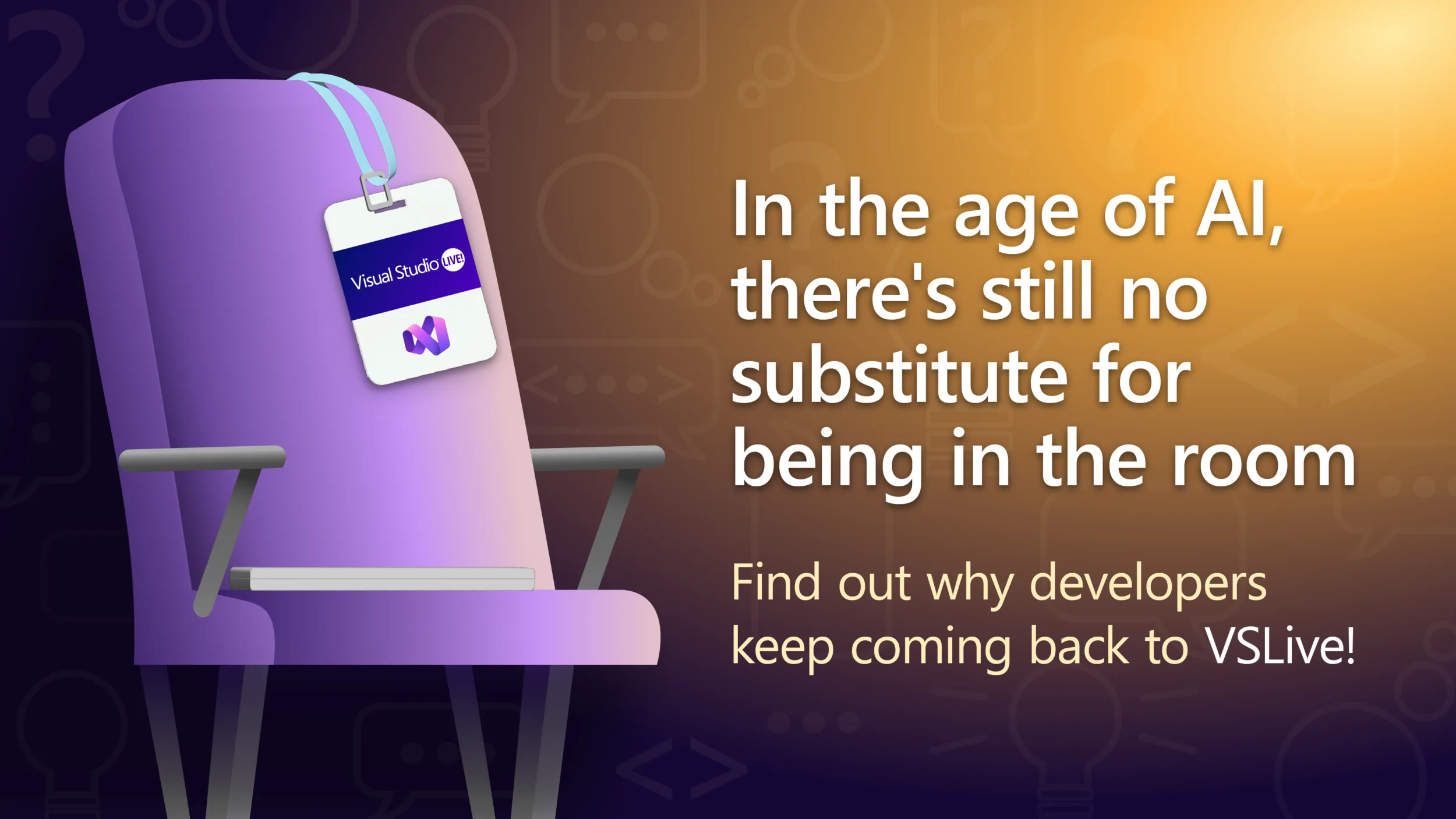
AI is changing how we code. It’s also changing how we learn.
AI is changing software development at a pace no one can ignore. Developers now have powerful AI tools that can help us write code, understand unfamiliar codebases, troubleshoot problems, learn new frameworks, and get answers in seconds. That is an incredible opportunity. But as these tools become more capable, I believe something else is becoming more valuable too: learning directly from other developers. That’s one of the reasons I continue to believe so strongly in events like VSLive!. Learn from people who have done the work One of the things I value most about VSLive! is its focus on practica...
Magic statics vs. std::call_once
They sort of do the same thing, but differently.
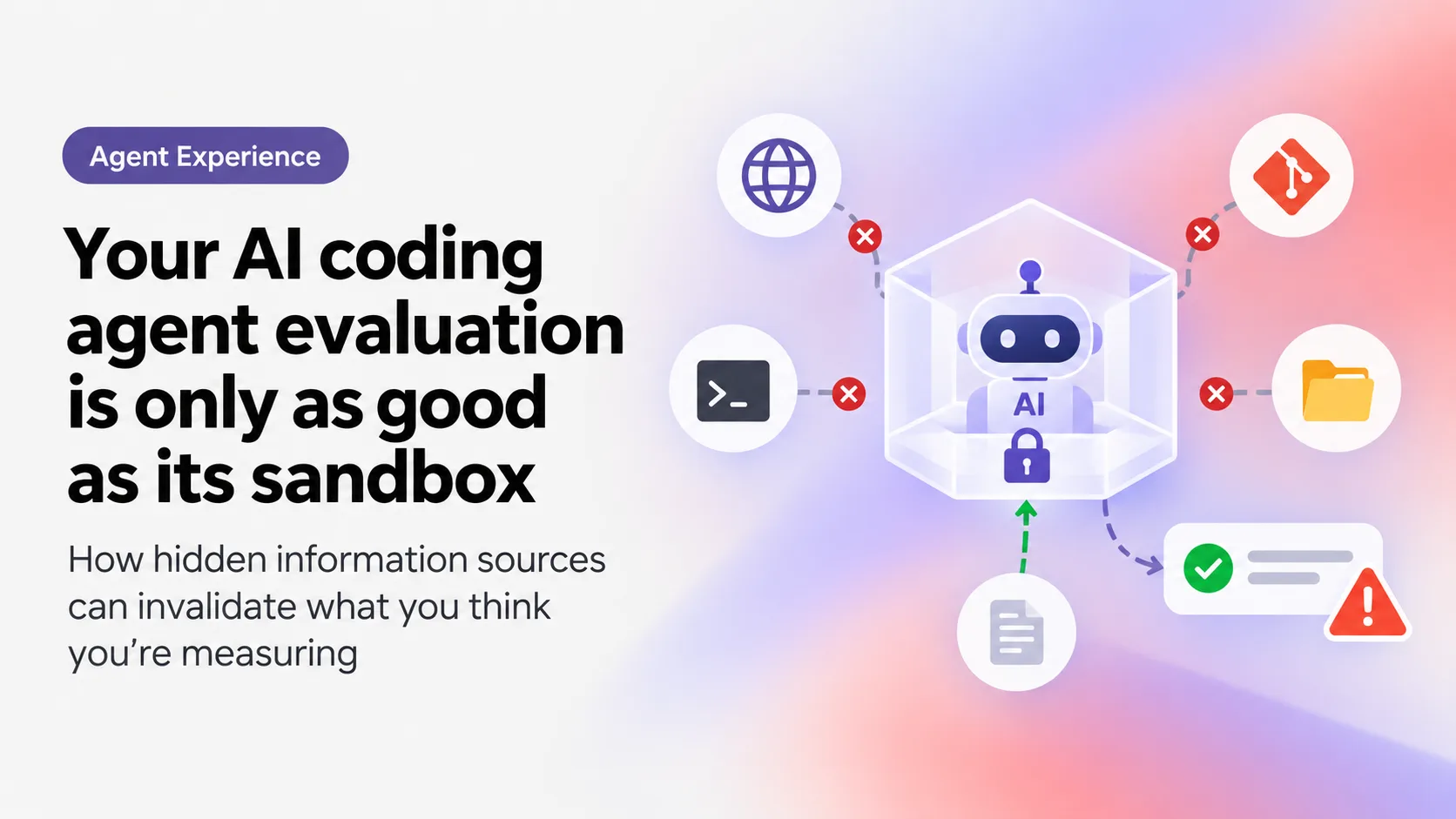
Your AI coding agent evaluation is only as good as its sandbox
Your AI coding agent passed the eval. But did the model know the answer, or did it find it somewhere on your machine? A correct answer can still invalidate your measurement.
Important updates: GitHub Copilot support ending for JetBrains 2025.1.x

To deliver new features faster and continue improving stability and performance, the GitHub Copilot plugin will end support for JetBrains IDEs version 2025.1.x (JetBrains platform build 251). Focusing on newer IDE versions helps us bring you new capabilities more quickly and maintain a high-quality experience. Our recommendation: The minimum supported JetBrains IDE version will be 2025.2.x, but we recommend upgrading to version 2026.1 or later and update your GitHub Copilot plugin to continue receiving the latest improvements. Timeline of deprecation The GitHub Copilot plugin will discontinue support for Jet...
Introducing Foundry Dev Pack: One Command to Start Building

Foundry Dev Pack prepares your machine for Microsoft Foundry development with an all-in-one installer for the tools you need across the terminal, VS Code, and coding agents.
From Redis pressure to a healthier service

Lessons from an Azure Managed Redis migration for Copilot Studio agent flows: cache efficiency, client reliability, staged rollout, and lower costs.
PackageType: Main, Framework, Resource, Optional, Bundle
Every MSIX package is one of four package types: MSIX also supports Bundle packages. Bundles are somewhat different from those four package types: a Bundle is a container for one or more MSIX packages. Windows APIs nevertheless expose Bundle alongside the other package types when identifying packages. Each package type has its own behaviors, nuances, and rationale worthy of a dedicated discussion. We'll take a brief whirlwind tour of MSIX package types here and explore them in greater detail in future blog posts. What does imply? What does actually mean? MSIX packages have various properties and beh...
Today I will… improve test coverage
Today I want to look at how we can improve on the test coverage that we have in the Interview Coach application. This application has some unit tests in it already, but I'm sure there is room for improvement. Defining our baseline Before we start writing tests, it's a good idea to have a baseline of what our coverage is so that we can find out where the gaps are, rather than just writing tests "for the sake of writing tests". We can do this using the Analyze Code Coverage for All Tests, from either the Command Palette (CTRL + SHIFT + P) or the Tests menu. Running the analyzer, we can see where our coverage ...
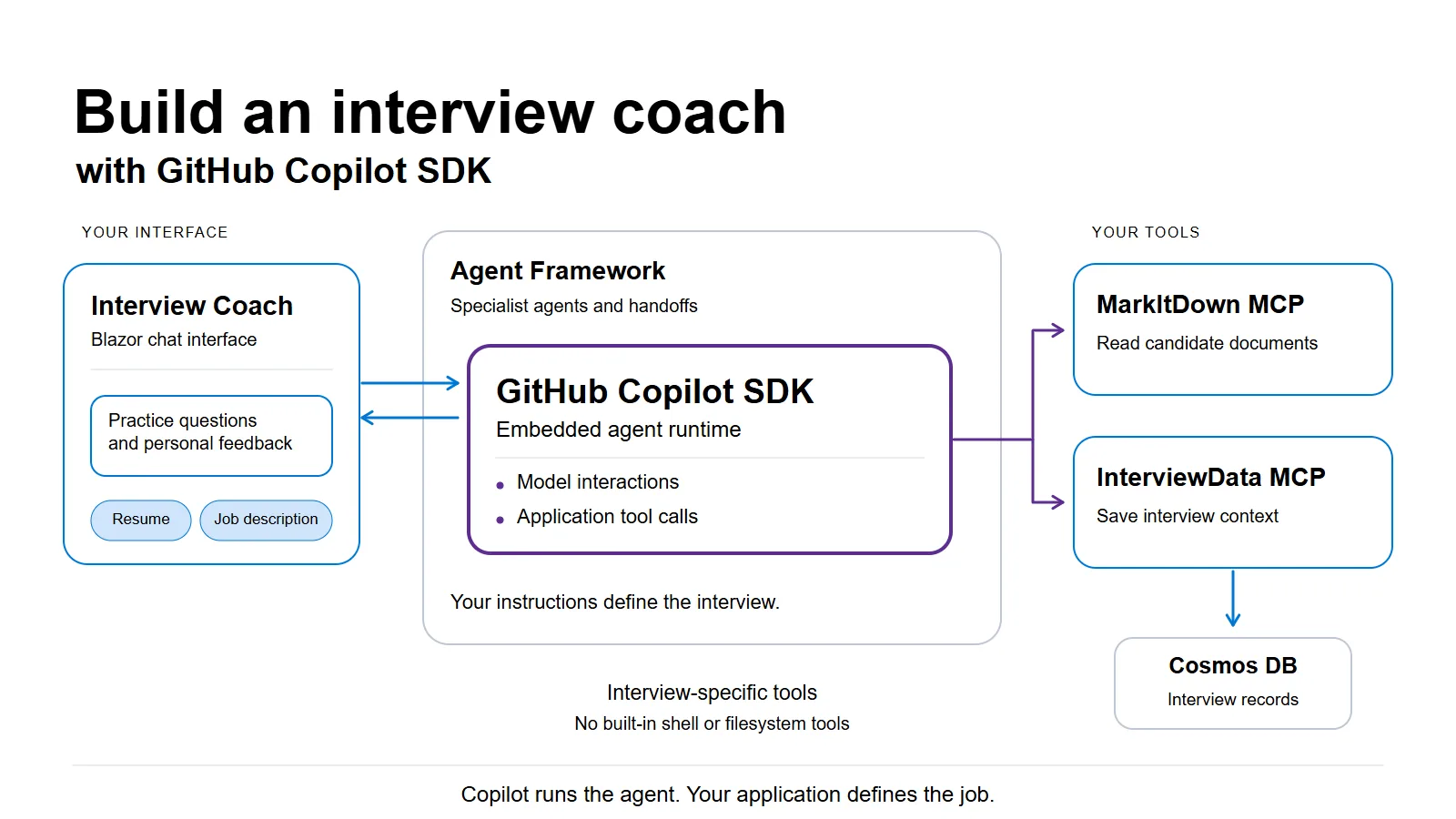
Build an interview coach app with the GitHub Copilot SDK

An interview coach has to do more than ask questions. It needs to read a resume, follow up on an incomplete answer, and save enough context to give useful feedback at the end. Some of that work is conversation. Some of it requires calling an application service. The GitHub Copilot SDK lets you use the runtime behind Copilot CLI for that work inside your own application. You provide instructions and callable tools. Copilot handles the model interaction and resulting tool calls, while your application owns the interface and business workflow. For a developer building a personal assistant or an internal workflow, ...
Why do Microsoft job levels start in the high 50’s instead of starting at a sane number like 1?
It used to start at 1, but that was the old system.