
Developer Support
Advocacy and Innovation
Latest posts
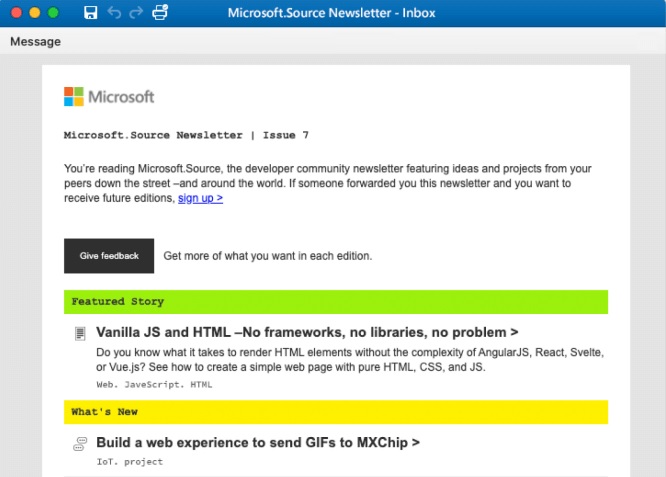
Learn, connect, explore – stay at the forefront of rapidly evolving technologies!

Looking for a way to stay current and get hands-on experience with Azure? Now you can get notified about events—from local hacks, workshops, and training sessions to virtual meetups and global conferences. Get the latest articles, documentation, and events from Microsoft.Source—the curated monthly developer community newsletter. Learn about new technologies and find opportunities to connect with other developers online and locally. Interested in learning more about Kubernetes or just want to get started developing apps with Azure using Python, Java, .NET and more? Get the...
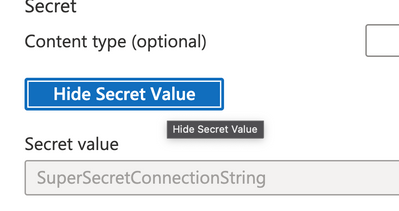
Getting secrets from Key Vault in YAML pipeline
Andrew Redman spotlights how to use a Key Vault Task inside an Azure DevOps pipeline to automate a deployment using secrets. Keeping your connection strings and secrets secure is not necessarily only a concern of just one type of industry. The best practice would be to keep security at the top of your mind regardless of if you are working on an app for a company in the Healthcare space or Finance, Retail, etc….Azure Key Vault can help in doing just that. If you have ever created an Azure App Service or Azure Function App that uses app settings, then you have dealt with the problem of how you ...

Azure AD OAuth client credential flow with custom certificate walk-through
Nicola Delfino demonstrates how to use a certificate to request an access token to Azure Active Directory, using the OAuth 2.0 client credential flow You can use the OAuth 2.0 client credentials grant specified in RFC 6749, to access web-hosted resources by using the identity of an application. This type of grant is commonly used for server-to-server interactions that must run in the background, without immediate interaction with a user. The OAuth 2.0 client credentials grant flow permits a web service (confidential client) to use its own credentials, instead of impersonating a user, to authenticate whe...

The Microsoft Planetary Computer
Susan Leighton spotlights the Planetary Computer, combining a multi-petabyte catalog of global environmental data with intuitive APIs, a flexible scientific environment that allows users to answer global questions about that data, and applications that put those answers in the hands of conservation stakeholders. In Microsoft’s 2021 Environmental Sustainability Report, in addition to discussing the early progress on commitments around being a carbon negative, water positive, and a zero-waste company by 2030, we stated that we would build a Planetary Computer. So, what is it? This blog contains a consolidate...
Express Design – AppDev on Steroids
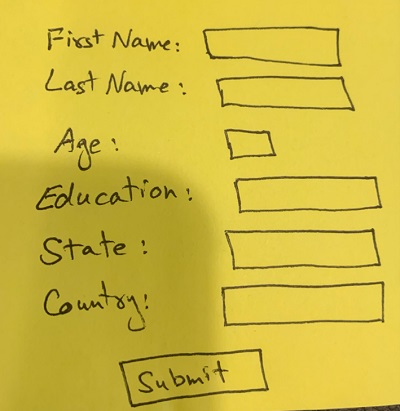
Tahir Naveed spotlights Express Design, a new way to quickly get started with Power Apps by instantly transforming your visual design into an app. As soon as the announcement of Express Design came out on Microsoft Build, I wanted to get my hands dirty with it. Here is a quick tutorial on how it works. Express Design (Preview) is a new way to quickly get started with Power Apps by instantly transforming your visual design into an app. App design can be in the form of paper forms, whiteboard sketches, or Figma files without the knowledge of the database or any programming language. Design an app: ...

DevOps Fragility, Antipatterns, and Consequences
Mark Eisenberg and Keith Anderson spotlight app architecture, organizational structure, and testing responsibilities and the importance of how these areas can improve or hinder the effectiveness of DevOps practices. Overview DevOps was born from the idea of applying development practices and tooling to the creation and management of IT infrastructure. The specific practice that caught the attention of these IT experts was Agile. They saw the promise of applying iterative development to infrastructure automation in a practice that would come to be known as infrastructure as code. From that simple idea, ...

Kubernetes and Challenges in Cloud-Agnostic Strategies
Stephen Abdo and Pete Tian examine cloud-agnostic strategies and explore common challenges and misconceptions. Overview and Industry Trends Over the past several years there has been an increased focus on adopting cloud-agnostic strategies. Some common reasons to do this are to avoid becoming dependent on any one cloud provider and the freedom to pursue a best-of-breed ecosystem. Kubernetes is one technology that has been used to accomplish these goals. Microsoft has even been making more and more PaaS services available in Kubernetes to aid in that effort. However, we sometimes see customers who are n...

How To Batch Importing Azure DevOps Work Items Using Azure DevOps APIs and C#
Kyle Johnson and Sash Kavalaparambil explore batch import for Azure DevOps work items using REST APIs. While you can upload a CSV with work items into Azure DevOps, there is so much flexibility you get when you import work items using the Azure DevOps API. What you need You can do this by creating an app registration and using MSAL to authenticate but to keep it simple for this blog post, we will create a Personal Access Token (PAT) then use that PAT token in the code. Steps to create a PAT token - Use personal access tokens - Azure DevOps | Microsoft Docs Below is a sample CSV file. Now let’s...

DevOps Nirvana – Part 1
Randy Pagels takes you on a DevOps journey to frame up the way an organization would foster a strong DevOps culture. Contributions made to this blog post by Kyle Burns, Microsoft Cloud Solution Architect and Able Wang, former Principal Cloud Advocate and DevOps Lead at Microsoft, his contributions and skills will be forever appreciated. During this blog series I will be taking you on a DevOps journey to frame up the way an organization would foster a strong DevOps culture. I’ve referenced this fantastic blog written by Niels (Nells) Talens on the “AgileThings” website. Source: AgileThings. This blog is ...