
.NET Blog
Free. Cross-platform. Open source. A developer platform for building all your apps.
Latest posts

Blazor now in official preview!

With this newest Blazor release we're pleased to announce that Blazor is now in official preview! Blazor is no longer experimental and we are committing to ship it as a supported web UI framework including support for running client-side in the browser on WebAssembly. A little over a year ago we started the Blazor experimental project with the goal of building a client web UI framework based on .NET and WebAssembly. At the time Blazor was little more than a prototype and there were lots of open questions about the viability of running .NET in the browser. Since then we've shipped nine experimental Blazor release...

Updated Razor support in Visual Studio Code, now with Blazor support
Today we are pleased to announce improved Razor tooling support in Visual Studio Code with the latest C# extension. This latest release includes improved Razor diagnostics and support for tag helpers and Blazor apps.
Announcing the .NET Framework 4.8

We are thrilled to announce the release of the .NET Framework 4.8 today. It’s included in the Windows 10 May 2019 Update. .NET Framework 4.8 is also available on Windows 7+ and Windows Server 2008 R2+. You can install .NET 4.8 from our .NET Download site. For building applications targeting .NET Framework 4.8, you can download the NET 4.8 Developer Pack. If you just want the .NET 4.8 runtime, you can try: The .NET Framework 4.8 includes an updated toolset as well as improvements in several areas: You can see the complete list of improvements in the .NET Framework 4.8 r...
.NET Core Workers in Azure Container Instances

In .NET Core 3.0 we are introducing a new type of application template called Worker Service. This template is intended to give you a starting point for writing long running services in .NET Core. In this walkthrough you'll learn how to use a Worker with Azure Container Registry anAzure Container Instances to get your Worker running as a microservice in the cloud.
NuGet Spring 2019 Roadmap

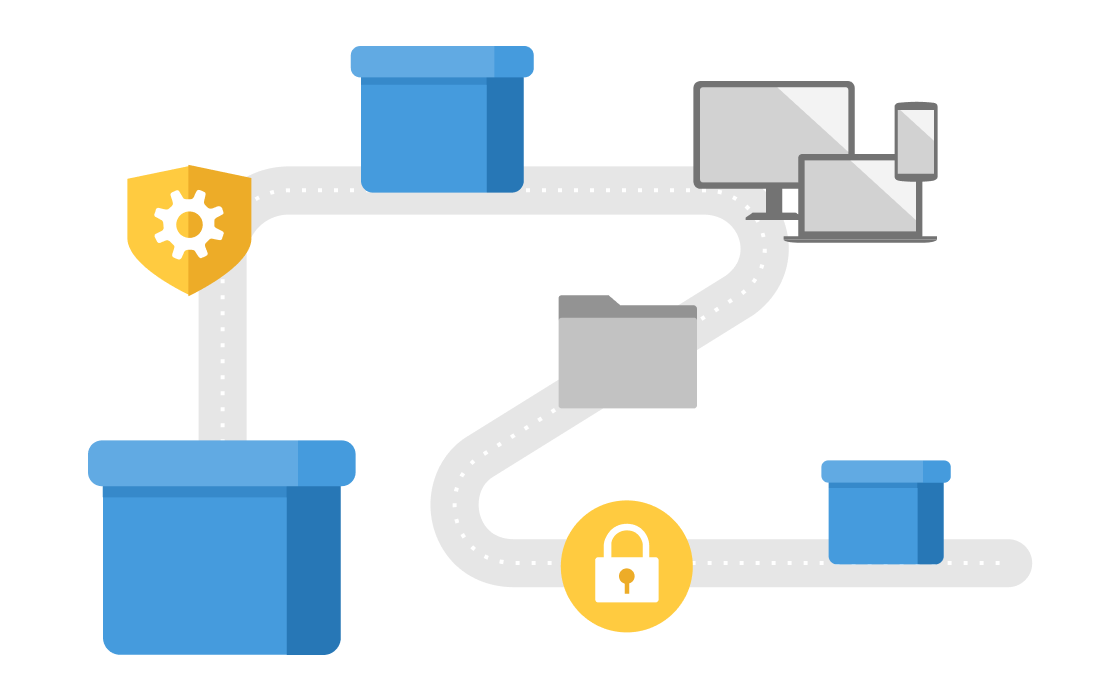
We published our last NuGet roadmap in June last year. Many of the features announced were major additions to NuGet and we have been hard at work to implement those over the last few months. In this post, we will start by summarizing the features we have completed and then peek into the next wave of work planned. Looking back Here are some features that were announced in our last roadmap blog post and have since been released. Cross-platform credential provider support for Azure Artifacts Status: Implemented | Documentation Before, there was no easy way to restore packages on Linux or macOS if you used Azure...
.NET Core April 2019 Updates – 2.1.10 and 2.2.4

Today, we are releasing the .NET Core April 2019 Update. These updates contain security and reliability fixes. See the individual release notes for details on included fixes. Security Microsoft Security Advisory CVE-2019-0815: ASP.NET Core Denial of Service Vulnerability A denial of service vulnerability exists in ASP.NET Core 2.2 where, if an application is hosted on Internet Information Server (IIS) a remote unauthenticated attacker can use a specially crafted request to cause a Denial of Service. The vulnerability affects any Microsoft ASP.NET Core 2.2 applications if it is hosted on an IIS s...
A portable way to get GC events in process and no admin privilege with 10 lines of code (and ability to dynamically enable/disable events)

I’ve been talking about doing managed heap performance analysis with ETW events for ages because ETW is just such a powerful tool. It has a well defined format so many components, from kernel modes to user mode ones, all emit ETW events which means you can have tools that just know how to parse the event format and correlate them. At Microsoft perf teams have analysis that tells you “this long request took X ms and X0 ms was due to a kmode component0, X1 ms was due to a umode component1 and etc” by interpreting ETW events. This is immensely useful. However, you do need admin privilege to turn on ETW events whi...
Announcing ML.NET 1.0 RC – Machine Learning for .NET

ML.NET is an open-source and cross-platform machine learning framework (Windows, Linux, macOS) for .NET developers. Using ML.NET, developers can leverage their existing tools and skillsets to develop and infuse custom AI into their applications by creating custom machine learning models for common scenarios like Sentiment Analysis, Recommendation, Image Classification and more!. Today we’re announcing the ML.NET 1.0 RC (Release Candidate) (version ) which is the last preview release before releasing the final ML.NET 1.0 RTM in 2019 Q2 calendar year. Soon we will be ending the first main milestone of a great...
Web and Azure Tool Updates in Visual Studio 2019

Hopefully by now you’ve seen that [Visual Studio 2019 is now generally available][1]. As you would expect, we’ve added improvements for web and Azure development. As a starting point, Visual Studio 2019 comes with [a new experience for getting started with your code][2] and we updated the experience for creating ASP.NET and ASP.NET Core projects to match: