
Azure DevOps Blog
DevOps, Git, and Agile updates from the team building Azure DevOps
Latest posts
Organization profile image

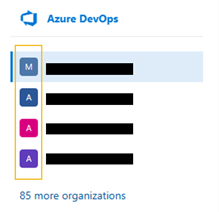
Well, it’s hard to believe it’s already 2023! Here at Azure DevOps, we want to wish all of you a Happy New Year and share a small improvement we just added to the product roadmap. An Azure DevOps organization is created with an automatically generated profile image, based on the first letter in the organization name. This makes it hard for users accessing multiple organizations to differentiate one from another in the list. We’ll add the ability to upload an image of your choice, so that it more accurately reflects the brand of your organization. Community Suggestion Ticket You’ll see us adding more and more ...
Node runner update guidance for Azure Pipelines task authors

Introduction This blog post contains important guidance for Azure Pipelines task authors. Task authors are developers that create custom pipeline tasks that are published on the Marketplace and/or used internally in their organization. Background Azure Pipeline tasks are executed using Task runners, which in turn are bundled with and invoked by the Pipelines agent. Tasks use Node or PowerShell runners, which are distributed with the agent in the agent directory. The PowerShell runner uses Windows PowerShell. Therefore, to run cross-platform e.g. on macOS and Ubuntu, most tasks use a Node runner. For example,...

December patches for Azure DevOps Server

This month, we are releasing fixes that impact our self-hosted product, Azure DevOps Server. The following will be fixed with this patch: Azure DevOps Server 2020.1.2 Patch 4 If you have Azure DevOps Server 2020.1.1, you should first update to Azure DevOps Server 2020.1.2. Once on Update 1.2, install Azure DevOps Server 2020.1.2 Patch 4. Check out the release notes for more details. Verifying Installation Azure DevOps Server 2019.1.2 Patch 2 If you have Azure DevOps Server 2019.1.1, you should first update to Azure DevOps Server 2019.1.2. Once on Update 2019.1.2, install Azure DevOps Server 2019.1...

New Boards Hub, Sprint 214 Update

List of New Boards Hub bugs fixed in sprint 214. We enabled the "Try New Boards Hub" message across another ring of accounts. The process continues to go slower than originally expected. Every time we enable the message, we receive more feedback on issues that need to be fixed. This process will continue over the next couple of sprints. We want to get the rollout right and the issues fixed before making New Boards Hub the default experience. Notable bugs fixed Note: Although these items are fixed, they may not be released to all organizations yet. Rollout can take a few days to a couple weeks. We appreciate ...
Updated: Now available: Azure DevOps Server 2022 RTW
12/16 Update: There is an additional step that you will have to follow while upgrading to Azure DevOps Server 2022. This applies to Azure DevOps Server/Team Foundation Server and Elasticsearch installations on the same and in different machines. You will have to select Install New Search while configuring search post Azure DevOps Server upgrade. Re-indexing is not required in this case. If any index is found which is below 6.x then re-indexing is required for that index to upgrade Elasticsearch to 7.x. The following table includes mapping of Azure DevOps Server/Team Foundation Server and Elasticsearch ...

Upgrade of .NET agent for Azure Pipelines

We are upgrading the .NET used by Azure Pipelines agent from current .NET Core 3.1 to .NET 6. This is to support new Apple silicon hardware as well as newer operating systems such as Ubuntu 22.04, or Windows on ARM64. Another reason for the .NET upgrade is the fact the .NET Core 3.1 version is already in maintenance phase and the support ends on December 13th, 2022. This means there will be no patches after this date. See .NET and .NET Core official support policy (microsoft.com) and .NET Core 3.1 reaching end of support on December 13th, 2022 for more details. We do not want our customers to build and release th...

New Boards Hub, Sprint 213 Update
Nothing exciting to report for sprint 213. We spent most of our time fixing issues and continue to make good progress. You will also see the new usability feature added below. Notable bugs fixed Note: Although these items are fixed, they may not be released to all organizations yet. Rollout can take a few days to a couple weeks. Copy link to comments feature Using the new "Copy link" action, you can copy a link to a specific work item comment. Paste that link into another work item comment or description. When clicked on, the work item will be opened, and the comment is highlighted. What is next? Contin...

Azure DevOps client libraries migrated to MSAL

The Microsoft.VisualStudio.Services.InteractiveClient library is a public NuGet package that takes care of authenticating to Azure DevOps Services. It abstracts away the acquisition, management and refreshing of authentication tokens, so developers can focus on their goals and stay productive. Historically, the interactive client library has been dependent on the Microsoft.IdentityModel.Clients. ActiveDirectory (or ADAL, for short) to authenticate against Azure Active Directory. With ADAL coming close to the end of its lifecycle, we have updated the interactive client to use a new authentication library - Micros...
All Azure DevOps REST APIs now support PAT scopes

Recently, the Azure DevOps team completed an initiative to associate all Azure DevOps REST APIs with a granular personal access token (PAT) scope. As part of our ongoing investments in security, we undertook this effort to reduce the risks associated with a leaked PAT credential. Previously, a number of Azure DevOps REST APIs were not associated with a PAT scope, which at times led customers to consume these APIs using full-scoped PATs. The broad permissions of a full-scoped PAT (all permissions of their corresponding user), in the hands of a malicious actor, represent a significant security risk to organizations...