
Azure Cosmos DB Blog
The latest news, updates and technical insights from the Azure Cosmos DB team
Latest posts

Monitor Azure Managed Instance for Apache Cassandra using Dynatrace

There is now a new extension from Dynatrace that provides fully app-centric Cassandra performance monitoring for Azure Managed Instance for Apache Cassandra. Monitor your clusters with Dynatrace Prometheus Extension Dynatrace Prometheus Extension allows you to monitor and analyze the activity of your Azure Managed Instance for Apache Cassandra clusters, from both data and infrastructure perspectives. It helps visualize your cluster's health and shows metrics like CPU, connectivity, request latency, suspension, and garbage collection time. Additionally, with Davis, it automatically detects performance problems a...
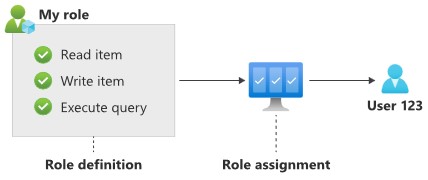
Role-based access control in Azure Cosmos DB API for MongoDB: Now in preview

Role based access control (RBAC) is a much-needed capability in any database for enterprises. It lets you simplify your access control mechanism without added management. We have introduced RBAC in Azure Cosmos DB API for MongoDB, which allows you to: How does it work? API for MongoDB RBAC is built on concepts that are commonly found in other RBAC systems like Azure RBAC, including: How to get started? Using RBAC is a simple 4 step process. 1. Enable RBAC on Azure Cosmos DB API for MongoDB To use RBAC in API for MongoDB, you need to enable this capability in your Azure Cosmos D...

Run parallel CRUD operations with Python Async IO for Azure Cosmos DB

Async IO support for Azure Cosmos DB Python SDK, an important and much-anticipated capability, is now generally available (GA) for Python developers, data scientists, and any other professional that uses our Azure Cosmos DB Python SDK. Benefits Async IO support makes it easier to run multiple IO operations in parallel. The main advantage of Async IO support, like with most asynchronous clients, is to improve performance. Async IO makes it easy to run multiple IO operations (such as querying Azure Cosmos DB) at the same time, rather than waiting for each operation to complete before running the next one. With ...
Benchmarking Data Migration from Cassandra to Azure Cosmos DB Cassandra API


About the authors: Akash & Alp We are working with many customers who for a variety of reasons such as not having to deal with patching the O/S, upgrades, scalability, etc. are looking to move their Cassandra IaaS workloads to Azure and one of the destinations is Azure Cosmos DB Cassandra API. We wanted to explore and dive deeper into performance details when we execute a historical data migration from Cassandra IaaS into Azure Cosmos DB Cassandra API. By historical data migration, we are referring to the one-time data movement as opposed to the incremental data updates which will typically come from the...
Introducing a new system function and optimized query operators

The query engine in Azure Cosmos DB Core (SQL) API now has a new system function and optimizations for a set of query operations to better use the index. In this post we’ll cover the new DateTimeBin function as well as improvements to GROUP BY, DISTINCT, OFFSET LIMIT, and JOIN. These example scenarios are for Contoso, a fictional online retailer that stores a product catalog of 1 million items in Azure Cosmos DB. They have 1.5 GB of data stored in a container partitioned by the id property. Here’s an example document: DateTimeBin system function Contoso wants to know how many products were made avail...

Azure Cosmos DB at Microsoft Build 2022 Review – Episode 45


Welcome back! We hope you enjoyed all the content and updates from the 2022 edition of Microsoft Build. Developers were able to watch and virtually attend over 500 different live sessions covering topics ranging from Java, Kubernetes, and Azure Cosmos DB, and more! Check out the video below for the full recap on the new and exciting features we announced for Azure Cosmos DB at this year’s Build. In this episode of Azure Cosmos DB Live Mark and his guests from the Azure Cosmos DB Program Management team will discuss and recap all the new announcements around Azure Cosmos DB at the 2022 edition of Microsoft Bu...
Simplified Write and Read Paths in the Azure Cosmos DB Cassandra API

Azure Cosmos DB is a fully managed service which can be used as a backing data store for applications using Apache Cassandra, using the API for Cassandra. Built on top of Azure Cosmos DB, the Cassandra API provides scale, performance and availability guarantees while eliminating the operational overhead needed to manage Cassandra data. In this blog post, we dive into what goes on behind the scenes when read and write requests are sent to a Cassandra API endpoint. By delving into the details, we list the various components that are fully managed and optimized by the service and no longer require fine grained us...
Announced at Microsoft Build: New features for scalable, cost-effective application development

Microsoft Build starts today and features exciting announcements about Azure Cosmos DB, along with demonstrations of new features and interactive sessions with members of our product team. We hope you’re able to join us live or on-demand. New features for developers to build and deploy scalable applications Azure Cosmos DB has been the database of choice for cloud-native app development on Azure since its launch at Microsoft Build in 2017. Developers now have more ways to dev/test free with Azure Cosmos DB. MongoDB data is now supported in public preview by the desktop Azure Cosmos DB Emulator for Linux, and t...

Watch Now! Azure Cosmos DB Essentials Season 3

Season 3 is finally here! Explore and dive into the diverse types of architectures our customers use to build lightweight IoT & real-time telemetry applications by leveraging Azure Cosmos DB. Mustafa Branch and Mark Brown walkthrough use case diagrams, explain how data flows throughout the cloud application architecture, and explore the relevant Azure Cosmos DB features and capabilities for this use case. Azure Cosmos DB Data Ingestion Azure Cosmos DB has the capability to ingest substantial amounts of data to support your applications by leveraging the following capabilities: ...