
Azure DevOps Blog
DevOps, Git, and Agile updates from the team building Azure DevOps
Latest posts

Agentic Autofix for GitHub Advanced Security for Azure DevOps is in public preview

Today, we're announcing the public preview of Agentic Autofix for GitHub Advanced Security for Azure DevOps. Thank you to everyone who participated in our June private preview and our October limited preview. Your feedback helped us expand alert coverage, improve failure handling, and prepare the experience for broader rollout. With Agentic Autofix, cut time to remediate code vulnerabilities with ready-to-review, AI-generated fixes built into the developer workflow. Here's how to get started. Enable Copilot Autofix Administrators can enable Copilot Autofix at the organization, project, or repository level. F...

New guidance to optimize Git performance in Azure Repos

Git works well for most development workflows. But a change that seems harmless can make a repository harder to work with. Here are a few examples of how that can happen. Committing binaries directly to your repository Binaries are more likely than source code files to differ a lot between versions, so delta compression is less effective. This makes the repository grow faster. Reordering generated content If you use generated text that adds or removes a small amount of data with each change, but the data isn't ordered consistently, Git then ends up storing extra data for what would otherwise be a small upda...
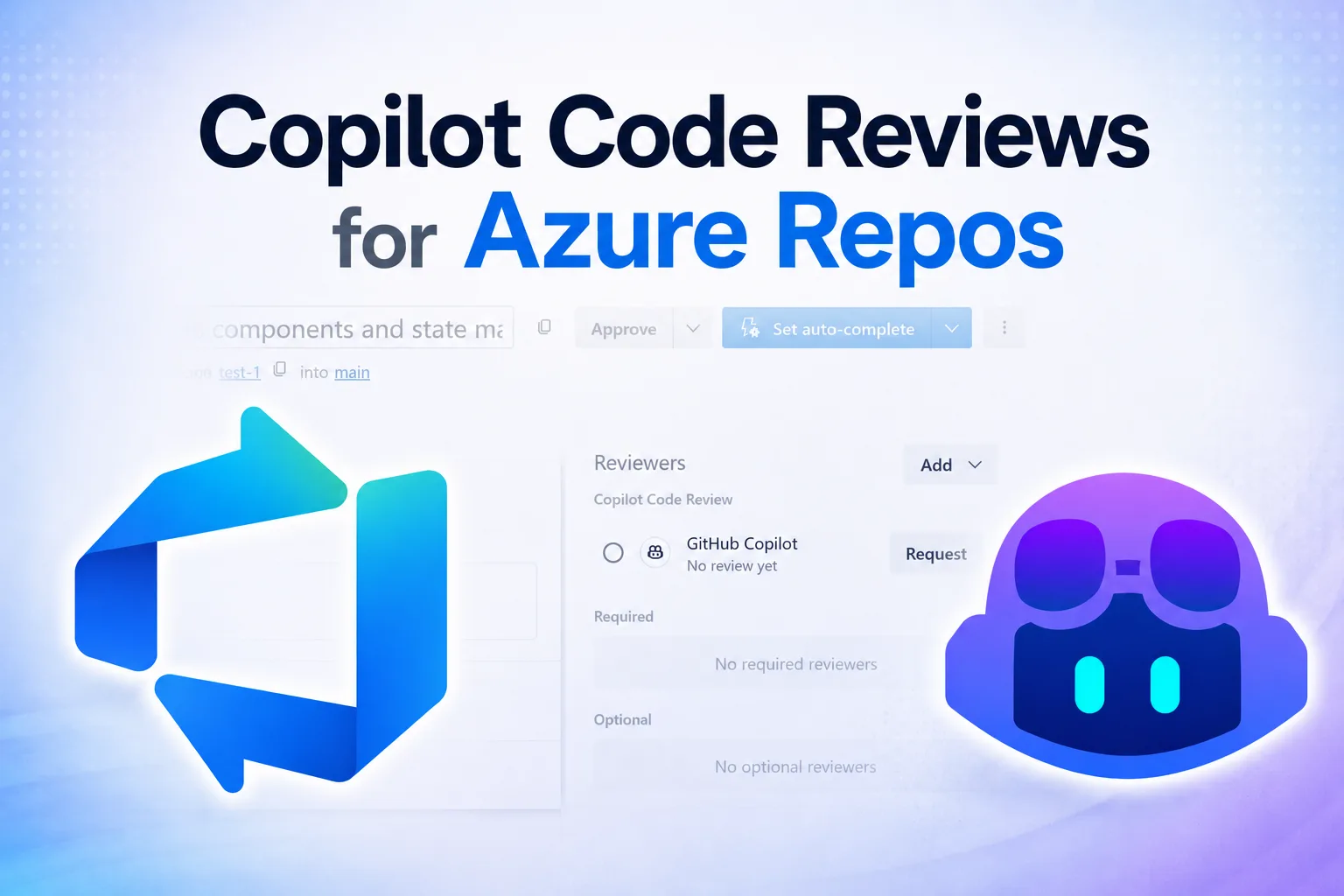
Copilot Code Reviews for Azure Repos is generally available

Copilot Code Review for Azure Repos is now generally available. Use GitHub Copilot to review pull requests, identify issues, and suggest code changes.
Azure DevOps integration with the GitHub Copilot app (public preview)
We’re excited to announce the public preview of Azure DevOps integration in the Copilot app. You can now start agent sessions that work directly with your Azure DevOps repositories to create branches, make code changes, commit changes, and open pull requests. This brings GitHub Copilot's coding agents to teams using Azure DevOps repositories. What is the Copilot app? The GitHub Copilot app is a standalone desktop application that lets developers delegate coding tasks to AI agents. You can ask Copilot to explore a codebase, implement changes, fix bugs, and create pull requests, all from one place. The app also ...
Azure DevOps and GitHub: Start Your Agentic Journey Where You Are

Software development is changing fast as developers shift from writing code to directing agents. Today, we’re bringing more of that agentic experience to Azure DevOps teams who keep their code in Azure Repos: the GitHub Copilot app now works with Azure Repos, Copilot Code Review for Azure DevOps is generally available, and Copilot Autofix for GitHub Advanced Security for Azure DevOps is in public preview. Together, these updates let Copilot plan, code, review, and secure your software across your work items, repositories, pull requests, and pipelines, so you can start your agentic journey from where you are. Br...

October 2026 Node.js vulnerabilities: Azure DevOps security guidance

On October 21, 2026, the Node.js project released fixes for 10 vulnerabilities. These include flaws in DNS resolution and TLS certificate validation, along with a Brotli decompression bug that can corrupt memory and potentially allow code execution when an application processes attacker-controlled data. The fixes shipped in 22.23.4, 24.22.1 and 26.12.1, with different affected branches and prerequisites for each CVE. Azure Pipelines can use Node.js in several contexts, including agent task runners, pipeline-selected tools and application runtimes. Each has a separate update path. Vulnerability scope...
Azure DevOps Server RC (26H2) Is Now Available

Today we're releasing the release candidate (RC) of the next Azure DevOps Server release. It brings new features previously available in our hosted version, along with security and quality improvements. You can download Azure DevOps Server RC (26H2) today. A direct upgrade to Azure DevOps Server RC is supported from any version of Team Foundation Server, including Team Foundation Server 2015 and newer. Direct upgrade from this RC release to the eventual RTW will be supported. If you prefer to wait until RTW to upgrade your servers, trying out this RC on a test deployment is a great first step. Note: Extended ...
PHP2Shell and Azure DevOps: what to check
On October 21, 2026, PHP disclosed two critical vulnerabilities that can allow remote code execution. Neither Azure DevOps Services, our cloud-hosted offering, nor Azure DevOps Server, our on-premises product, uses PHP to handle customer requests. PHP runtimes used by pipelines, containers, and deployed applications have their own patching requirements. Deployment scope: cloud and on-premises Azure DevOps Services (cloud). Microsoft operates and updates the service. You remain responsible for PHP installed by your pipeline steps or bundled into custom images and applications. Azure DevOps Server (on-premises)...

Introducing Agentic Autofix for code and dependencies
Fixing a vulnerability takes more than knowing where it is. You need a change that follows your coding standards and works with the rest of your code. Copilot Autofix for GitHub Advanced Security for Azure DevOps now runs on an agentic foundation. It also supports dependency vulnerability fixes and code scanning alerts from third-party tools. Select the alert to address, Autofix works in the background on a proposed change in your existing Azure DevOps workflow, and your team keeps the final decision on what to merge. Agentic fixes use your repository context Your team might require a shared validation helper...