
Azure Cosmos DB Blog
The latest news, updates and technical insights from the Azure Cosmos DB team
Latest posts
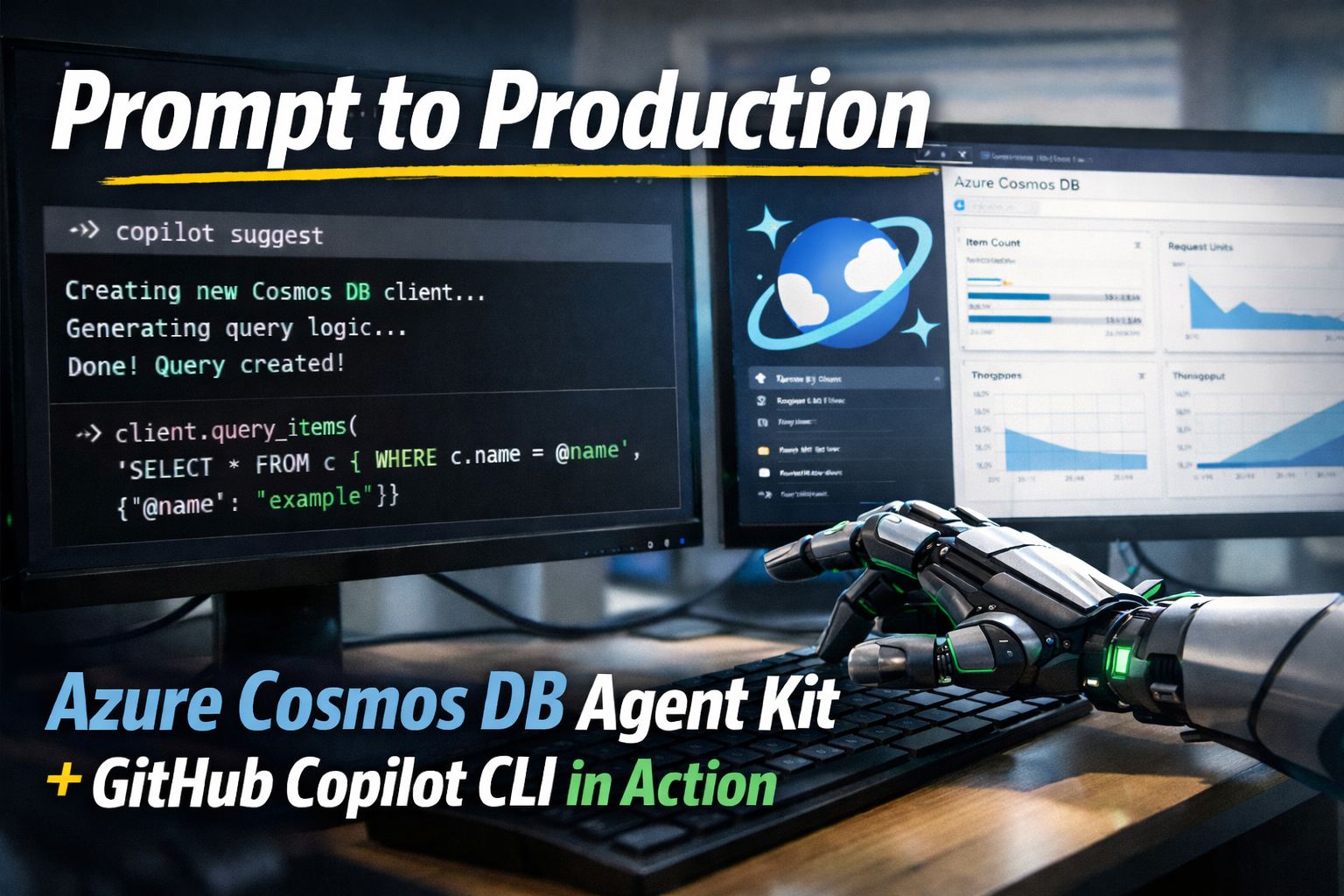
Accelerate Your Cosmos DB Infrastructure with GitHub Copilot CLI and Azure Cosmos DB Agent Kit

Modern infrastructure work is increasingly agent driven, but only if your AI actually understands the platform you’re deploying. This guide shows how to turn GitHub Copilot CLI into an Azure Cosmos DB aware infrastructure expert by loading the Azure Cosmos DB Agent Kit. In under a minute, you’ll give Copilot deep, opinionated knowledge of Azure Cosmos DB best practices so it can review, generate, and optimize your Terraform, Bicep, Docker, and CI/CD configurations directly from your terminal. TL;DR — Get Started in 30 Seconds That's it! Copilot CLI now has expert-level Azure Cosmos DB infrastructure knowl...
Azure Cosmos DB TV Recap: Supercharging AI Agents with the Azure Cosmos DB MCP Toolkit (Ep. 110)


In Episode 110 of Azure Cosmos DB TV, host Mark Brown is joined by Sajeetharan Sinnathurai to explore how the Azure Cosmos DB MCP Toolkit is changing the way developers build, deploy, and scale AI agents using real application data. As agentic AI systems evolve, one challenge continues to surface: securely and consistently connecting AI agents to operational data—without rewriting integration logic for every platform. This episode takes a deep dive into how the Model Context Protocol (MCP), along with Azure Azure Cosmos DB’s implementation, addresses that challenge. Why MCP Matters for AI Agents At its cor...
Introducing the Azure Cosmos DB Agent Kit: Your AI Pair Programmer Just Got Smarter
The Azure Cosmos DB Agent Kit is an open-source collection of skills that teaches your AI coding assistant (GitHub Copilot, Claude Code, Gemini CLI) expert-level Azure Cosmos DB best practices. Install with one command, get production-ready guidance instantly. The Challenge Every Azure Cosmos DB Developer Faces You're building a new application with Azure Cosmos DB. You've got your data, you've got your queries, but then come the questions that keep you up at night: These aren't trivial questions. Poor decisions here can mean the difference between a blazing-fast application and one that...
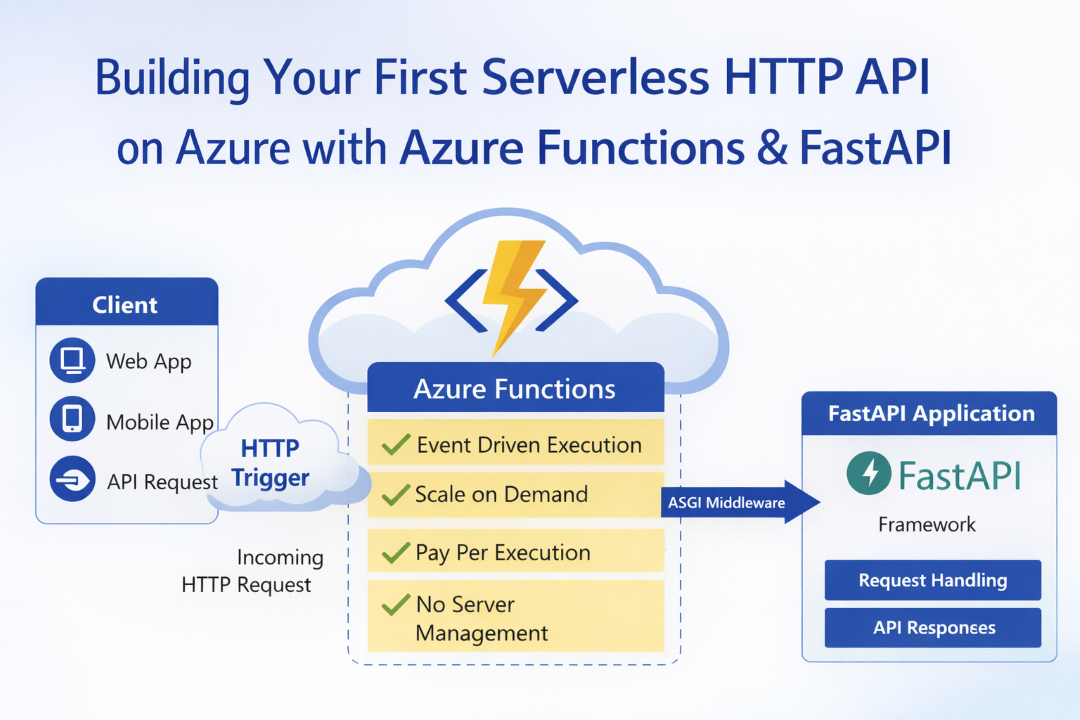
Part 1: Building Your First Serverless HTTP API on Azure with Azure Functions & FastAPI

Introduction This post is Part 1 of the series Serverless Application Development with Azure Functions and Azure Cosmos DB, where we explore how to build end-to-end serverless applications using Azure Functions for compute and Azure Cosmos DB for storage. Together, these services allow you to build scalable, event-driven, cost-efficient cloud solutions without managing servers or infrastructure. Throughout the series, you’ll progressively build real application components starting with simple HTTP APIs, adding persistent storage, implementing event-driven patterns using the Cosmos DB Change Feed, and orches...
Azure Cosmos DB Conf 2026 — Call for Proposals Is Now Open
Every production system has a story behind it. The scaling limit you didn’t expect. The data model that finally clicked. The tradeoff you had to make under real-world pressure. The solution that worked—and the lessons you’d pass on to the next team. Azure Cosmos DB Conf 2026 is where those stories get shared. This is a global, developer-first conference focused on real-world engineering with Azure Cosmos DB, Azure DocumentDB, and open-source DocumentDB. It’s about showing how things actually work in production—through real architecture, real code, and live demos—not high-level concepts or marketing ...

Powering Real-Time Gaming Experiences with Azure Cosmos DB for NoSQL

Scenario: When Every Millisecond Counts in Gaming Imagine millions of players logging in at the exact moment a new game season launches. Leaderboards light up, achievements tally, and in-game shops buzz with transactions. In these high-stakes moments, speed and reliability aren’t optional, they’re mission critical. That’s where Azure Cosmos DB with the NoSQL API steps in, powering real-time, global gaming experiences without missing a beat. Why Gaming Needs a Next-Gen Database Modern gaming experiences must withstand massive user surges, where game launches and updates can trigger huge spikes in concurrent p...
Public Preview: Cosmos DB Mirroring in Microsoft Fabric with Private Endpoints
We are very excited to announce the public preview for private endpoint support for Azure Cosmos DB Mirroring with Microsoft Fabric mirroring. This feature allows you to preserve the enhanced network security on your data in Cosmos DB from virtual networks or private endpoints, allowing you to seamlessly replicate your operational data in Cosmos DB using Mirroring into your Fabric Workspaces. Configuring Mirroring with Private Endpoints The process for configuring Mirroring on your Cosmos DB accounts with private endpoints during our preview requires multiple steps. To see these steps in detail...
Build AI Tooling in Go with the MCP SDK – Connecting AI Apps to Databases

A hands‑on walkthrough of building MCP servers that can plug AI applications into Azure Cosmos DB The Model Context Protocol (MCP) has established itself as the ubiquitous standard for connecting AI applications to external systems. Since its release, there have been implementations across various programming languages and frameworks, enabling developers to build solutions that expose data sources, tools, and workflows to AI applications. For Go developers, however, the journey to an official MCP SDK took longer (compared to other SDKs like Python and TypeScript). Discussions and design/implementation w...
How Azure Cosmos DB Powers ARM’s Federated Future: Scaling for the Next Billion Requests

The Cloud at Hyperscale: ARM’s Mission and Growth Azure Resource Manager (ARM) is the backbone of Azure’s resource provisioning and management, orchestrating billions of daily requests from customers around the globe. ARM manages all resources for Azure: VMs, Storage, Databases, etc. As Azure’s reach expands and customer expectations rise, ARM’s architecture must not only keep pace—it must set the pace for cloud-scale reliability, agility, and innovation. In recent years, ARM has seen its request volume surge at an exponential rate, reaching unprecedented levels that continually redefine the boundaries of c...
Unlock the power of distributed graph databases with JanusGraph and Azure Apache Cassandra
Connecting the Dots: How Graph Databases Drive Innovation In today’s data-rich world, organizations face challenges that go beyond simple tables and rows. Whether it’s uncovering hidden relationships in social networks, detecting fraud, or powering recommendation engines, graph databases offer a unique way to model and analyze complex connections. JanusGraph, an open-source graph database, combined with Azure Managed Instance for Apache Cassandra, provides a scalable, secure, and flexible foundation for building graph-powered applications making it easier for teams to tackle problems that traditional database...
Azure Cosmos DB vNext Emulator: Query and Observability Enhancements
The Azure Cosmos DB Linux-based vNext emulator (preview) is a local version of the Azure Cosmos DB service that runs as a Docker container on Linux, macOS, and Windows. It provides a cost-effective way to develop and test applications locally without requiring an Azure subscription or network connectivity. The latest release brings improvements in two key areas: Query Improvements This emulator release enables several query patterns that were previously unsupported. In this post, we'll focus on the following enhancements to query capabilities: Let's explore these with practical...
Azure Cosmos DB : Becoming a Search-Native Database


For years, “Database” and “Search systems" (think Elastic Search) lived in separate worlds. While both Databases and Search Systems operate in the same domain (storing, indexing and querying data), they prioritized different aspects. OLTP Databases prioritized Search Systems prioritized AI and Agents are accelerating the dissolution of the boundary between these two systems. AI solves real world problems in near-real-time that needs both of these systems. Using separate systems for these specializations not only leads to high overhead, but leads to sub-optimal relevanc...
Long-term data retention up to 10 years: Announcing Private Preview of Azure Backup for Azure Cosmos DB
![Hans Wieser [MS]](https://devblogs.microsoft.com/cosmosdb/wp-content/uploads/sites/52/2025/12/Hans_Wieser_173-small-96x96.png)
Azure Backup for Azure Cosmos DB is a new option that lets you securely protect and recover your Azure Cosmos DB data for compliance, audit, and ransomware protection scenarios. It leverages Azure Backup’s vault isolation and Azure Cosmos DB’s native backup streams to deliver scalable, long-term data protection that meets regulatory requirements. How does it work? During the private preview, you can configure backup schedules and retention policies at the Azure Cosmos DB account or collection level, stream backups to a vaulted, isolated Azure Backup Vault, and restore data to an empty Azure Cosmos DB account in...

Tata Neu delivers personalized shopping experiences for millions of users with Azure DocumentDB

With Azure DocumentDB, Tata Neu delivers seamless authentication for millions of users, accelerates credit card onboarding across partners, unifies loyalty programs for hundreds of millions of members, and powers AI-driven support experiences across more than 60 brands. This article is coauthored by Anurag Mathur, the VP and Head of Foundational Services at Tata Digital, and Bhaskar Chellappa, the VP and Head of TechOps at Tata Digital Introducing Tata Neu: Tata Digital's unified app Tata Neu is designed to deliver an extensive yet highly personalized shopping experience. The culmination of more than t...
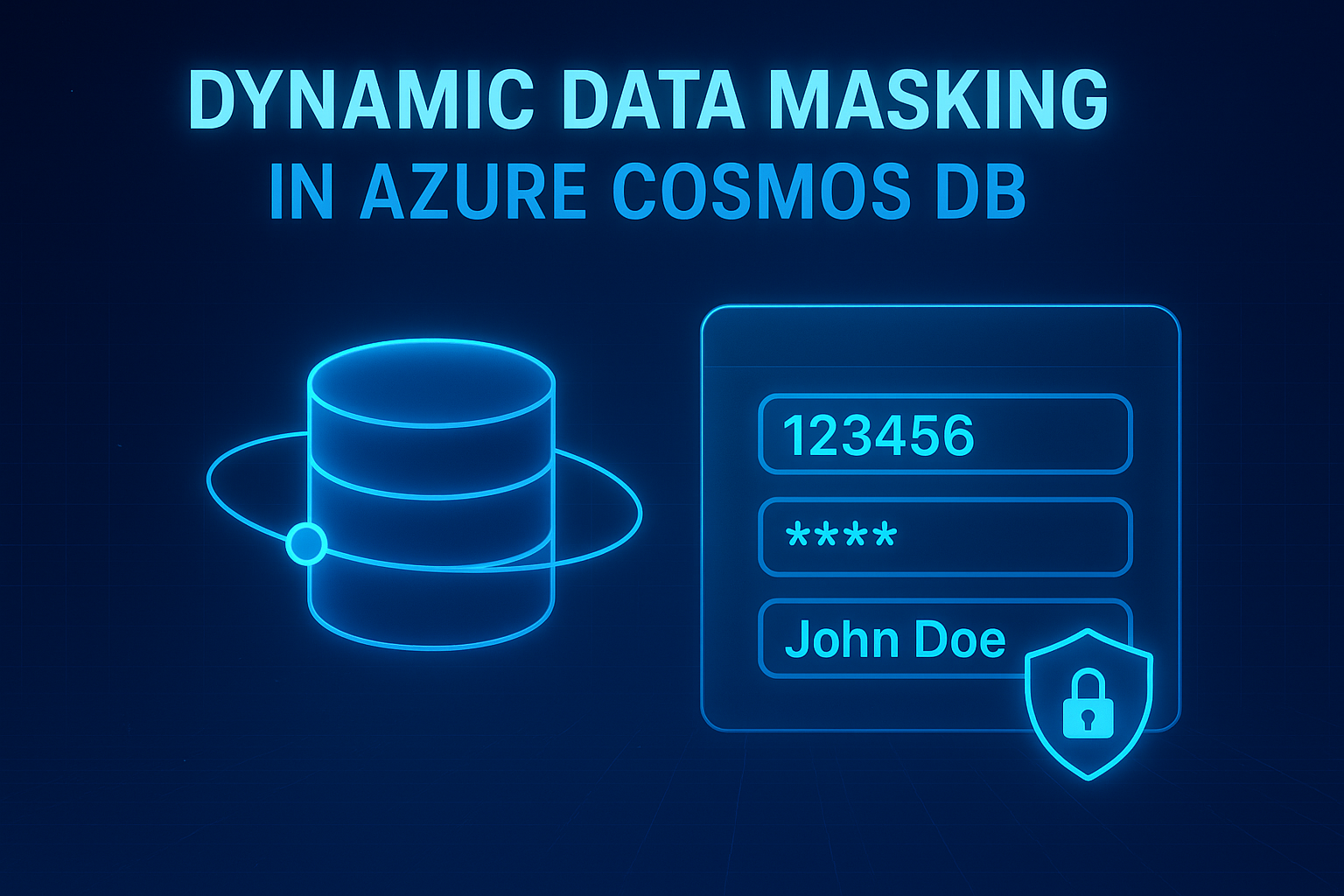
Announcing: Dynamic Data Masking for Azure Cosmos DB (Preview)

Today marks a big step forward with the public preview of Dynamic Data Masking (DDM) for Azure Cosmos DB. This feature helps organizations protect sensitive data without requiring changes to application logic or database interactions. What is Dynamic Data Masking? Dynamic Data Masking (DDM) is a server-side, policy-driven security feature that automatically masks sensitive information for non-privileged users. When enabled, DDM ensures that only authorized users can view unmasked data, while others see masked or redacted values. The original data remains unchanged in the database, and masking occurs in real tim...
Use Azure SRE Agent with Azure Cosmos DB: Smarter Diagnostics for Your Applications

We’re excited to announce the Azure Cosmos DB SRE Agent built on Azure SRE Agent; a new capability designed to simplify troubleshooting and improve reliability for your applications running on Azure Cosmos DB. Some key features of Azure Cosmos DB SRE Agent are: Benefits of using Azure Cosmos DB SRE Agent Managing distributed applications can be complex. The Azure Cosmos DB SRE Agent bridges the gap by: Azure Cosmos DB SRE Agent Scenario Integrating Azure SRE Agent with your Azure Cosmos DB resource can leverage diagnostics to help identify issues or areas for improvement....
Announcing Private Preview: Safe Account Key rotation using Account Key Usage Metadata
Account Key Usage Metadata is a new security and observability feature that helps Azure Cosmos DB customers avoid service disruptions during key rotations. It provides visibility when each account key was last used, allowing teams to make informed decisions before rotating or migrating to Entra ID. This feature addresses a common challenge of rotating a key that appears unused but is still actively relied upon by critical applications—leading to unexpected outages. How Does It Work? In the private preview, on your Azure Cosmos DB account, you can view the last usage timestamp for each key. This timestamp r...
General Availability: Priority-Based Execution in Azure Cosmos DB
Have you ever faced a situation where two different workloads share the same container, and one ends up slowing down the other? This is a common challenge for many of our customers running applications on Azure Cosmos DB. Imagine these scenarios: In all these cases, there’s one workload you’d prefer to prioritize, ensuring critical operations run smoothly while others can progress slowly during resource contention. Introducing Priority-Based Execution Priority-Based Execution solves this problem. It lets you assign high priority to critical workloads and low priority to less important ones using...

Announcing Preview of Online Copy Jobs in Azure Cosmos DB: Migrate Data with Minimal Downtime!
We are excited to announce the preview of Online Copy Jobs, a powerful new feature designed to make data migration between containers seamless and efficient with minimal downtime. With this feature, you can replicate data from a source to a destination container in real time without disrupting your applications. What is an online copy job? Online Copy Jobs allow you to copy data from a source container to a destination container while your applications continue to run on the source. All data including incremental updates is automatically replicated, ensuring the destination container becomes an up-to-date repli...
Announced at Ignite 2025: Azure DocumentDB, MCP Toolkit, Fleet Analytics, and more!

Microsoft Ignite 2025 kicked off with a wave of announcements for Azure Cosmos DB and Azure DocumentDB, setting the tone for a week of innovation in cloud databases and AI. Here’s your one-stop summary of everything unveiled—and what to watch for in the sessions ahead. Major Azure Cosmos DB announcements from Ignite 2025 Azure DocumentDB now Generally Available Azure DocumentDB is now generally available, bringing a new level of openness, flexibility, and cost efficiency to MongoDB workloads. Built on the open-source DocumentDB engine – now governed by the Linux Foundation – Azure DocumentDB delivers Mongo...

Introducing Index Advisor for Azure DocumentDB (Preview)

We’re excited to announce the public preview of Index Advisor for Azure DocumentDB (with MongoDB Compatibility). It is a built-in AI powered performance tuning assistant that helps you understand slow queries, diagnose inefficiencies, and automatically generate optimized index recommendations. With Index Advisor, you can quickly analyze query structure, execution plans, and collection statistics to receive data-driven, plain-English index recommendations. Even better, you can apply these recommendations directly inside the DocumentDB for VS Code extension, making performance tuning faster, easier, and seamles...
Azure Cosmos DB Extension for VS Code Now Generally Available
We’re thrilled to announce the general availability (GA) of the Azure Cosmos DB extension for Visual Studio Code! This powerful extension brings enterprise-grade database management directly into your development environment, making it easier than ever to build, test, and deploy applications powered by Azure Cosmos DB. Why This Matters for Azure Cosmos DB Developers As a Cosmos DB developer, you know the importance of rapid iteration and seamless workflows. The Azure Cosmos DB VS Code extension eliminates context switching by bringing your database management tools directly into your I...
Now Generally Available: Azure Cosmos DB Fleet Pools

We’re excited to announce two updates to Azure Cosmos DB fleets: Azure Cosmos DB fleets enables developers to build scalable, isolated, and cost-effective multi-tenant or Software as a Service (SaaS) applications. Today, many SaaS providers using Azure Cosmos DB isolate each tenant (the end customer of the SaaS provider) in a separate database account to meet strict performance and security requirements—for example, supporting customer-managed keys. While this approach ensures tenant isolation, it creates operational complexity at scale. Managing thousands of RU/s settings becomes difficult, and p...
Public Preview: Azure DocumentDB Migration Extension Now Supports Online Migration to Azure DocumentDB (with MongoDB compatibility)

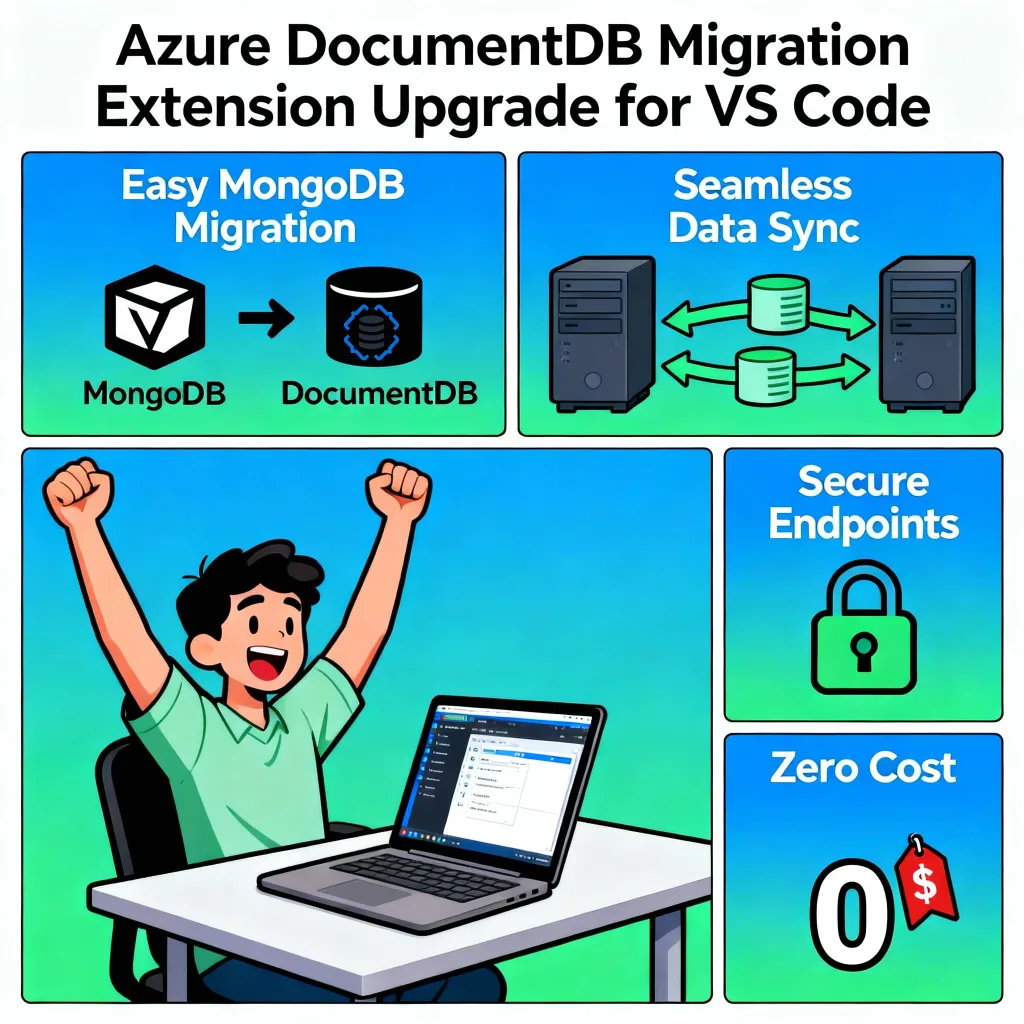
We’re excited to announce the Public Preview of a significant enhancement to the Azure DocumentDB (with MongoDB compatibility) Migration extension for Visual Studio Code—introducing online migration capability! This update makes it easier than ever to migrate MongoDB workloads to Azure DocumentDB with minimal downtime, maximum efficiency, and a fully managed experience. What Is the Azure DocumentDB Migration Extension? The extension is designed to simplify the migration process for MongoDB workloads. It provides a developer-friendly experience within Visual Studio Code, enabling you to assess, plan, and exe...
Azure DocumentDB is Now Generally Available

Azure DocumentDB, a fully managed MongoDB-compatible database service based on the open-source DocumentDB governed by the Linux Foundation, is now generally available. It was formerly known as vCore-based Azure Cosmos DB for MongoDB. Azure DocumentDB gives developers a multi-cloud, first-party document database on Azure that preserves MongoDB skills and tooling, improves portability through open source, and delivers clear cost control with a simple compute and storage-based model. At Ignite, we announced the AI-powered Index Advisor, Premium storage v2 disks, and the VS Code migration extensio...
Announcing: GA of Cosmos DB in Microsoft Fabric and Cosmos Mirroring
We’re excited to announce that Cosmos DB in Microsoft Fabric and Cosmos DB Mirroring are now Generally Available, uniting your operational and analytical data in one platform. You can now analyze live Cosmos DB data directly in Fabric—no complex or costly ETL required. Data stays in sync in OneLake, providing a single source of truth for real-time and historical insights. Write queries using T-SQL from a SQL Endpoint or use Python and Spark Notebooks in Fabric. As a distributed NoSQL database Cosmos DB in Fabric brings support for semi or unstructured data to analytics and ML workloads as well as a host of a...
Introducing the Azure Cosmos DB MCP Toolkit: Empowering AI Agents with Azure Cosmos DB Intelligence
We're excited to announce the Azure Cosmos DB MCP Toolkit in public preview. This open-source implementation of the Model Context Protocol (MCP) gives AI agents and LLMs direct, secure access to Azure Cosmos DB. The toolkit bridges intelligent applications and globally distributed databases, enabling AI agents to query, search, and understand data autonomously. The MCP Toolkit seamlessly integrates with Microsoft Foundry, a platform for building intelligent agents, AI workflows, and deploying AI models at scale. Developers can experiment, orchestrate, and manage AI applications from development to production. ...
What’s New in Semantic Search for Azure Cosmos DB at Ignite 2025

We’re excited to introduce new capabilities and performance improvements for vector and full-text search in Azure Cosmos DB. These updates make it easier for developers and architects to build semantic search experiences and generative AI applications on the world’s most scalable NoSQL database. Note: These new capabilities are actively rolling out. As a result, they may not yet be available in all Azure regions. Float16 Vector Support Save up to 50% on storage while maintaining high recall. You can now store and index vectors in Float16 format, reducing storage costs and memory usage while keeping...
Azure Cosmos DB Migration from MongoDB (RU) to Azure DocumentDB Is Now Generally Available!
After a successful public preview, we’re excited to announce the General Availability (GA) of online migration from RU-based Azure Cosmos DB for MongoDB to Azure DocumentDB (with MongoDB compatibility). This capability makes migration fast, simple, and cost-free—all through the Azure portal. Why This Matters If you’re running workloads on RU-based Cosmos DB for MongoDB, you can now move to Azure DocumentDB without downtime or extra cost. The GA release ensures a seamless experience: everything happens online, directly in the Azure portal, with no hidden charges or additional tools. What You Get Migration is d...

How Kraft Heinz achieved 1,400x faster data lineage with Azure DocumentDB’s DiskANN vector search and hybrid search
This article is authored by Gurvinder Singh, Principal Cloud Engineer at The Kraft Heinz Company. ICYMI: Hear how Kraft Heinz built an AI-powered data lineage solution leveraging Azure DocumentDB hybrid search and graph querying capabilities - watch the Ignite session here: Move fast, save more with MongoDB-compatible workloads on DocumentDB The enterprise-scale challenge: Data lineage across 50+ interconnected systems At Kraft Heinz, we operate one of the world’s largest CPG data ecosystems with more than 200 brands and 50+ interconnected enterprise systems—including SAP, Oracle, Snowflake, and Po...
Configuring Advanced High Availability Features in Azure Cosmos DB SDKs

Azure Cosmos DB is engineered from the ground up to deliver high availability, low latency, throughput, and consistency guarantees for globally distributed applications. As mission-critical systems increasingly rely on Cosmos DB for performance at scale, understanding and configuring advanced high availability features becomes essential. Advanced high availability capabilities in Azure Cosmos DB Azure Cosmos DB provides a rich set of features to support high availability and resilience: These capabilities form the backbone of Cosmos DB's 99.999% availability SLA. To fully realize the ...

IntelePeer supercharges its agentic AI platform with Azure Cosmos DB
Reducing latency by 50% and scaling intelligent CX for SMBs This article was co-authored by Sergey Galchenko, Chief Technology Officer, IntelePeer, and Subhash Ramamoorthi, Director, IntelePeer AI Hub. ICYMI: Discover how IntelePeer enhances agent intelligence and powers their multi-agent applications - watch the Ignite session here: From DEV to PROD: How to build agentic memory with Azure Cosmos DB. You don’t need to be an AI expert, software engineer, or data scientist to understand the importance of system reliability and performance in digital customer service platforms. If you’ve ever tried to...
From Real-Time Analytics to AI: Your Azure Cosmos DB & DocumentDB Agenda for Microsoft Ignite 2025
Microsoft Ignite 2025 is your opportunity to explore how Azure Cosmos DB, Cosmos DB in Microsoft Fabric, and DocumentDB power the next generation of intelligent, planet-scale applications. Whether you’re building real-time analytics pipelines, optimizing MongoDB-compatible workloads, or implementing AI-driven architectures, these technologies are at the heart of modern innovation. This year’s sessions feature hands-on labs, advanced breakouts, and inspiring customer stories from companies like Sam’s Club, Veeam, and Sitecore, showing how they leverage Azure Cosmos DB and DocumentDB to deliver speed, re...
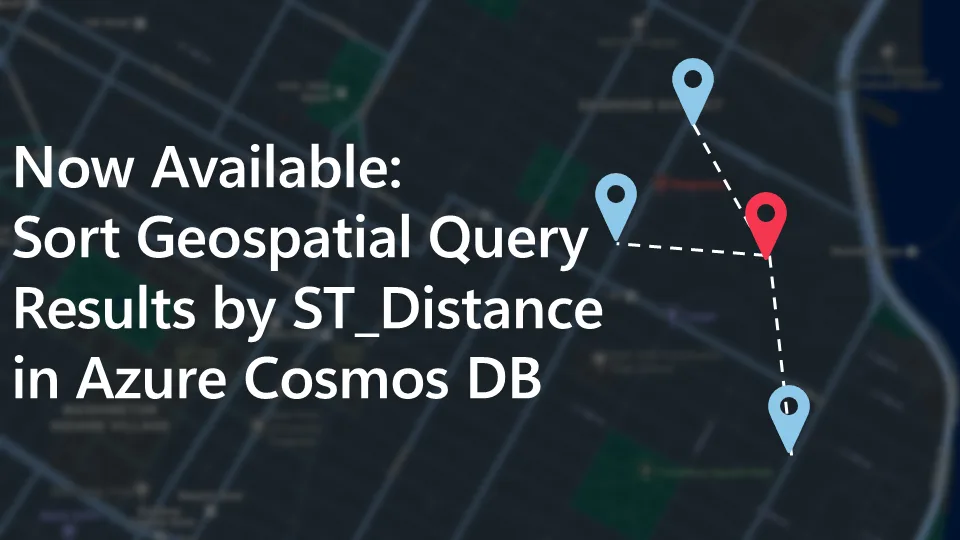
Now Available: Sort Geospatial Query Results by ST_Distance in Azure Cosmos DB
Azure Cosmos DB’s geospatial capabilities just got even better! We're excited to announce that you can now sort query results by distance using an ORDER BY ST_DISTANCE(...) clause in the NoSQL query language while leveraging a spatial index. Why is this important? Previously, you could use ST_DISTANCE in projections or WHERE clauses to filter results within a radius, for example, finding all restaurants within 5000 meters. But if you wanted to sort those results by the distance, you had to pull the data client-side and handle sorting manually. Now you can now do it directly in your query! Azure Cosmos D...
Query Advisor for Azure Cosmos DB: Actionable insights to improve performance and cost

Azure Cosmos DB for NoSQL now features Query Advisor, designed to help you write faster and more efficient queries. Whether you’re optimizing for performance, cost, or scalability, Query Advisor provides actionable recommendations to help you get the most out of your data. Why Query Optimization Matters Azure Cosmos DB’s SQL API is flexible and expressive, allowing developers to query JSON data with familiar SQL-like syntax. But as applications grow in complexity, small differences in query structure can have a big impact on performance and Request Units (RUs). For example, two queries that return the same r...
Accelerate Your Growth: Azure Cosmos DB Partner Acceleration Program

Unlock 360° Success with the Cosmos DB Engineering Team Are you ready to elevate your cloud data practice and drive innovation for your customers? The Azure Cosmos DB Partner Acceleration Program—spearheaded by the Cosmos DB Engineering Team—offers a unique, end-to-end journey for partners. This initiative is designed to empower, upskill, and accelerate your business with technical enablement, customer engagement support, and robust Go-To-Market (GTM) opportunities. Please note, it is open to all type of partners, ISVs, GISV, GSIs, SIs or Channel has technical practices. Sign up now: https://aka.ms/cdbpartner...