
Azure Cosmos DB Blog
The latest news, updates and technical insights from the Azure Cosmos DB team
Latest posts

Azure Cosmos DB at Build 2023: Everything you need to know

Build season is upon us again and we’ve got plenty of goodies in store. From a ton of new features that will make life easier for developers, to exciting sessions where Azure Cosmos DB will be the star of the show, you won’t want to miss the event. This year’s Build takes place May 23-25th and is happening both in-person at the Seattle Convention Center and online through live streams. Can’t go in person? Get in on all the action at no cost by registering to attend online here. You can watch the live broadcast and interactive sessions, and engage with speakers and experts in real time. Check out ...

Evolving django-multitenant to build scalable SaaS apps on Postgres & Citus

This post by Gurkan Indibay about the django-multitenant library was originally published on the Citus Open Source Blog. If you’re building a software application that serves multiple tenants, you may have already encountered the challenges of managing and isolating tenant-specific data. That’s where the django-multitenant library comes in. This library, actively used since 2017 and now downloaded more than 10K times per month, offers a simple and flexible solution for building multi-tenant Django applications. In this blog post, we’ll dive deeper into the concept of multi-tenancy and explore how Django-multi...
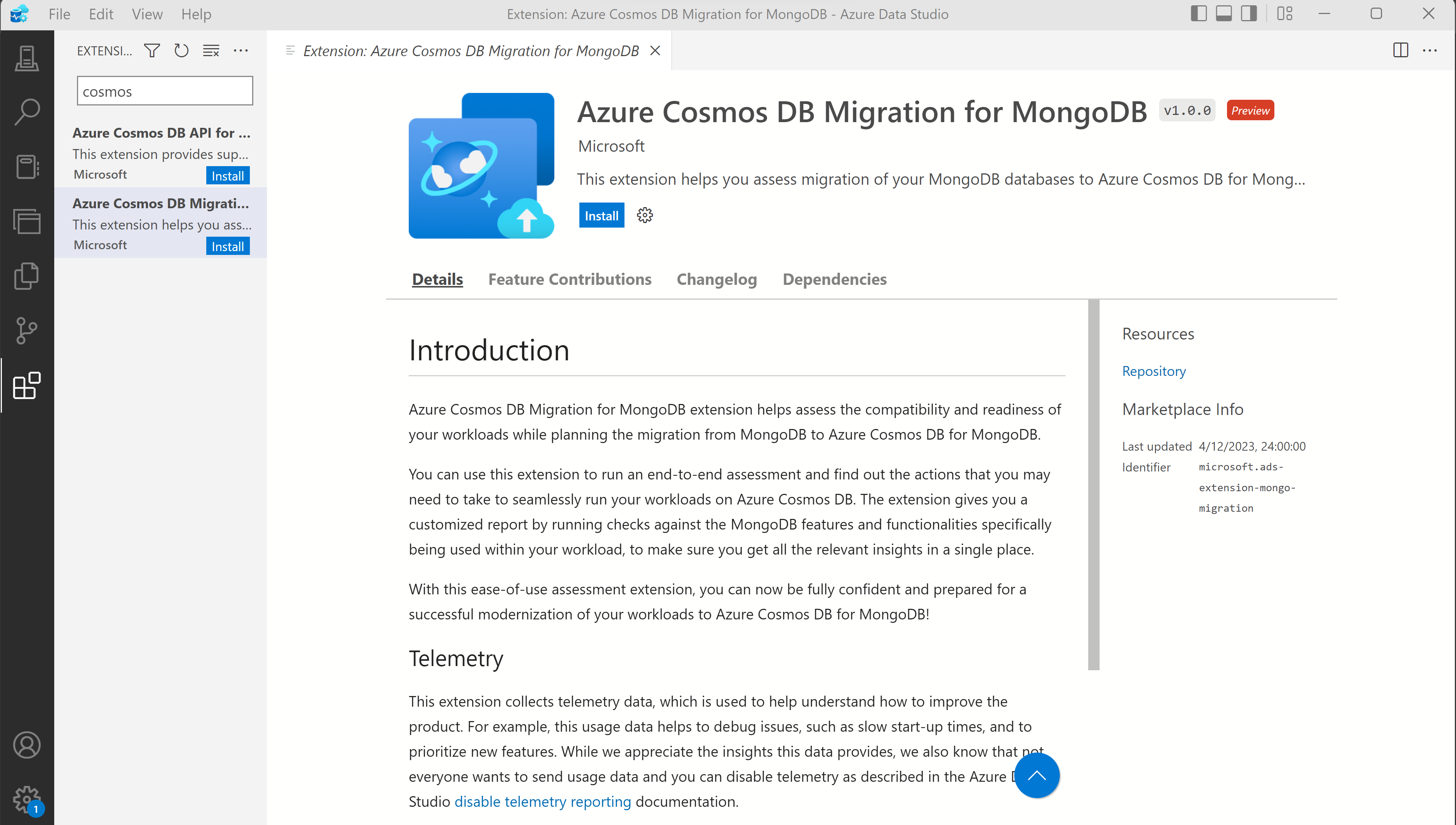
Migration assessment for MongoDB to Azure Cosmos DB for MongoDB

As more and more businesses are moving their applications to the cloud or looking for improvements in their cloud applications, they are faced with the challenge of choosing the right database solution for their needs. For those who are currently using MongoDB, Azure Cosmos DB for MongoDB is an attractive option. Azure Cosmos DB offers two types of MongoDB offerings: the RU-based MongoDB offering and the vCore-based MongoDB offering ( in preview). While both offerings provide a MongoDB-compatible API, they differ in pricing and performance. Azure Cosmos DB's MongoDB offerings provide a MongoDB-compatible API a...
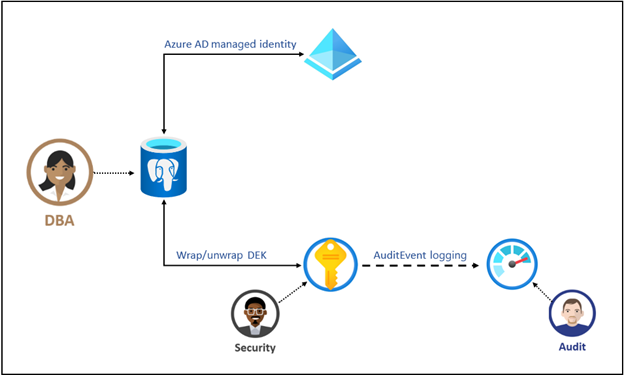
Data Encryption at rest with Customer Managed keys for Azure Cosmos DB for PostgreSQL

Today, we are thrilled to announce the public preview of data encryption at rest with customer managed keys for Azure Cosmos DB for PostgreSQL. Data stored in your Azure Cosmos DB for PostgreSQL cluster is automatically and seamlessly encrypted with keys managed by Microsoft (service-managed keys). Optionally, you can now choose to add an additional layer of security by enabling encryption with customer-managed keys. Many organizations require full control of access to the data using a customer-managed key. Data encryption with customer-managed keys for Azure Cosmos DB for PostgreSQL enables you to bring your ...

Building multi-tenant Java apps using Spring Data and Azure Cosmos DB

There are many factors to take into account when designing a multi-tenant application in Azure Cosmos DB. We've covered many of these aspects at a high level in our documentation on Multitenancy and Azure Cosmos DB. In this blog, we'll quickly dive into the mechanics of implementing a database per tenant or container per tenant performance isolation model using the Spring Data library for Azure Cosmos DB. We'll show samples where each app instance can reference and/or create multiple databases or containers on-the-fly, and we'll discuss some of the trade-offs between these two approaches. Flexible T...

Highlights from Azure Cosmos DB Conf 2023!
Azure Cosmos DB Conf returned this year with the exciting launch of a new version of Azure Cosmos DB for MongoDB, and a variety of sessions on how to drive developer productivity, cloud-scale innovation, and cost savings with Azure Cosmos DB. Customers and partners such as Databricks, LinkedIn, and Cazton joined a host of Azure Cosmos DB experts to discuss everything from top ways to save money with Azure Cosmos DB to how to build large-scale multi-tenant SaaS systems. Missed the event? We’ve got you covered with some event highlights. So sit back, relax, grab your popcorn and tune in to these sessions! Keynot...
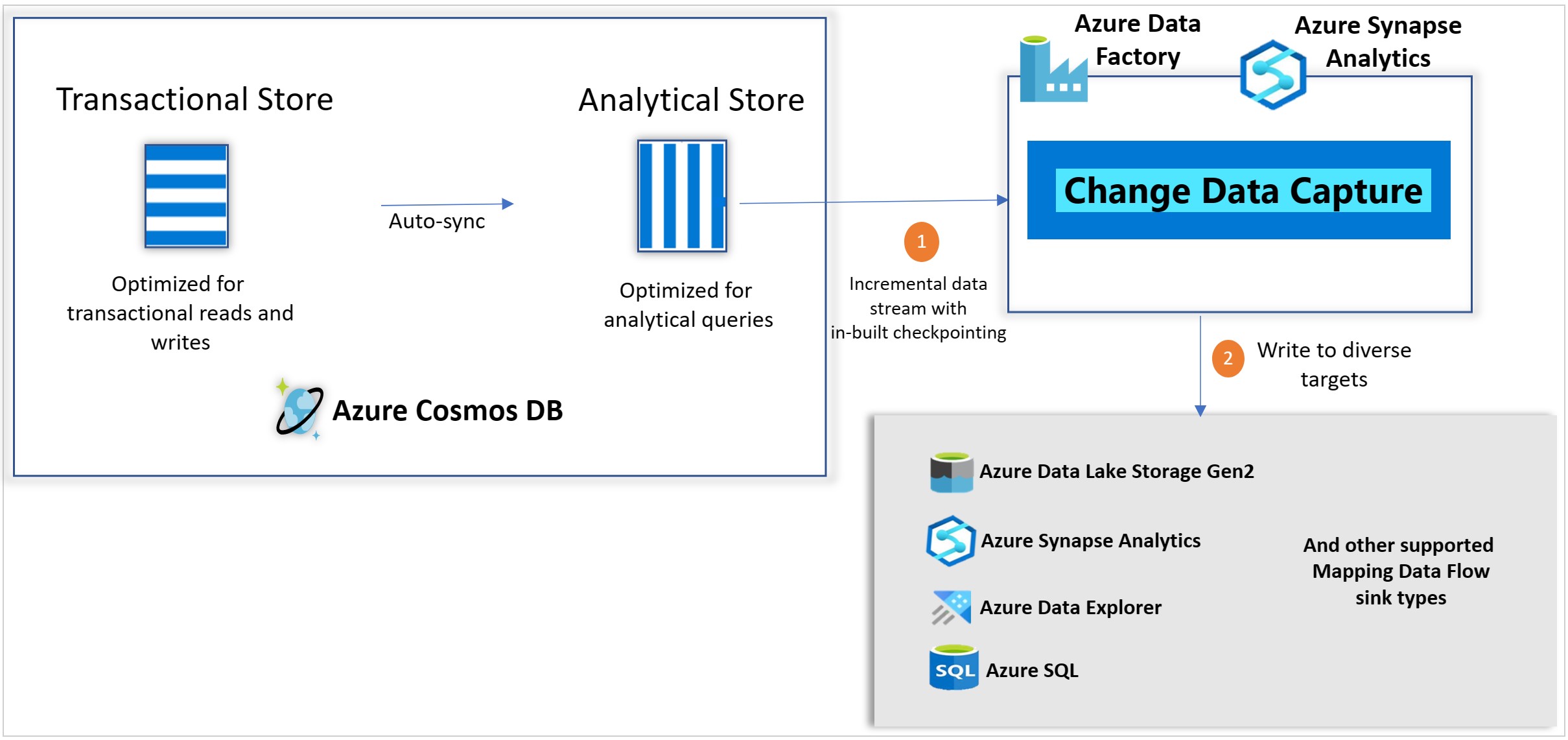
Now in preview – Change Data Capture (CDC) with Azure Cosmos DB analytical store


Azure Cosmos DB analytical store now supports Change Data Capture (CDC), for Azure Cosmos DB API for NoSQL and Azure Cosmos DB API for MongoDB. This capability, available in public preview, allows you to efficiently consume a continuous and incremental feed of changed (inserted, updated, and deleted) data from analytical store. CDC is seamlessly integrated with Azure Synapse and Azure Data Factory, providing a scalable no-code experience for high data volume. As CDC is based on analytical store, it does not consume provisioned RUs, does not affect the performance of your transactional workloads, provides lower la...

Azure Cosmos DB for MongoDB vCore helps developers build intelligent apps in the cloud

Building intelligent applications such as chatbots, recommendation systems, and other transactional workloads are at the top of developers’ to-do lists, thanks to the explosive growth of AI for building cost-effective and engaging ways to interact with customers. A high-performance intelligent application requires a data strategy that can support rich querying and real-time responsiveness. Azure Cosmos DB is a key product in the Microsoft Intelligent Data Platform, a comprehensive end-to-end platform that empowers customers to innovate anywhere at scale. Built for the speed and scale these intelligent applicat...

Announcing the New Azure Cosmos DB Desktop Data Migration Tool

Today we're excited to introduce a brand new Azure Cosmos DB Desktop Data Migration Tool. You can find the new tool at https://github.com/AzureCosmosDB/data-migration-desktop-tool. Read more about it below and how to use it. Some History The old Data Migration Tool (or DMT as it was known) was originally created in 2015 and had become outdated. It was built on the Microsoft .NET framework 4.5.1, which meant that it was Windows only and also made it difficult to upgrade to modern versions of .NET. It also used the original DocumentDB client for .NET which has since been replaced by the newer Microsoft.Az...