
Azure Cosmos DB Blog
The latest news, updates and technical insights from the Azure Cosmos DB team
Latest posts
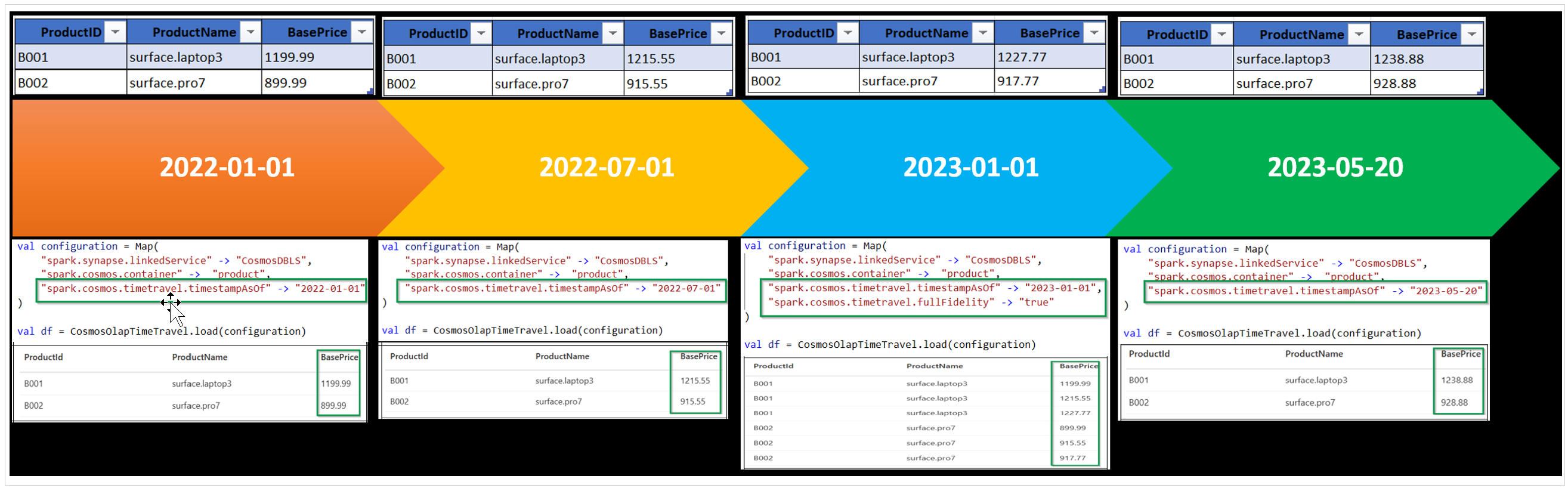
Unlocking the power of Time-Travel in Azure Synapse Link for Azure Cosmos DB


Azure Synapse Link now offers time-travel capabilities for Azure Cosmos DB data supporting NoSQL and MongoDB APIs. This exciting feature, currently available in public preview through Azure Synapse Spark, enables you to access Azure Cosmos DB data in the analytical store, precisely as it appeared at specific points in time in history (down to the millisecond level). With time-travel, you can effortlessly query past data that has been updated or deleted, analyze trends, and compare differences between two points of interest. The diagram below illustrates how the BasePrice in the Product container gets updated o...

Announced at MS Build 2023: Burst capacity, materialized views, integrated vector database, and more!

Microsoft Build 2023 kicked off today with exciting sessions and announcements lined up around AI, cloud development, cloud-scale innovation, developer productivity, and more. Azure Cosmos DB announced its own new additions and enhancements, enabling developers to further optimize costs, performance, and productivity. We also introduced new tools for building intelligent, AI-infused applications. We hope you’re able to join us live or in-person in Seattle and that you continue to enjoy the event with us this week! Here’s a look at what’s new from Azure Cosmos DB. Save costs and enhance product...
Introducing Integrated Vector Database in Azure Cosmos DB for MongoDB vCore


Editor's note (November 2025): Azure Cosmos DB for MongoDB (vCore) has been renamed to Azure DocumentDB. This article was originally published before the rename, so it uses the product name that was current at the time. While the product name has changed, the technical concepts discussed in this article remain applicable unless otherwise noted. For the latest Azure DocumentDB announcements, features, and technical guidance, visit the Azure DocumentDB Dev Blog. We are thrilled to announce the release of Integrated Vector Database in Azure Cosmos DB for MongoDB vCore, which will be showcased at Microsoft Bui...

Announcing Materialized Views for Azure Cosmos DB for NoSQL (Preview)

When designing an application using Azure Cosmos DB, users are required to select a Partition Key from among the properties stored for each item, and the value in the Partition Key is used to scale out their data. Users can avoid costly cross partition queries by correctly using the Partition Key in their queries but in many cases, it can be difficult to have one container be efficient at writing data as well as queries. This can sometimes result in a design that scales well for writing data, but with slow or expensive queries for users. The solution historically has been to use Change Feed and copy data from ...

Real time data processing with new Azure Cosmos DB change feed modes

The Azure Cosmos DB change feed allows applications to seamlessly react to real time changes to data! It’s a persistent record of changes to items in your container in the order they occurred. Instead of writing complex code to query recently modified documents, manually track checkpointing, and handle retries for errors in processing, the change feed provides ways to manage this for you. The change feed makes scenarios like triggering notifications based on updates to your data, real-time stream processing, and data movement even easier! Change feed modes The change feed is available in two modes, e...
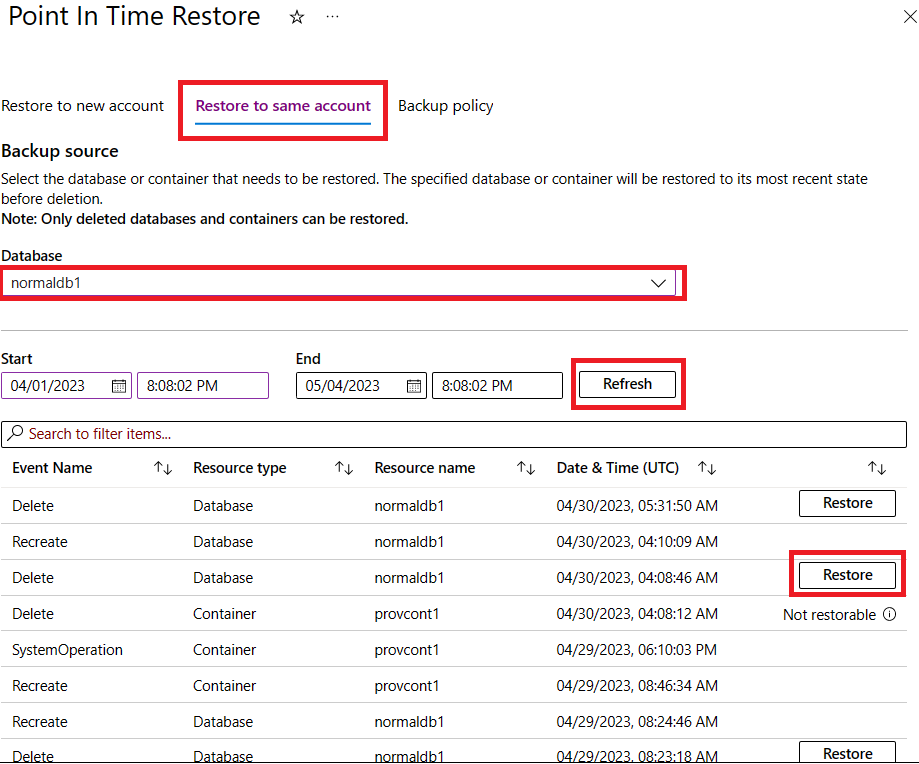
Do more with granular control in new backup features for Azure Cosmos DB at low cost

This blog post and the features are brought to you by Vinh Trinh, Mayank Katwal, Amit Singh, Kshittiz Kumar, Vineet Kumar, Dinesh Kumar, Chuck Skelton, Sidney Andrews, Joe Dennis, Venkata Sivaramakrishna Ramadugu & Govind Kanshi from the Azure Cosmos DB team Azure Cosmos DB team is pleased to share exciting announcements. Same account restore (Preview) For a while now, customers who accidentally deleted a container or a database had to restore the deleted resources into another new account and then move the data into the source account. This was cumbersome for most customers, involv...
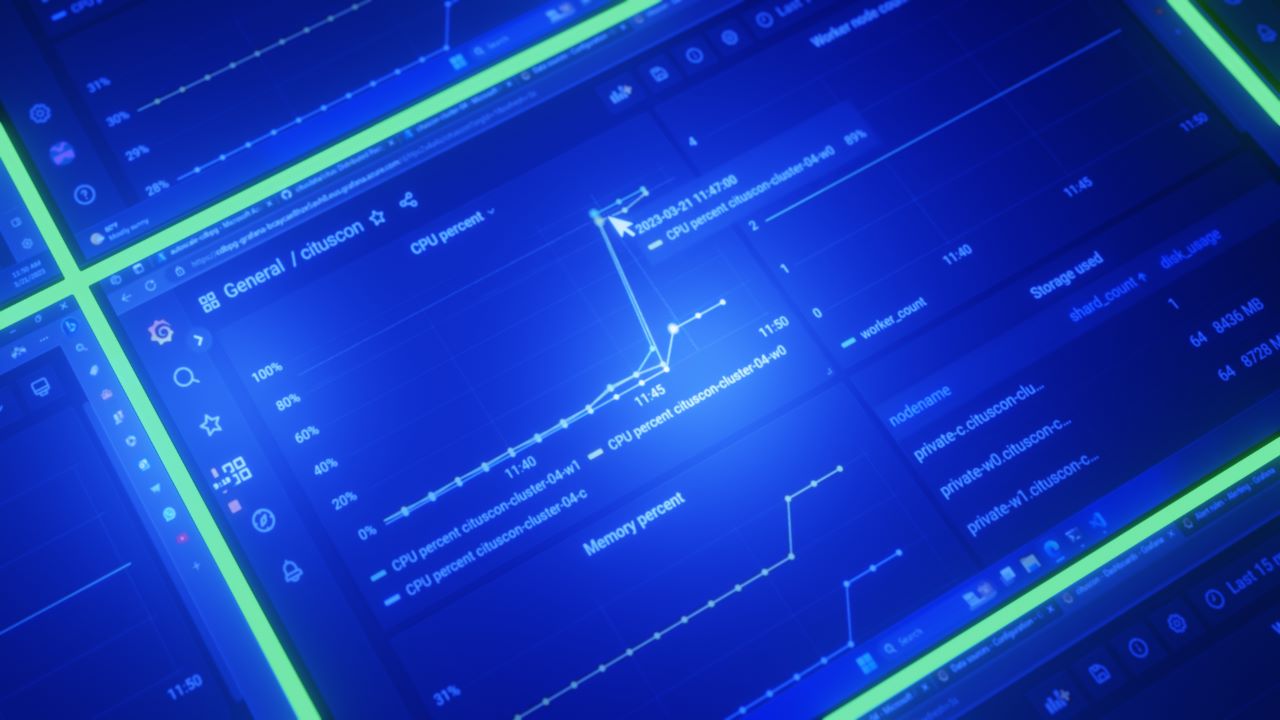
Auto scaling Azure Cosmos DB for PostgreSQL with Citus, Grafana, & Azure Functions

One of the top Citus features is the ability to run PostgreSQL at any scale, on a single node as well as a distributed database cluster. As your application needs to scale, you can add more nodes to the Citus cluster, rebalance existing data to the new Postgres nodes, and seamlessly scale out. However, these operations require manual intervention: a) first you must create alerts on metrics, b) then, based on those alerts, you need to add more nodes, c) then you must kick off and monitor the shard rebalancer. Automating these steps will give you a complete auto scale experience—and make your life so much easier. ...

Register Now for Azure Cosmos DB North America Roadshow Events

The world of technology is rapidly evolving, and so are the tools we use to interact with it. As more organizations and developers look to leverage the power of AI and build intelligent applications with cloud scale databases, Microsoft Azure Cosmos DB stands as a beacon, offering unmatched scalability, performance, and reliability. This year, we're excited to bring the magic of Azure Cosmos DB straight to you through our upcoming roadshow series. Starting on May 31st and running through June, we're hosting a series of FREE in-person events in cities across North America. Where to Find Us...
Azure Cosmos DB at Build 2023: Everything you need to know
Build season is upon us again and we’ve got plenty of goodies in store. From a ton of new features that will make life easier for developers, to exciting sessions where Azure Cosmos DB will be the star of the show, you won’t want to miss the event. This year’s Build takes place May 23-25th and is happening both in-person at the Seattle Convention Center and online through live streams. Can’t go in person? Get in on all the action at no cost by registering to attend online here. You can watch the live broadcast and interactive sessions, and engage with speakers and experts in real time. Check out ...