
Azure Cosmos DB Blog
The latest news, updates and technical insights from the Azure Cosmos DB team
Latest posts
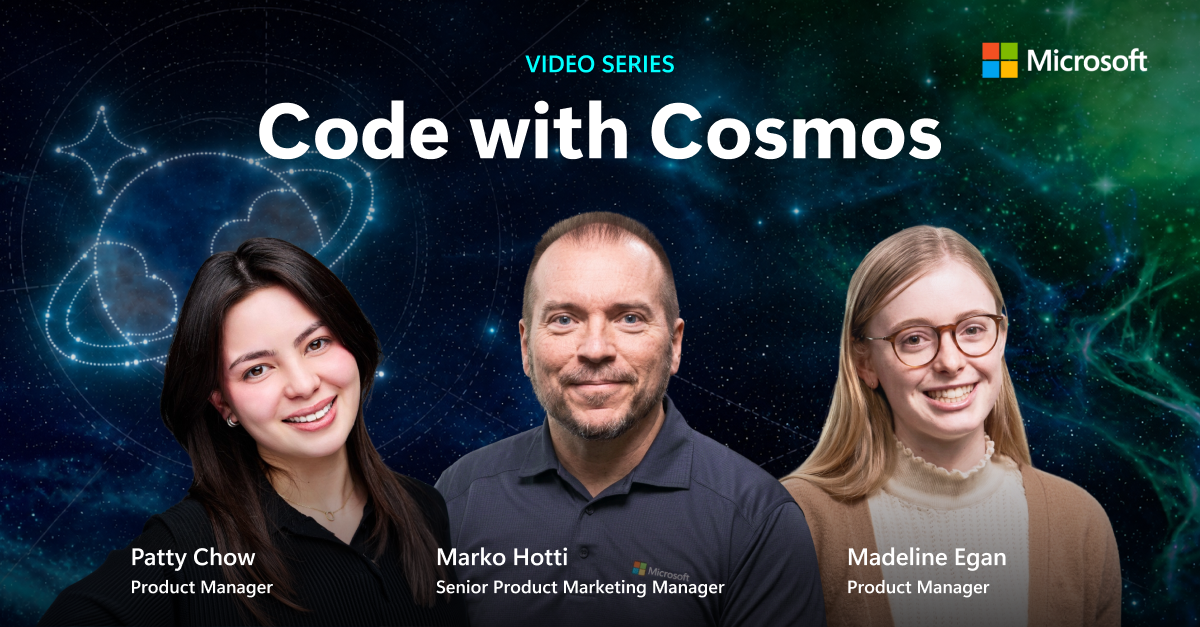
Code with Cosmos: Build a Production-Ready AI App in Four Episodes

Follow an AI application from a blank folder to a system built for production AI application development often starts with a promising prototype. A real application has to do more than produce an answer: it needs current operational data, the ability to take actions and complete transactions, memory that carries across sessions, coordination between specialized agents, and enough visibility for developers to understand and improve how the system behaves. Today, we're introducing Code with Cosmos, a new four-part Azure Cosmos DB video series that follows one app – an AI travel planner – from a blank folder...
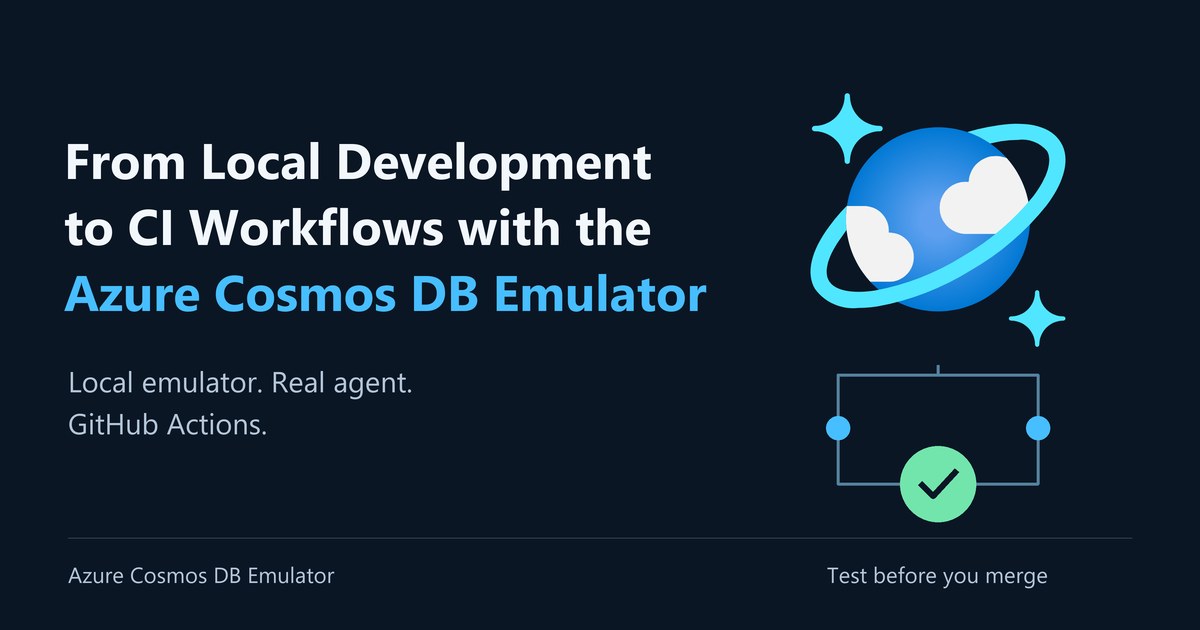
From Local Development to CI Workflows with the Azure Cosmos DB Emulator

When you change a database-backed feature, a successful HTTP response isn't enough. You need to know that the write reached storage, the application retrieved the updated record, and the next answer reflects it. The Azure Cosmos DB Emulator runs locally in Docker and lets us use the SDK we'll use in production. We'll develop against it first, then carry our tests into GitHub Actions. Each update to an open pull request must pass against a fresh emulator before we merge. Building on Theo van Kraay's local development walkthrough, we'll use FleetCharge, a Python demo built with Microsoft Agent Framework and F...
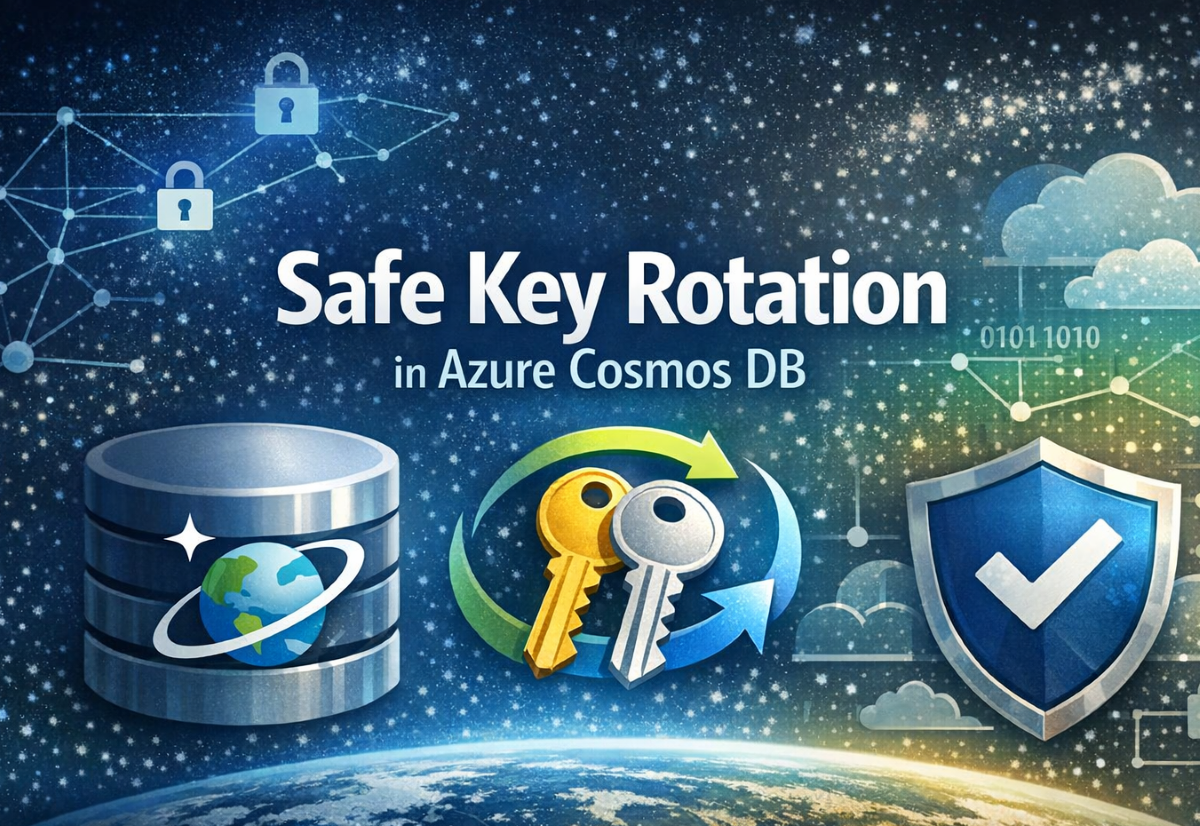
Announcing GA of Safe Key Rotation in Azure Cosmos DB

In our previous post, we introduced the private preview of Safe Key Rotation, a feature that helps Azure Cosmos DB customers avoid service disruptions during key rotations. By showing when each account key was last used, it helps teams make informed decisions before rotating keys or moving to Entra ID. This capability addresses a common challenge: keys that appear unused may still support critical applications, which can lead to unexpected outages if they are rotated too soon. What is new? With general availability, we are expanding this capability to give you even more control and confidence when managi...
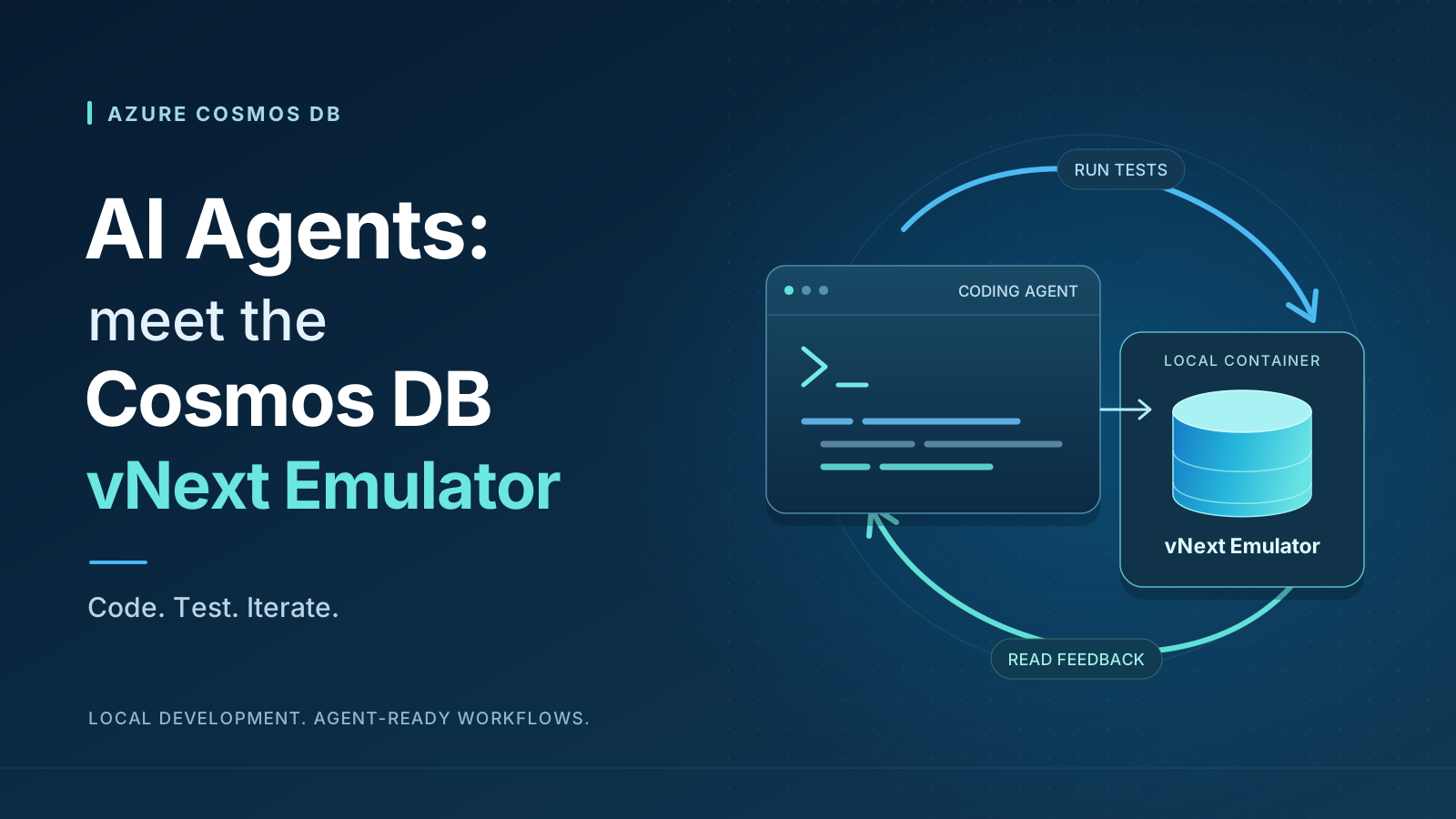
AI Agents: Meet the Azure Cosmos DB vNext Emulator

Over a typical 2 day window, we record 10 times as many emulator sessions lasting more than 30 minutes for vNext as for the legacy emulator. Our bet is that agentic development is helping drive the difference! The appeal is straightforward: coding agents need a database they can run anywhere. They also need a database they can start, seed, test against and debug as they work. Our vNext emulator fits that workflow naturally. A different kind of developer With the vNext emulator, we're building for a broader idea of the developer: a person at a keyboard, a coding agent, or the two working together. The...

Introducing the Native Confluent Cloud Connector Experience in Azure Cosmos DB!
Co-authored with Praveen Raja P Azure Cosmos DB already includes a powerful event foundation: change feed provides a durable, ordered record of item changes within each logical partition. It is ideal for reacting to operational data as it changes, building projections, and driving workflows directly from the database. Confluent Cloud adds a complementary event layer rather than replacing change feed. Kafka topics can carry database changes alongside explicit business events from many systems, retain them independently from the operational database, and let multiple consumer groups process and replay each s...
From an Empty Folder to an AI Agent: Meet create-cosmos-agent

The first few minutes of a new AI project often feel productive. Create a chat endpoint, connect a model, send a prompt, and display the answer. Then the real questions arrive. Where should the agent store memory? How do we keep one customer's data away from another? How do we trace the source of an answer? What happens when an action requires approval? How do we test the application locally before creating cloud resources? And how do we move to Azure without rebuilding the project? Those questions inspired me to build create-cosmos-agent, an open-source CLI for creating production-oriented TypeScript AI...
I’m the Only Developer on This Project. Do I Really Need RBAC?

You own the account, wrote the application, and would be the one fixing it if something broke. So role-based access control (RBAC) can sound like an answer to a problem you do not have: managing other people. You do not need RBAC for your app to function; account keys still work while key-based authentication is enabled. But for a live Azure Cosmos DB for NoSQL project you intend to keep, identity-based access is the better default, even if you remain its only developer. The reason is not team size. It is reducing the secrets you maintain and giving your code only the access it needs. Neither benefit requir...
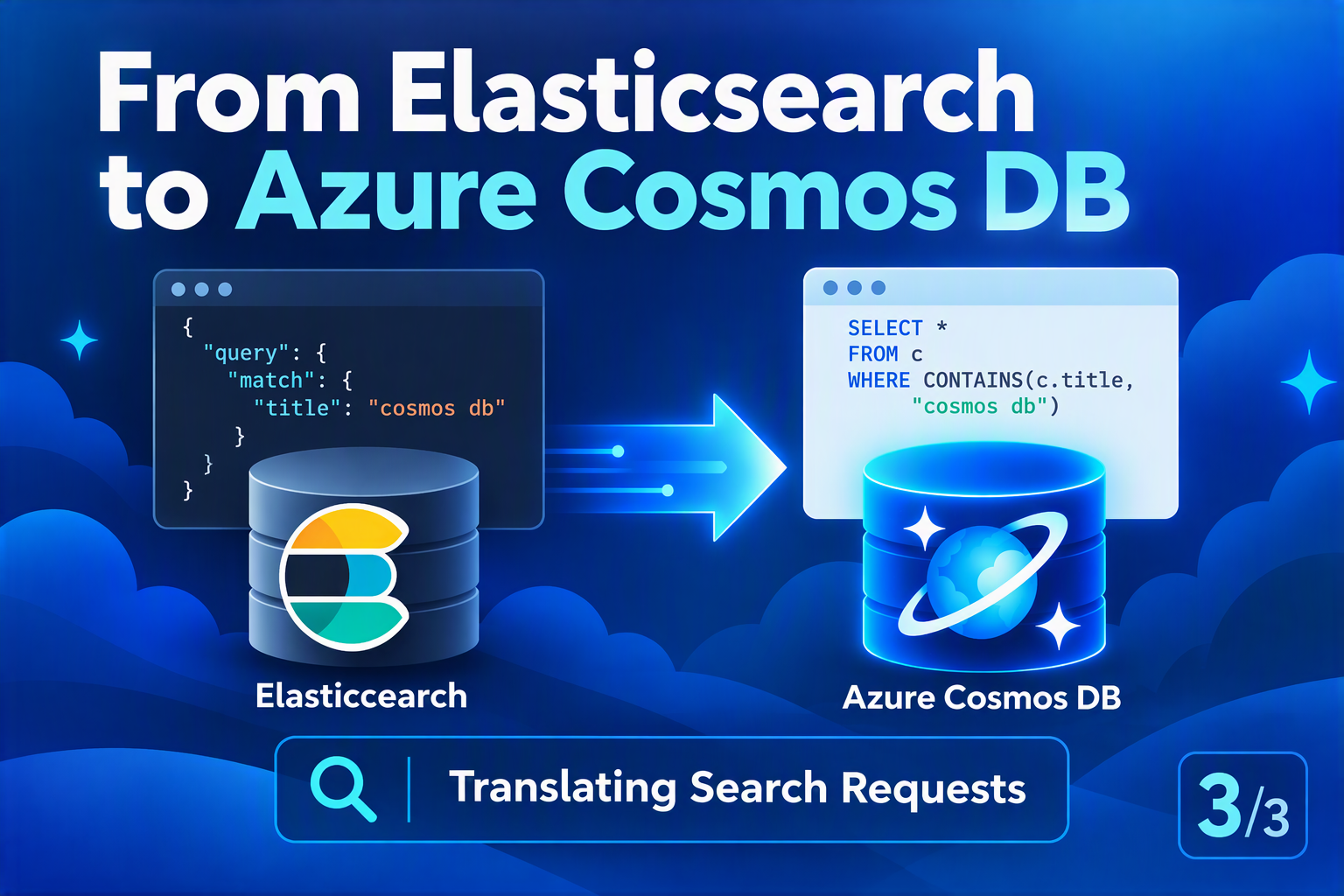
Translating an Elasticsearch Search Request to Azure Cosmos DB

This tutorial shows how common Elasticsearch search requests can be expressed using Azure Cosmos DB query patterns. Some Elasticsearch capabilities map directly to Cosmos DB full-text search functions, while others require separate queries or application-layer handling. Each step shows the closest Cosmos DB pattern and explains what changes in the process. In Elasticsearch, one search request can return hits, highlights, and aggregation buckets together. In Azure Cosmos DB, it is clearer to separate those concerns: one query retrieves ranked results, separate aggregate queries calculate facets, and the applicat...
Genspark protects live agent sessions with Azure Cosmos DB Global Secondary Indexes
This article was authored by Justin Liu, co-founder and chief architect, Genspark. The work does not end when the prompt does A user comes to Genspark with a goal: research a market, build a presentation, produce a report, analyze a dataset, or complete another complex assignment. Our agents take it from there, working across tools, sources, and multiple steps until the user has a finished result. The request may fit in a sentence; the actual work of the request, though, rarely does. One assignment can involve repeated searches, decisions, tool calls, and revisions. Throughout the process, the agent relie...