
Azure SQL Dev Corner
Voices from the Azure SQL PM Team, focusing on development and developers
Latest posts
Data API builder for Azure SQL Databases – Public Preview

I am extremely happy and excited to announce the public preview of Data API builder for Azure SQL Databases. Data API builder is a new product that we are adding to the developer’s toolset to help every developer to be more efficient and effective, by instantly and securely turning Azure SQL Databases into a modern REST and GraphQL API. Turn Azure SQL databases into APIs Thanks to Data API builder, tables, views, and stored procedures objects can be turned into REST and GraphQL API instantly, so that data can be accessed using modern techniques on any platform, any language, and any device, using modern and wel...

Getting Started with Azure SQL Bindings: Part 1

Expanding on the excellent post by Drew Skwiers-Koballa; Developing with Azure SQL bindings and Azure SQL trigger for Azure Functions, I'd like to take a chance to walk you through creating your first SQL Binding using a completely local development environment. Part 1 will cover creating a SQL Binding to get data from an Azure SQL Database. Parts 2 and 3 will then cover inserts, updates, and deletes as well as calling stored procedures. Prerequisites and Setup Our local development environment will be using VS Code and Docker. If you don't have either installed, you can get VS Code here and Docker ...
Using Python and Azure Functions to send data from Azure SQL Database

When building applications on Azure SQL, one of the most flexible ways to send data from your database to other systems is to use Azure Functions. Azure Functions are serverless functions that can be triggered by a variety of events, including HTTP requests, timers, and Azure SQL Database changes. In this article, we will discuss how to send data from an Azure SQL Database to an FTP server and API endpoints using Azure Functions. The complete sample code for this article is available on GitHub. Get data from Azure SQL Database in Azure Functions With Azure SQL bindings for Azure Functions we can easily re...

CTEs, Views or Temp Tables?
I've just finished watching the video from the @GuyInACube about Common Table Expressions and I noticed that in several comments there was the request to explain what is the difference between Common Table Expressions, Views and Temp Tables. This is quite a common question, and it is time to give it a simple, concise, and clear answer, once and for all. Common Table Expressions You can think of a Common Table Expression (CTE) as a table subquery. A table subquery, also sometimes referred to as derived table, is a query that is used as the starting point to build another query. Like a subquery, it will exi...

Development with SQL in containers on macOS
There are a bunch of tools available for developing with SQL on macOS, including the mssql extension for VS Code and the standalone yet-comfortably-familiar Azure Data Studio. As a developer, you might have heard about the Azure SQL Database emulator and you've most certainly heard about deploying SQL in containers. Most recently, a new option for running SQL containers locally on your arm64 (M1/M2) Mac became available and it makes running full SQL Server images easier than ever. In the v4.16 release of Docker Desktop, support for using Rosetta for emulation of x86/amd64 images was introduced as a beta fe...

Developing with Azure SQL bindings and Azure SQL trigger for Azure Functions
The Azure Functions SQL trigger will invoke an Azure Function when data is changed in a SQL database table, enabling new event-driven scenarios with SQL database. Accessing data in a SQL database with Azure Functions can be accomplished more quickly with the Azure SQL bindings for Azure Functions integration. Azure SQL bindings for Azure Functions are available in public preview for all languages supported by Azure Functions and the Azure SQL trigger for Azure Functions is available in public preview for C# Azure Functions. Guestbook sample application A website guestbook is a simple form and list inte...

Connecting the Dots of Azure SQL CICD Part 3: Testing with tSQLt
In part 3 of our Azure SQL database change management (CICD) series we cover testing your code using tSQLt and GitHub Actions. Prerequisites Check Refer to part 1 and part 2 for the prerequisites. Fork the GitHub Project We will be using tSQLt in this post, so I have created a GitHub project made up of several SQL Database Projects for Visual Studio Code. In these database projects are the tSQLt samples installed and ready to go. This post will focus more on the process of setting up a testing pipeline but if you are curious, you can read about the tSQLt samples/quickstart here, or...
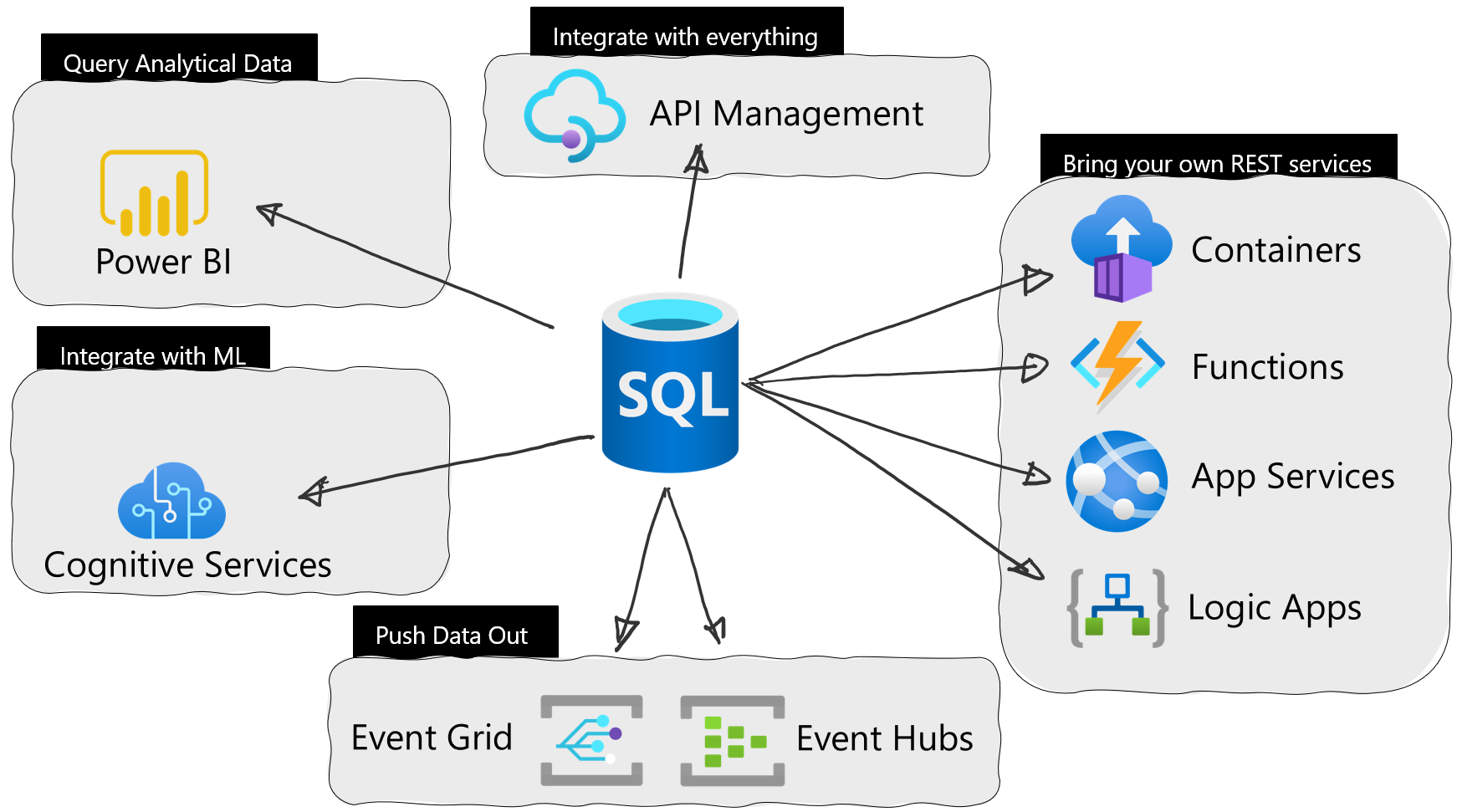
Azure SQL Database External REST Endpoints Integration Public Preview
The ability to call a REST endpoint natively from Azure SQL Database, which was made available via an Early Adopter Preview in May, is now moving to Public Preview. I'm extremely happy that as of today the new system stored procedure is available to everyone, automatically and transparently: you can use it right away, from any Azure SQL Database that you may already have or that you'll create in future. With you can call a REST endpoint, like an Azure Function, for example, with just a line of code: Here's a screenshot of the result of calling an Azure Function that provides information about local re...
Maximizing Azure SQL Database performance with a globally distributed Redis write-behind cache


Azure SQL Database is a fully managed platform as a service (PaaS) relational database service. With Azure SQL Database, you can create a highly available and high-performance data storage layer for the applications and solutions in Azure. SQL Database can be the right choice for a variety of modern cloud applications because it enables you to process both relational data and non-relational structures, such as graphs, JSON, spatial, and XML. You can also take advantage of advanced query processing features, such as high-performance in-memory technologies and intelligent query processing. Database caching is a ...