
Azure Cosmos DB Blog
The latest news, updates and technical insights from the Azure Cosmos DB team
Latest posts
Apache Cassandra version 3.11 support beyond EOL

The Apache Cassandra Project Team recently announced that, after more than half a decade, versions 3.0.x and 3.11.x will reach End of Life at the end of 2023. To echo the project team announcement, we want to highlight the significant advantages of upgrading to Cassandra 4.0 or 4.1, and encourage users to make the transition. However, if you prefer to remain on version 3.11 for the time being, with Azure Managed Instance for Apache Cassandra, we have you covered! We are delighted to announce that we will be fully supporting Cassandra version 3.11 until the end of 2024. Support will include any required CVE ...

Announcing Azure Cosmos DB custom routing endpoints for Azure IoT Hub – GA

We are very happy to announce the general availability for Azure Cosmos DB custom routing endpoints for Azure IoT Hub. Many IoT solutions require extensive downstream data analysis. You have to seamlessly push the data into hyperscale databases quickly. For example, intelligent transport systems have a constant inflow of a continuous stream of data. This data must be analyzed even as it is being written into the database. We have seen multiple scenarios in manufacturing, automotive, and other IoT solution-focused industries that require hyperscale databases. These solutions need extremely high throughput to...
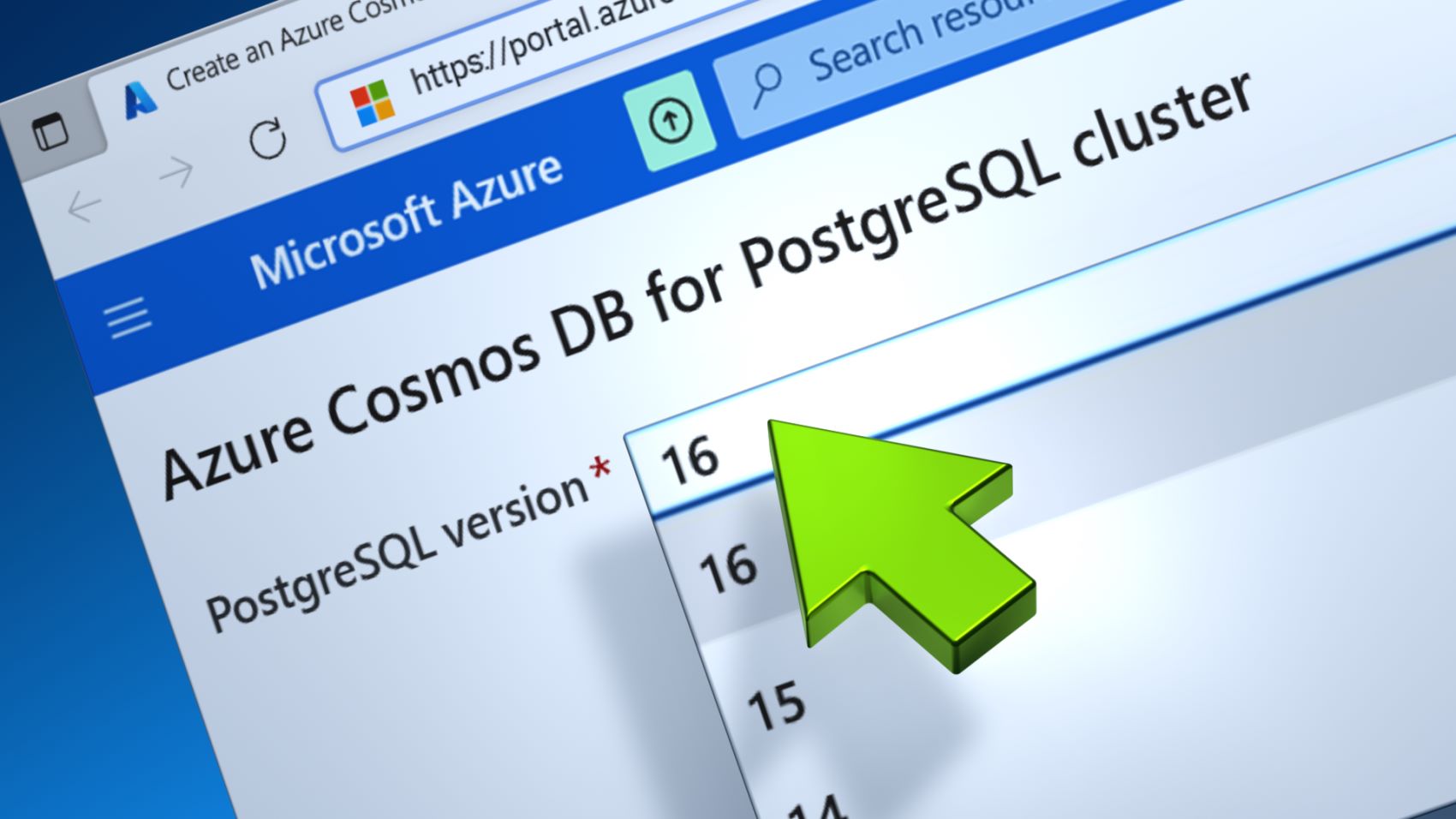
Postgres 16 available in Azure Cosmos DB for PostgreSQL, powered by Citus

Big news in the Postgres world: PostgreSQL 16 was released just over 2 weeks ago. And today we're announcing that Postgres 16 is generally available for production workloads on Azure Cosmos DB for PostgreSQL. That’s right, in production: this announcement is not just a preview of Postgres 16 support. Whether you need to provision a new distributed Postgres cluster in Azure Cosmos DB for PostgreSQL—or upgrade your existing database clusters—Postgres 16 is now an option for you. And you can use Azure Portal, Bicep or ARM templates, REST APIs, Azure SDKs, or Azure CLI to spin up a new Postgres 16 cluster in...
Exploring the Free Try Azure Cosmos DB Sandbox Experience

In today’s rapidly evolving digital landscape, data is at the heart of everything we do. From e-commerce and healthcare to gaming and finance, businesses across all industries are relying on data to drive innovation, make informed decisions, and deliver exceptional user experiences. To harness the full potential of your data, you need a robust and scalable database solution that can adapt to your evolving needs. Enter Azure Cosmos DB, a NoSQL and relational database from Azure that delivers high performance at any scale. Azure Cosmos DB offers many benefits, including high availability, low latency data ac...

Driving real-time analytics with Azure Cosmos DB and Fivetran

Organizations face the challenge of efficiently extracting, transforming, and loading (ETL) data from various sources to leverage the power of real-time analytics and drive impactful business decisions. Azure Cosmos DB, a fully managed and serverless distributed database supporting NoSQL and relational workloads, is a valuable source for collecting and processing large quantities of data. To harness the full potential of Azure Cosmos DB, businesses need a robust data integration solution that enables seamless replication of data to cloud destinations. Fivetran, a leader in the data movement space, has develope...

Announcing JavaScript SDK v4 for Azure Cosmos DB
We are excited to announce the public preview of JavaScript SDK for Azure Cosmos DB version 4. The Azure Cosmos DB JavaScript SDK helps developers build Azure Cosmos DB applications with the NoSQL API and perform various operations more efficiently. The preview of version 4 is now available for download or to provide feedback on GitHub. The SDK targets Node v16 and above and has many new features including Hierarchical partition keys, Client-side request diagnostics, Index metrics , new implementation for Change Feed, Priority-based throttling, etc. The SDK is fully open-sourced, written in TypeScript, supports J...
Azure Cosmos DB design patterns – Part 1: Attribute array
Over the years, customers have asked us for help in designing applications around specific scenarios they were trying to achieve. In some cases, these centered around implementing certain patterns using a JSON-based NoSQL database. Some of these patterns are very common in the NoSQL world, but not well understood by those new to NoSQL databases. Other patterns were very specific to the Cosmos DB service itself in demonstrating how to leverage specific capabilities to solve difficult architectural challenges. We've been capturing these patterns and sharing them with customers individually. We felt now was a...
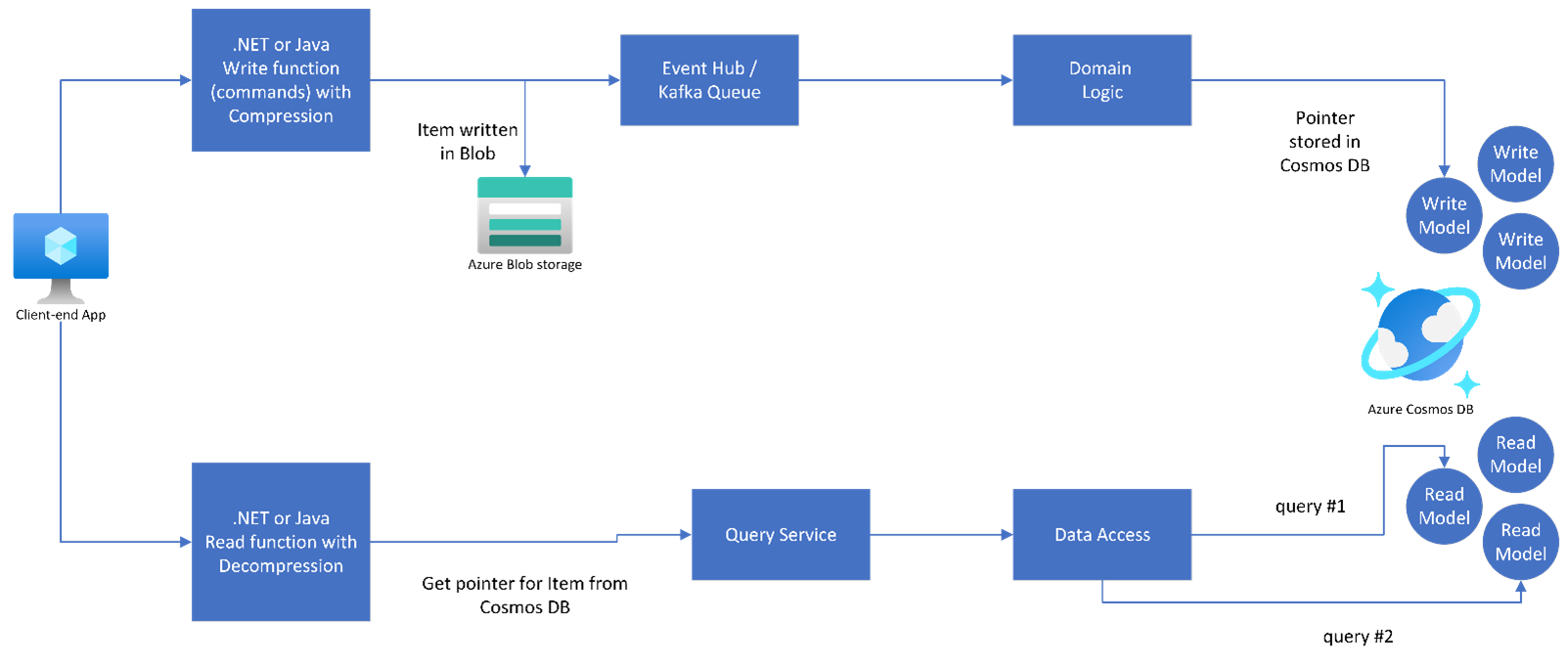
4 Design Patterns to Deal with Large Item Sizes in Azure Cosmos DB for NoSQL

Introduction A recommended best practice in Azure Cosmos DB for NoSQL is to avoid overly large item sizes. An Azure Cosmos DB item can represent either a document in a container, a row in a table, or a node or edge in a graph, depending on which API you use. Though the maximum size of an item allowed in Azure Cosmos DB for NoSQL is 2 MB, it is strongly recommended to restrict item sizes to 1 - 5 KB. This blog post covers multiple approaches that you can use to model large objects within your Azure Cosmos DB-backed application. This post draws from our experiences of collaborating with different Software En...
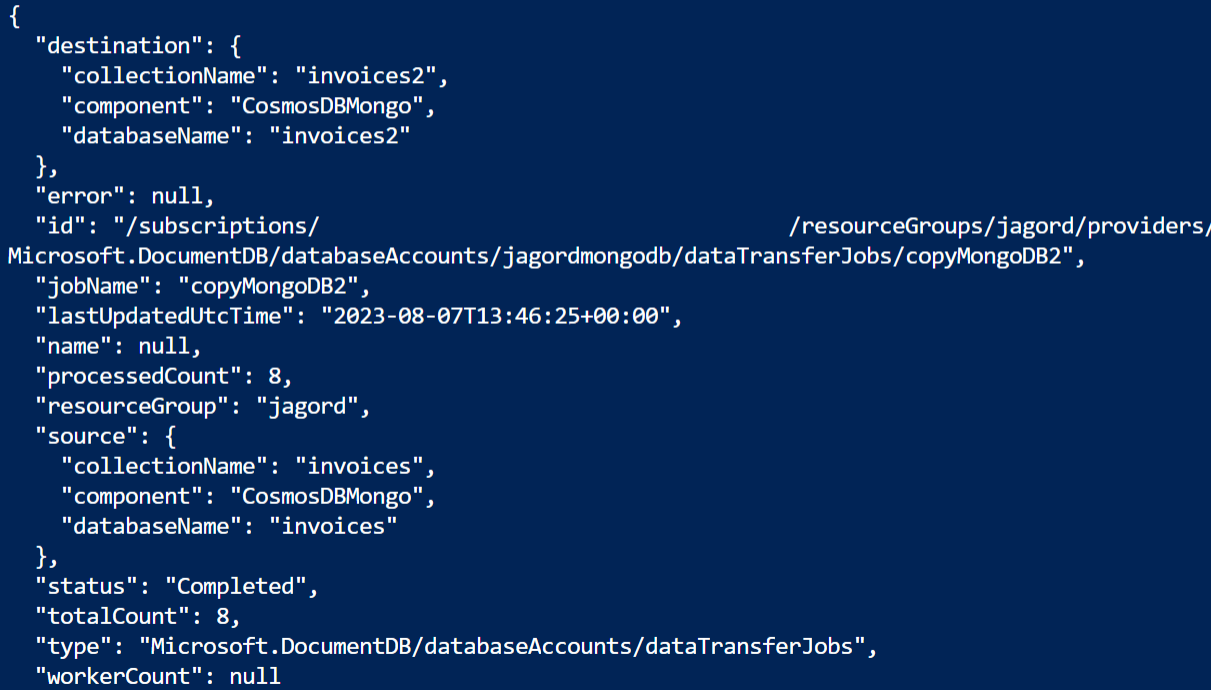
Introducing Intra-Account Collection Copy in Azure Cosmos DB for MongoDB

Azure Cosmos DB, Microsoft's globally distributed, multi-model database service, has always been at the forefront of empowering developers with innovative features and functionalities. In its pursuit of providing a seamless and efficient experience, Azure Cosmos DB recently announced the public preview of "Intra-Account Collection Copy" for Azure Cosmos DB for MongoDB. This feature allows users to effortlessly copy collections within the same account, offering enhanced data management and migration capabilities. In this blog post, we will delve into the significance of this update and explore how MongoDB support ...