
Azure Cosmos DB Blog
The latest news, updates and technical insights from the Azure Cosmos DB team
Latest posts
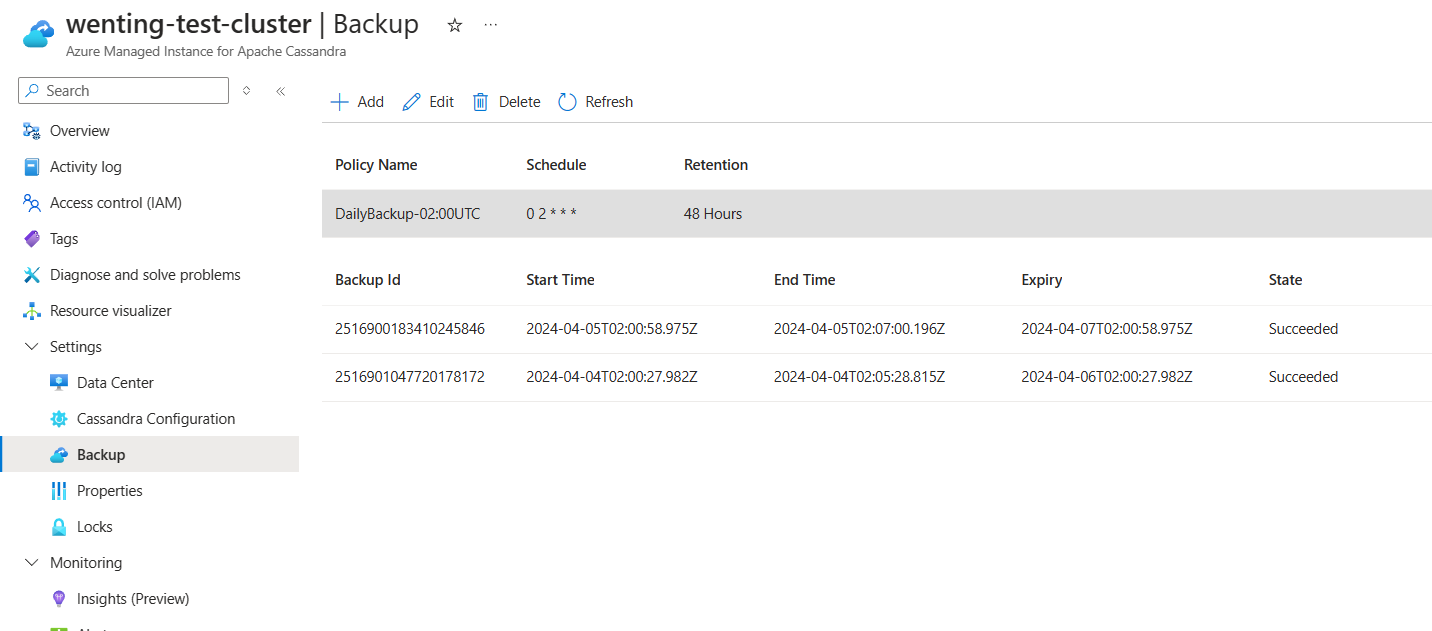
Backups for Azure Managed Instance for Apache Cassandra®

In the dynamic landscape of cloud-based data management, Azure Managed Instance for Apache Cassandra® (Azure MI Cassandra) stands out as a fully managed service that simplifies the deployment and management of Cassandra clusters on the Azure platform. Beyond its core functionalities, Azure MI Cassandra offers a valuable backup feature, allowing users to capture snapshots of their Cassandra clusters at critical moments. In this blog, we'll explore how to leverage this feature to create robust backups for your Azure MI Cassandra cluster. Why Backups Matter In the context of an Azure MI Cassandra cluster, backups ...
Introducing vCore-based Azure Cosmos DB for MongoDB’s Latest Features

Editor's note (November 2025): Azure Cosmos DB for MongoDB (vCore) has been renamed to Azure DocumentDB. This article was originally published before the rename, so it uses the product name that was current at the time. While the product name has changed, the technical concepts discussed in this article remain applicable unless otherwise noted. For the latest Azure DocumentDB announcements, features, and technical guidance, visit the Azure DocumentDB Dev Blog. The vCore-based Azure Cosmos DB for MongoDB unveils significant AI enhancements. The updated integrated vector database introduces groundbreaking featur...

Optimizing database performance: Change partition keys of a container in Azure Cosmos DB for NoSQL API (preview)

Partitioning is a key concept in Azure Cosmos DB, a fully managed, globally distributed, multi-model database service that offers unlimited scalability and low latency. By distributing data across multiple physical partitions based on the partition key(s), Azure Cosmos DB optimizes data access and distribution, profoundly impacting database performance and cost. Therefore, choosing the right partition key is paramount to achieving the right performance and cost. Challenges with partition keys Choosing the right partition key is not always easy. Sometimes, the partition key that is initially chosen may not be op...

Now in public preview: Mirroring Azure Cosmos DB in Microsoft Fabric


This blog is co-authored by Rodrigo Souza. We are excited to announce that mirroring Azure Cosmos DB databases in Microsoft Fabric is now available to all customers. You can seamlessly bring your databases into Microsoft OneLake, enabling no-ETL, near real-time insights on your data. Many organizations want to transform their businesses by reacting quicker to any changes in their business environment or market conditions in real time. Bringing their data together, which is distributed across cloud and on-premises, can often be complex and difficult to manage. They need complex processes to analyze this data w...

Azure Cosmos DB Conf 2024: A Deep Dive for Developers and AI Enthusiasts

The world of data is constantly evolving, and developers need powerful tools to keep pace. Enter Azure Cosmos DB, a globally distributed NoSQL database built for modern app development. This year's Azure Cosmos DB Conf, happening virtually on April 16th, 2024, at 9AM – 12PM PT, is set to offer a wealth of insights and learning opportunities for anyone interested in Azure Cosmos DB. What Makes This Conference Special? This free event goes beyond your typical developer conference. Here is why you should mark your calendars: Featured Speakers and Sessions Indu...

How to use self-signed certificates to connect to Azure Managed Instance for Apache Cassandra

Azure Managed Instance for Apache Cassandra, a fully managed service, enables you to run Apache Cassandra workloads on Azure, freeing you from managing the infrastructure. In this blog post, I will show you how to use self-signed certificates to connect to your cluster and verify the identity of both the client and the server. What is a self-signed certificate? By default, all connections made by Azure Managed Instance for Apache Cassandra are secured using SSL certificates signed by a Certificate Authority (CA). Certificate authority signed certificates provide an extra layer of trust and security to all conne...

Private Link in Azure Cosmos DB for MongoDB vCore is Generally Available!
Editor's note (November 2025): Azure Cosmos DB for MongoDB (vCore) has been renamed to Azure DocumentDB. This article was originally published before the rename, so it uses the product name that was current at the time. While the product name has changed, the technical concepts discussed in this article remain applicable unless otherwise noted. For the latest Azure DocumentDB announcements, features, and technical guidance, visit the Azure DocumentDB Dev Blog. You can now use private endpoints for your Azure Cosmos DB for MongoDB vCore clusters to allow hosts on a virtual network (VNet) to securely a...

Announcing Try Azure Cosmos DB support with Vercel Integration

We're excited to announce that Vercel now supports Try Azure Cosmos DB. Now, developers can effortlessly create free Azure Cosmos DB accounts within the integration and upgrade as needed. This enhancement streamlines productivity, enabling developers to swiftly create Vercel applications with a new Azure Cosmos DB account. Empowering developers to bring their ideas to life. Developers increasingly favor Azure Cosmos DB as the preferred database solution for building modern, cloud-based applications. The database offers a range of benefits that attract developers, including: Simplified app development: Azu...
Azure Cosmos DB design patterns – Part 8: Preallocation

We're thrilled to present the eighth edition of our blog series, focusing on design patterns in Azure Cosmos DB for NoSQL applications. Drawing from real-world customer experiences, our goal is to help you navigate the ins and outs of JSON-based NoSQL databases. In this chapter, we'll dive deeper into common NoSQL patterns, particularly suitable for those new to this type of database. Additionally, we'll highlight patterns specific to Azure Cosmos DB, demonstrating how to leverage its distinct capabilities, including preallocation, to address complex architectural challenges. These patterns, previously sha...