
Azure Cosmos DB Blog
The latest news, updates and technical insights from the Azure Cosmos DB team
Latest posts
How Microsoft Copilot scales to millions of users with Azure Cosmos DB

This article is guest authored by Youssef Moussaoui, member of the technical staff, Microsoft Copilot. As part of the team developing Microsoft Copilot, we’re constantly looking for ways to improve the application and keep our millions of users engaged. With this in mind, we recently evaluated the structure of our backend and began looking for a database that would set the foundation for Copilot’s future. Copilot today processes billions of messages from millions of active users, so we needed a database solution that not only delivered a fast, engaging experience, but also provided worldwide coverage to sup...

Announcing the Public Preview of the Azure Cosmos DB SDK for Rust!

We’re excited to announce the public preview of the Azure Cosmos DB SDK for Rust, a native Rust SDK that enables developers to interact with Azure Cosmos DB for NoSQL accounts from their Rust applications. Following the release of Azure SDK for Rust Beta, the Azure Cosmos DB Rust SDK provides an idiomatic API for performing operations on databases, containers, and items. With this release, Rust developers can now build high-performance, scalable applications using Azure Cosmos DB. Rust is an excellent choice for modern application development due to its focus on performance, memory safety, and concurrency. ...

Migrating data from DynamoDB to Azure Cosmos DB

Co-authors: RK Iyer, Mangal Dutta Migrating stateful systems, such as databases, is a complex process. A frequent requirement for customers is to transfer data from DynamoDB to Azure Cosmos DB for NoSQL. This process involves several stages, including exporting data from DynamoDB, performing necessary transformations, and importing the data into Azure Cosmos DB. Common migration techniques: Offline and Online Migration strategies include offline and online approaches, which can be used independently or combined based on your needs. Online migration is ideal for applications requiring real-time data transfer ...

New Azure Cosmos DB Design Patterns Video Series – Learn, Implement, and Contribute!

We’re excited to introduce the Azure Cosmos DB Design Patterns video series—your go-to resource for learning how to design scalable, efficient, and cost-effective applications with Azure Cosmos DB. Built on real-world use cases, each episode explores a proven design pattern, walking through how it works, when to use it, and how to implement it using sample code from the Azure Cosmos DB Design Patterns GitHub repository. Hosted by Mark Brown (Azure Cosmos DB Principal Program Manager) and Jasmine Greenaway (Microsoft Senior Cloud Advocate), this series provides actionable insights to help you optimize your data ...

Moving to TLS 1.2 for Azure Cosmos DB: Ensuring Secure Connections

Security and reliability are at the core of modern cloud applications. To strengthen data protection and align with industry best practices, we encourage all Azure Cosmos DB customers to transition to TLS 1.2. This post explains why this change is important, how to make the transition, and the benefits it brings to your applications. Why Move to TLS 1.2? Transport Layer Security (TLS) is a critical component in securing data transmitted over networks. TLS 1.2 offers enhanced security features compared to its predecessors, TLS 1.0 and 1.1. By moving to TLS 1.2 or later, you ensure that your data is protected wi...

DocumentDB is Gaining Momentum in the Open-Source Database World

In the short amount of time since we unveiled DocumentDB, our open-source document database platform powering the vCore based Azure Cosmos DB for MongoDB, and the feedback has been nothing short of phenomenal. In this short time, we've received a lot of attention from tech media and community members alike. Rapid Community Adoption Developers and database enthusiasts have embraced DocumentDB with overwhelming enthusiasm, rapidly driving traction among both users and contributors. In just under a week, our project earned 1000 GitHub stars, nearly 50 forks, and multiple pull requests and issues—clear evidence of ...

A Powerful, Open-Source MongoDB GUI for Everyone

Editor's note (November 2025): Azure Cosmos DB for MongoDB (vCore) has been renamed to Azure DocumentDB. This article was originally published before the rename, so it uses the product name that was current at the time. While the product name has changed, the technical concepts discussed in this article remain applicable unless otherwise noted. For the latest Azure DocumentDB announcements, features, and technical guidance, visit the Azure DocumentDB Dev Blog. Introduction Azure Cosmos DB for MongoDB provides robust support through its Request Units (RU) model and vCore-based architecture, enabling flexible and...
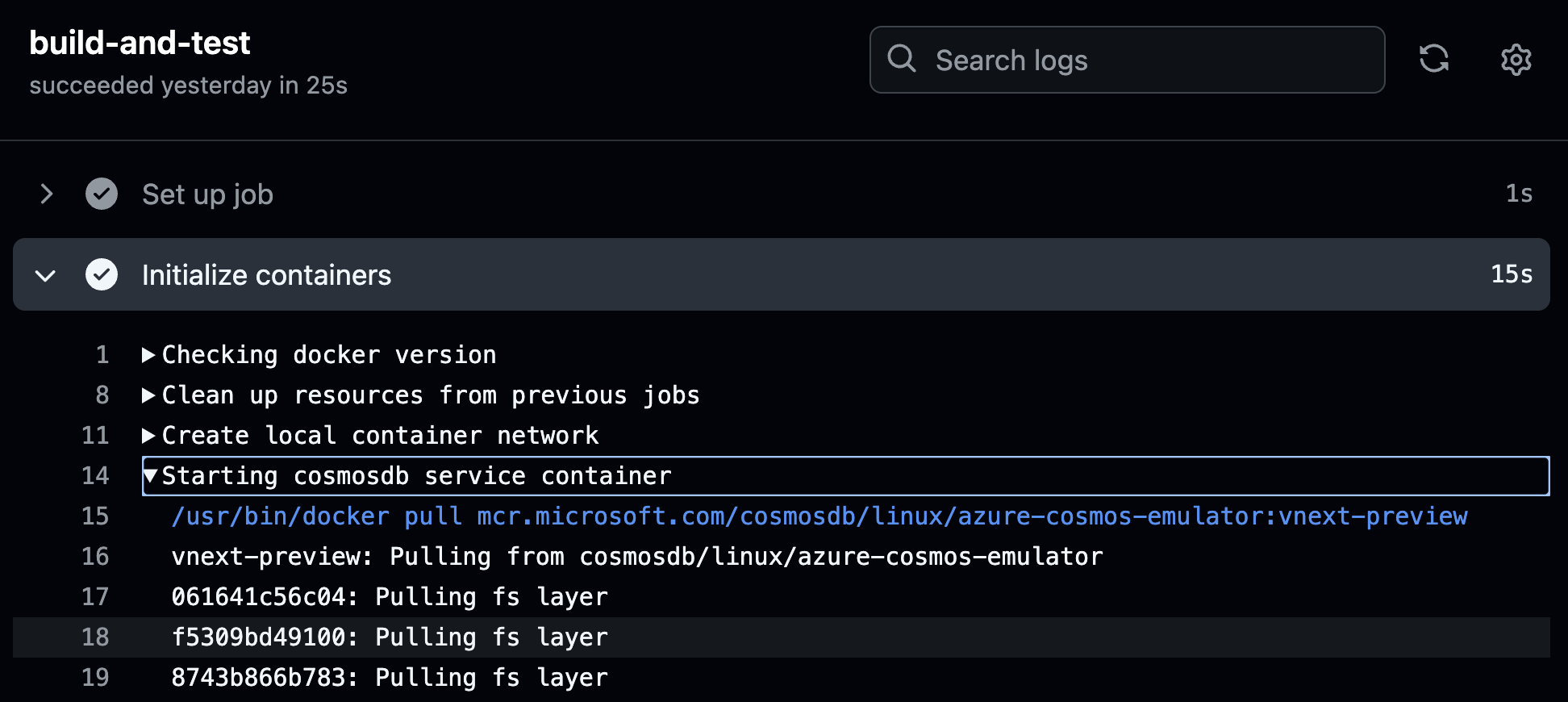
Use Azure Cosmos DB as a Docker container in CI/CD pipelines
There are lot of benefits to using Docker containers in CI/CD pipelines, especially for stateful systems like databases. For example, when you run integration tests, each CI job can start the database in an isolated container with a clean state, preventing conflicts between tests. This results in a testing environment that is reliable, consistent, and cost effective. This approach also reduces latency and improves the overall performance of the CI/CD pipeline because the database is locally accessible. The Linux-based Azure Cosmos DB emulator is available as a Docker container and can run on a variety of platf...

Doctors generate faster, more accurate medical charts with Sayvant and Azure Cosmos DB
This article is guest authored by Justin Mardjuki, CEO, Sayvant. Emergency rooms and urgent care facilities handle an estimated 350 million visits each year. Acute care environments are fast-paced, unpredictable, and high stakes. In these settings, providing care quickly is paramount. That’s why we created Sayvant, the leading clinical documentation AI solution for acute care. Sayvant helps clinicians generate accurate, defensible medical charts in seconds, enabling them to focus on delivering patient care instead of administrative tasks like documentation. Sayvant automates the creation of clinically accurate...