
Azure SQL Dev Corner
Voices from the Azure SQL PM Team, focusing on development and developers
Latest posts

SQL Decomposition in a Nutshell

Good software design principles apply inside the database too. See how decomposition, encapsulation, statelessness, and clear contracts can make complex T-SQL easier to read, test, reuse, and maintain.
Advocating for Uptime: The 6 Phases of Change
Schema changes are inevitable, but downtime doesn’t have to be. Learn a phased approach to safely evolve a production SQL schema while applications remain online.
Bacpac and Dacpac, the similarities and differences

When you need to move an entire database or move the objects in a database, bacpac and dacpac files often come up because of all of the tooling options to interact with them. Bacpac and dacpac files share some core similarities as well as some major differences in how they're used in SqlPackage and other SQL tools, but their flexibility can create a bit of confusion. In this post, we are going to discuss exactly what makes bacpac specifically important, as well as explore the options that a dacpac is capable of. A bacpac is primarily a portable copy of schema and data whose model is limited to the Azure SQL Data...
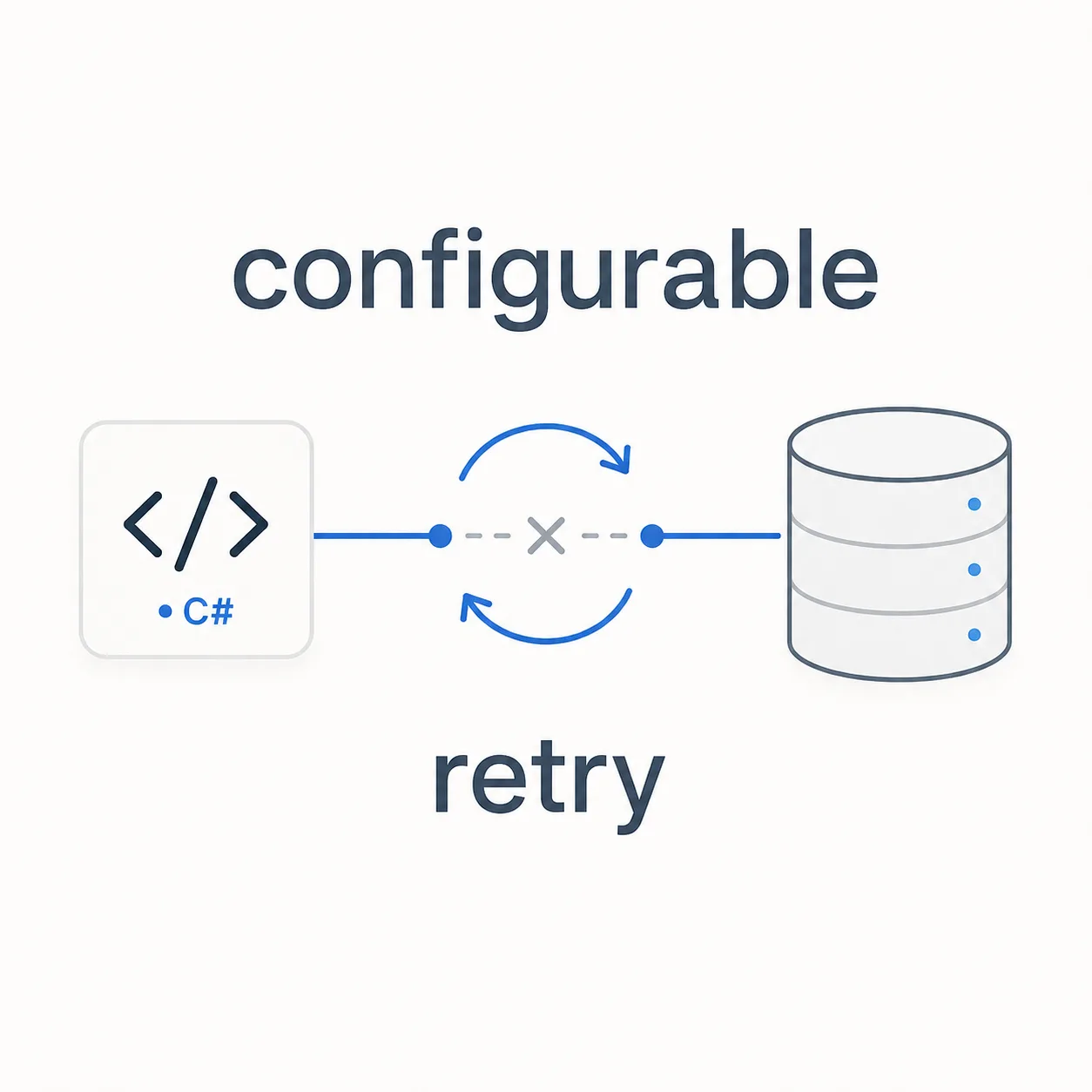
Try the new SqlClient and Retry connections natively
Microsoft.Data.SqlClient includes configurable retry logic for SqlConnection and SqlCommand, giving .NET applications built-in resilience for transient SQL Server failures without requiring Polly.

New Azure SQL Foundations video series with GitHub samples

Bob Ward and I recently released a series of videos, read more in the original blog post or go directly to the series on YouTube. The Azure SQL Database Foundations series are four videos that take you from your first Hyperscale database to AI features running against your own operational data. We also included how to assess and migrate (with AI and skills!) to Hyperscale in the first place, and the common optimizations you should consider. Every episode ships with a repo, so you can follow along in your own environment instead of watching someone else’s terminal.
Outgrowing SQL Server Express? Upgrade to Azure SQL Database Free Tier in 3 Steps


If you’ve been building local prototypes, internal tools, web backends, or lightweight services on SQL Server Express, you know the routine: it’s free, familiar, and gets the job done – until you hit hardware limits or spend weekends manual backup scripts and handling OS patches. Learn how to upgrade from SQL Server Express to Azure SQL Database free tier in 3 simple steps. Whether you're running SQL Server 2022 (or older) and hitting the hard 10 GB storage wall, or using SQL Server 2025 and realizing 50 GB of disk space doesn't solve the strict 1.4 GB memory bottleneck, staying on Express limits your applica...
MSSQL Extension for VS Code: SQL Formatter, Azure SQL Database Provisioning, and More

Writing and maintaining SQL is easier when you can eliminate repetitive steps and keep your scripts cleanly formatted. With the MSSQL extension for VS Code v1.45, we're introducing the Public Preview of the SQL Formatter alongside the General Availability of Azure SQL Database Provisioning and Shortcuts Configuration. You can now apply consistent T-SQL formatting across your projects, create free tier cloud databases with automated post-deployment actions, and streamline frequently used commands and queries directly inside Visual Studio Code. What's new in MSSQL extension for VS Code v1.45 Here's a summary of t...
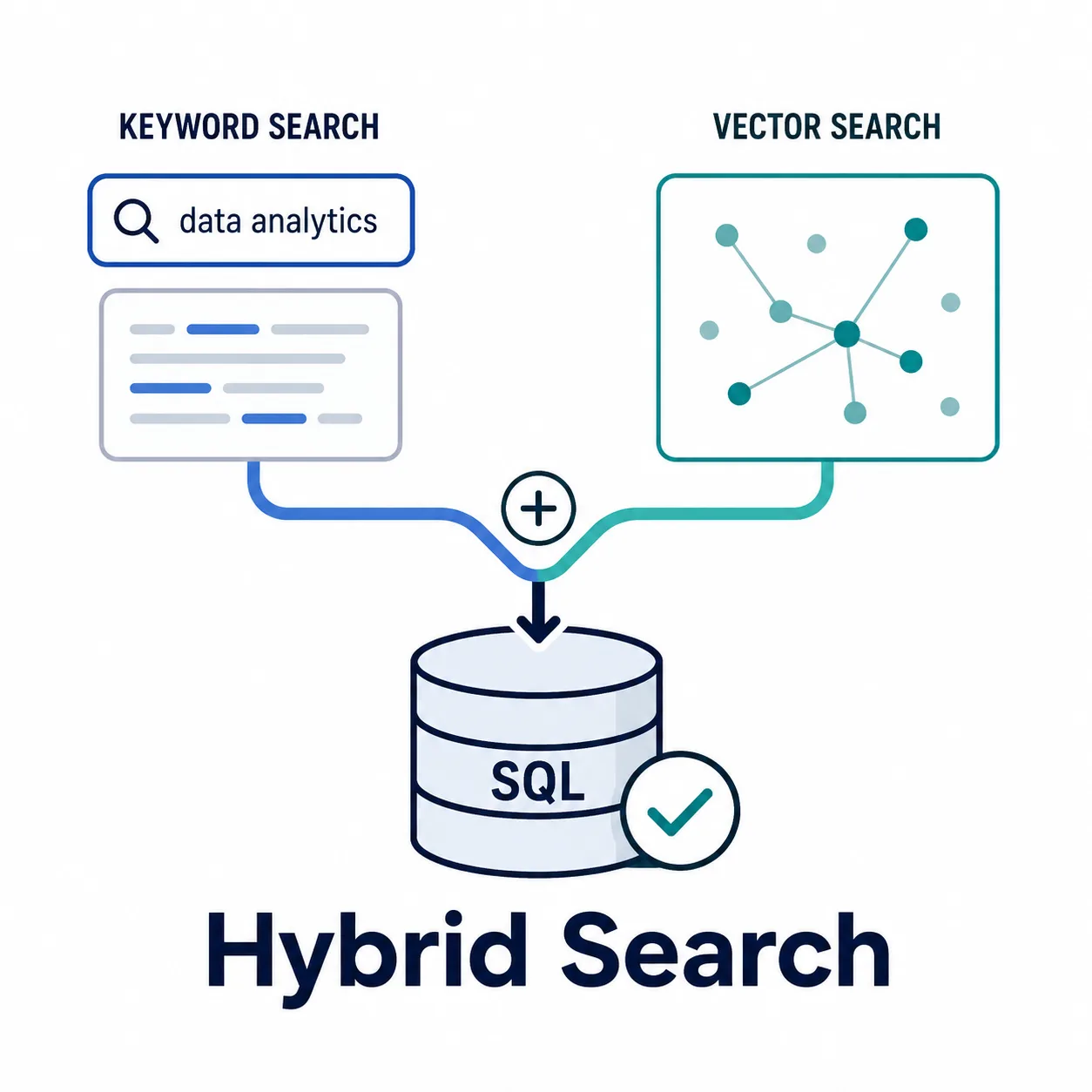
The Two Hybrid Searches in Microsoft SQL
Hybrid search is usually described as combining keyword search with vector search. Microsoft SQL does that, for sure, but we do quite a bit more right out of the box. SQL dynamically evaluates queries and switches between kNN and ANN vector search based on cost and selectivity. These two types of hybrid search, work together, ensuring your semantic queries return the best possible results to your apps and agents. Text search In 1998, Microsoft Research Cambridge welcomed Stephen Robertson, one of the principal architects of BM25, or Best Matching 25, the relevance-ranking algorithm that became foundational to m...
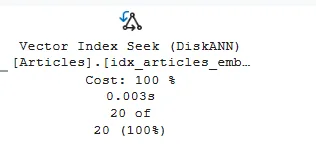
Beyond Vector Indexes: Azure SQL Brings Optimizer Intelligence to Vector Search

Why production AI retrieval depends on more than vector index performance. It's easy to think of AI retrieval as a vector search problem. For many developers, the first conversation starts with vector index benchmarks: How many queries per second can it handle? What's the latency? What's the recall? How well does it scale? Those metrics are critical, but production AI retrieval rarely consists of vector similarity alone. Equally important is what happens when vector search becomes part of a real application workload, one that includes filters, joins, security policies, ranking logic, and live operational d...