
Azure SQL Dev Corner
Voices from the Azure SQL PM Team, focusing on development and developers
Latest posts
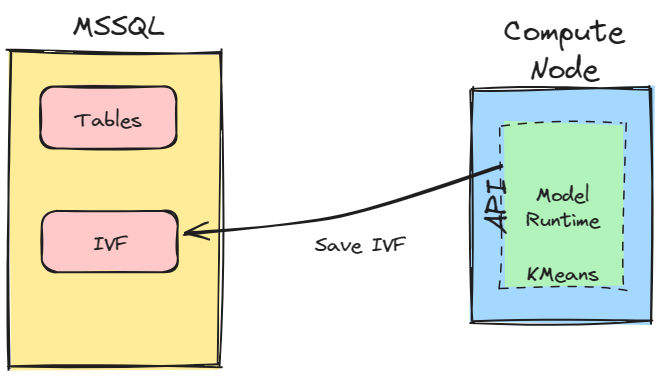
Vector Search Optimization via KMeans, Voronoi Cells and Inverted File Index (aka “Cell-Probing”)

In a previous article I already mentioned how vectors can be easily stored in Azure SQL already and how to calculate dot product and cosine distance using just T-SQL. In this article I will show how to improve the performance in vector search by using a technique that has many name but is really based on something very well know already: KMeans Clustering. As KMeans clustering is a compute intensive operation, this project uses SciKit-Learn library to perform the clustering and then stores the results in a SQL DB table. The results are then used to perform ANN search on the vector column in pure T-SQL. Vector...
Vanna.ai and Azure SQL Database

Vanna.ai and Microsoft SQL Vanna.ai, in partnership with Azure SQL Database Product Management, bring you a collaboration for using Vanna's natural language to SQL (NL2SQL) agent with the Azure SQL Database. How does Vanna.ai work? First, Vanna is an open-source Python RAG (Retrieval-Augmented Generation) framework for SQL generation/natural language to SQL (NL2SQL) and provides a fully hosted platform for application development. Get started for free here. (From the documentation) At its core, Vanna is a Python package that uses retrieval augmentation to help you generate accurate SQL queries for your d...

Introducing Regular Expression (Regex) Support in Azure SQL DB

We are pleased to announce the private preview of regular expressions (regex) support in Azure SQL Database. Regex is a powerful tool that allows you to search, manipulate, and validate text data in flexible ways. With regex support, you can enhance your SQL queries with pattern matching, extraction, replacement, and more. You can also combine them with other SQL functions and operators to create complex expressions and logic. This feature can help you to: The Regex feature in Azure SQL DB follows the POSIX standard and is compatible with the standard regex syntax and supports a variety of...
Empowering the SQLBits website with Azure SQL and Data API Builder
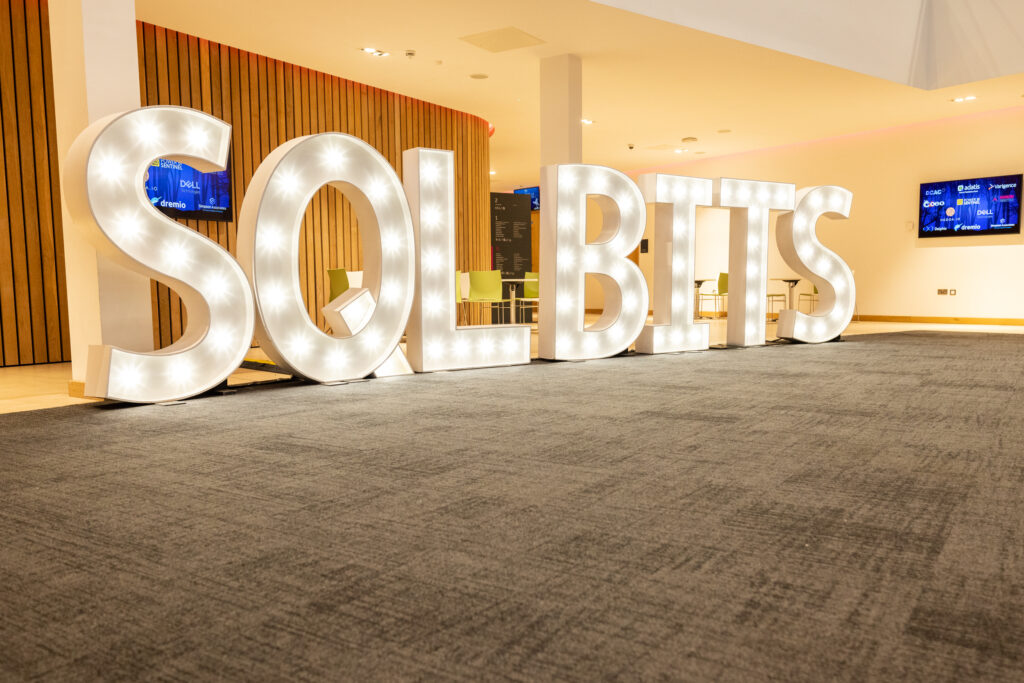
SQLBits is the biggest and most well-known data conference in UK and Europe. With several thousand people attending every year, and with more than 10 years of session recordings, it provides an amazing amount of knowledge to everyone who wants to learn anything around the Microsoft Data Platform. Be it on-premises, or on Azure, or the shiny new Fabric, SQLBits has something for you. In late 2023 the new SQLBits 2024 was unveiled, along with the updated website, during a very funny and engaging live event with the SQLBI folks. If you have missed the event, make sure to watch the recording here: Along with the 2...

Azure SQL Trigger Binding for Azure Functions goes GA
Azure SQL Database Engineering and Product Management would like to announce that Azure SQL Trigger Binding for Azure Functions is now generally available (GA). Catching Up As a quick refresher, the Azure SQL trigger uses SQL change tracking functionality to monitor a SQL table for changes and trigger a function when a row is created, updated, or deleted. It can be used in many scenarios such as change streaming from an Azure SQL database, participating in event-based architectures, as well as real time updating of web pages and applications. The GitHub samples repository is located here if you would like to tr...

NL2SQL with LangChain and Azure SQL Database
LangChain is an open-source framework for creating applications that use and are powered by language models (LLM/MLM/SML). In this post, basic LangChain components (toolkits, chains, agents) will be used to create a natural language to SQL prompt that will allow interactions with an Azure SQL Database; just ask the database what you want as if speaking to another person. Getting Started Looking at the python notebook used for this sample, you may notice in the repository there are 2. One is using OpenAI and the other is using Azure OpenAI. This post will be using the OpenAI notebook. The differences are...
Build highly scalable, AI-ready applications on Azure SQL Database Hyperscale

Build highly scalable, AI-ready applications on Azure SQL Database Hyperscale AI and cloud-native applications built for the future need a highly scalable, cloud native database with excellent price-performance. For applications operating on mission-critical relational data, Azure SQL Database Hyperscale provides the performance, reliability and security you expect from Azure SQL – but at the same price as commercial open source databases. SQL Database Hyperscale delivers consistently high performance at any scale, standing above the competition. Combined with a new lower price, choosing the right relational ...

Build your APIs with DAB using Containers – Part 2

Are you tired of spending countless hours building APIs from scratch? With Data API builder (DAB), you can create your API in just minutes! All you need to do is create a JSON configuration file to describe your database entities (tables, views, stored procedures, or collections) from your Azure SQL Database, SQL Server, Cosmos DB, PostgreSQL, or MySQL database. Using containers with DAB (Data API Builder for short) provides a consistent, isolated, portable, and lightweight local development experience that makes team collaboration easier. Once the local development is completed, one possible next step is to de...

Using AI for Content Moderation with Azure SQL Database
In my previous posts, I have covered using Azure OpenAI services with Azure SQL Database via REST endpoints. This post with further explore that pathway by creating stored procedures you can use to encapsulate the REST calls and combine them with custom business logic for AI content moderation with Azure SQL Database. A Quick Introduction The services to being used in this post are the new Azure AI Content Safety service and the Azure AI Language service. Azure AI Content Safety is a solution designed to detect harmful user-generated and AI-generated content in applications and services. It can detect such cont...