
Microsoft Agent Framework
The latest news from the Microsoft Agent Framework team for developers
Latest posts
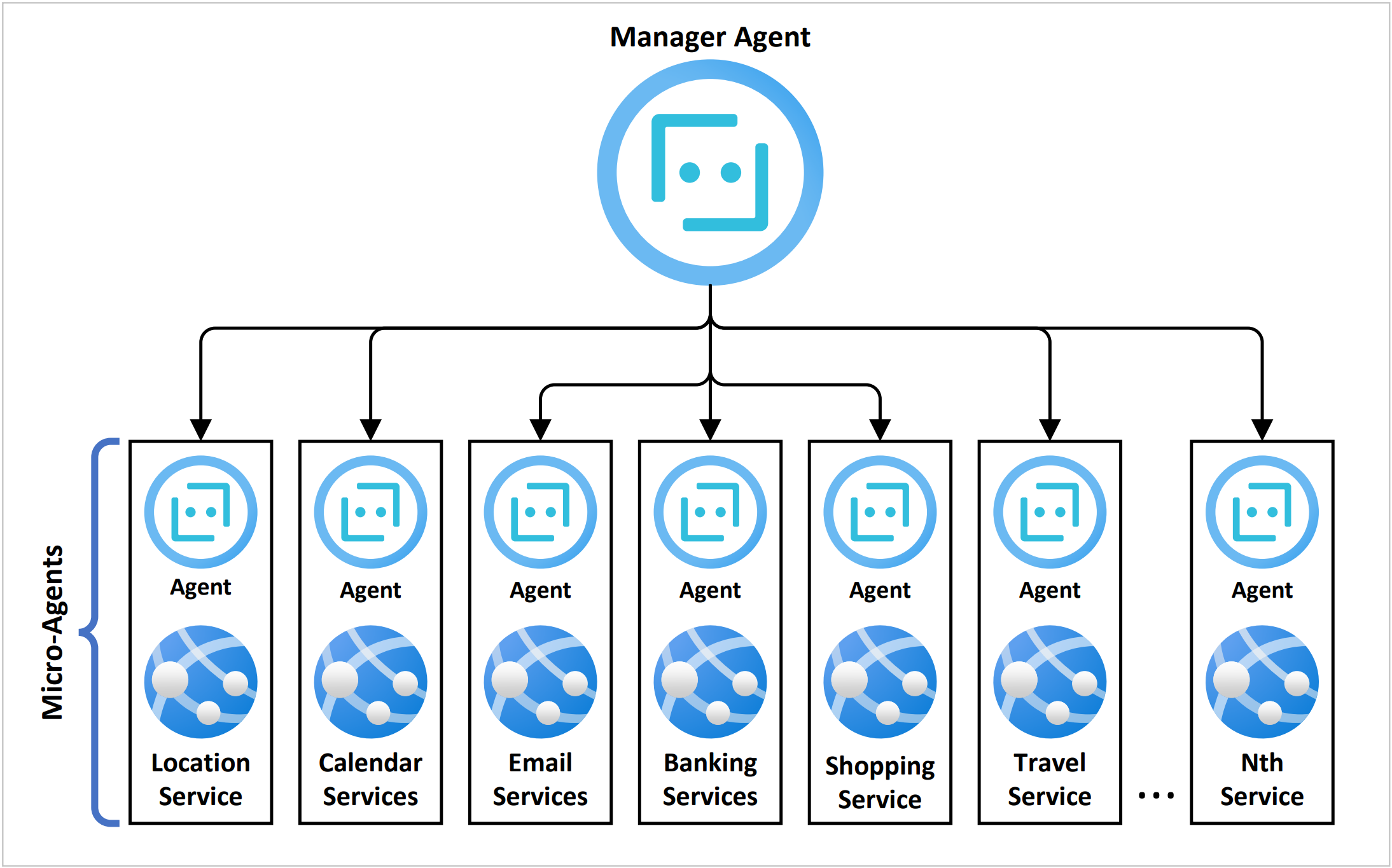
MicroAgents: Exploring Agentic Architecture with Microservices


Throughout our time building Semantic Kernel and working with customers, we've introduced agents and have just started to explore the potential of autonomous AI agents. While the community is in the midst of exploring various architectures for these agents, one source we can draw inspiration from is the microservice architecture. Consider the benefits of microservices: In this post, we'll cover what we're calling MicroAgents and talk through what some of the benefits this approach could provide. Let's dive in! What is an Agent? From the perspective of Semantic Kernel orchestration, an A...

GUEST POST: How to build a Kernel Memory connector and use Elasticsearch as vector database

This article will help readers to create their own connectors for Kernel Memory. It will introduce fundamental concepts of Kernel Memory and Elasticsearch and will show some practical use cases of how to use the interface IMemoryDb. The complete source code for the connector is located in the GitHub repository FreeMindLabs.KernelMemory.Elasticsearch. In there, you can find the complete implementation of the IMemoryDb methods using ElasticsearchClient. A brief introduction to Kernel Memory According to Devis Lucato (Principal Architect at Microsoft - Semantic Kernel & Memory), we should think about Kernel...

Say hello to Semantic Kernel V1.0.1

The Semantic Kernel team is proud to announce that we have published V1.0.1 of Semantic Kernel for C#. With V1, C# developers now have a solid foundation to build AI agents for their AI powered applications. We are extremely thankful to the many people who tested our release candidates over the past two weeks. The many bug reports and feature requests helped ensure that we landed a solid version of Semantic Kernel. We hope this is a perfectly holiday gift for anyone interested in building AI applications over the winter holidays. If you need some inspiration, I'd recommend checking out the submissions to la...

Migrating from the Sequential and Stepwise planners to the new Handlebars and Stepwise planner
As part of our Ignite release, we shipped the new gen-4 and gen-5 planners developed by the Semantic Kernel team. These new planners can handle many more functions (2-3X more), leverage more complex logic (e.g., loops, conditionals, and complex objects), all while using fewer tokens. Because of just how much better these new planners are, the Semantic Kernel team has decided that the existing Action, Sequential, and V1 Stepwise planners will not move to the v1.0.0 version of Semantic Kernel. While they were revolutionary at the time, there are much better tools for developers to now use. By removing them from ...

Release Candidate 1 for the Semantic Kernel .NET SDK is now live.
Semantic Kernel v1.0 has shipped and the contents of this blog entry is now out of date. Since the interface is getting extremely close to its final v1.0.0 structure, we’re excited to release v1.0.0 RC1 of the .NET Semantic Kernel SDK. During the next two weeks we’ll be focused on bug fixes and making minor adjustments to finish the shape of the API. In this blog we’ll share… Automated function calling makes getting started easy. With the latest round of updates, we took great care to make the SDK as simple to use for new and existing users. This included renaming many of our classes a...
Come hack with us on Semantic Kernel v1.0!
v1.0 is right around the corner! What better way to kick off the holiday season than with an AI hackathon! We're approaching a big milestone for the Semantic Kernel with the upcoming release of the 1.0 SDK. To get the community familiar with the changes that are coming and to get as much feedback as possible, we're launching a weeklong hackathon open globally for people to hack with the Semantic Kernel! Submissions are open from December 4, 2023 at 12 PM PST to December 11, 2023 at 12 PM PST. We'll be judging submissions based off the following categories: Stay tuned for prizes! The t...

Semantic Kernel’s Ignite release: Beta8 for the .NET SDK
Yesterday’s and today’s Ignite sessions have been jam packed with updates. From new AI infrastructure to the new Copilot Studio, Microsoft has had a lot to share! At the center of it all, however, is still AI Orchestration: the layer that uses AI to retrieve data, call functions, and ultimately do real work. That’s where Semantic Kernel comes in. As our contribution to Ignite, we wanted to share two huge announcements: To access them, get the latest Semantic Kernel packages from NuGet. Keep reading to learn more about these new enhancements that have come to Semantic Kernel. Introducing our Gen-...

OpenAI Assistants: The power of templated assistant instructions
Another day, another update from the Semantic Kernel team on OpenAI Assistants! For this article, we wanted to dive into assistant instructions, the key element in the Assistant API that allows you to give assistants their own persona. With the existing OpenAI API, instructions are typically static. You define them once for an assistant, and then they’re reused whenever an assistant answers a thread. You can, however, override the instruction every time you create a new run of a thread. A screenshot of the OpenAI API docs for creating a new run of a thread. We’ve taken advantage of this request parameter t...

Introducing v1.0.0 Beta6 for the .NET Semantic Kernel SDK
Semantic Kernel v1.0 has shipped and the contents of this blog entry is now out of date. The Semantic Kernel team continues to make improvements to our beta release of the .NET library. Our sixth Beta release is the most jam packed one so far, so we wanted to take the opportunity to share everything new inside of it. As a reminder, if you want visibility into our full plans for v1 of Semantic Kernel, please check out this blog post. Additionally, if you’re needing to update from pre-Beta, we recommend our first Beta blog post where we outline some of the initial breaking changes. Semantic functions are get...