
Microsoft Agent Framework
The latest news from the Microsoft Agent Framework team for developers
Latest posts
Explore .NET and AI Integration at .NET Conf 2023 with Semantic Kernel

Join us this November 14-16 for the .NET Conf 2023, an event focused on knowledge sharing and the latest in .NET development. The conference will feature non-stop sessions over three days, ensuring that no matter where you are in the world, there’s something for you to tune into. We understand the value of direct interaction and have planned for live Q&A sessions on Twitter and Twitch, catering to a global developer audience eager to discuss the latest in .NET developments. .NET 💖 AI - Featuring John Maeda and Scott Hanselman Join Semantic Kernel on Day 1 between 2:15 and 3:00 pm PST. Since AI ha...

Building AI Applications with Microsoft Semantic Kernel and MongoDB Atlas Vector Search


As part of this guest blogpost by the MongoDB Atlas Vector Search team, we are excited to announce native support for MongoDB Atlas Vector Search in Microsoft Semantic Kernel. With this integration, users can bring the power of LLMs (large language models) to their proprietary data securely, and build generative AI applications using RAG (retrieval-augmented generation) with programming languages like Python and C#. The accompanying tutorial will walk you through an example. What is MongoDB Atlas Vector Search? MongoDB Atlas Vector Search is a fully managed service that simplifies the process of effectively i...

OpenAI Assistants: a first look into using OpenAI Assistants with Semantic Kernel

On Monday, we shared that the future of Semantic Kernel will leverage OpenAI Assistants so you can take advantage of the ease-of-use they provide in creating agents and copilots. In this blog post, we wanted to pick up where we left off and share an incremental update on our current progress while also diving into some of the scenarios we want to enable once we’ve launched the integration. So without further ado… check out this recorded demo of us using assistants with Semantic Kernel! In the demo, you’ll see just how easy it’ll be to update an existing Semantic Kernel v1.0 project from a standard kernel to...
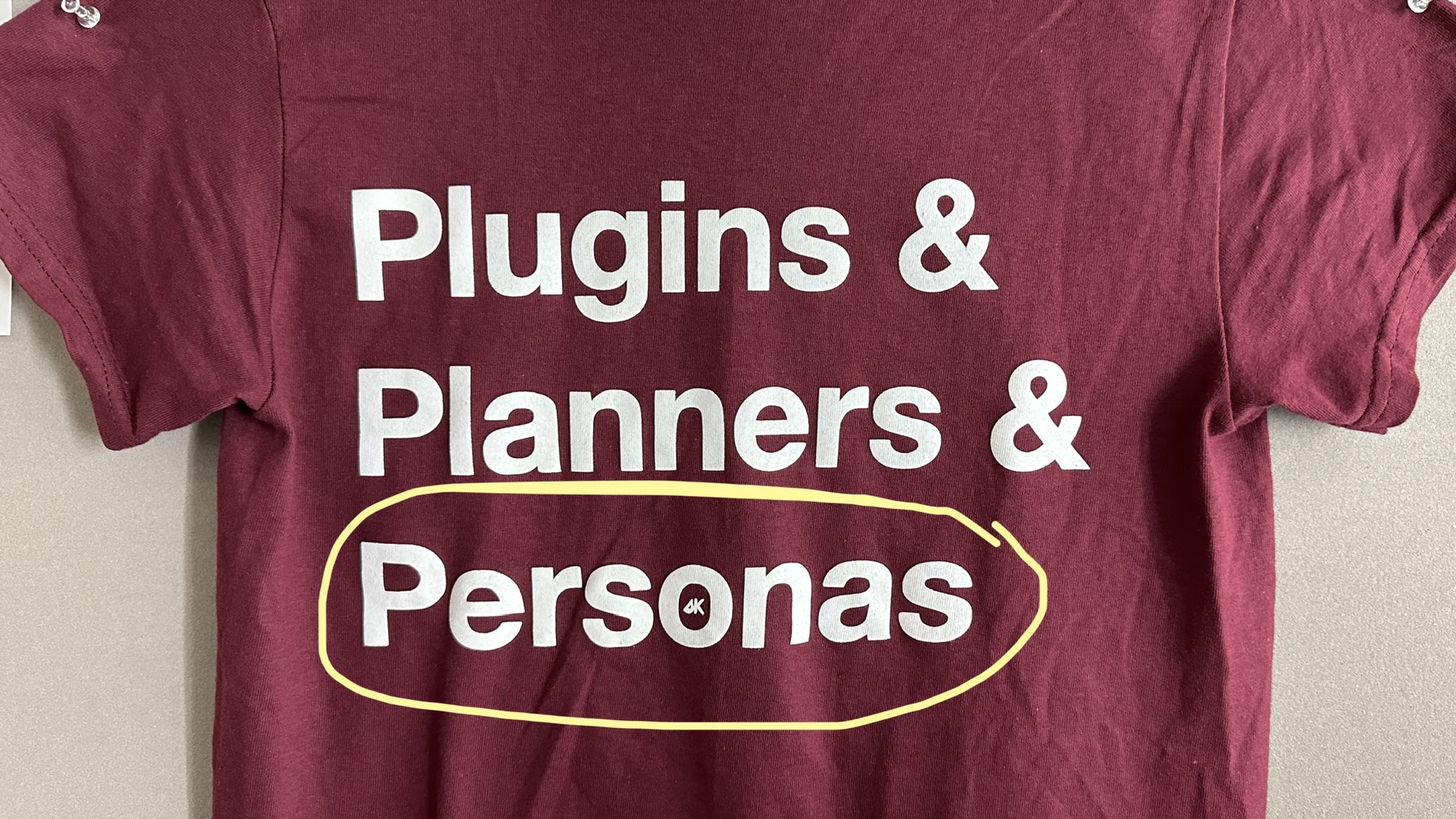
Unveiling the Next Steps in AI Productivity: Plugins, Planners, and Personas at Microsoft Ignite
As the Microsoft Ignite event approaches on November 16th, we are excited to invite you to join us for a live session at the Seattle Convention Center Summit. This gathering is a special opportunity for business leaders and AI enthusiasts to gain insight into the advancements of Semantic Kernel, particularly in the realms of Plugins, Planners, and Personas. We'll be sharing the latest developments on our Plugins and Planners and introducing exciting updates that enhance their functionality and business applications. Moreover, we'll be looking ahead, focusing on Personas. We'll discuss what Persona...

OpenAI Assistants: the future of Semantic Kernel
During the OpenAI event earlier today, OpenAI announced the launch of GPTs and the assistants API, the new and improved ways of creating agents on top of their chat completion models. With assistants, much of the heavy lifting required to build agents has been stripped away… This ultimately means it’ll be faster, and easier, for you to build agents on top of OpenAI and Semantic Kernel. We’re excited to share our plans on incorporating assistants into Semantic Kernel and how they fit into our v1 proposals, so beginning today, we’re going to start a series on building agents with Semantic Kernel. ...
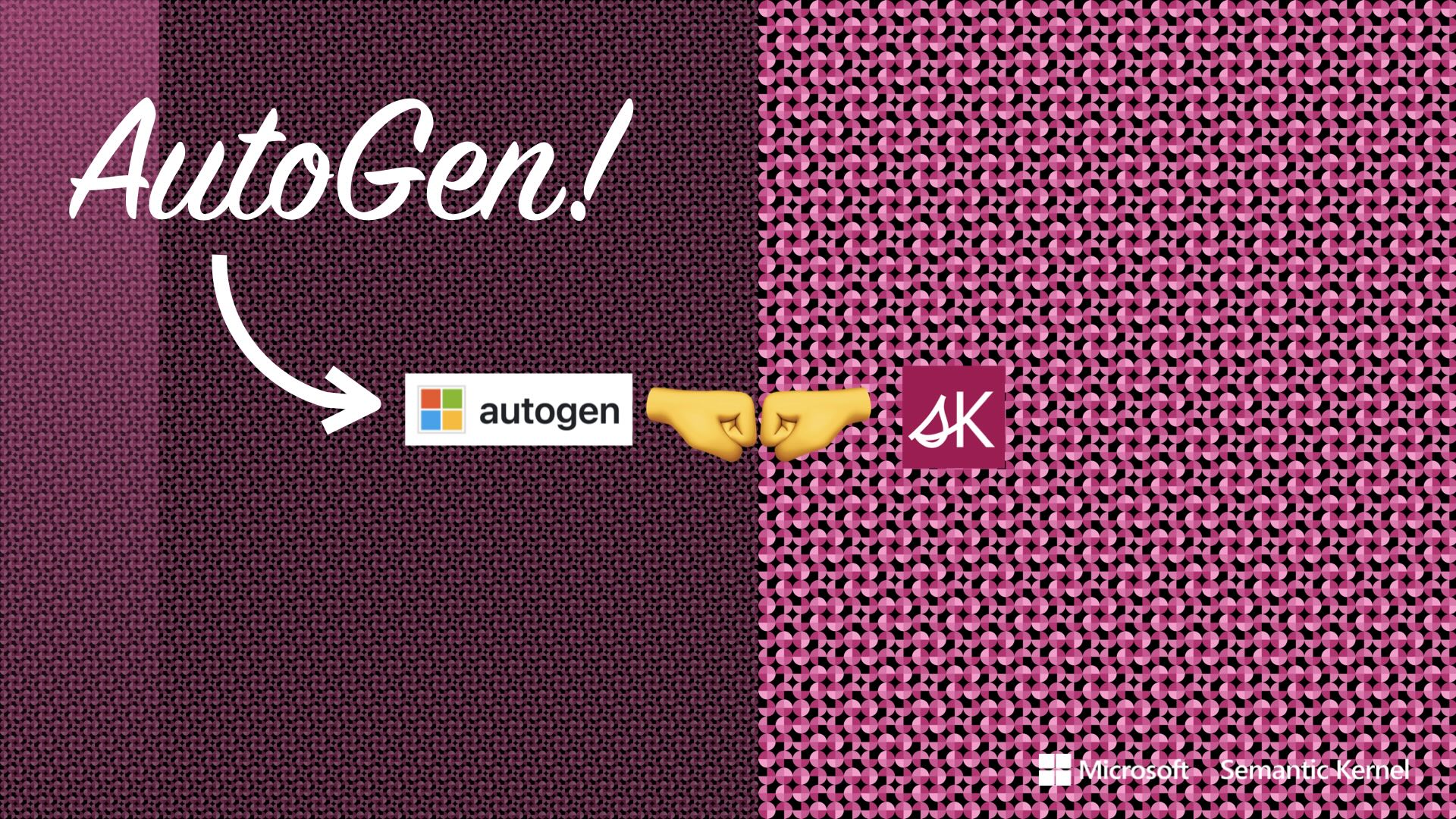
AutoGen Agents Meet Semantic Kernel

In this blog post, we show you how you can use Semantic Kernel with AutoGen, a Microsoft Research project that shows the potential of using multiple agents together. With AutoGen, Microsoft research has shown that multiple agents can be better than one. To actually do work, however, agents within AutoGen need hooks into the real world so they can retrieve information, create content, and complete tasks. Without these capabilities, agents will simply talk to each other and waste thousands or tens-of-thousands of tokens. This is where Semantic Kernel comes in. With Semantic Kernel, you can easily bring Plugin...

What to expect from v1 and beyond for Semantic Kernel.
Semantic Kernel v1.0 has shipped and the contents of this blog entry is now out of date. In a previous article, we announced the beta launch of Semantic Kernel v1. In that article, we shared the initial breaking changes we made for v1: 1) renaming skills to plugins, 2) making Semantic Kernel AI service agnostic while still supporting first class support for Azure OpenAI and OpenAI, and 3) consolidating our implementation of planners. These are by no means the only changes we have planned for v1 though. Several other changes are necessary before we can confidently say that we have a simple-to-use API that ...

GUEST POST – Crafting Unique AI Personas: Harnessing the Power of Logit Bias in Large Language Models

Large Language Models (LLMs) have revolutionized our interaction with software. However, there's a catch - their responses can be monotonous and impersonal. This is where 'personas' come in. They add a human touch to LLMs, transforming generic outputs into customized responses that resonate with users. This is particularly handy in applications like customer service bots and virtual assistants. But how do we create these personas without hefty costs or time investments? The good news is, we can tweak a set of common parameters in most LLMs to influence their output, and that's what we'll explore today. The exa...
Chat Copilot Integration with Semantic Memory – Release 0.5

Chat Copilot Release 0.5 introduces the integration of Semantic Memory (SM). Chat Copilot now utilizes the ISemanticMemoryClient interface from SM instead of the ISemanticTextMemory interface associated with Semantic Kernel memory connectors. Semantic Memory (SM) is an open-source platform specialized in the efficient indexing of datasets through custom continuous data hybrid pipeline - https://github.com/microsoft/semantic-memory. This pipeline has been introduced as a separate (third) service component: memorypipeline; although, you are able to continue to run locally for debugging without this additio...