
AI

Embeddings and vector search in Microsoft Agent Framework for Go

Build semantic search with Go structs, generate embeddings through a common API, and connect vector retrieval to agent context and memory.
Can a local git remote replace GitHub in your agent eval?

We swapped GitHub for a local git remote in our agent evals. Rebasing and pushing on request were unaffected, but the agent pushed on its own 11 points less often. Here's when a local remote is a safe shortcut, and when it isn't.

Bring Your Own Model to the GitHub Copilot SDK with C#

The GitHub Copilot SDK gives your application an agent runtime. BYOK lets you keep that runtime while sending model requests to your own Microsoft Foundry or Azure OpenAI deployment. Here is the complete C# setup.
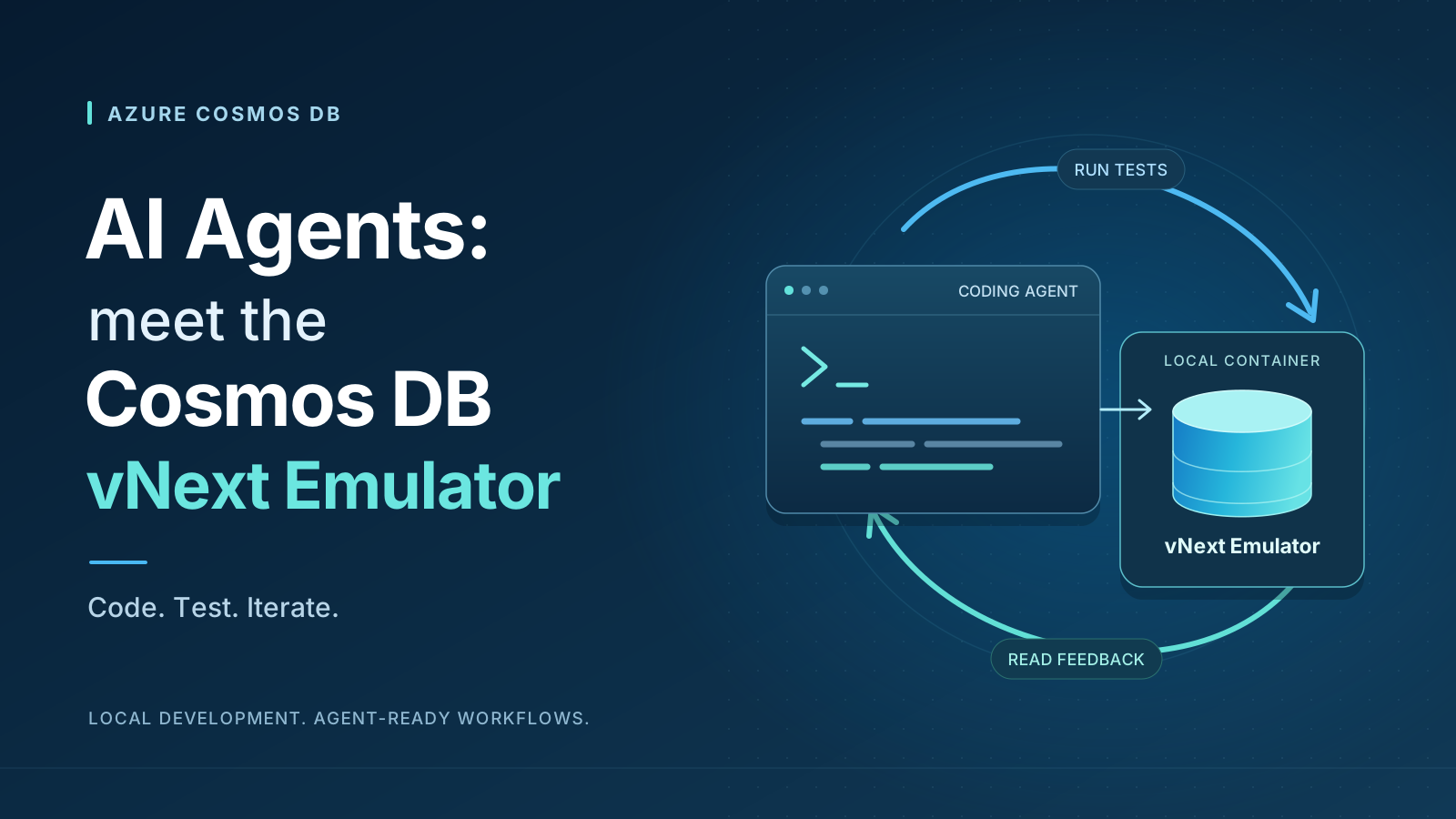
AI Agents: Meet the Azure Cosmos DB vNext Emulator

Over a typical 2 day window, we record 10 times as many emulator sessions lasting more than 30 minutes for vNext as for the legacy emulator. Our bet is that agentic development is helping drive the difference! The appeal is straightforward: coding agents need a database they can run anywhere. They also need a database they can start, seed, test against and debug as they work. Our vNext emulator fits that workflow naturally. A different kind of developer With the vNext emulator, we're building for a broader idea of the developer: a person at a keyboard, a coding agent, or the two working together. The...
Azure MCP Server 3.0 stable release: More tools. More possibilities

Explore the new Azure MCP Server 3.0 stable release, with AI agent tools for Terraform, backup, recovery, and troubleshooting, plus stronger security defaults.
Introducing the Agent Experience (AX) Practitioner Playbook
AI coding agents now pick the SDK, the version, and the pattern for your developers. The AX Practitioner Playbook is our method for finding out whether they get your technology right, and for fixing the sources they rely on when they don't.
Dynamic Workflows in Azure Functions Hosted Skills: Durable, AI-Led Work for Event-Driven Apps

Azure Functions is the event-driven application platform, and Hosted Skills adds AI reasoning to your app. Dynamic Workflows give the app a durable way to carry out AI-led, multi-step work after the triggering invocation is finished. The model writes a plan (a DAG) one time, and Durable Functions runs it. In our benchmark, token use decreased by 56-93% and end-to-end latency decreased by 77-95%, with the same output quality.
AI Development on Windows: from PyTorch and llama.cpp to Windows ML


Today we are highlighting improvements across a few key open-source projects many of you already use, as well as updates to Windows ML. To empower developers, we must support the broad range of tools for experimentation and exploration across inference and training, in addition to our production grade native inference stack. Available today, Windows adds experimental llama.cpp support to Windows ML so you can run GGUF models locally through new task-specific APIs. Windows ML is the unified, high-performance local AI inferencing framework for Windows. Our experimental Windows-native Runtime API is now in preview ...
From Spec-First to Enterprise-Ready: Extending GitHub Spec Kit

How presets, extensions, bundles, workflows, and governed catalogs make Spec-Driven Development adaptable at scale This article continues Spec-Driven Development: A Spec-First Approach to AI-Native Engineering, which introduced the principles and lifecycle of SDD. Here, we focus on the next challenge: adapting that workflow to the standards, domains, tools, and governance needs of a large engineering organization. When a good workflow meets organizational reality Spec-Driven Development (SDD) gives teams a durable source of truth: structured specs that carry intent through requirements, design, implementatio...
Upcoming SQL and AI Events to Put on Your Calendar

Developers, database administrators, data professionals, architects and technology decision makers have several opportunities to connect, learn and gain hands-on experience this fall. 2027 Q4 SQL Events Get hands-on with SQL and AI The Friday workshops are led by the SQL product group! They provide a full day of practical learning before the community conferences begin. This AI workshop is designed for SQL developers, database administrators, application developers, architects and other data professionals who want to build AI-powered applications without abandoning the SQL tools and security model they alr...
Bring agentic reasoning to Python function apps with Azure Functions Agent bindings (preview)

Add bounded AI reasoning to Python function apps with Azure Functions Agent bindings, while keeping deterministic application code in control.
What is Agent Experience (AX)?
Your agent says it's done, and the code compiles, but did it pick your technology? Did it use it correctly? Learn what Agent Experience (AX) is, how to measure it, and why the obvious fix isn't always the right one.
From an Empty Folder to an AI Agent: Meet create-cosmos-agent

The first few minutes of a new AI project often feel productive. Create a chat endpoint, connect a model, send a prompt, and display the answer. Then the real questions arrive. Where should the agent store memory? How do we keep one customer's data away from another? How do we trace the source of an answer? What happens when an action requires approval? How do we test the application locally before creating cloud resources? And how do we move to Azure without rebuilding the project? Those questions inspired me to build create-cosmos-agent, an open-source CLI for creating production-oriented TypeScript AI...
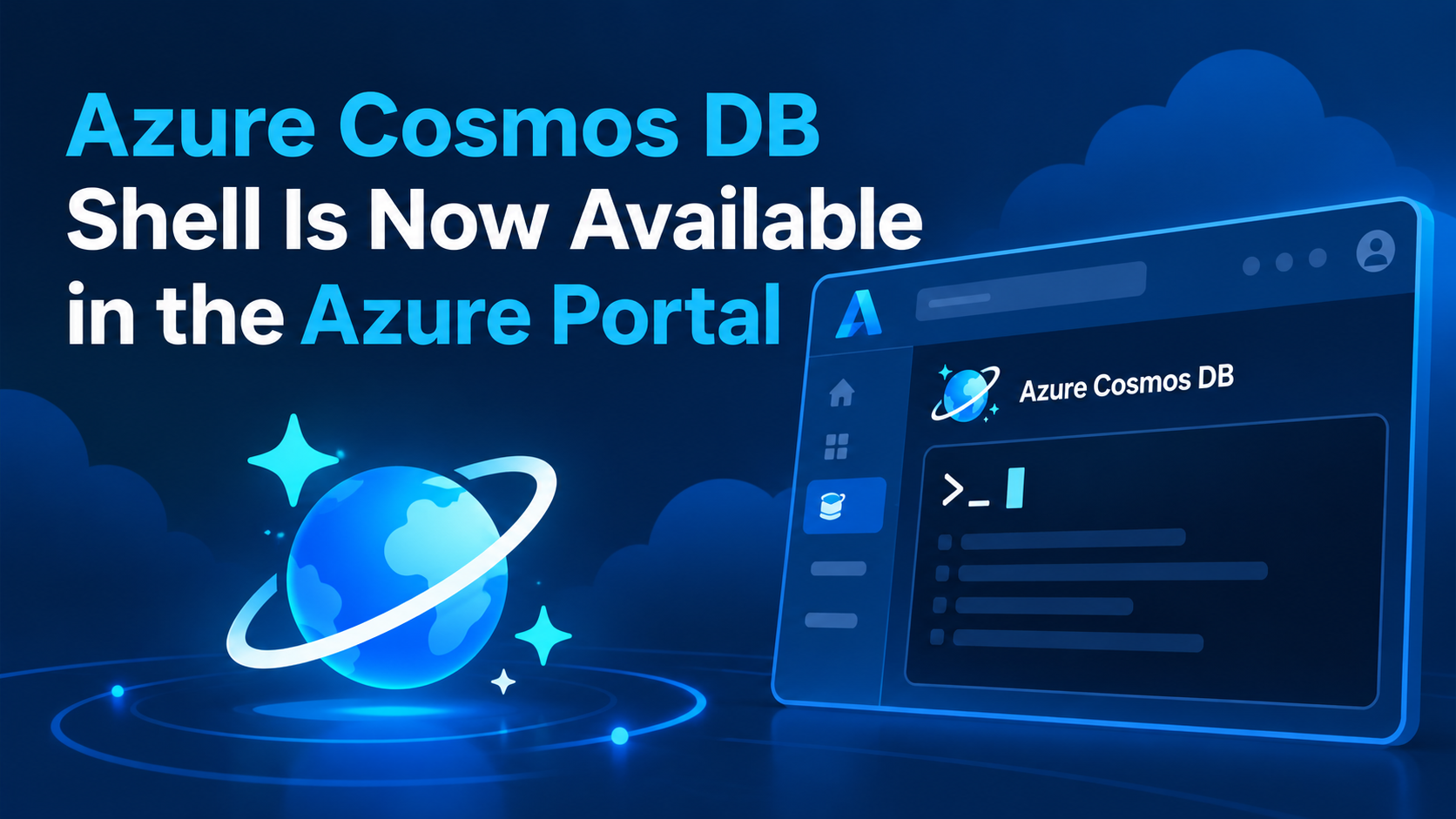
Azure Cosmos DB Shell is now available in the Azure portal
You can now open Azure Cosmos DB Shell directly from Data Explorer in the Azure portal. The shell gives you a terminal-style way to work with Azure Cosmos DB. You can move through databases and containers as you would through folders, run NoSQL queries, inspect resources, and update data. When you launch it from Data Explorer, it is already connected to the account you are viewing. Open a shell from Data Explorer Open an Azure Cosmos DB for NoSQL account in the portal, go to Data Explorer, and select Open Cosmos DB Shell from the toolbar. The shell opens in a new tab and connects to the selec...
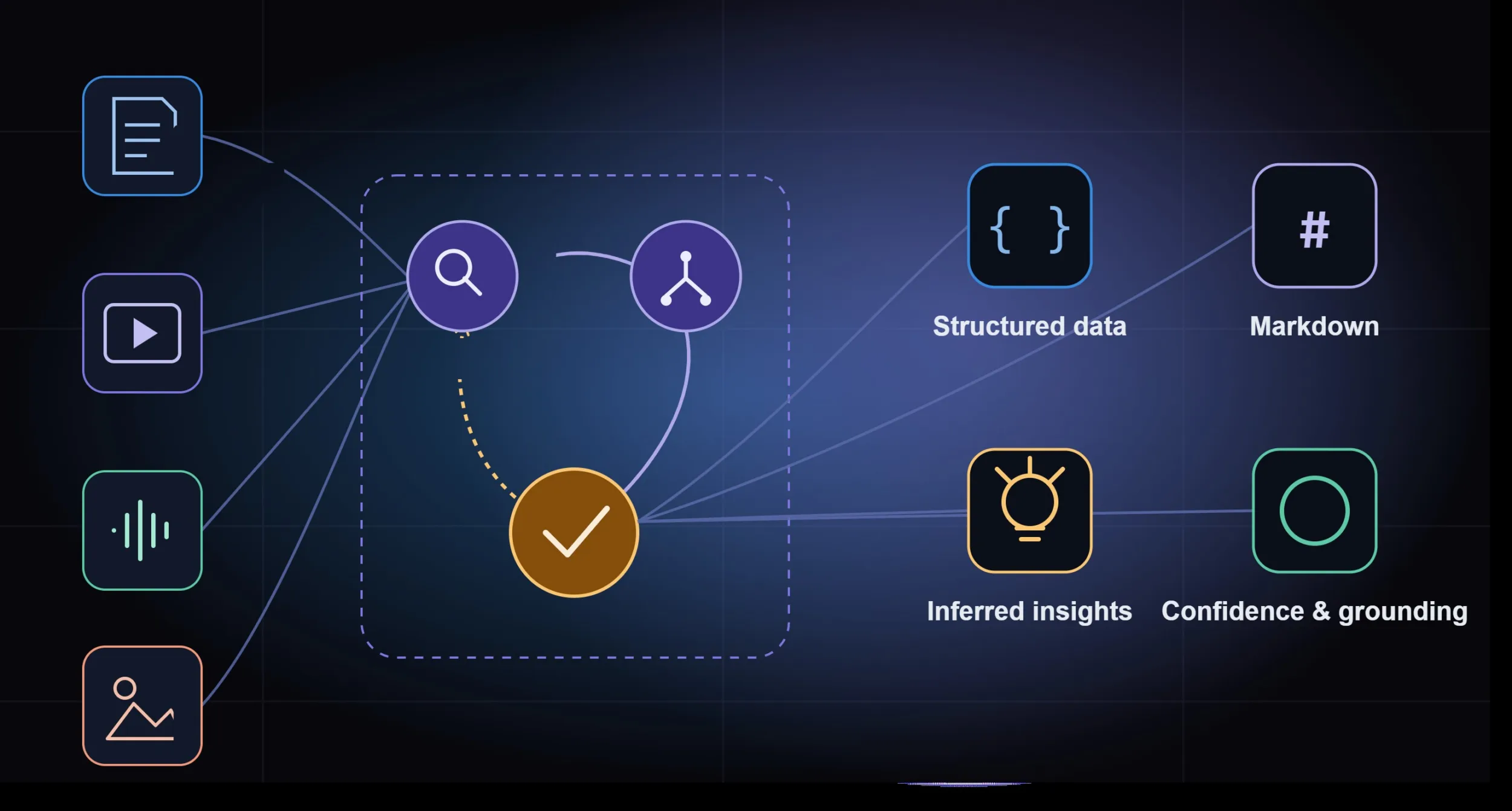
Why content extraction still matters in the GenAI era


Learn why stronger AI models make trustworthy content extraction more important, how Azure Content Understanding and Azure Document Intelligence serve different needs, and what comes next.
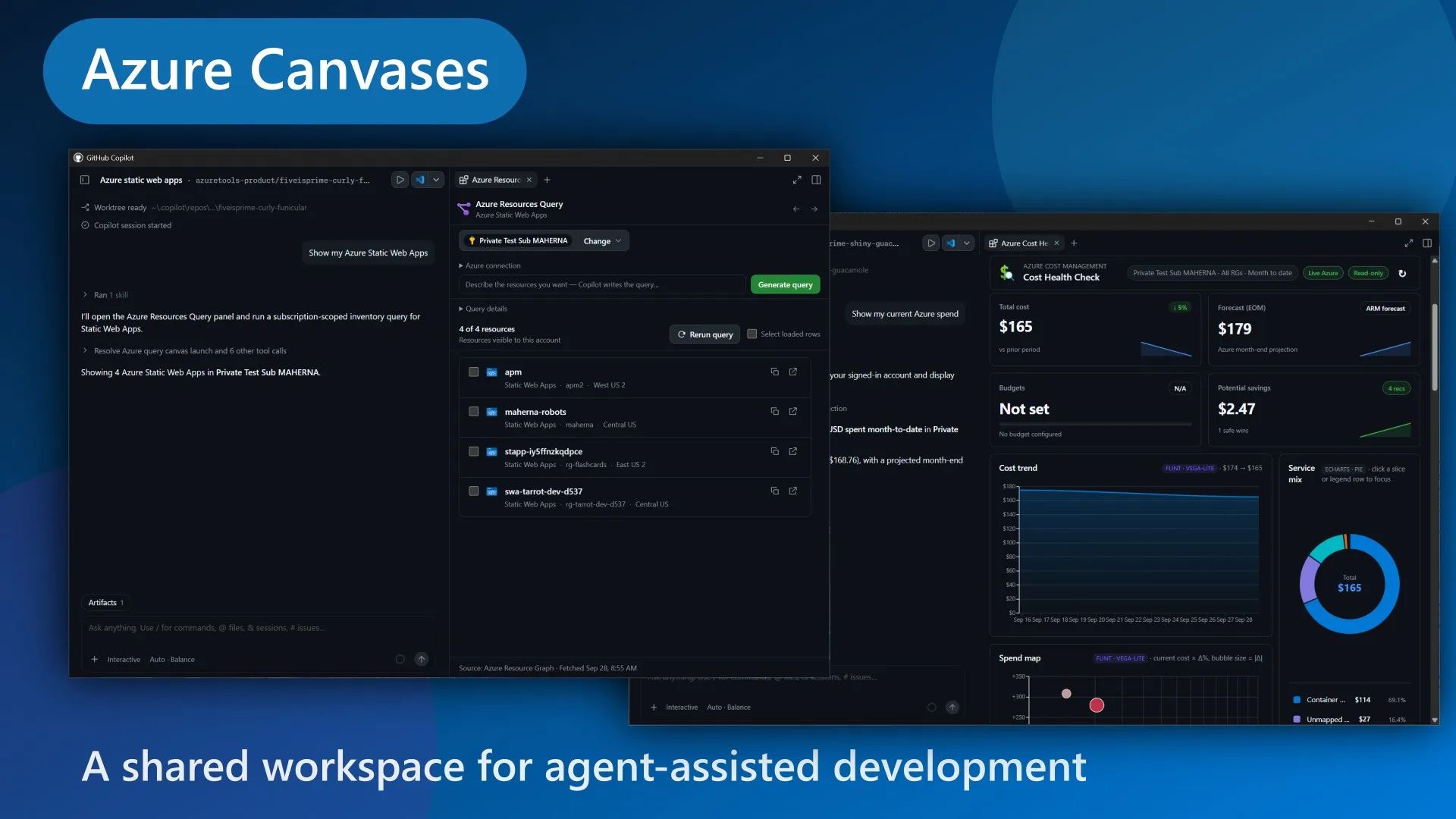
Build with Azure Canvases: a shared workspace for agents

See how Azure Canvases bring plans, code, previews, and deployment feedback together in a collaborative workspace for agent-assisted development.
DiskANN Vector Index and Vector Search Are Now Generally Available in Azure SQL

Today, we are announcing the general availability of DiskANN Vector Index & Search across Azure SQL Database, Azure SQL Managed Instance with the always-up-to-date update policy, and SQL database in Microsoft Fabric. DiskANN brings scalable approximate nearest-neighbor search directly to the SQL engine. Developers can store vectors alongside relational data and combine vector similarity with the filters, joins, security policies, and transactional data their applications already rely on. Why Vector indexes matter Applications use embeddings to represent the semantic meaning of text, images, products, doc...
What’s new across Microsoft SQL at SQLCon/FabCon Europe 2026

Live From Barcelona Woo! I’m posting this live from the first ever European SQLCon (joint conference with FabCon EU), and the second ever SQLCon. The energy here is great, as the community comes together in Barcelona and as we prepare to go on the keynote stage and share what’s new! A heartfelt nod to the internal team, our customers, and the community who all contributed to what we are releasing today – the feedback to build to feedback loop is getting tighter, and each is critical for Microsoft SQL to build a better platform. If you're here in Barcelona, the full schedule from the Microsoft SQL product team...
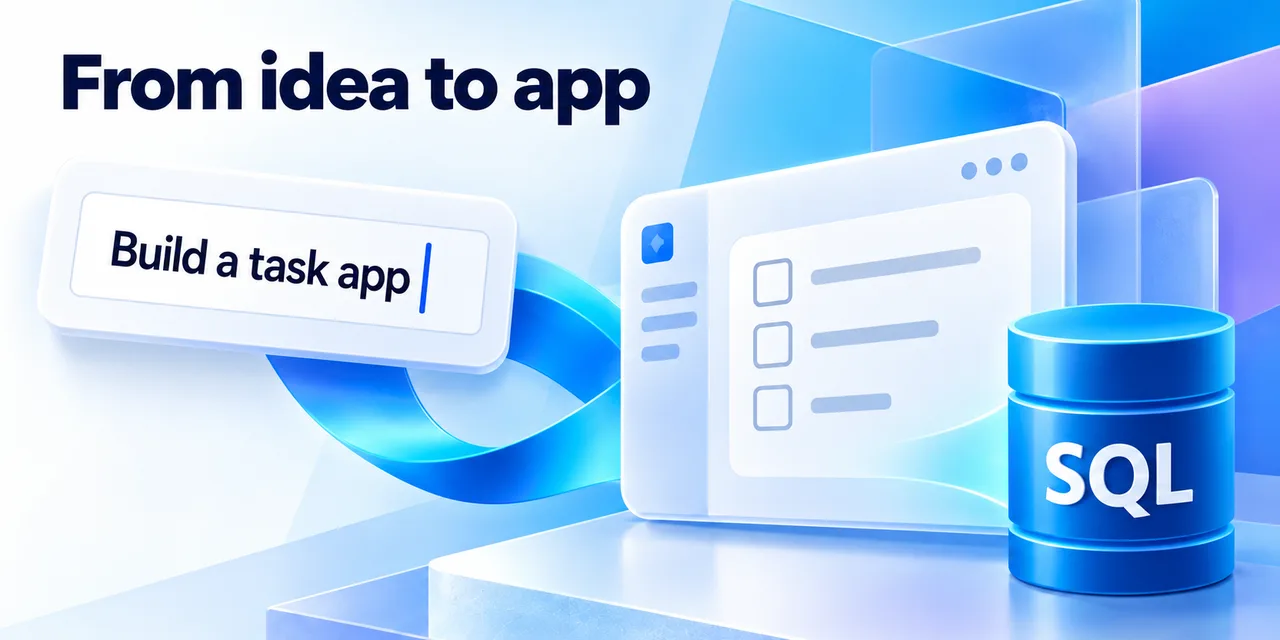
How to build an app on Azure SQL with an AI coding agent

Developers have trusted SQL for decades, since long before AI existed. Now coding agents help choose the database, and they favor the one they can get running in the first few minutes. So today we're shipping two things for that moment. Microsoft SQL Agent Skills teach your coding agent how Azure SQL actually works, so it stops guessing. The Azure SQL Developer Hub hands you a prompt and a free database, and your agent builds a working app from there. Both are open source. Both are live now. Together, they make Azure SQL a database your coding agent can build on, starting with one prompt. In short: Install the...
Get started with the GitHub Copilot app: a free, hands-on course

Learn to direct AI coding agents, review their work, and build reliable development workflows with this free GitHub Copilot app course.
Build Agentic UI with the new Blazor AI components

Build Agentic UI with the new Blazor AI components for streamed content, tools, approvals, shared state, and generative experiences.
AG-UI Protocol now has a first-class .NET SDK
The new AG-UI .NET SDK enables .NET services to expose and consume interoperable agent endpoints using Microsoft.Extensions.AI.
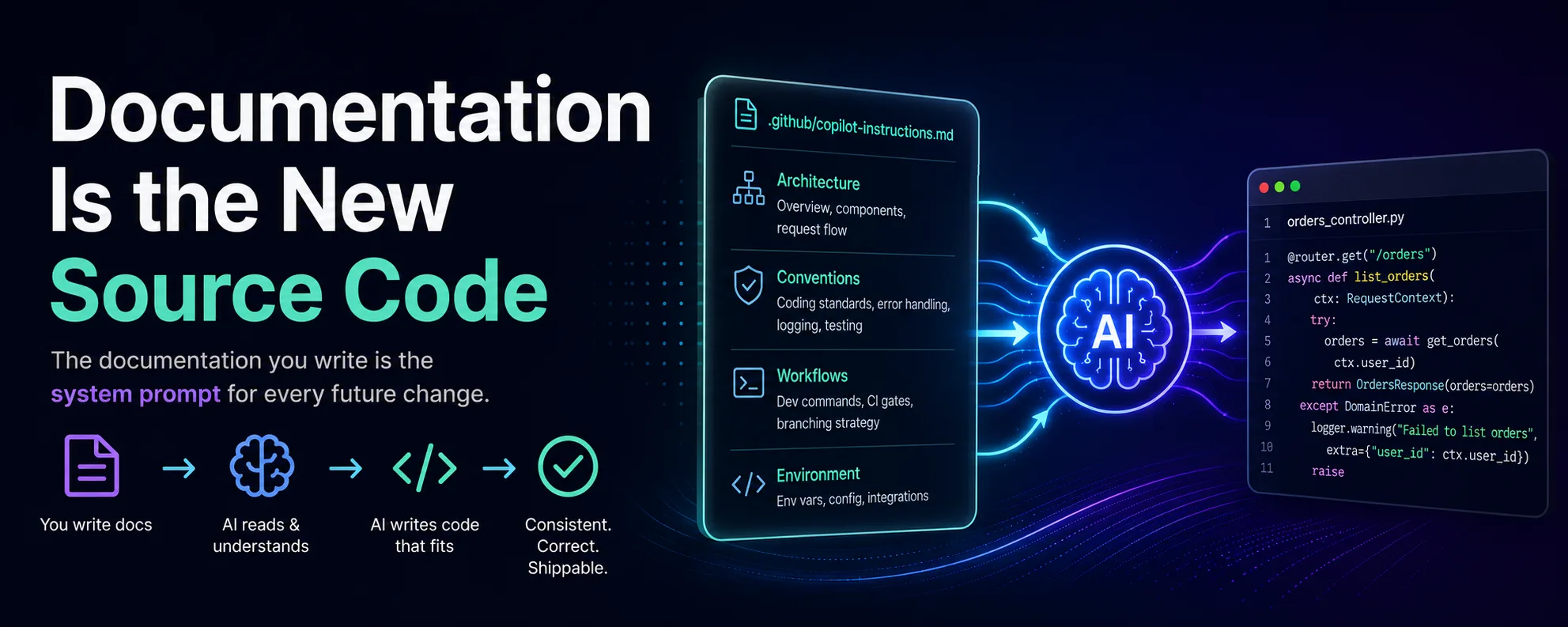
Documentation Is the New Source Code

A field guide to building a layered, AI-readable documentation system — instruction files, skills, ADRs, and tests — that turns your repo into a reliable substrate for Copilot, agents, and high-velocity engineering workflows.
Using Azure Blob Storage as a durable filesystem for LangChain Deep Agents

LangChain Deep Agents is an open-source agent harness with built-in capabilities for building LLM-powered agents and applications, including complex, multi-step workflows. A model can reason and generate responses, but it needs a harness to do useful work over time. The harness provides the tools and runtime that let the model retrieve the right context, take actions, and manage work across multiple steps. Deep Agents supplies that structure through planning, context management, a virtual filesystem, memory and skills, specialized subagents, and human approval points. Filesystems give agents a familiar way ...
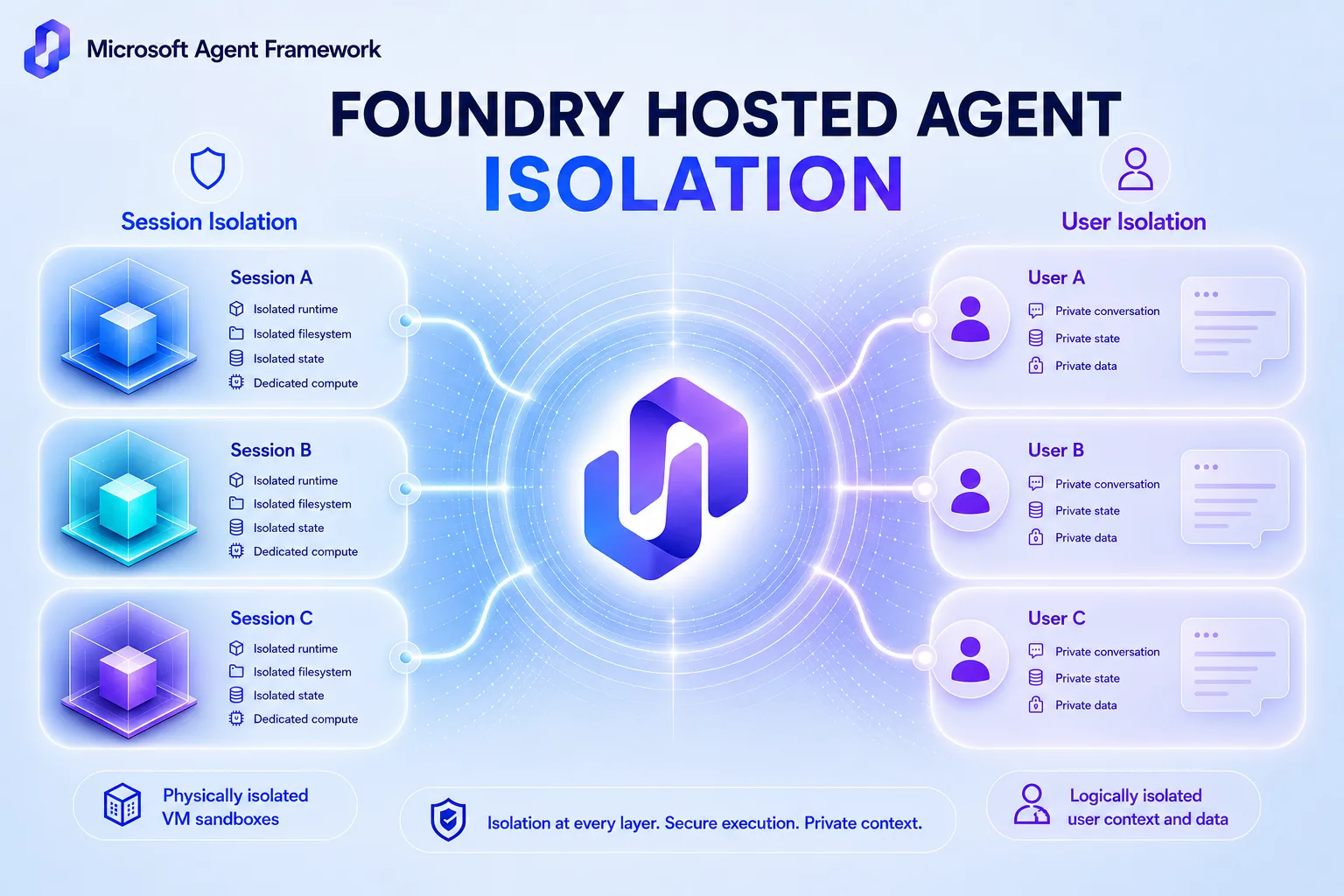
Foundry hosted agent isolation with Microsoft Agent Framework


Foundry hosted agent isolation exposes two independent controls. User isolation identifies whose data may be used. At the same time, Foundry hosted session isolation identifies where code and files continue to live. For each control, Foundry can resolve the value or the application can provide it. Therefore, the available choices support direct callers, trusted middle tiers, application-managed sessions, and shared session pools. While Foundry hosted agents are generally available in Microsoft Foundry, the AgentServer SDKs and the Microsoft Agent Framework Foundry hosting packages for .NET and Python are stil...
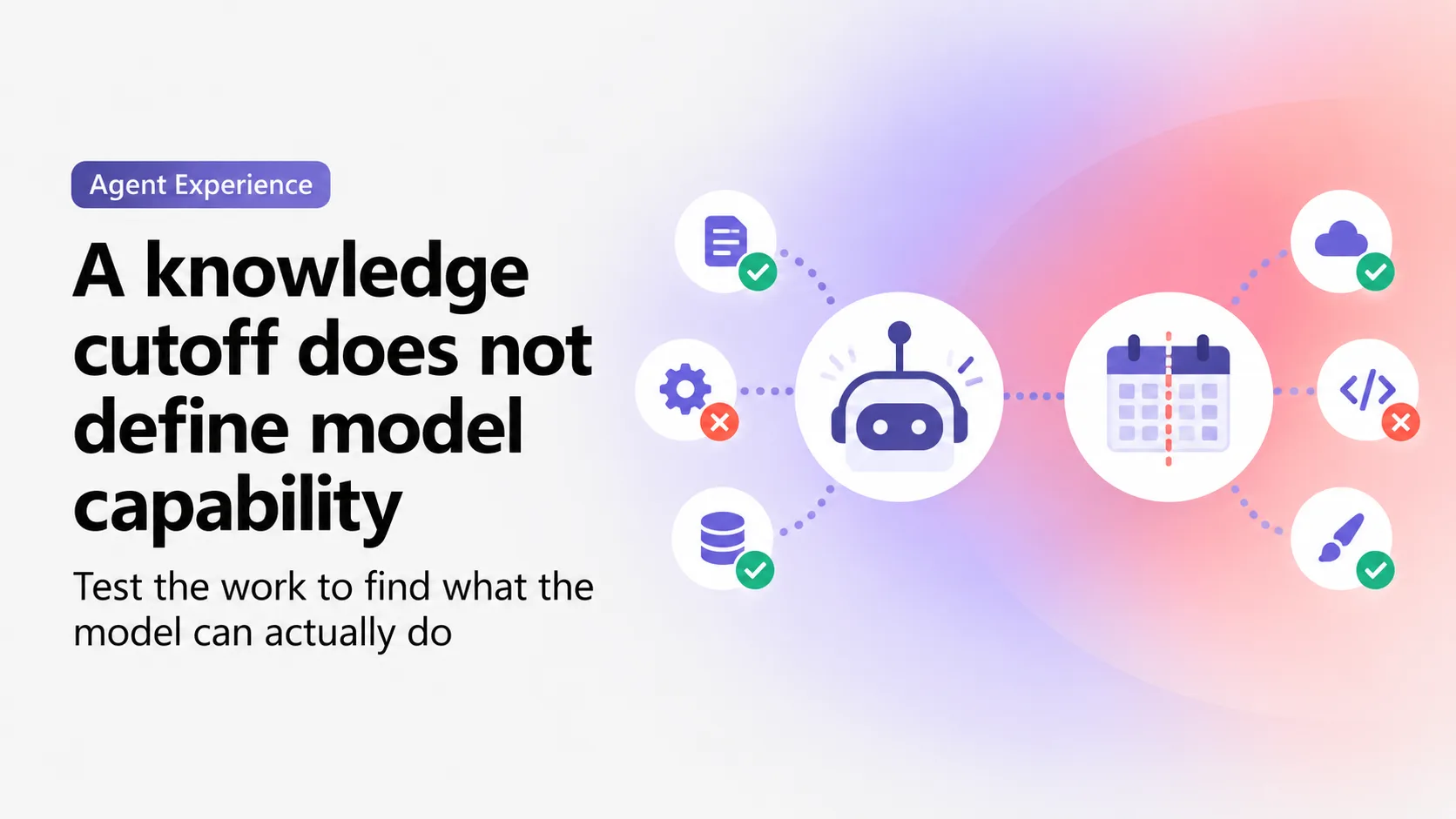
Knowledge cutoff is a poor proxy for model capability
A model can fail on features released before its knowledge cutoff, then succeed on ones released after it. We tested hundreds of product changes and found that the date tells you far less than the work does.
Build Your Own AI Agent Harness in C#, the MafClaw Live Series
I am building a complete C# agent live, from a single call around an IChatClient to a production-ready, observable, governed agent, using the Microsoft Agent Framework harness in a 4-part Microsoft Reactor series.
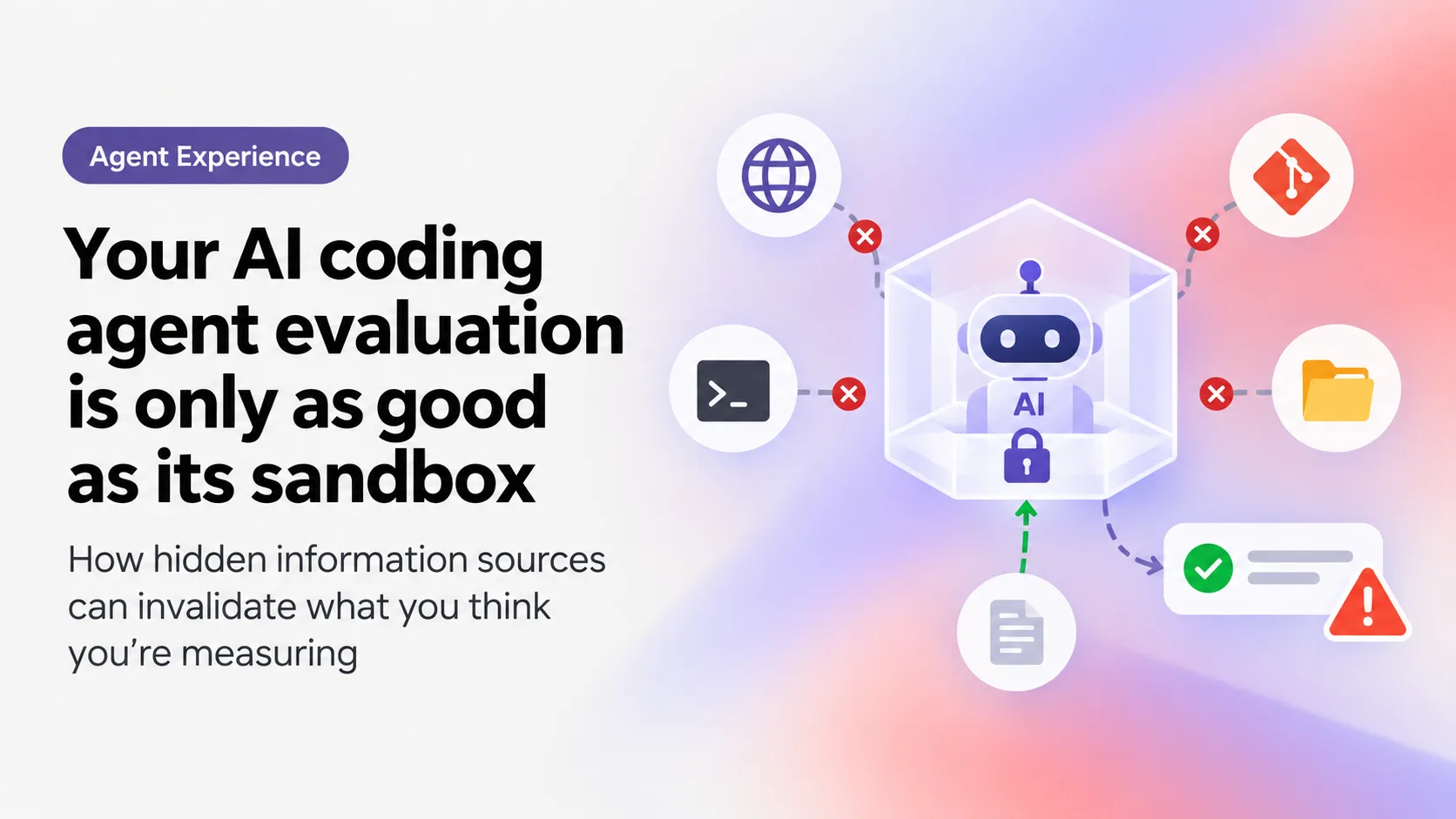
Your AI coding agent evaluation is only as good as its sandbox
Your AI coding agent passed the eval. But did the model know the answer, or did it find it somewhere on your machine? A correct answer can still invalidate your measurement.
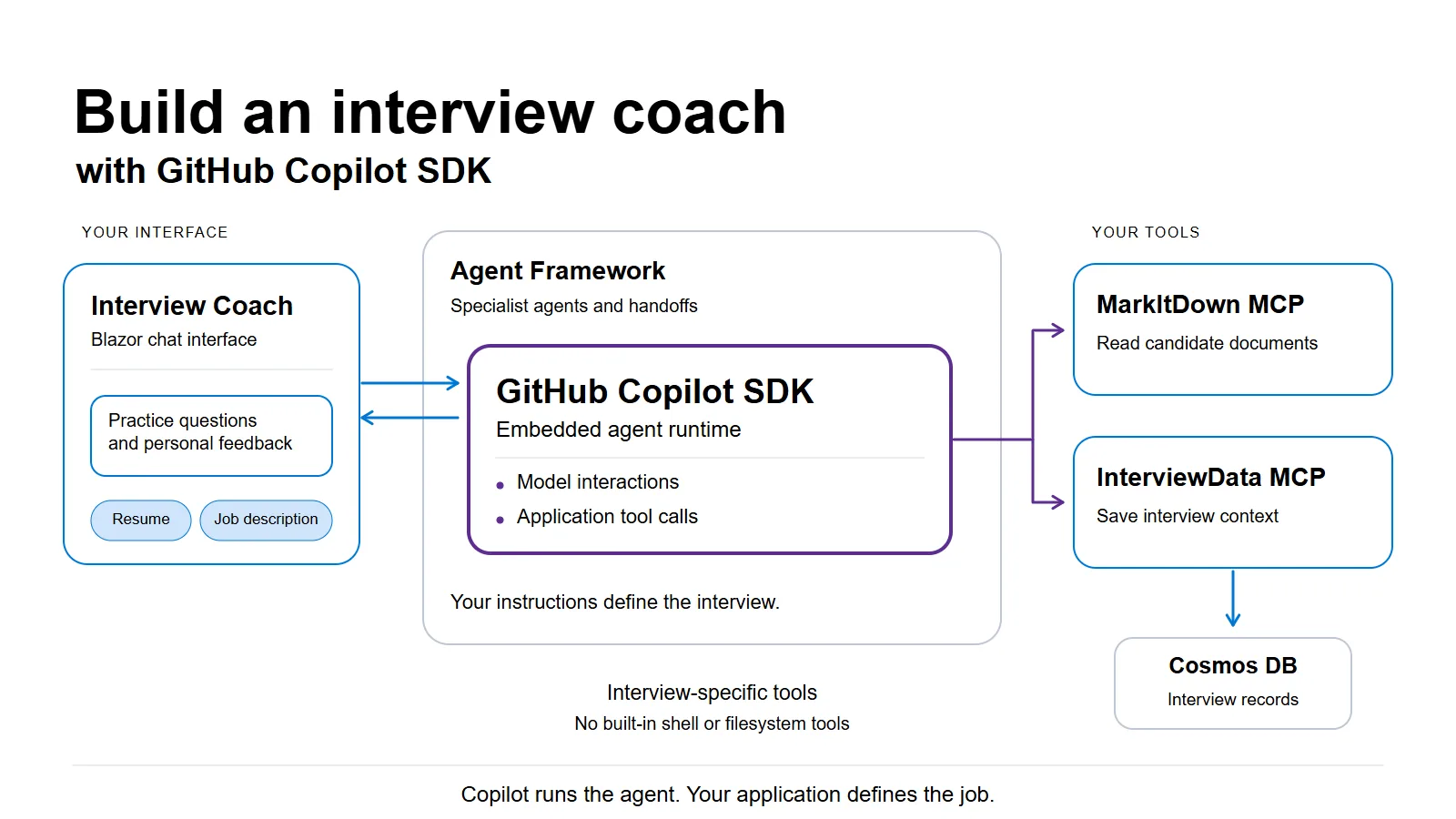
Build an interview coach app with the GitHub Copilot SDK

An interview coach has to do more than ask questions. It needs to read a resume, follow up on an incomplete answer, and save enough context to give useful feedback at the end. Some of that work is conversation. Some of it requires calling an application service. The GitHub Copilot SDK lets you use the runtime behind Copilot CLI for that work inside your own application. You provide instructions and callable tools. Copilot handles the model interaction and resulting tool calls, while your application owns the interface and business workflow. For a developer building a personal assistant or an internal workflow, ...
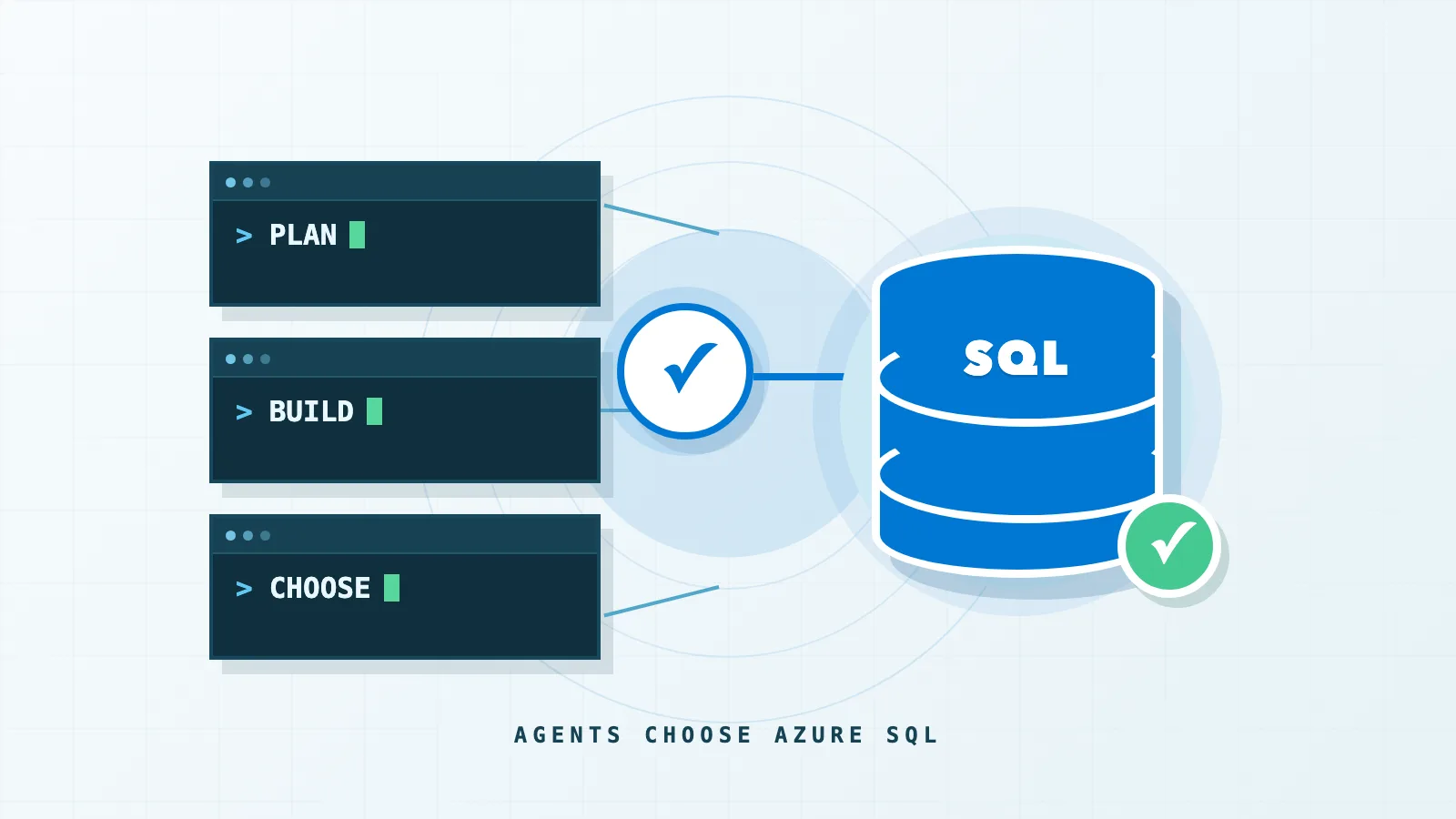
Coding agents are picking Azure SQL Database
I went looking for Azure SQL Database in a recent coding agent benchmark, honestly unsure whether Microsoft SQL would show up. Armature ran a study where real coding agent CLIs (Claude Code, Codex, Cursor) were dropped into six synthetic-but-realistic repositories and asked to pick a database, then actually build with it. 356 runs were completed across three personas: vibe coder, junior developer, senior engineer. Every session is published, so you can replay the prompts, the searches, the commands, and the code. Azure SQL Database came in second! Not second behind AWS. Second behind Neon, and ahead of Amazon...