
Microsoft Agent Framework
The latest news from the Microsoft Agent Framework team for developers
Latest posts

Microsoft Agent Framework Version 1.0

Today, we're thrilled to announce that Microsoft Agent Framework has reached version 1.0 for both .NET and Python. This is the production-ready release: stable APIs, and a commitment to long-term support. Whether you're building a single assistant or orchestrating a fleet of specialized agents, Agent Framework 1.0 gives you enterprise-grade multi-agent orchestration, multi-provider model support, and cross-runtime interoperability via A2A and MCP. When we introduced Microsoft Agent Framework last October, we set out to unify the enterprise-ready foundations of Semantic Kernel with the innovative orchestrations...

Handling Long-Running Operations with Background Responses


Handling Long-Running Operations with Background Responses AI agents powered by reasoning models can take minutes to work through complex problems — deep research, multi-step analysis, lengthy content generation. In a traditional request-response pattern, that means your client sits idle waiting for a connection that may time out, or worse, fails silently and loses all progress. Background responses in Microsoft Agent Framework let you offload these long-running operations so your application stays responsive and resilient, regardless of how long the agent takes to think. With background responses, you start ...
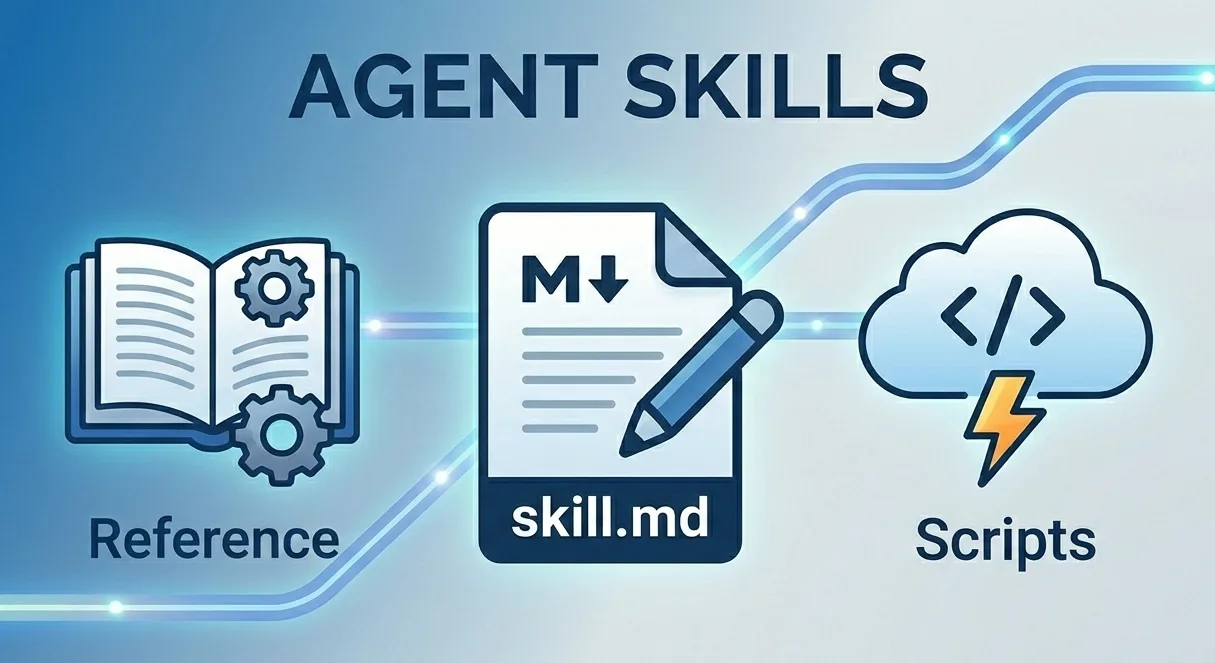
What’s New in Agent Skills: Code Skills, Script Execution, and Approval for Python
Code-Defined Skills, Script Execution, and Approval for Agent Skills in Python When we introduced Agent Skills for Microsoft Agent Framework, you could package domain expertise as file-based skill directories and have agents discover and load them on demand. Now, the Python SDK takes skills further — you can define skills entirely in code, let agents execute scripts bundled with skills, and gate script execution behind human approval. These additions give you more flexibility in how you author skills, more power in what agents can do with them, and more control over when agents are allowed to act. Code-Defined ...
Agent Harness in Agent Framework


Agent harness is the layer where model reasoning connects to real execution: shell and filesystem access, approval flows, and context management across long-running sessions. With Agent Framework, these patterns can now be built consistently in both Python and .NET. In this post, we’ll look at three practical building blocks for production agents: Shell and Filesystem Harness Many agent experiences need to do more than generate text. They need to inspect files, run commands, and work with the surrounding environment in a controlled way. Agent Framework makes it possible to model those capabil...
Give Your Agents Domain Expertise with Agent Skills in Microsoft Agent Framework
You can now equip your Microsoft Agent Framework agents with portable, reusable skill packages that provide domain expertise on demand — without changing a single line of your agent's core instructions. With built-in skills providers for both .NET and Python, your agents can discover and load Agent Skills at runtime, pulling in only the context they need, when they need it. What Are Agent Skills? Agent Skills is a simple, open format for giving agents new capabilities and expertise. At the core of every skill is a file — a markdown document that describes what the skill does and provides step-by-step instr...
Migrate your Semantic Kernel and AutoGen projects to Microsoft Agent Framework Release Candidate
We're thrilled to announce that Microsoft Agent Framework has reached Release Candidate status for both .NET and Python. Release Candidate is an important milestone on the road to General Availability — it means the API surface is stable, and all features that we intend to release with version 1.0 are complete. Now is the time to move your Semantic Kernel project to Microsoft Agent Framework and give us your feedback before final release. Whether you're building a single helpful assistant or orchestrating a team of specialized agents, Agent Framework gives you a consistent, multi-language foundation to do it. Wh...

From Local Models to Agent Workflows: Building a Deep Research Solution with Microsoft Agent Framework on Microsoft Foundry Local

Introduction: A New Paradigm for AI Application Development In enterprise AI application development, we often face this dilemma: while cloud-based large language models are powerful, issues such as data privacy, network latency, and cost control make many scenarios difficult to implement. Traditional local small models, although lightweight, lack complete development, evaluation, and orchestration frameworks. The combination of Microsoft Foundry Local and Agent Framework (MAF) provides an elegant solution to this dilemma. This article will guide you from zero to one in building a complete Deep Research agent w...
Build AI Agents with Claude Agent SDK and Microsoft Agent Framework
Microsoft Agent Framework now integrates with the Claude Agent SDK, enabling you to build AI agents powered by Claude's full agentic capabilities. This integration brings together the Agent Framework's consistent agent abstraction with Claude's powerful features, including file editing, code execution, function calling, streaming responses, multi-turn conversations, and Model Context Protocol (MCP) server integration — available in Python. Why Use Agent Framework with Claude Agent SDK? You can use the Claude Agent SDK on its own to build agents. So why use it through Agent Framework? Here are the key reasons: ...
Build AI Agents with GitHub Copilot SDK and Microsoft Agent Framework
Microsoft Agent Framework now integrates with the GitHub Copilot SDK, enabling you to build AI agents powered by GitHub Copilot. This integration brings together the Agent Framework's consistent agent abstraction with GitHub Copilot's capabilities, including function calling, streaming responses, multi-turn conversations, shell command execution, file operations, URL fetching, and Model Context Protocol (MCP) server integration — all available in both .NET and Python. Why Use Agent Framework with GitHub Copilot SDK? You can use the GitHub Copilot SDK on its own to build agents. So why use it through Agent Frame...
The “Golden Triangle” of Agentic Development with Microsoft Agent Framework: AG-UI, DevUI & OpenTelemetry Deep Dive
In the explosive era of Agentic AI, we're not just seeking more powerful models—we're searching for a development experience that lets developers actually get some sleep. When building Agents locally, we've traditionally faced three major challenges: Today, I'll walk you through a classic case from Microsoft Agent Framework Samples—GHModel.AI—to reveal the "Golden Triangle" development stack that perfectly solves these pain points: DevUI, AG-UI, and OpenTelemetry. Let's explore how this powerful combination empowers the entire local development lifecycle. Phase 1: Creation — Standing on t...
Unlocking Enterprise AI Complexity: Multi-Agent Orchestration with the Microsoft Agent Framework
The Architectural Imperative: Why Multi-Agent Orchestration is Essential In modern enterprise AI systems, the scope and complexity of real-world business challenges quickly exceed the capabilities of a single, monolithic AI Agent. Facing tasks like end-to-end customer journey management, multi-source data governance, or deep human-in-the-loop review processes, the fundamental architectural challenge shifts: How do we effectively coordinate and manage a network of specialized, atomic AI capabilities? Much like a high-performing corporation relies on specialized departments, we must transition from a single-execu...
Semantic Kernel and Microsoft Agent Framework
Last week we announced Microsoft Agent Framework, you can find all the details: I'm immensely proud of the work the team that brought you AutoGen and Semantic Kernel have done to create Microsoft Agent Framework. We really think it's a great step forward in building AI agents and applications, building on all the learnings we've had from creating AutoGen and Semantic Kernel. Please give a try and give us your feedback, we think you'll like it! If you've been building and shipping on Semantic Kernel, I'm sure you have questions. I've answered the most common here but, as always, you...
Encoding Changes for Template Arguments in Semantic Kernel
In previous versions of the Semantic Kernel, the encoding of template arguments was performed automatically if the argument type was a . The encoding was not applied for custom types, anonymous types, or collections. With the latest changes, we've introduced stricter rules: if automatic encoding is enabled (the default behavior), an exception will now be thrown when complex types are used as arguments. This enforces more secure template rendering by requiring developers to handle encoding manually for complex types and explicitly disable automatic encoding for those variables. This change promotes best practic...

Azure Authentication Changes in Semantic Kernel Python
In previous versions of the Semantic Kernel Python, the default fallback authentication mechanism for Azure services like was from the Azure Identity library. This provided a convenient way to authenticate without explicitly passing credentials, especially during development. However, with the latest package version , this fallback is being removed to encourage more secure and explicit authentication practices. If your code relied on this default behavior, you may encounter errors after updating, and you'll need to make minor code adjustments to continue using credential-based authentication. This post expla...

Guest Blog: Building Multi-Agent Solutions with Semantic Kernel and A2A Protocol
In the rapidly evolving landscape of AI application development, the ability to orchestrate multiple intelligent agents has become crucial for building sophisticated, enterprise-grade solutions. While individual AI agents excel at specific tasks, complex business scenarios often require coordination between specialized agents running on different platforms, frameworks, or even across organizational boundaries. This is where the combination of Microsoft's Semantic Kernel orchestration capabilities and Agent-to-Agent (A2A) protocol creates a powerful foundation for building truly interoperable multi-agent systems. ...
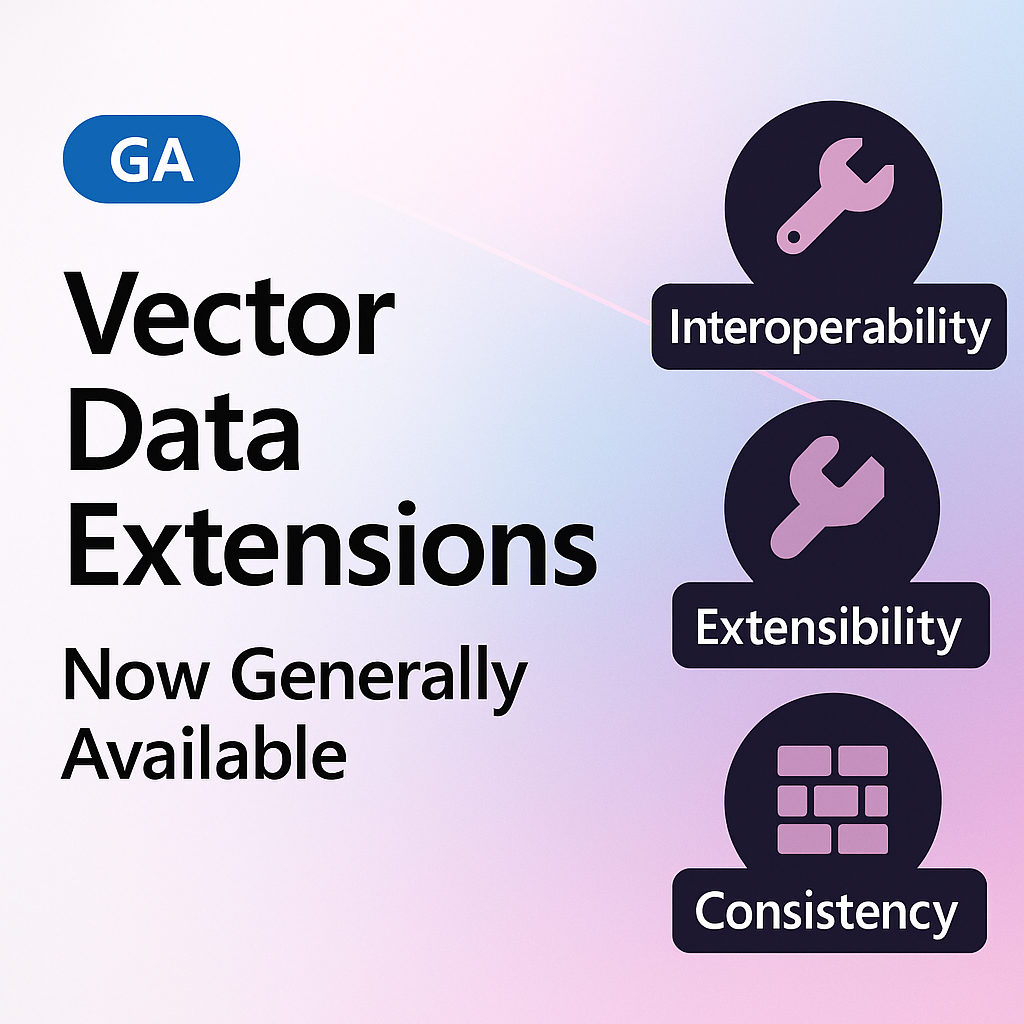
Semantic Kernel Python Gets a Major Vector Store Upgrade
We're excited to announce a significant update to Semantic Kernel Python's vector store implementation. Version 1.34 brings a complete overhaul that makes working with vector data simpler, more intuitive, and more powerful. This update consolidates the API, improves developer experience, and adds new capabilities that streamline AI development workflows. What Makes This Release Special? The new vector store architecture consolidates everything under and delivers three key improvements: Let's explore what makes these changes valuable. Unified Field Model - Simplified Configuration We've repla...

Enhancing Plugin Metadata Management with SemanticPluginForge

In the world of software development, flexibility and adaptability are key. Developers often face challenges when it comes to updating plugin metadata dynamically without disrupting services or requiring redeployment. This is where SemanticPluginForge, an open-source project, steps in to improve the way we manage plugin metadata. LLM Function Calling Feature The function calling feature in LLMs allows developers to define a set of functions that the model can invoke during a conversation. These functions are described using metadata, which includes the function name, parameters, and their descriptions. The LL...
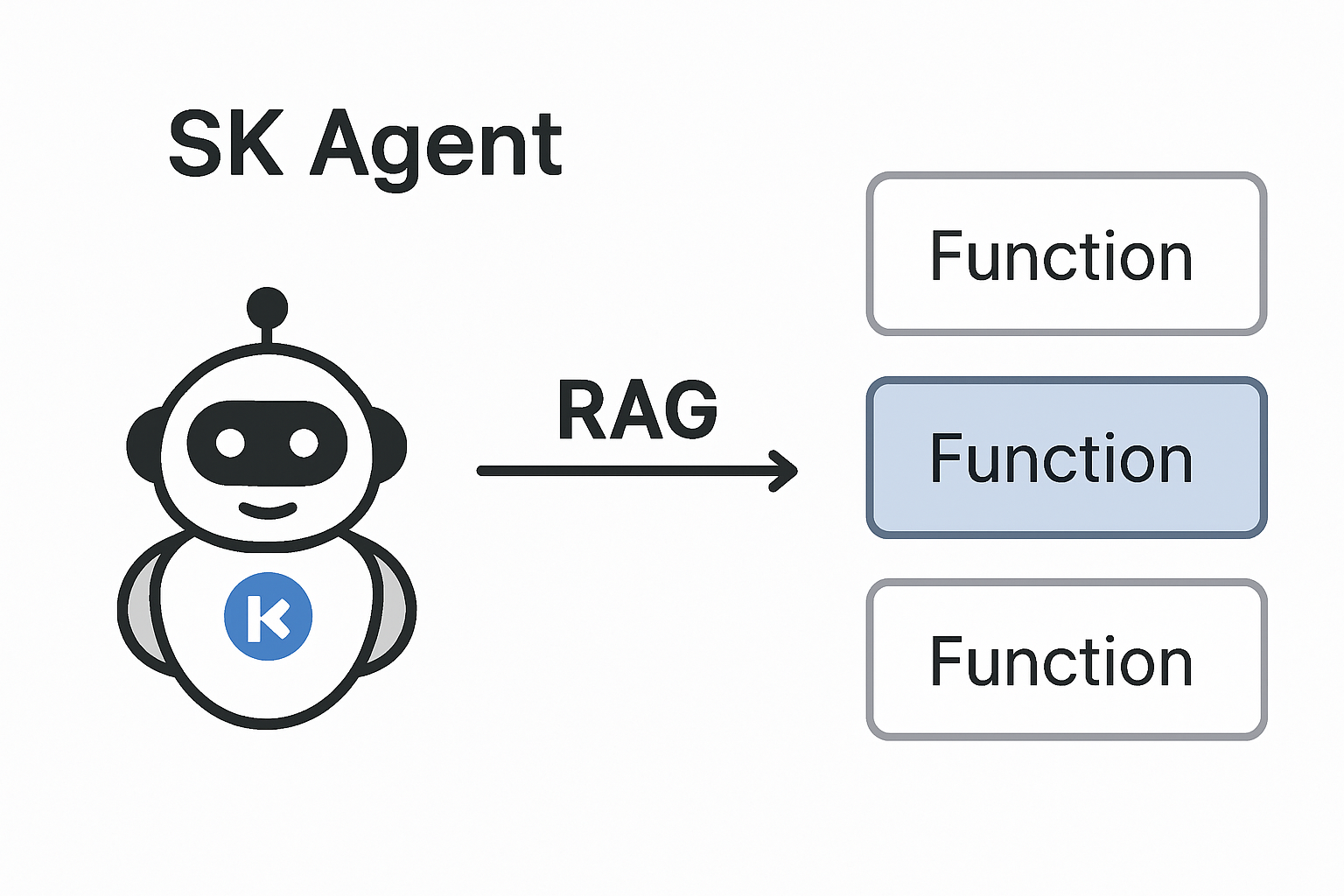
Smarter SK Agents with Contextual Function Selection
Smarter SK Agents with Contextual Function Selection In today's fast-paced AI landscape, developers are constantly seeking ways to make AI interactions more efficient and relevant. The new Contextual Function Selection feature in the Semantic Kernel Agent Framework is here to address this need. By dynamically selecting and advertising only the most relevant functions based on the current conversation context, this feature ensures that your AI agents are smarter, faster, and more effective than ever before. Why Contextual Function Selection Matters When dealing with a large number of available functions, AI mod...