
Microsoft Agent Framework
The latest news from the Microsoft Agent Framework team for developers
Latest posts
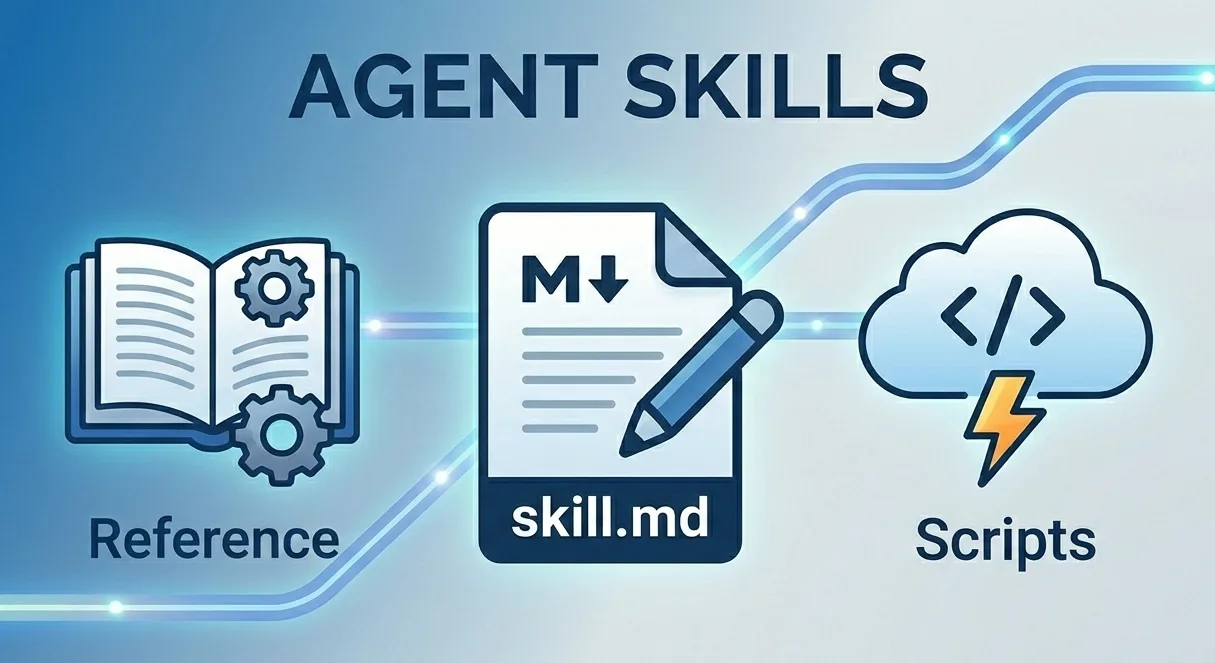
Agent Skills in .NET: Three Ways to Author, One Provider to Run Them

Your agents can now draw on skills authored in three different ways – as files on disk, as inline C# code, or as encapsulated classes – and combine them freely in a single provider. Add built-in script execution support and a human-approval mechanism for script calls, and you have a practical authoring model that fits real-world scenarios: skills that evolve over time, skills owned by different teams, and scripts that need human oversight before they act on your systems. The scenario You're building an HR self-service agent for your company. It starts life with a single file-based skill that walks new hires thr...
Building a Real-Time Multi-Agent UI with AG-UI and Microsoft Agent Framework Workflows

Multi-agent systems demo beautifully. Putting them in front of real users is another story. In early prototypes, a terminal or a basic chat window is enough. But once agents start handing off to each other, pausing for approvals, or asking follow-up questions, those interfaces fall apart. Which agent is active? Why is the system waiting? What's it about to do on the user's behalf? Without answers to those questions, a multi-agent workflow stops feeling like a product and starts feeling opaque. This post shows what a better answer looks like. We'll build a customer support workflow that pairs M...

Microsoft Agent Framework Version 1.0

Today, we're thrilled to announce that Microsoft Agent Framework has reached version 1.0 for both .NET and Python. This is the production-ready release: stable APIs, and a commitment to long-term support. Whether you're building a single assistant or orchestrating a fleet of specialized agents, Agent Framework 1.0 gives you enterprise-grade multi-agent orchestration, multi-provider model support, and cross-runtime interoperability via A2A and MCP. When we introduced Microsoft Agent Framework last October, we set out to unify the enterprise-ready foundations of Semantic Kernel with the innovative orchestrations...
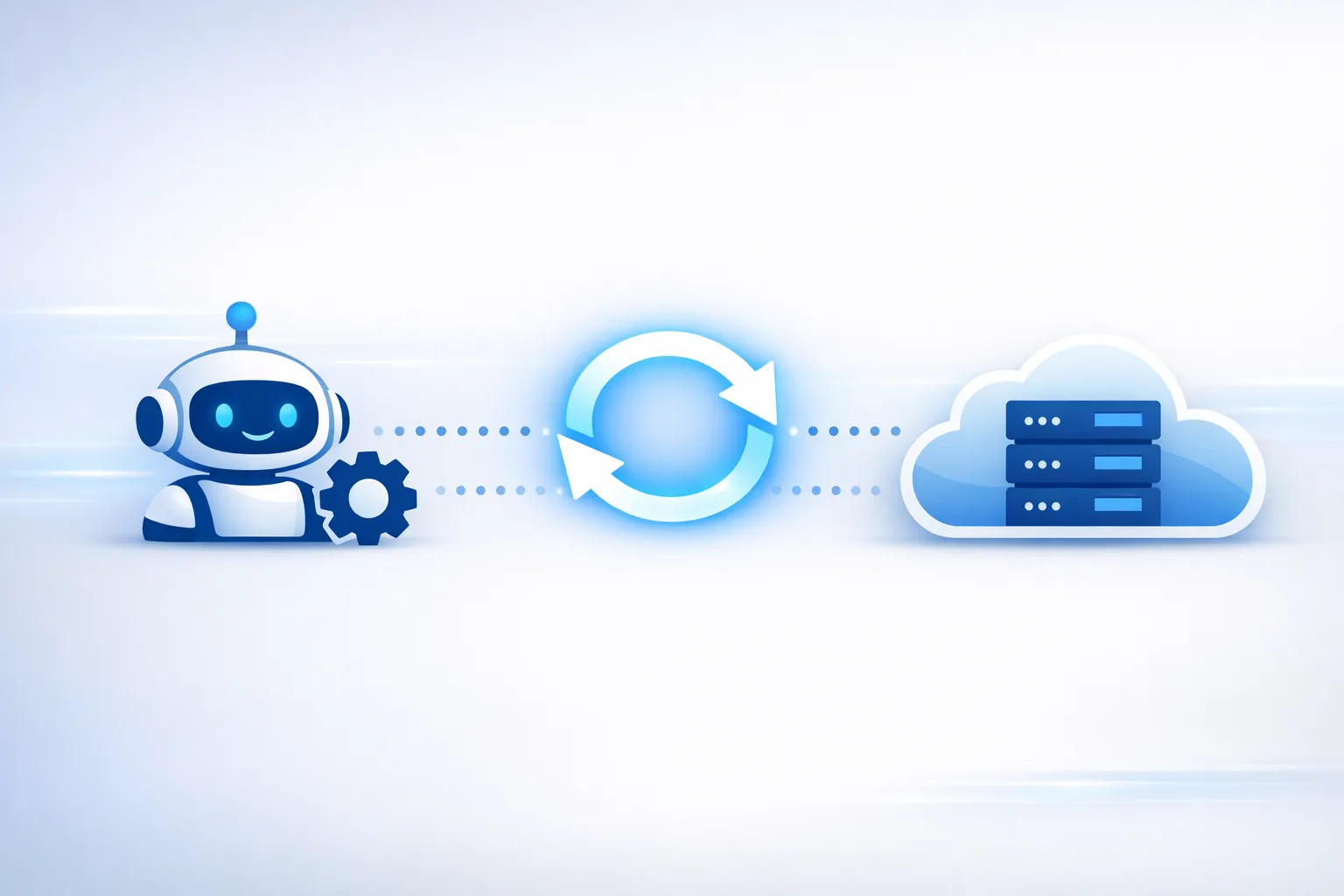
Handling Long-Running Operations with Background Responses

Handling Long-Running Operations with Background Responses AI agents powered by reasoning models can take minutes to work through complex problems — deep research, multi-step analysis, lengthy content generation. In a traditional request-response pattern, that means your client sits idle waiting for a connection that may time out, or worse, fails silently and loses all progress. Background responses in Microsoft Agent Framework let you offload these long-running operations so your application stays responsive and resilient, regardless of how long the agent takes to think. With background responses, you start ...
What’s New in Agent Skills: Code Skills, Script Execution, and Approval for Python
Code-Defined Skills, Script Execution, and Approval for Agent Skills in Python When we introduced Agent Skills for Microsoft Agent Framework, you could package domain expertise as file-based skill directories and have agents discover and load them on demand. Now, the Python SDK takes skills further — you can define skills entirely in code, let agents execute scripts bundled with skills, and gate script execution behind human approval. These additions give you more flexibility in how you author skills, more power in what agents can do with them, and more control over when agents are allowed to act. Code-Defined ...
Agent Harness in Agent Framework


Agent harness is the layer where model reasoning connects to real execution: shell and filesystem access, approval flows, and context management across long-running sessions. With Agent Framework, these patterns can now be built consistently in both Python and .NET. In this post, we’ll look at three practical building blocks for production agents: Shell and Filesystem Harness Many agent experiences need to do more than generate text. They need to inspect files, run commands, and work with the surrounding environment in a controlled way. Agent Framework makes it possible to model those capabil...
Give Your Agents Domain Expertise with Agent Skills in Microsoft Agent Framework
You can now equip your Microsoft Agent Framework agents with portable, reusable skill packages that provide domain expertise on demand — without changing a single line of your agent's core instructions. With built-in skills providers for both .NET and Python, your agents can discover and load Agent Skills at runtime, pulling in only the context they need, when they need it. What Are Agent Skills? Agent Skills is a simple, open format for giving agents new capabilities and expertise. At the core of every skill is a file — a markdown document that describes what the skill does and provides step-by-step instr...
Migrate your Semantic Kernel and AutoGen projects to Microsoft Agent Framework Release Candidate
We're thrilled to announce that Microsoft Agent Framework has reached Release Candidate status for both .NET and Python. Release Candidate is an important milestone on the road to General Availability — it means the API surface is stable, and all features that we intend to release with version 1.0 are complete. Now is the time to move your Semantic Kernel project to Microsoft Agent Framework and give us your feedback before final release. Whether you're building a single helpful assistant or orchestrating a team of specialized agents, Agent Framework gives you a consistent, multi-language foundation to do it. Wh...

From Local Models to Agent Workflows: Building a Deep Research Solution with Microsoft Agent Framework on Microsoft Foundry Local

Introduction: A New Paradigm for AI Application Development In enterprise AI application development, we often face this dilemma: while cloud-based large language models are powerful, issues such as data privacy, network latency, and cost control make many scenarios difficult to implement. Traditional local small models, although lightweight, lack complete development, evaluation, and orchestration frameworks. The combination of Microsoft Foundry Local and Agent Framework (MAF) provides an elegant solution to this dilemma. This article will guide you from zero to one in building a complete Deep Research agent w...
Build AI Agents with Claude Agent SDK and Microsoft Agent Framework
Microsoft Agent Framework now integrates with the Claude Agent SDK, enabling you to build AI agents powered by Claude's full agentic capabilities. This integration brings together the Agent Framework's consistent agent abstraction with Claude's powerful features, including file editing, code execution, function calling, streaming responses, multi-turn conversations, and Model Context Protocol (MCP) server integration — available in Python. Why Use Agent Framework with Claude Agent SDK? You can use the Claude Agent SDK on its own to build agents. So why use it through Agent Framework? Here are the key reasons: ...
Build AI Agents with GitHub Copilot SDK and Microsoft Agent Framework
Microsoft Agent Framework now integrates with the GitHub Copilot SDK, enabling you to build AI agents powered by GitHub Copilot. This integration brings together the Agent Framework's consistent agent abstraction with GitHub Copilot's capabilities, including function calling, streaming responses, multi-turn conversations, shell command execution, file operations, URL fetching, and Model Context Protocol (MCP) server integration — all available in both .NET and Python. Why Use Agent Framework with GitHub Copilot SDK? You can use the GitHub Copilot SDK on its own to build agents. So why use it through Agent Frame...
The “Golden Triangle” of Agentic Development with Microsoft Agent Framework: AG-UI, DevUI & OpenTelemetry Deep Dive
In the explosive era of Agentic AI, we're not just seeking more powerful models—we're searching for a development experience that lets developers actually get some sleep. When building Agents locally, we've traditionally faced three major challenges: Today, I'll walk you through a classic case from Microsoft Agent Framework Samples—GHModel.AI—to reveal the "Golden Triangle" development stack that perfectly solves these pain points: DevUI, AG-UI, and OpenTelemetry. Let's explore how this powerful combination empowers the entire local development lifecycle. Phase 1: Creation — Standing on t...
Unlocking Enterprise AI Complexity: Multi-Agent Orchestration with the Microsoft Agent Framework
The Architectural Imperative: Why Multi-Agent Orchestration is Essential In modern enterprise AI systems, the scope and complexity of real-world business challenges quickly exceed the capabilities of a single, monolithic AI Agent. Facing tasks like end-to-end customer journey management, multi-source data governance, or deep human-in-the-loop review processes, the fundamental architectural challenge shifts: How do we effectively coordinate and manage a network of specialized, atomic AI capabilities? Much like a high-performing corporation relies on specialized departments, we must transition from a single-execu...
Semantic Kernel and Microsoft Agent Framework
Last week we announced Microsoft Agent Framework, you can find all the details: I'm immensely proud of the work the team that brought you AutoGen and Semantic Kernel have done to create Microsoft Agent Framework. We really think it's a great step forward in building AI agents and applications, building on all the learnings we've had from creating AutoGen and Semantic Kernel. Please give a try and give us your feedback, we think you'll like it! If you've been building and shipping on Semantic Kernel, I'm sure you have questions. I've answered the most common here but, as always, you...
Encoding Changes for Template Arguments in Semantic Kernel
In previous versions of the Semantic Kernel, the encoding of template arguments was performed automatically if the argument type was a . The encoding was not applied for custom types, anonymous types, or collections. With the latest changes, we've introduced stricter rules: if automatic encoding is enabled (the default behavior), an exception will now be thrown when complex types are used as arguments. This enforces more secure template rendering by requiring developers to handle encoding manually for complex types and explicitly disable automatic encoding for those variables. This change promotes best practic...

Azure Authentication Changes in Semantic Kernel Python
In previous versions of the Semantic Kernel Python, the default fallback authentication mechanism for Azure services like was from the Azure Identity library. This provided a convenient way to authenticate without explicitly passing credentials, especially during development. However, with the latest package version , this fallback is being removed to encourage more secure and explicit authentication practices. If your code relied on this default behavior, you may encounter errors after updating, and you'll need to make minor code adjustments to continue using credential-based authentication. This post expla...

Guest Blog: Building Multi-Agent Solutions with Semantic Kernel and A2A Protocol
In the rapidly evolving landscape of AI application development, the ability to orchestrate multiple intelligent agents has become crucial for building sophisticated, enterprise-grade solutions. While individual AI agents excel at specific tasks, complex business scenarios often require coordination between specialized agents running on different platforms, frameworks, or even across organizational boundaries. This is where the combination of Microsoft's Semantic Kernel orchestration capabilities and Agent-to-Agent (A2A) protocol creates a powerful foundation for building truly interoperable multi-agent systems. ...
Semantic Kernel Python Gets a Major Vector Store Upgrade
We're excited to announce a significant update to Semantic Kernel Python's vector store implementation. Version 1.34 brings a complete overhaul that makes working with vector data simpler, more intuitive, and more powerful. This update consolidates the API, improves developer experience, and adds new capabilities that streamline AI development workflows. What Makes This Release Special? The new vector store architecture consolidates everything under and delivers three key improvements: Let's explore what makes these changes valuable. Unified Field Model - Simplified Configuration We've repla...

Enhancing Plugin Metadata Management with SemanticPluginForge

In the world of software development, flexibility and adaptability are key. Developers often face challenges when it comes to updating plugin metadata dynamically without disrupting services or requiring redeployment. This is where SemanticPluginForge, an open-source project, steps in to improve the way we manage plugin metadata. LLM Function Calling Feature The function calling feature in LLMs allows developers to define a set of functions that the model can invoke during a conversation. These functions are described using metadata, which includes the function name, parameters, and their descriptions. The LL...
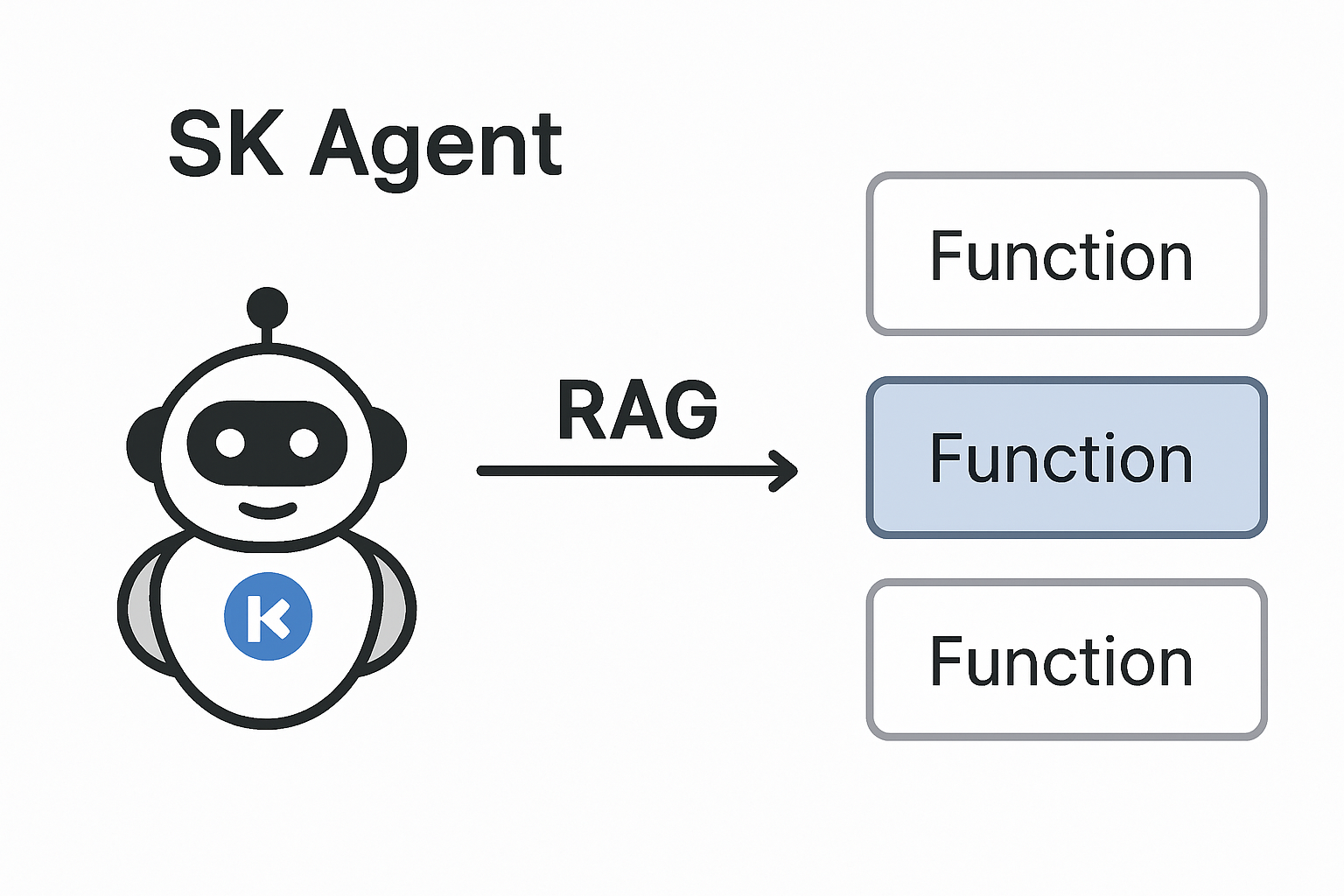
Smarter SK Agents with Contextual Function Selection
Smarter SK Agents with Contextual Function Selection In today's fast-paced AI landscape, developers are constantly seeking ways to make AI interactions more efficient and relevant. The new Contextual Function Selection feature in the Semantic Kernel Agent Framework is here to address this need. By dynamically selecting and advertising only the most relevant functions based on the current conversation context, this feature ensures that your AI agents are smarter, faster, and more effective than ever before. Why Contextual Function Selection Matters When dealing with a large number of available functions, AI mod...
Semantic Kernel and Microsoft.Extensions.AI: Better Together, Part 2

This is Part 2 of our series on integrating Microsoft.Extensions.AI with Semantic Kernel. In Part 1, we explored the relationship between these technologies and how they complement each other. Now, let's dive into practical examples showing how to use Microsoft.Extensions.AI abstractions with Semantic Kernel in non-agent scenarios. Getting Started with Microsoft.Extensions.AI and Semantic Kernel Before we dive into examples, let's understand what we'll be working with. Microsoft.Extensions.AI provides foundational abstractions like and , while Semantic Kernel builds upon these to provide higher-level functio...

Semantic Kernel: Multi-agent Orchestration

The field of AI is rapidly evolving, and the need for more sophisticated, collaborative, and flexible agent-based systems is growing. With this in mind, Semantic Kernel introduces a new multi-agent orchestration framework that enables developers to build, manage, and scale complex agent workflows with ease. This post explores the new orchestration patterns, their capabilities, and how you can leverage them in your own projects. Why Multi-agent Orchestration? Traditional single-agent systems are limited in their ability to handle complex, multi-faceted tasks. By orchestrating multiple agents, each with special...

Semantic Kernel and Microsoft.Extensions.AI: Better Together, Part 1
This is the start of a series highlighting the integration between Microsoft Semantic Kernel and Microsoft.Extensions.AI. Future parts will provide detailed examples of using Semantic Kernel with Microsoft.Extensions.AI abstractions. The most common questions are: This blog post will address these questions and offer guidance on when and how to use them. First, we will explore what Microsoft Extensions AI is and its relationship with Semantic Kernel. The Evolution of AI Integration in .NET with Microsoft Extensions AI Artificial Intelligence, or AI, is evolving at a rapid pace that many d...

Transitioning to new Extensions AI IEmbeddingGenerator interface
As Semantic Kernel shifts its foundational abstractions to Microsoft.Extensions.AI, we are obsoleting and moving away from our experimental embeddings interfaces to the new standardized abstractions that provide a more consistent and powerful way to work with AI services across the .NET ecosystem. The Evolution of Embedding Generation in Semantic Kernel Semantic Kernel has always aimed to provide a unified way to interact with AI services, including embedding generation. Our initial approach used the interface, which served us well during the experimental phase. However, as the AI landscape has matured, so...
Vector Data Extensions are now Generally Available (GA)


We’re excited to announce the release of Microsoft.Extensions.VectorData.Abstractions, a foundational library providing exchange types and abstractions for vector stores when working with vector data in AI-powered applications. This release is the result of a close collaboration between the Semantic Kernel and .NET teams, combining expertise in AI and developer tooling to deliver a robust, extensible solution for developers. What is Microsoft.Extensions.VectorData.Abstractions? Microsoft.Extensions.VectorData.Abstractions provides shared abstractions and utilities for working with vector data, enabling develope...
Semantic Kernel: Package previews, Graduations & Deprecations

Semantic Kernel: Package Previews, Graduations & Deprecations We are excited to share a summary of recent updates and continuous clean-up efforts across the Semantic Kernel .NET codebase. These changes focus on improving maintainability, aligning with the latest APIs, and ensuring a consistent experience for users. Below you’ll find details on package graduations, deprecations, and a few other improvements. Graduations Spring Cleaning – Deprecations Improvements & Updates These updates are part of our ongoing effort to keep the S...
RC1: Semantic Kernel for Java Agents API

We’re excited to announce the release candidate of the Semantic Kernel for Java Agents API! This marks a major step forward in bringing the power of intelligent agents to Java developers, enabling them to build rich, contextual, and interactive AI experiences using the Semantic Kernel framework. What Are Agents in Semantic Kernel? Agents are intelligent, autonomous components that can reason, plan, and act using natural language. They leverage large language models (LLMs) to interact with users, invoke tools, and maintain context over time. With this API, Java developers can now create agents that: ...

Guest Blog: Orchestrating AI Agents with Semantic Kernel Plugins: A Technical Deep Dive

Today we're excited to welcome Jarre Nejatyab as a guest blog to highlight a technical deep dive on orchestrating AI Agents with Semantic Kernel Plugins. In the rapidly evolving world of Large Language Models (LLMs), orchestrating specialized AI agents has become crucial for building sophisticated cognitive architectures capable of complex reasoning and task execution. While powerful, coordinating multiple agents—each with unique capabilities and data access—presents significant engineering challenges. Microsoft's Semantic Kernel (SK) offers a robust framework for managing this complexity through its intuitive p...

Guest Blog: Letting AI Help Make the World More Accessible – Analyzing Website Accessibility with Semantic Kernel and OmniParser
Today we're excited to welcome Jonathan David, as a guest author on the Semantic Kernel blog. We'll turn it over to Jonathan to dive into Letting AI Help Make the World More Accessible - Analyzing Website Accessibility with Semantic Kernel and OmniParser. With the European Accessibility Act and Germany's Barrierefreiheitsstärkungsgesetz (which translates to Barrier Freedom Strengthening Act) coming into force in July 2025, ensuring digital accessibility is no longer optional. This article explores the importance of accessibility and how AI-driven solutions using Semantic Kernel and OmniParser could strea...
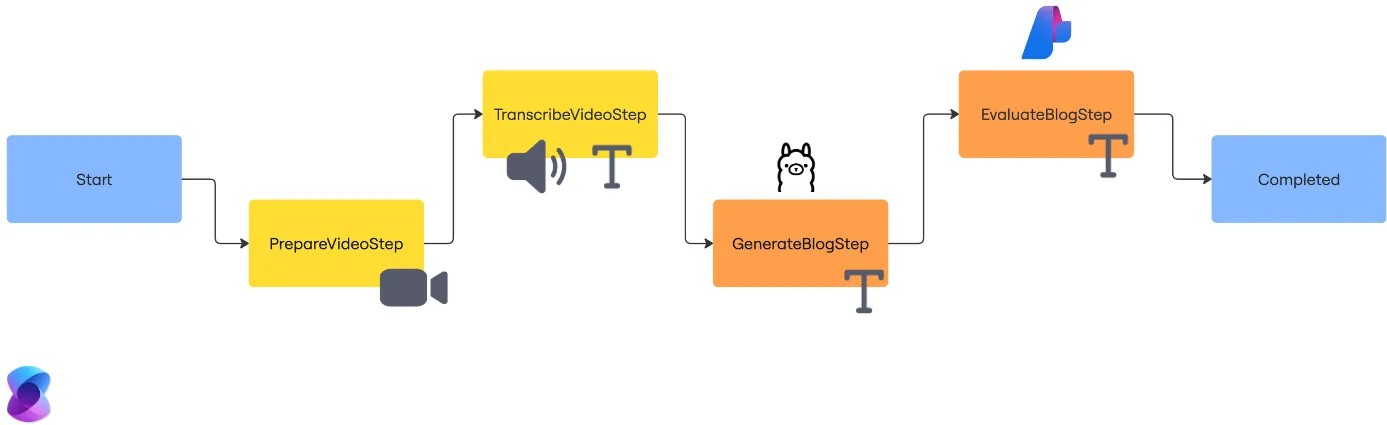
Guest Blog: SemantiClip: A Practical Guide to Building Your Own AI Agent with Semantic Kernel

Today we’re excited to welcome Vic Perdana, as a guest author on the Semantic Kernel blog today to cover his work on a SemantiClip: A Practical Guide to Building Your Own AI Agent with Semantic Kernel. We’ll turn it over to Vic to dive in further. Everywhere you look lately, the buzz is about AI agents. But cutting through the noise—what does agentic AI really mean for developers and builders? How can we move from hype to building real, practical solutions that solve business problems, automate workflows, and, simply put, make our lives easier? I'm excited to share my journey and, as a little Easter egg...
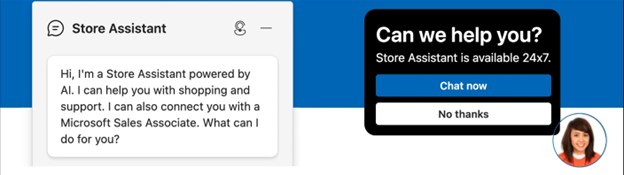
Customer Case Study: Microsoft Store Assistant — bringing multi expert intelligence to Microsoft Store chat with Semantic Kernel and Azure AI


Introduction In October 2024 Microsoft replaced a legacy rule‑based chat bot on Microsoft Store with Microsoft Store Assistant, powered by Azure Open AI, Semantic Kernel, and real‑time page context. The transformation changed a scripted, button-driven experience into a conversation that comprehends the entire public Microsoft portfolio, including Surface and Xbox products, Microsoft 365 subscriptions, Azure services, and the Dynamics and Power Platform portfolio, and knows when to involve a human Sales Associate. Six months later, the assistant manages several millions of conversations annually, maintains a fo...

Guest Blog: Build an AI App That Can Browse the Internet Using Microsoft’s Playwright MCP Server & Semantic Kernel — in Just 4 Steps

Today we're excited to feature a returning guest author, Akshay Kokane to share his recent Medium article on Building an AI App That Can Browse the Internet Using Microsoft’s Playwright MCP Server & Semantic Kernel. We’ll turn it over to him to dive in! MCP! It’s the new buzzword in the AI world. So, I thought — why not be a part of this buzz myself? That’s why I wrote this blog on using the MCP server with Semantic Kernel and Azure AI Foundry. Let’s start by understanding: What is MCP? There are many blogs and videos that helped me grasp the MCP concept, and I’ll drop those links at the end. But for me,...
Integrating Semantic Kernel Python with Google’s A2A Protocol
Google's Agent-to-Agent (A2A) protocol is designed to enable seamless interoperability among diverse AI agents. Microsoft’s Semantic Kernel (SK), an open-source platform for orchestrating intelligent agent interactions, is now being integrated into the A2A ecosystem. In this blog, we demonstrate how Semantic Kernel agents can easily function as an A2A Server, efficiently routing agent calls to specialized services. You can read more about the A2A protocol in Google's technical documentation. Our Contribution to the A2A Ecosystem Our initial contribution to the A2A repository addresses the current absence of ...
Semantic Kernel adds Model Context Protocol (MCP) support for Python
We are excited to announce that Semantic Kernel (SK) now has first-class support for the Model Context Protocol (MCP) — a standard created by Anthropic to enable models, tools, and agents to share context and capabilities seamlessly. With this release, SK can act as both an MCP host (client) and an MCP server, and you can leverage these capabilities directly in your agents. This unlocks powerful new scenarios for tool interoperability, prompt sharing, and agent orchestration across local and remote boundaries. This requires Semantic Kernel Python version 1.28.1 or higher. What is MCP? MCP is a protocol that ...
Customer Case Study: Announcing the Neon Serverless Postgres Connector for Microsoft Semantic Kernel
Announcing the Neon Serverless Postgres Connector for Microsoft Semantic Kernel We’re excited to introduce the Neon Serverless Postgres Connector for Microsoft Semantic Kernel, enabling developers to seamlessly integrate Neon’s serverless Postgres capabilities with AI-driven vector search and retrieval workflows. By leveraging the pgvector extension in Neon and the existing Postgres Vector Store connector, this integration provides a high-performance, scalable solution for vector embeddings and performing vector similarity search in Postgres. Why Use Neon for Semantic Kernel? Neon is a fully managed Serverless...

Guest Blog: Bridging Business and Technology: Transforming Natural Language Queries into SQL with Semantic Kernel Part 2
Today we'd like to welcome back a team of internal Microsoft employees for part 2 of their guest blog series focused on Bridging Business and Technology: Transforming Natural Language Queries into SQL with Semantic Kernel. We'll turn it over to our authors - Samer El Housseini, Riccardo Chiodaroli, Daniel Labbe, Fabrizio Ruocco and Angel Sevillano Cabrera to dive in. Introduction In today's data-driven business landscape, access to information is critical for decision-making. However, a persistent challenge has been the technical barrier between business users who need data insights and the complex database sys...
Guest Blog: Revolutionize Business Automation with AI: A Guide to Microsoft’s Semantic Kernel Process Framework
Revolutionize Business Automation with AI: A Guide to Microsoft’s Semantic Kernel Process Framework Step-by-Step guide on creating your first process with AI Microsoft’s AI Framework, Semantic Kernel, is an easy-to-use C#, Java, and Python-based AI framework that helps you quickly build AI solutions or integrate AI capabilities into your existing app. Semantic Kernel provides various ways to integrate the power of LLM into your application. The two core sub-frameworks that Semantic Kernel offers are Agent-based and Process-based. In my previous blogs I have shared steps to create agents with Semantic Kernel’...
Announcing Hybrid Search with Semantic Kernel for .NET
Today we’re thrilled to announce support for Hybrid search with Semantic Kernel Vector Stores for .NET. What is Hybrid Search? Hybrid search performs two parallel searches on a vector database. The union of the results of these two searches are then returned to callers with a combined rank, based on the rankings from each of the constituent searches. The two searches typically consist of 1. a vector similarity search and 2. a keyword search over the source text of the vector from search 1. Using hybrid search typically results in much better RAG performance than just using regular vector similarity search....
Guest Blog: A Comprehensive Guide to Agentic AI with Semantic Kernel

Today we're excited to welcome Arafat Tehsin, who’s a Microsoft Most Valuable Professional (MVP) for AI. back as a guest author on the Semantic Kernel blog today to cover his work on a Comprehensive Guide to Agentic AI with Semantic Kernel. We'll turn it over to Arafat to dive in further. The world of AI is evolving rapidly and just two weeks back, the Semantic Kernel team rolled out several significant improvements to their Agent Framework for both .NET and Python SDKs. These updates pave the way for more dynamic and flexible applications across various industries. Therefore, I decided to come up with a compr...
Python Vector Store Connectors update: Faiss, Azure SQL Server and Pinecone
Announcing New Vector Stores: Faiss, SQL Server, and Pinecone We are thrilled to announce the availability of three new Vector Stores and Vector Store Record Collections: Faiss, SQL Server, and Pinecone. These new connectors will enable you to store and retrieve vector data efficiently, making it easier to work with your own data and data models. Faiss Faiss is a library for efficient similarity search and clustering of dense vectors. It builds on the built-in InMemoryCollection, by creating Faiss indexes on the side, which are then used for the actual vector search. Setup Install Semantic Kernel with ...
Guest Blog: Semantic Kernel and Copilot Studio Usage Series – Part 1
Today on the Semantic Kernel blog we're excited to welcome a group of guest authors from Microsoft. We'll turn it over to Riccardo Chiodaroli, Samer El Housseini, Daniel Labbe and Fabrizio Ruocco to dive into their use cases with Semantic Kernel and Copilot Studio. In today's fast-paced digital economy, intelligent automation is no longer optional—it's an essential capability for organizations striving to remain competitive and agile. Modern business success depends not merely on adopting advanced technologies, but on seamlessly integrating them into existing operations to enhance productivity, improve custo...

Semantic Kernel Agents are now Generally Available
The time is finally here, Semantic Kernel’s Agent framework is now Generally Available! Available today as part of Semantic Kernel 1.45 (.NET) and 1.27 (Python), the Semantic Kernel Agent framework makes it easier for agents to coordinate and dramatically reduces the code developers need to write to build amazing AI applications. What does Generally Available mean? When we mark an API as Generally Available it means that we have high confidence in the quality of the surface for building AI applications and that we can support and maintain the API going forward. We know that a stable and supported API is import...
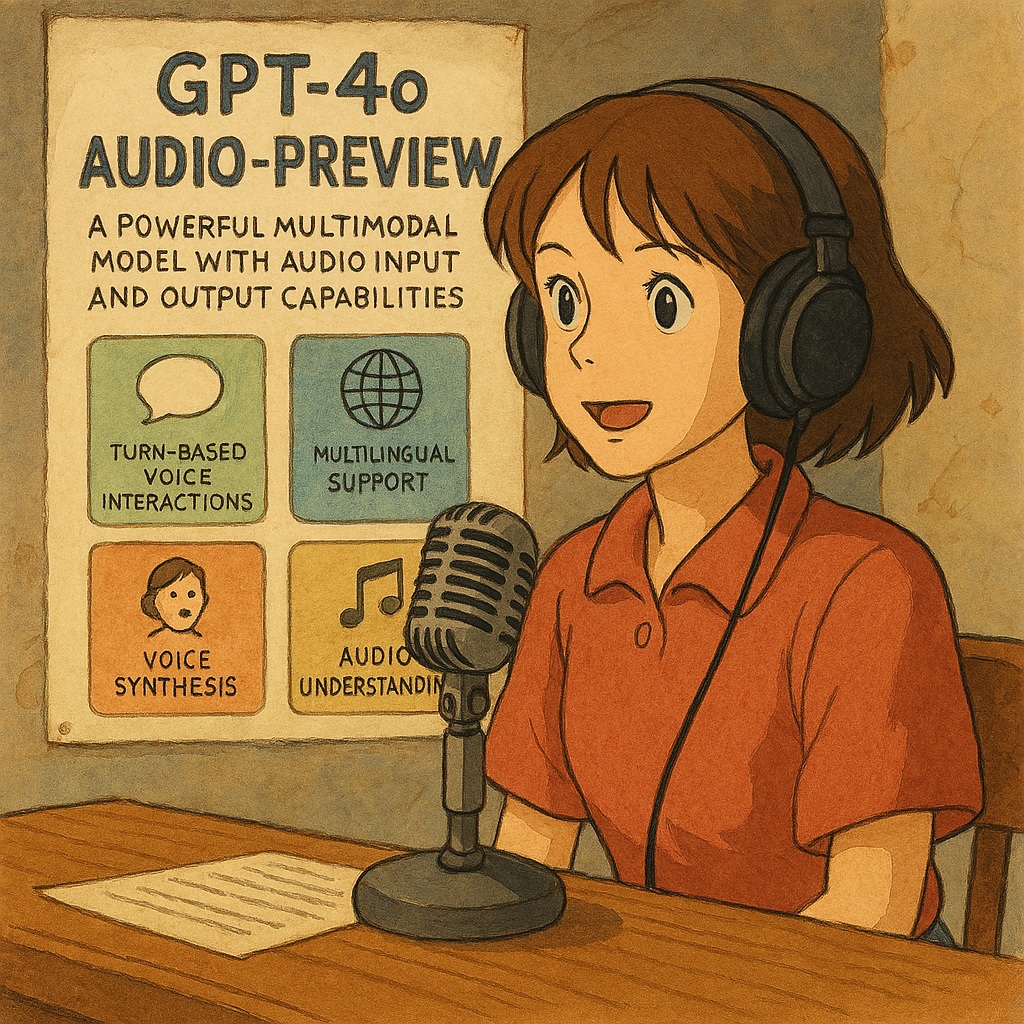
Using OpenAI’s Audio-Preview Model with Semantic Kernel
OpenAI's gpt-4o-audio-preview is a powerful multimodal model that enables audio input and output capabilities, allowing developers to create more natural and accessible AI interactions. This model supports both speech-to-text and text-to-speech functionalities in a single API call through the Chat Completions API, making it suitable for building voice-enabled applications where turn-based interactions are appropriate. In this post, we'll explore how to use the audio-preview model with Semantic Kernel in both C# and Python to create voice-enabled AI applications. Best Use Cases Best for turn-based interaction...
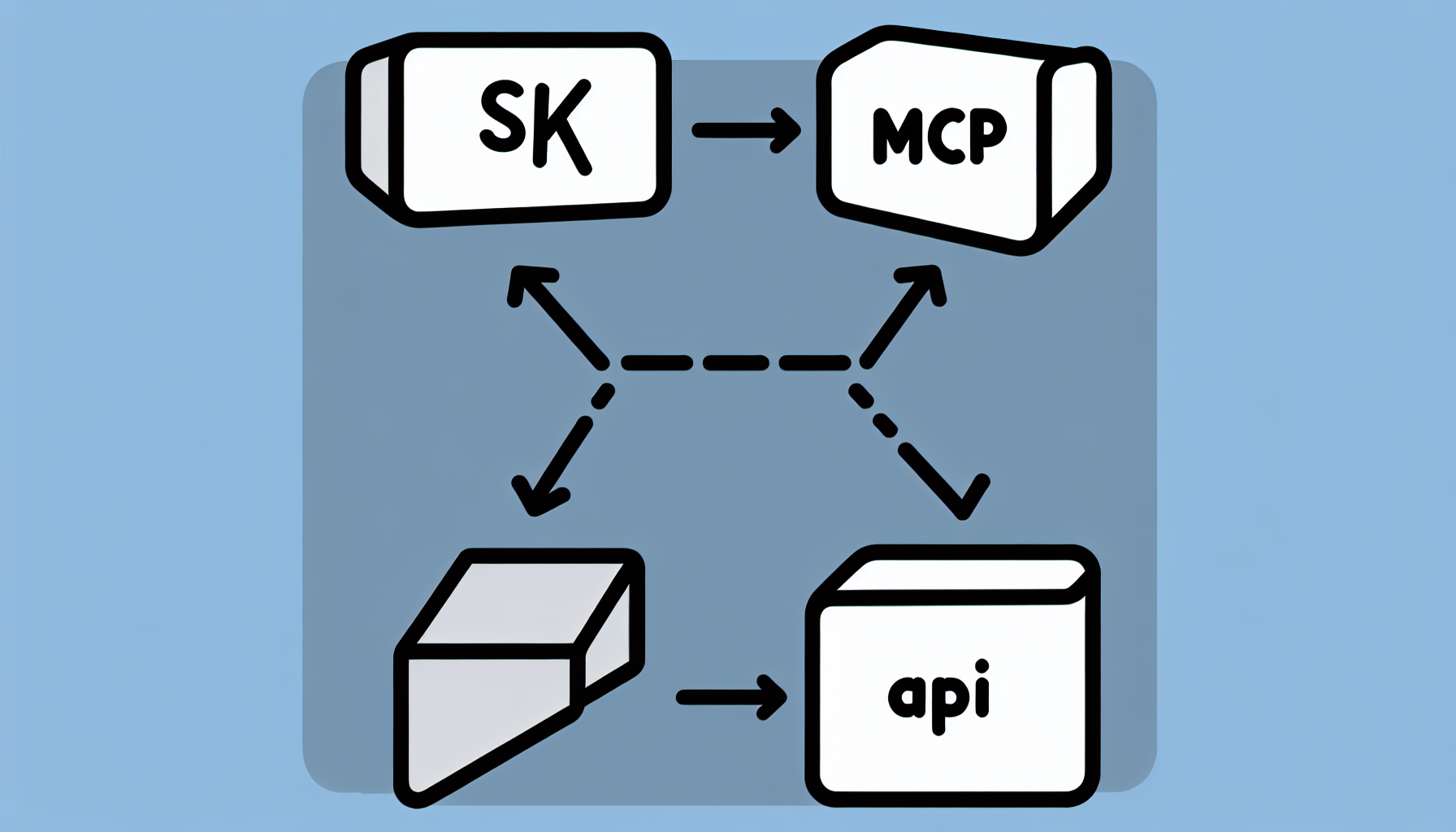
Building a Model Context Protocol Server with Semantic Kernel
This is second MCP related blog post that is part of a series of blog posts that will cover how to use Semantic Kernel (SK) with the Model Context Protocol (MCP). This blog post demonstrates how to build an MCP server using MCP C# SDK and SK, expose SK plugins as MCP tools and call the tools from client side via SK. Here are a few reasons why you might want to build an MCP server with SK: For more information about MCP, please refer to the documentation. The sample described below uses the official ModelContextProtocol nuget package. Its runnable source code is available in the Semantic...
Semantic Kernel Agent Framework RC2
Three weeks ago we released the Release the Agents! SK Agents Framework RC1 | Semantic Kernel and we’ve been thrilled to see the momentum grow. Thank you to everyone who has shared feedback, filed issues, and started building with agents in Semantic Kernel—we’re seeing more developers try agents than ever before. Today, we’re declaring build 1.43 (.NET) and 1.26.1 (Python) as Release Candidate 2 of the Semantic Kernel Agent Framework. With this release, we’re introducing a small but impactful change to how agents handle chat message threads —one that sets the stage for powerful new capabilities coming soon. ...

Accelerating Agentic Workflows with NVIDIA AgentIQ, Azure AI Foundry and Semantic Kernel
Today, we're excited to announce our collaboration with NVIDIA. In Azure AI Foundry, we've integrated NVIDIA NIM microservices and the NVIDIA AgentIQ toolkit into Azure AI Foundry—unlocking unprecedented efficiency, performance, and cost optimization for your AI projects. Read more on the announcement here. Optimizing performance with NVIDIA AgentIQ and Semantic Kernel Once your NVIDIA NIM microservices are deployed, NVIDIA AgentIQ takes center stage. This open-source toolkit is designed to seamlessly connect, profile, and optimize teams of AI agents, enables your systems to run at peak performance. AgentIQ del...
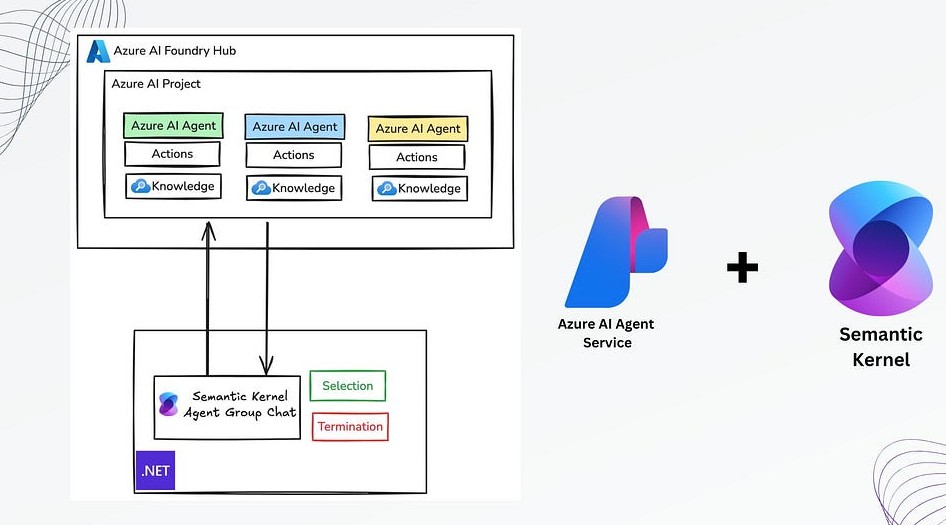
Guest Blog: Build a Multi-Agent System Using Microsoft Azure AI Agent Service and Semantic Kernel in 3 Simple Steps!
Build a Multi-Agent System Using Microsoft Azure AI Agent Service and Semantic Kernel in 3 Simple Steps! Today we're thrilled to welcome back guest author, Akshay Kokane to share his recent Medium article on Build a Multi-Agent System Using Microsoft Azure AI Agent Service and Semantic Kernel in 3 Simple Steps. We’ll turn it over to him to dive in! In my previous blog, I introduced Microsoft’s Azure AI Agent Service, a fully managed platform that simplifies the process of building, deploying, and scaling AI agents. Unlike OpenAI Assistant, Azure AI Agent Service offers greater flexibility, supporting multip...
Customer Case Study: Announcing the Microsoft Semantic Kernel Couchbase Connector
We're thrilled to announce the launch of the Semantic Kernel Couchbase Vector Store Connector for .NET developers, created through our strategic partnership with Microsoft's Semantic Kernel team. This powerful out-of-the-box connector transforms how developers integrate vector search capabilities into their AI applications. What sets this connector apart is how it harnesses Couchbase's distributed NoSQL platform alongside Semantic Kernel's vector store abstractions, creating an integration that prioritizes both performance and developer experience. The Semantic Kernel Couchbase Vector Store Connector elimin...

The Future of AI: Customizing AI Agents with the Semantic Kernel Agent Framework
Today we're excited to promote a recent blog from AI Platform focused on customizing AI agents with the Semantic Kernel agent framework. Read the entire blog post: here The Future of AI blog series is an evolving collection of posts from the AI Futures team in collaboration with subject matter experts across Microsoft. In this series, we explore tools and technologies that will drive the next generation of AI. Explore more at: https://aka.ms/the-future-of-ai Customizing AI agents with the Semantic Kernel agent framework AI agents are autonomous entities designed to solve complex tasks for humans...

Using Azure AI Agents with Semantic Kernel in .NET and Python
Today we’re excited to dive into Semantic Kernel and Azure AI Agents. There are additional details about using an within Semantic Kernel covered in our documentation here. Azure AI Agents are powerful tools for developers seeking to integrate AI capabilities into their applications. In this blog post, we'll explore how to utilize Azure AI Agents alongside the Semantic Kernel in both .NET and Python, showcasing the potential of these technologies to create intelligent and responsive applications. What is an Azure AI Agent? An Azure AI Agent is a specialized agent within the Semantic Kernel framework, designe...

Customer Case Story: Creating a Semantic Kernel Agent for Automated GitHub Code Reviews

Today I want to welcome a guest author to our Semantic Kernel blog, Rasmus Wulff Jensen, to cover how he's created a Semantic Kernel agent for automated GitHub code review. We'll turn it over to Rasmus to dive in. Introduction If you work in software development, you know that Code reviews are an essential part of the software development process, ensuring quality, security, and maintainability. However, they also consume a significant amount of developers’ time, often delaying feature delivery and increasing workload. Recognizing this challenge, the company Relewise, a Search and Recommendation SASS Business, ...
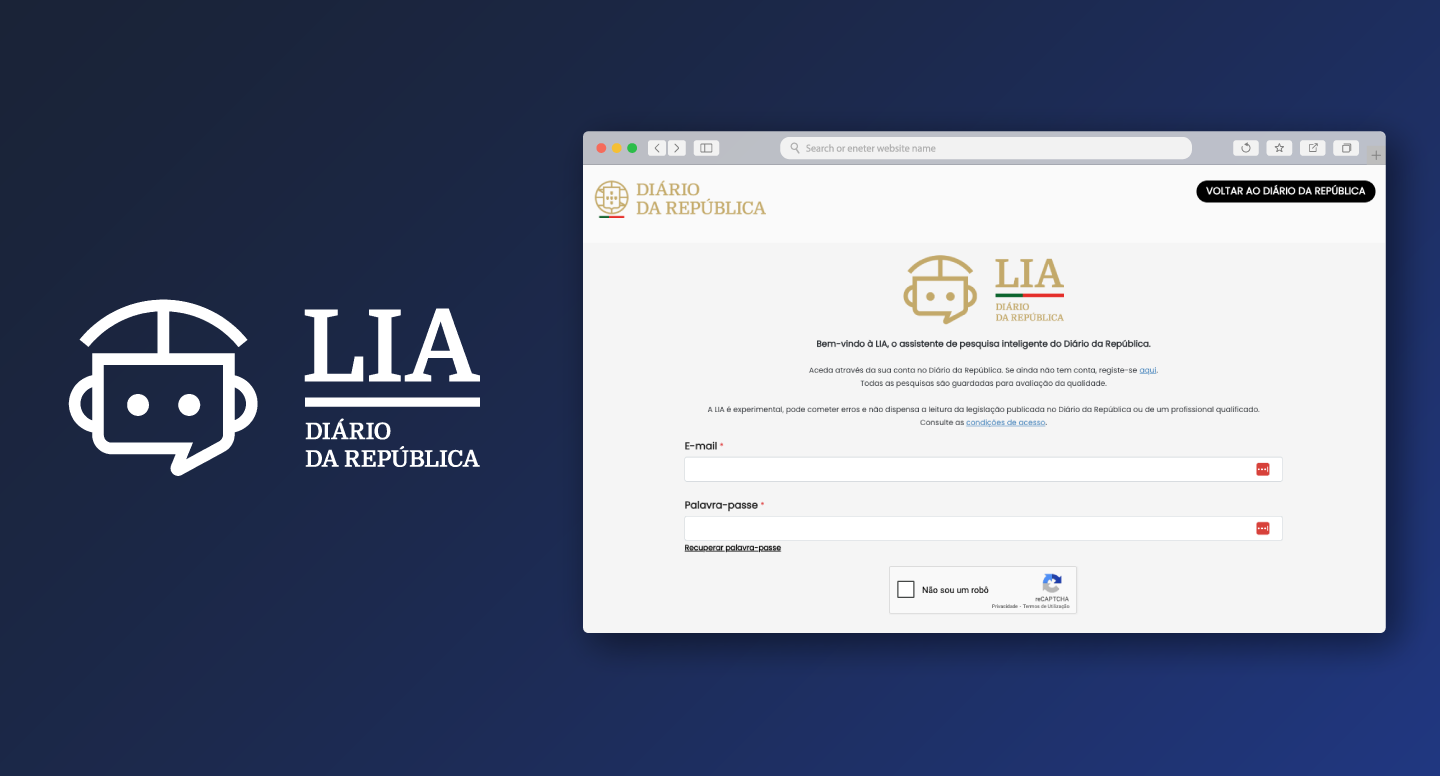
Customer Case Study: INCM transforms legal accessibility with an AI Search Assistant

Customer Case Study: INCM transforms legal accessibility with an AI Search Assistant The Imprensa Nacional-Casa da Moeda (INCM) is responsible for managing and publishing Portugal’s Diário da República (Official Gazette of the Republic of Portugal), which includes essential information for understanding laws, regulations, and legal processes. The quantity of information and the complex language used in these documents present significant challenges for individuals seeking to access and understand them. This complexity often acts as an obstacle, limiting access to vital legal information. These challenges not onl...
Keeping the Conversation Flowing: Managing Context with Semantic Kernel Python
In the dynamic field of conversational AI, managing coherent and contextually meaningful interactions between humans and digital assistants poses increasingly complex challenges. As dialogue lengths extend, maintaining full conversational context becomes problematic due to token constraints and memory limitations inherent to large language models (LLMs). These constraints not only degrade conversational clarity but also compromise the system's ability to deliver accurate and relevant responses. Thus, effective solutions require strategies that intelligently balance context retention with efficient memory ma...
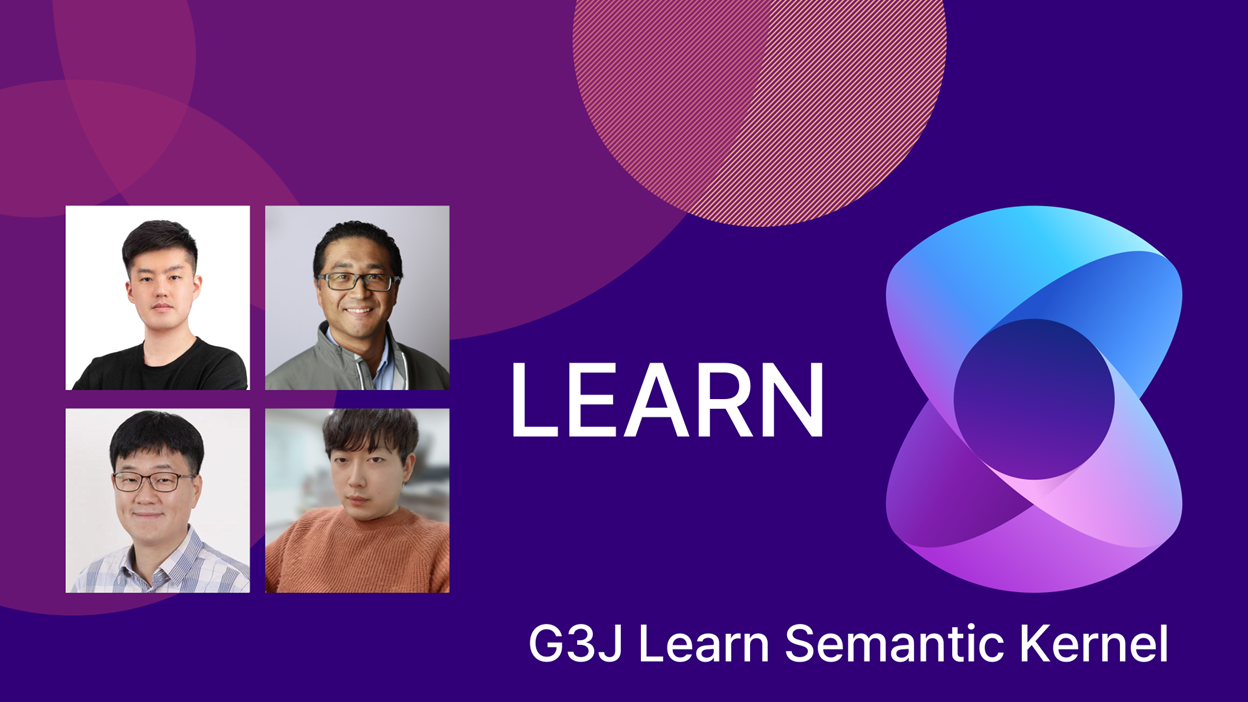
G3J Learn Semantic Kernel Show – A Deep Dive in Korean! | 세계로 뻗어갑니다: “G3J Learn Semantic Kernel” 쇼 – 한국어로 배우는 Semantic Kernel!
Global Expansion – "G3J Learn Semantic Kernel" Show – A Deep Dive in Korean! Localization Increases Demand Following the success of this multi-language delivery, we quickly noticed a surge in demand for localized content. Developers from different parts of the world have expressed interest in diving deeper into Semantic Kernel, and we couldn’t be more excited to expand on this momentum. To address this growing interest, we are thrilled to announce the recordings of a new initiative, starting with a deep dive into Semantic Kernel in Korean. The pilot session featured above is the first of many localized f...
Integration of AWS Bedrock Agents in Semantic Kernel
Overview of AWS Bedrock Agents AWS Bedrock Agents provide a managed service that facilitates the experimentation and rapid deployment of AI agents. Users can leverage proprietary AWS models as well as a diverse selection of models from various providers available on AWS Bedrock. Semantic Kernel's Integration with AWS Bedrock Semantic Kernel now integrates with AWS Bedrock Agents, enabling users to leverage kernel functions alongside features such as code interpretation and Retrieval-Augmented Generation (RAG) powered by the AWS knowledge base. If you manage resources on AWS and are exploring a multi-cloud AI s...
Talk to your agents! Introducing the Realtime API’s in Semantic Kernel
Introducing Realtime Agents in Semantic Kernel for Python With release 1.23.0 of the Python version of Semantic Kernel we are introducing a new set of clients for interacting with the realtime multi-modal API's of OpenAI and Azure OpenAI. They provide a abstracted approach to connecting to those services, adding your tools and running apps that leverage these very powerful and useful agents. The key addition that Semantic Kernel brings when you want to connect to these models is that we make the experience of using these models with function calling very easy, just create a Kernel and add your plugins as ...
Effortlessly Integrate xAI’s Grok with Semantic Kernel
For Semantic Kernel users, integrating xAI's Grok API using the OpenAI connector is a breeze thanks to its compatibility with OpenAI's API format. This tutorial focuses on setting up Grok in your Semantic Kernel projects with minimal fuss, using C# and Python examples. Why Grok? Grok, built by xAI, is a powerful AI model, offers a 128k context window and function-calling support, making it a solid choice for complex tasks in Semantic Kernel. With an API compatible with OpenAI, announced in November 2023 and now available via API access, with models like "grok-beta" available for developers and soon the ne...
AutoGen and Semantic Kernel, Part 2

Following on from our blog post a couple months ago: Microsoft’s Agentic AI Frameworks: AutoGen and Semantic Kernel, Microsoft’s agentic AI story is evolving at a steady pace. Both Azure AI Foundry’s Semantic Kernel and AI Frontier’s AutoGen are designed to empower developers to build advanced multi-agent systems. The AI Frontier’s team is charging ahead pushing the boundaries of multi-agent approaches, building new agentic patterns as well as a growing library of purpose-built agents, such as Magentic One, while the Semantic Kernel team builds on years of enterprise expertise to enable developers to build agents...

Integrating Model Context Protocol Tools with Semantic Kernel: A Step-by-Step Guide

This post describes how to use Model Context Protocol tools with Semantic Kernel. Model Context Protocol (MCP) is an open protocol that standardizes how applications provide context to LLMs. MCP standardizes the connection between AI models and various data sources and tools. The Model Context Protocol is significant because it enhances the way AI models interface with data and tools, promoting interoperability, flexibility, and improved contextual understanding. Its potential applications span various domains including, data integration and knowledge management, making it a valuable component in the developme...
Guest Blog: LLMAgentOps Toolkit for Semantic Kernel

Today the Semantic Kernel team is excited to welcome a guest author, Prabal Deb to share his work. LLMAgentOps Toolkit is repository that contains basic structure of LLM Agent based application built on top of the Semantic Kernel Python version. The toolkit is designed to be a starting point for data scientists and developers for experimentation to evaluation and finally deploy to production their own LLM Agent based applications. Architecture The LLMAgentOps architecture might be constructed using the following key components divided into two phases like DevOps / MLOps / LLMOps development and deploym...
Release the Agents! SK Agents Framework RC1
Semantic Kernel Agent Framework Reaches Release Candidate 1 We're excited to announce that with the release of Semantic Kernel 1.40 (.NET) and 1.22.0 (Python), we're elevating the Semantic Kernel Agent Framework to Release Candidate 1. This marks a significant milestone in our journey toward providing a robust, versatile framework for building AI agents for enterprise applications. Code Sample: Creating a Chat Agent with tool plugins Creating an agent with Semantic Kernel is easy! Let's look at a simple Python example that demonstrates how to create a chat completion agent that answers questions about a menu u...

Compatibility of PostgreSQL Connector with AWS and GCP
As AI-driven applications continue to evolve, the need for efficient vector-based search capabilities is greater than ever. Microsoft Semantic Kernel makes it easy to integrate these capabilities with PostgreSQL databases using the connector. Whether you're leveraging cloud-hosted PostgreSQL instances on Amazon Web Services or Google Cloud, this connector enables seamless interaction, allowing you to store and query vectorized data for tasks like recommendation systems, semantic search, and more. Compatible Databases Semantic Kernel Postgres Connector is compatible with PostgreSQL instances hosted locally or i...
Hybrid Model Orchestration
Hybrid model orchestration is a powerful technique that AI applications can use to intelligently select and switch between multiple models based on various criteria, all while being transparent to the calling code. This technique not only allows for model selection based on factors such as the prompt's input token size and each model's min/max token capacity, or data sensitivity - where sensitive inference is done against local models and the others against cloud models - returning either the fastest response, the most relevant response, or the first available model's response, but also provides a robust fallbac...
Guest Blog: Revolutionizing AI Workflows: Multi-Agent Group Chat with Copilot Agent Plugins in Microsoft Semantic Kernel

Revolutionizing AI Workflows: Multi-Agent Group Chat with Copilot Agent Plugins in Microsoft Semantic Kernel Copilot Agent Plugins (CAPs) are revolutionizing how developers interact with Microsoft 365 data. By transforming natural language into seamless CRUD actions using Microsoft Graph and Semantic Kernel, CAPs enable the creation of intelligent, AI-driven solutions. This sample demonstrates a multi-agent group chat system where AI-powered agents collaborate across Contacts, Calendar, and Email— with a standout Legal Secretary Agent ensuring compliance and multilingual support. 📺 Watch the full video: htt...

AI Agents for Beginners Course: 10 Lessons teaching you how to start building AI Agents
10 Lessons teaching everything you need to know to start building AI Agents Today we want to highlight the AI Agents For Beginners course that was released. 🔗https://github.com/microsoft/ai-agents-for-beginners/tree/main Start learning and building in the exciting world of AI Agents today! From the Semantic Kernel team, we look forward to seeing what you build!
Using OpenAI’s o3-mini Reasoning Model in Semantic Kernel
OpenAI’s o3-mini is a newly released small reasoning model (launched January 2025) that delivers advanced problem-solving capabilities at a fraction of the cost of previous models. It excels in STEM domains (science, math, coding) while maintaining low latency and cost similar to the earlier o1-mini model. This model is also available as Azure OpenAI Service, emphasizing its efficiency gains and new features like reasoning effort control and tool use. Throughout this post We'll explore how to use and other reasoning models with Semantic Kernel in both C# and Python. Key Features of OpenAI o3-mini: ...
Guest Blog: Step-by-Step Guide to Building a Portfolio Manager: A Multi-Agent System with Microsoft Semantic Kernel and Azure OpenAI
Today the Semantic Kernel team is excited to welcome back a guest author, Akshay Kokane to share his recent Medium article using Semantic Kernel and Azure OpenAI, showcasing a step-by-step guide to building a Portfolio Manager. We’ll turn it over to him to dive into his work below. In my previous blog, we went over how Semantic Kernel can be used to create a multi-agent system. Link. However, agent collaboration was really challenging, as we were not able to control how agents collaborated. We could set the termination strategy to decide when to stop collaboration between agents, but not how agents would pa...
Customer Case Study: How preezie’s AI shopping assistant is reshaping Blue Bungalow’s online store


Introduction Blue Bungalow, one of Australia’s leading fashion retailers, faced a common challenge in eCommerce—how to create a more engaging, seamless, and personalised shopping experience for customers online. They wanted to implement AI-powered assistance to provide personalised product recommendations, accurate sizing guidance, product comparisons, and instant answers to customer questions—replicating the ease and support of an in-store shopping experience. To bring this vision to life, preezie developed an AI shopping assistant, built on Semantic Kernel and Elasticsearch. https://www.youtube.com/watch?v=...
Guest Blog: Let your Copilot Declarative Agent think deep with DeepSeek-R1

Today we'd like to feature a guest author on our Semantic Kernel blog, Mahmoud Hassan, a Microsoft Valuable Professional (MVP) focused on AI. We'll turn it over to him to dive into his work below. In recent days, there has been significant attention in the AI community regarding DeepSeek-R1 and its capabilities. Many people are playing with it. For instance, Fabian Williams yesterday shared his experiment here: https://lnkd.in/dgZ8hjgB of running it locally. I thought, maybe today is my turn! However, I also thought it is an excellent opportunity to show a plugin design pattern I previously sha...
Using Azure OpenAI Chat Completion with data source and Function Calling
Azure OpenAI Chat Completion with data source provides powerful capabilities for integrating conversational AI into applications. However, using a data source and function calling in a single request is not supported yet. When both features are enabled, function calling is ignored, and only the data source is used. This presents a challenge when retrieving information, as a single request might not be sufficient to obtain an answer. This article shows how to address this limitation with custom retry mechanism. If a query remains unanswered, the system sequentially retries with different sources until the reque...
Semantic Kernel Roadmap H1 2025: Accelerating Agents, Processes, and Integration
As we move into the first half of 2025, I'm excited to share our ambitious roadmap that we hope will enable you to build even more sophisticated AI applications with Semantic Kernel. Agent Framework 1.0 By the end of Q1 2025, the SK Agent Framework will transition from preview to general availability (GA). This milestone marks a commitment to a stable, versioned API that minimizes breaking changes and supports production-grade applications. As highlighted in our recent community office hours meeting, our vision is to embrace an agent-first programming model. This approach has been shaped by extensive fe...
Using DeepSeek models in Microsoft Semantic Kernel
DeepSeek recently awed the AI community by open sourcing two new state-of-the-art models, the DeepSeek-V3 and a reasoning model, the DeepSeek-R1, that not only claim to be op-par with the most capable models from OpenAI but are also extremely cost-effective. We'd like to highlight the recent announcement from the Azure AI Foundry team highlighting DeepSeek R1 is now available on Azure AI Foundry and GitHub. DeepSeek is also available for use in Semantic Kernel, Azure AI Foundry and can be called via our inferencing connector as well. Semantic Kernel is thrilled to see such exciting development in...
Guest Blog: Creative Writing Assistant – a multi-agent app sample with Semantic Kernel & .NET Aspire

Today we’re featuring a guest author, Ricardo Niepel, who’s a Senior Technical Specialist at Microsoft. He’s written an article we’re sharing below; we’ll turn it over to Ricardo to share more! If “Creative Writing Assistant” sounds familiar, it might be because we've previously released a similar multi-agent application built in Python during our Ignite conference (Azure AI Foundry and the dev toolchain to infuse AI in all your apps | Ignite Session BRK119). Based on the invaluable feedback we received from all of you we are now excited to show a .NET version of this sample application. It illustrates how the...
Guest Blog: Leap Forward with Modern AI using Microsoft 365 Agents SDK and Semantic Kernel
Leap Forward with Modern AI using Microsoft 365 Agents SDK and Semantic Kernel Today we’re featuring a guest author, Arafat Tehsin, who’s a Microsoft Most Valuable Professional (MVP) for AI. He’s written an article we’re sharing below, focused on how to Leap Forward with Modern AI using Microsoft 365 Agents SDK and Semantic Kernel. We’ll turn it over to Arafat to share more! Happy new year. I know you’re excited to see this. It is real, it is happening, but you know what? It is still in preview and things will break. So, get ready for it. If you’re wondering what this SDK is all about then despite my ...
Customer Case Study: Pushing the Boundaries of Multi-Agent AI Collaboration with ServiceNow and Microsoft Semantic Kernel

The Journey to Multi-Agent Innovation At ServiceNow, we embarked on an ambitious journey to redefine how AI systems collaborate in enterprise environments. Through our partnership with Microsoft, we set out to create something beyond traditional integration – a true multi-agent system across platform that could work effectively alongside human teams. While NowAssist and Microsoft Copilot were already capable of basic task handoffs, we envisioned a future where AI agents could work together as seamlessly as human colleagues, sharing context and coordinating complex activities in real-time. Tackling the P1 Inci...
Guest Blog: Building Multi-Agent Systems with Multi-Models in Semantic Kernel – Part 1
Today I want to welcome back Arafat Tehsin, who’s a Microsoft Most Valuable Professional (MVP) for AI. He’s written an article we’re sharing below, focused on Building Multi-Agent Systems with Multi-Models in Semantic Kernel. We’ll turn it over to Arafat to share more! Imagine running a restaurant. Each of your team member, from the chef to server to the cashier has got specialised skills. While the chef prepares delicious meals, the server ensures that the food is delivered promptly and the cashier ensures smooth transactions. Together, they deliver a seamless dining experience. Similarly, in a multi-a...
Understanding Semantic Kernel AI Connectors
AI Connectors in Semantic Kernel are components that facilitate communication between the Kernel's core functionalities and various AI services. They abstract the intricate details of service-specific protocols, allowing developers to seamlessly interact with AI services for tasks like text generation, chat interactions, and more. Using AI Connectors in Semantic Kernel Developers utilize AI connectors to connect their applications to different AI services efficiently. The connectors manage the requests and responses, providing a streamlined way to leverage the power of these AI services with...
Empowering AI Agents with Tools via OpenAPI: A Hands-On Guide with Microsoft Semantic Kernel Agents
Today the Semantic Kernel team is happy to welcome back our guest author, Akshay Kokane. We will turn it over to him to dive into his recent Medium article on Semantic Kernel. As we advance towards an Agentic Approach in the AI world, I would like to share my insights on how Semantic Kernel can assist in building AI agents and leveraging existing APIs to create intelligent agents. In a previous article, I discussed how Semantic Kernel can develop a multi-agent system that fosters a collaborative environment for these agents to interact and deliver results. In this new blog post, I am pleased to share that ...

Unwrap some Semantic Kernel (Power)Toys this holiday season
Windows PowerToys has always been one of my favorite productivity hacks, and its latest release adds Paste with Advanced AI, which takes it to a new level. This feature, powered by Semantic Kernel, transforms how you work with text, images, and data from your clipboard by applying AI-driven enhancements. What Does It Do? Advanced Paste uses the OpenAI API to analyze, reformat, and transform clipboard text based on the user’s input, for example: Advanced Paste also has additional paste actions that work beyond simple text-based inputs: With Semantic Kernel, you can n...
Global Expansion – “G3J Learn Semantic Kernel” Show – A Deep Dive in Korean!
Global Expansion – "G3J Learn Semantic Kernel" Show – A Deep Dive in Korean! Localization Increases Demand Following the success of this multi-language delivery, we quickly noticed a surge in demand for localized content. Developers from different parts of the world have expressed interest in diving deeper into Semantic Kernel, and we couldn’t be more excited to expand on this momentum. To address this growing interest, we are thrilled to announce the recordings of a new initiative, starting with a deep dive into Semantic Kernel in Korean. The pilot session featured above is the first of many localized forma...
ONNX GenAI Connector for Python (Experimental)

ONNX GenAI Connector for Python (Experimental) With the latest update we added support for running models locally with the onnxruntime-genai. The onnxruntime-genai package is powered by the ONNX Runtime in the background, but first let’s clarify what ONNX, ONNX Runtime and ONNX Runtime-GenAI are. ONNX ONNX is an open-source format for AI models, both for Deep Learning and traditional Machine Learning. It defines an extensible computation graph model, as well as definitions of built-in operators and standard data types. ONNX Runtime The ONNX Runtime executes the saved weighted operations stored using the O...
Customer Case Study: How to use Elasticsearch Vector Store Connector for Microsoft Semantic Kernel for AI Agent development
How to use Elasticsearch Vector Store Connector for Microsoft Semantic Kernel for AI Agent development Today we're excited to feature the Elastic team to share more about their Semantic Kernel Elasticsearch Vector Store connector for Microsoft Semantic Kernel. Read the entire announcement here. I'll turn it over to Srikanth Manvi and Florian Bernd to dive into it. In collaboration with the Microsoft Semantic Kernel team, we are announcing the availability of Semantic Kernel Elasticsearch Vector Store Connector, for Microsoft Semantic Kernel (.NET) users. Semantic Kernel simplifies building enterprise-grade AI a...
Tracing your AI apps with Azure AI Foundry
We previously introduced observability within the Semantic Kernel. For further insights, please refer to our previous blog post, and you can also explore our learn site for additional details. To summarize, observability is an essential aspect of your application stack, particularly in today's landscape where AI plays a significant role in numerous applications. Given that large language models are inherently stochastic, they do not consistently generate the same outputs from identical inputs. As an application developer, it is vital for your team to have the capability to monitor the transactions made by your...

使用Semantic Kernel来开启您的AI旅程
Semantic Kernel (SK) 是由微软开发的一款开源开发工具包,旨在帮助开发者和企业利用最新的人工智能技术构建更智能和复杂的AI驱动解决方案,例如检索增强生成 (RAG) 和智能体 (Agent)。 核心概念 内核(Kernel) 您可以将SK的内核视为一个容器,该容器包含您所需的所有与AI相关的组件,如提示语模板、AI服务和插件。如果将所有的服务和插件提供给内核,则AI会根据需求自动使用它们。SK还提供多项企业级功能,使您可以保证您的AI符合安全要求且在部署后能够持续监控AI的表现。 提示语(Prompt Engineering) 提示语在使用大型语言模型中至关重要。优质的提示语能够显著提升用户体验。SK通过提示语模板(template)的方式来实现自然语言与AI插件的混合使用,让您的提示语变得更加的灵活。 AI服务(AI Services) SK支持多种AI应用场景,包括对话补全,文本生成,嵌入(embedding)生成,图像与文字转换,以及音频与文字转换。此外,SK兼容多个AI服务提供商,如OpenAI,Azure,Google AI, Amazon Bedrock, 以及提供本地推理服务的Ollama等。 插件(Plugins/Functions) SK通过插件支持扩展大型语言模型的功能。插件可以是代码或自然语言,并可集成外部系统,如数据库、API或其他云服务,以便AI解决方...

Microsoft Semantic Kernel Office Hours Update
Microsoft Semantic Kernel Office Hours Update Over the upcoming Holidays period there are several office hours sessions that we'll be cancelling. Below is an updated view of our upcoming office hours availability. We will resume with regularly scheduled Office Hours on January 8th for our weekly and monthly sessions. During this time, feel free to catch up on recordings from our Semantic Kernel Office Hours. Our Office Hours are posted here one week after the session: Semantic Kernel Office Hours - YouTube Community office hours During the Semantic Kernel community office hours, you can bring all of your ...
Unlocking the Power of Memory: Announcing General Availability of Semantic Kernel’s Memory Packages
We are thrilled to announce the General Availability (GA) of our Memory packages for .NET, Java, and Python! The Semantic Kernel team and our partners have been working hard to allow you to quickly connect to vector stores and make it easy for you to do embeddings and data retrieval between stores. Transforming Data Management with Vector Stores With the Memory package, you can take advantage of: Vector Store Connectors include (with more coming): For the most up to date list of available connectors see our out-of-the-box connectors page. Seamless integration with Semantic Kernel Chat C...
Announcing the GA Release of Filters for .NET and Python in Semantic Kernel
We are excited to announce the General Availability (GA) release of Filters for our .NET and Python Semantic Kernel! This vital enhancement strengthens the control and visibility developers have when running functions, ensuring responsible AI practices are instilled from the ground up. Filters not only improve security but also contribute to building enterprise-ready solutions that you can feel confident deploying. What Are Filters? Filters in Semantic Kernel provide a mechanism for developers to manage how and when functions operate within their applications. For example, validation filters can be employed...
Customer Case Study: Announcing the Microsoft Semantic Kernel Elasticsearch Connector
Today we're excited to feature the Elastic team to share more about their Semantic Kernel Elasticsearch connector. Read the entire announcement here. I'll turn it over to Srikanth Manvi to dive into it. In collaboration with the Microsoft Semantic Kernel team, we are announcing the availability of Semantic Kernel Elasticsearch Vector Store connector for Microsoft Semantic Kernel (.NET) users. Semantic Kernel simplifies building enterprise-grade AI agents, including the capability to enhance large language models (LLMs) with more relevant, data-driven responses from a vector store. Semantic Kern...
Announcing the GA Release of the OpenAPI Plugin for .NET and Python in Semantic Kernel
We are thrilled to announce the General Availability (GA) release of the OpenAPI package for Semantic Kernel, available for both .NET and Python! With this significant milestone, developers can easily integrate existing APIs as plugins, enhancing the capabilities of their AI agents while making them more versatile in real-world applications. Why OpenAPI Plugins Matter In many enterprises, a robust set of APIs already exists, facilitating critical functions for automation services and front-end applications. Semantic Kernel now allows you to harness these APIs—transforming them into plugins that your agents can ...

Leveraging Microsoft 365 Agents SDK with Semantic Kernel for Enhanced Multichannel AI

As the landscape of AI continues to evolve, meeting users where they are is vital. We want to spotlight the newly released Microsoft 365 Agents SDK and its seamless integration with Semantic Kernel. This powerful combination empowers developers to create robust AI agents capable of operating across multiple channels, engaging users wherever they are active. With the Microsoft 365 Agents SDK, you can extend the reach of your AI agents beyond a single platform, ensuring they are accessible across various environments and always available to connect with users. What is Microsoft 365 Agents SDK The Mi...
Customer Case Study: Zipp by Sticos – Powered by Semantic Kernel
Today we're featuring Sticos on our Semantic Kernel blog to highlight their customer journey with AI and Semantic Kernel. Who is Sticos Our Vision: Sticos is determined to become the most customer driven company in the world. Together we make incomprehensible legislation easy and practical! What We Do: We combine legal expertise and technology to make it easy for businesses to comply with regulations and to make right and smart decisions. Sticos’ history in AI In February 2017, before any LLM we launched a HR Chatbot. It could answer HR related questions, and you could even say ...
Customer Case Study: Fujitsu Kozuchi AI Agent Powered by Semantic Kernel
Customer Case Study: Fujitsu Kozuchi AI Agent Powered by Semantic Kernel Japanese multinational Fujitsu, a pioneer of information and communications technology, has been transforming industries since 1935. With a workforce of 124,000 dedicated professionals across 50 countries, Fujitsu’s mission is to “make the world more sustainable by building trust in society through innovation.” After introducing their groundbreaking Composite AI earlier this year, Fujitsu is back with another innovative business solution. The Fujitsu Kozuchi AI Agent is an autonomous system that functions as a full team member, making pr...

Allow users to talk and listen to your chatbot using Semantic Kernel Python
Until now, Semantic Kernel Python only allowed for the development of text-based AI applications. However, this is no longer the case, as we have expanded its capabilities to include audio as one of the supported modalities. In this article, I will provide a detailed, step-by-step guide on how to create a chatbot that can both speak to and listen to your users. As of the time of this blog post, OpenAI has announced the release of the Realtime API. For further details, you can find more information here. Please note that this blog post is not intended as a tutorial on the Realtime API. The Semantic Kernel team ...
Microsoft’s Agentic AI Frameworks: AutoGen and Semantic Kernel
Microsoft’s agentic AI frameworks, Semantic Kernel and AutoGen are deeply collaborating to provide the best-in-class agentic developer experience. With Semantic Kernel’s enterprise ready AI capabilities, customers can already use and get support for building agent applications and, moving forward, we’ll align the multi-agent runtime in AutoGen (called autogen-core) with Semantic Kernel, allowing customers to create enterprise-ready multi-agent solutions. Our two teams will be working quickly and diligently to get to this alignment, with the goal of making it available in early 2025. Meanwhile, for customers that...
Working with Audio in Semantic Kernel Python
We are pleased to announce the arrival of audio support in Semantic Kernel Python. This new audio functionality will enable you to create more interactive and accessible user experiences. In this blog post, I will detail the new interface, the existing connectors, and provide samples. Please continue reading for more information. Audio-to-Text The first feature we are introducing is the ability to transcribe audio into text. The foundational class for this feature is , which includes two public methods: and . The former returns a list of possible transcriptions based on the number requested, while the latter r...
Customer Case Study: Suntory and Reliability in AI with Semantic Kernel
Suntory Global Spirits is the spirits division of Suntory Holdings, a multinational beverage and food company based in Japan. Suntory is renowned for its high-quality alcoholic beverages, including premium Japanese whisky, gin, vodka, and other spirits. We'll turn it over to Urko Benito from Suntory to dive into their AI journey with Semantic Kernel. The Pursuit of Precision and Reliability in AI From late 2023 through the first half of 2024, our team was deeply engaged in a phase of intensive learning and exploration. With a broad list of potential use cases ranging from chatbots to complex data analysis ...

Transforming Semantic Kernel Functions
Functions are a key component of Semantic Kernel. As an AI Orchestrator, Semantic Kernel coordinates function execution together with Large Language Model (LLM) inference to allow the model return better responses or take action. Semantic Kernel groups related functions as plugins and provides capabilities to generate plugins from native code (e.g. C# classes or functions), REST API endpoints defined using the Open API specification or gRPC endpoints. Consider the following scenario, if I ask an LLM to tell me about the current weather in Dublin it won't be able to provide that information. The reason the LLM ...
Announcing Semantic Kernel for Java 1.4.0
Hello Java AI developers! We are announcing the 1.4.0 release of the Semantic Kernel for Java. Please see the full changelog here. You can find our updates on our GitHub repository and the artifacts on Maven Central. What's New in Semantic Kernel for Java 1.4.0? Vector Store Functionality Goes GA The central focus of this release is for the Vector Store functionality moving out of the experimental namespace and into general availability. This means that the Vector Store in the Semantic Kernel for Java is now stable and ready for production use. You can read more about Vector Stores in the Microsoft Learn do...

Managing Chat History for Large Language Models (LLMs)
Large Language Models (LLMs) operate with a defined limit on the number of tokens they can process at once, referred to as the context window. Exceeding this limit can have significant cost and performance implications. Therefore, it is essential to manage the size of the input sent to the LLM, particularly when using chat completion models. This involves effectively managing chat history and implementing strategies to truncate it when it becomes too large. Key Considerations for Truncating Chat History When truncating chat history, consider the following: Example Scenario Imagine you are deve...
Introducing AWS Bedrock with Semantic Kernel
One of the principal features of Semantic Kernel is its ability to integrate various AI services seamlessly. We are pleased to announce that this capability now extends to AWS Bedrock. With AWS Bedrock, you can access foundational models such as the Amazon Titan models. The new connector supports Chat Completion, Text Generation, and Text Embeddings, depending on the chosen model. AWS Bedrock AWS Bedrock is a fully managed service offering a serverless experience. It provides access to a diverse range of models from providers like Amazon, Anthropic, AI21 Labs, Cohere, and Meta, among others. If you are a ...
Productive AI at Microsoft Ignite 2024

Microsoft Ignite 2024 is almost here! This year the in-person conference will be held in Chicago Illinois USA November 19th - 22nd and the Semantic Kernel team will be on site answering questions and sharing best practices and if you can't attend in-person you can also sign up for free and watch it online or On Demand. I’m thrilled to announce our Semantic Kernel session – Productive AI with Semantic Kernel. During our session you will learn how Semantic Kernel can be used to enhance your current business processes with AI. You will learn about the latest AI innovations to ensure AI enables your employees...
세계로 뻗어갑니다: “G3J Learn Semantic Kernel” 쇼 – 한국어로 배우는 Semantic Kernel!
세계로 뻗어갑니다: “G3J Learn Semantic Kernel” 쇼 – 한국어로 배우는 Semantic Kernel! https://aka.ms/g3jlearnsk/live/ep01 다국어 컨텐츠 관련 수요가 늘어나고 있습니다 다국어로 Semantic Kernel 관련 내용을 방송한 이후, 개발자들 사이에서 현지화한 콘텐츠에 대한 수요가 크게 증가한 것을 확인했습니다. 각 지역의 개발자들이 Semantic Kernel에 대해 더 깊이 배우고자 하는 열정을 보여주었고, 이를 반영하여 저희는 다양한 언어로 더욱 심층적인 학습 콘텐츠를 제공하기로 결정했습니다. 이 관심에 부응하기 위해 그 첫 번째 시작을 바로 한국어로 진행하게 되어 너무 뿌듯합니다. 이 쇼를 통해 한국어 사용자들도 Semantic Kernel을 좀 더 깊이 이해하고 활용할 수 있을 것입니다. "G3J Learn Semantic Kernel" 쇼는? "G3J Learn Semantic Kernel"이라 이름 붙인 이 쇼는 지난 10월 17일부터 공식적으로 시작을 했으며, 매월 첫번째, 세번째 주에 Microsoft Developer Korea 유튜브 채널을 통해 방송합니다. 이 시리즈를 통해 개발자들이 ...

Microsoft.Extensions.VectorData.Abstractions: Now Available
We are thrilled to announce the launch of Microsoft.Extensions.VectorData for .NET! Our collaboration with the .NET team since the debut of Semantic Kernel has resulted in a powerful new feature that aligns with the best practices of both current and upcoming .NET releases. This is the second new package as part of this collaboration. You can learn more about Microsoft.Extensions.AI from our previous post. The introduction of Microsoft.Extensions.VectorData allows Vector Store vendors to implement .NET abstractions through a streamlined, lightweight package. This will make it easier for developers to integra...
Diving into Function Calling and its JSON Schema in Semantic Kernel .NET

Diving into Function Calling and its JSON Schema in Semantic Kernel .NET Function-calling is one of the most exciting features of certain Large Language Models (LLMs), enabling developers to execute code directly in response to user queries. In Semantic Kernel, we streamline the process by allowing you to use built-in plugins or integrate your own code with ease. Today, we’ll explore how Semantic Kernel creates a function-calling JSON schema—a critical component that helps the model determine which function to invoke in various contexts. For those unfamiliar, function-calling refers to running local code, oft...

Process Framework gets Python support and more!
As we continue to empower developers in embedding AI into their workflows, we are thrilled to announce significant updates to the Microsoft Semantic Kernel's Process Framework. Building on our introductory blog, we’ve made enhancements that further streamline business process automation and AI integration and help you to be successful with the Semantic Kernel Process Framework even more quickly. What’s New? Embrace the Future of AI-driven Processes As organizations strive to enhance efficiency and decision-making, the integration of AI into business processes is more...

AI Digital Transformation Discovering Rome’s hidden treasures with an AI virtual assistant and Semantic Kernel
Today we want to highlight a customer story featuring Semantic Kernel here: Discovering Rome’s hidden treasures with an AI virtual assistant - Source EMEA On a sunny Monday morning in late September, a river of travelers flowed slowly through the Piazza della Rotonda. The focal point of the piazza is the Pantheon, the nearly 2,000- year-old temple to all the Roman gods, and is one of the city’s most popular landmarks. Fronted by imposing rows of Corinthian columns, it merits the attention it draws. Nearly every visitor slowed down for a photo or selfie, vainly attempting to capture its perfect proportio...
eShop infused with AI – a comprehensive intelligent app sample with Semantic Kernel
Today we're featuring a sample application, called eShop. You can read the entire blog post and steps for running the application here: eShop infused with AI - a comprehensive intelligent app sample - .NET Blog Below, we have a brief summary of eShop and the integration with Semantic Kernel. Introducing eShop “support with AI” edition The AI-enhanced eShopSupport application is a support site that customers use to inquire about products. The eShop staff have a workflow for tracking these inquiries, conversing with the customers, and categorizing and eventually closing these inquiries. Through a variety of fe...

Customer Case Study: How Microsoft streamlined regulatory compliance with GenAI
Customer Case Study: How Microsoft streamlined regulatory compliance with GenAI Today we're featuring an external blog from EY featuring Microsoft's Semantic Kernel. This case study reveals how Microsoft legal teams are using GenAI to confidently manage regulatory change. Learn more here: How Microsoft uses GenAI for compliance | EY - Global How can you generate confidence in the face of uncertainty? Microsoft stands at the vanguard of the AI revolution. Their significant investment in generative AI (GenAI) technologies is driving swift progress in the Microsoft Azure AI technology stack and the Mi...
Announcement: Agent Framework Documentation Updates
The Semantic Kernel Agent Framework revolutionizes how developers can interact with Large Language Models (LLMs) by embedding dynamic, multi-step agents into their applications. By combining the power of LLMs with structured programming, the framework allows developers to build intelligent systems that can autonomously carry out tasks, reason based on context, and collaborate across multiple agents. In this blog, we'll dive into the Agent Framework documentation now available -- exploring its architecture, key components, and step-by-step guides on implementing different agents using the SDK. What is the Agen...
Microsoft.Extensions.AI: Simplifying AI Integration for .NET Partners
We are thrilled to announce the launch of Microsoft.Extensions.AI for .NET! Our collaboration with the .NET team since the debut of Semantic Kernel has resulted in a powerful new feature that aligns with the best practices of both current and upcoming .NET releases. With the introduction of Microsoft.Extensions.AI, Independent Software Vendors (ISVs) and AI solution providers can now build enhanced solutions on Semantic Kernel with a streamlined, lightweight package that makes it easy to integrate their solutions into SK and beyond. What is Microsoft.Extensions.AI? Microsoft.Extensions.AI is an innovative .N...
Microsoft Hackathon: Project Micronaire using Semantic Kernel
During our internal Microsoft Hackathon, there were a number of projects using Semantic Kernel. Today we'd like to highlight one of the projects focused on using Semantic Kernel and the new Vector Store abstraction. I'm going to turn it over to the Hackathon team to share more about their project and work using Semantic Kernel. Summary In Microsoft's 2024 Global Hackathon, we built the prototype for Micronaire as well as a demo project that showcased the capabilities of the library. We built a Romeo and Juliet chat bot that used RAG (Retrieval Augmented Generation) to recall paragraphs of the original Romeo and...
Using JSON Schema for Structured Output in .NET for OpenAI Models
In one of the previous posts, we demonstrated how to use JSON Schema to get Structured Output with OpenAI and Python version of Semantic Kernel: Using JSON Schema for Structured Output in Python for OpenAI Models. In this post, we will explore how to implement a JSON Schema-based structured output using .NET version of Semantic Kernel. For more information on structured outputs with OpenAI, visit their official guide: OpenAI Structured Outputs Guide. Why JSON Schema? When interacting with AI models, especially in scenarios where consistency, clarity, and accuracy are important (such as tutoring or solving...
Announcing Semantic Kernel for Java 1.3.0

Hello again Java AI developers! We are announcing the 1.3.0 release of the Semantic Kernel for Java. You can find our updates on the GitHub repository and the artifacts on Maven Central. This release will mark the final experimental version of our Vector Store functionality. Vector search is now available across all our supported vector stores. We’ve implemented approximate search for stores like Azure AI Search, Redis, and JDBC with PostgreSQL. For stores that don't natively support this, such as JDBC with MySQL, SQLite, HSQLDB, and Volatile (in-memory) stores, we’ve provided exhaustive search capabilities...
SK Python Kernel Reaches 1,000,000 downloads
We are thrilled to announce that Microsoft Semantic Kernel Python Kernel has reached an incredible milestone of 1,000,000 downloads! This achievement would not have been possible without the unwavering support and enthusiasm of our community. We want to extend our heartfelt thanks to every developer, contributor, and user who has embraced the Python Kernel, providing valuable feedback and contributing through PRs on our GitHub repo. Since the announcement of our 1.0 version in May 2024, we have witnessed remarkable growth in the usage of Semantic Kernel. Your dedication to innovation and collaboratio...
Using JSON Schema for Structured Output in Python for OpenAI Models
In working with AI applications, ensuring that the output generated by a language model is structured and follows a consistent format is critical—especially when handling complex tasks like solving math problems. A powerful way to achieve this is through the use of JSON Schema, which allows the AI model to produce outputs that align with a predefined structure, making them easy to parse and use in downstream applications. In this post, we will explore how to implement a JSON Schema-based structured output using Semantic Kernel, a feature introduced in version 1.10.0. Specifically, we’ll look at how to guide an...

Integrating AI into Business Processes with the Process Framework
As organizations look to enhance efficiency and decision-making, the integration of AI into business processes has become increasingly important. The new Process Framework for Microsoft Semantic Kernel empowers developers to seamlessly embed AI into their workflows, providing a structured approach to optimizing daily operations. Not sure what a business process is? A Process is a structured sequence of activities or tasks that deliver a service or product, adding value in alignment with specific business goals for customers. The Process Framework enables the fusion of AI directly into various business proce...
Microsoft Hackathon: Virtual Customer Success Manager (VCSM) using Semantic Kernel
Background on Hackathon Project: Virtual Customer Success Manager (VCSM) Semantic Kernel is a versatile SDK that seamlessly integrates AI models into applications, enhancing their responsiveness and understanding. It offers tools for chat completion, multi-agent coordination, and data retrieval, enabling developers to create advanced AI-driven solutions. The Virtual Customer Success Manager (VCSM), developed during Hackathon ’24, is a C# .NET project powered by Semantic Kernel. VCSM transforms customer support, onboarding, and engagement by providing personalized interactions, proactive assistance, and tailor...