

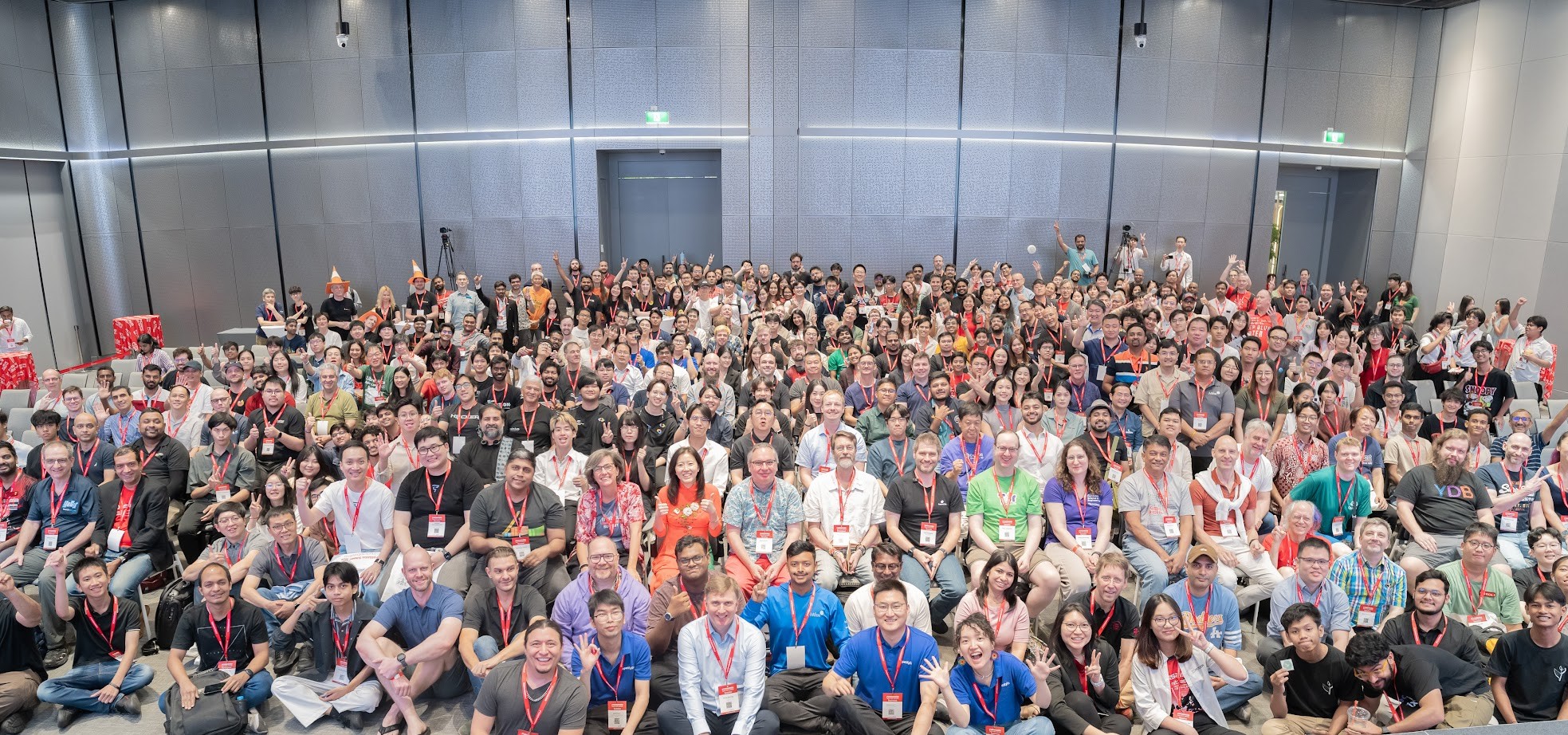
The FOSSASIA Summit 2026 was an incredible gathering of developers, open-source contributors, startups, and technology enthusiasts from across the region. This year, Azure Cosmos DB and Azure DocumentDB were present at the summit with both technical sessions and a dedicated booth, giving us a great opportunity to connect with the community and talk about building modern applications with cloud-native databases.
A Personal Note
This was my third time attending FOSSASIA, and it was special in many ways. It was also my first time attending the summit in Bangkok, Thailand, and the venue and overall experience were fantastic.
Over the years, I’ve been able to see how both my own journey and the conference itself have evolved. Each year the summit continues to grow, bringing together more developers, communities, and organizations that are passionate about open source and emerging technologies.
One of the highlights for me was seeing the strong presence from the open-source ecosystem. It was great to interact with engineers and teams from organizations like ExpressVPN, openEuler, and Grafana Labs, and to learn more about the work they are doing in the open-source space.
Events like FOSSASIA are also a great opportunity to engage with the student community, many of whom are exploring cloud and AI technologies for the first time. At the same time, it was exciting to connect with customers and developers already building applications with Azure Cosmos DB, sharing experiences and discussing new ideas.
Engaging with the Developer Community at FOSSASIA
Conversations focused on practical topics such as building AI‑first applications, designing globally distributed NoSQL architectures, integrating databases into modern developer tools and workflows, and exploring open‑source compatible database options. These discussions were grounded in real use cases, with developers sharing how they build, scale, and operate production systems.
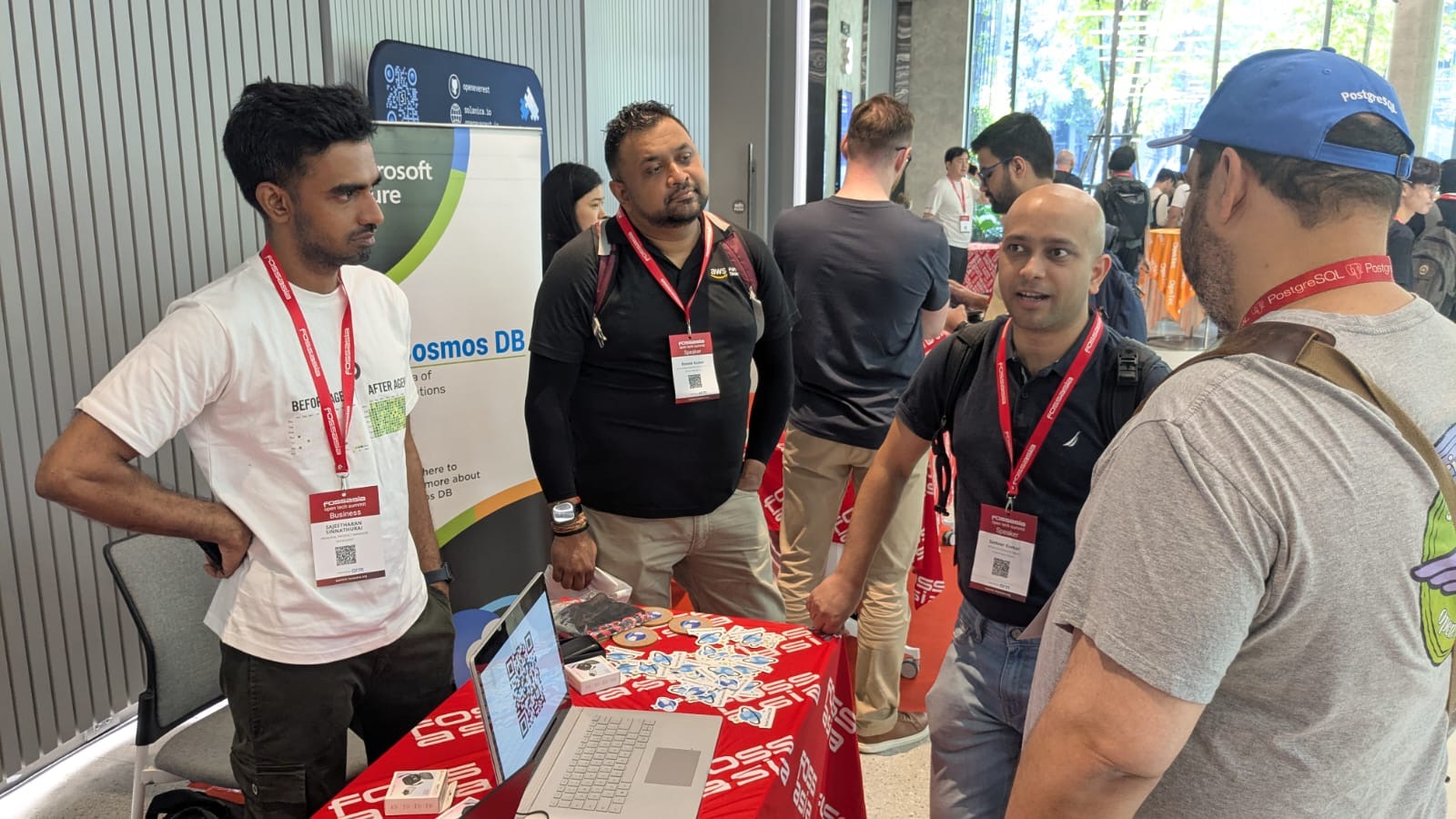
Beyond the technical discussions, the booth created opportunities to engage with the broader open‑source and developer community. From students new to databases to experienced engineers running large‑scale systems, the conversations reflected the depth and energy of the community across the region and reinforced the value of connecting face to face at events like FOSSASIA.
Technical Demonstrations
We delivered two technical sessions during the summit, sharing insights on AI-driven development, automation, and modern cloud-native architectures with Azure Cosmos DB and Azure Document DB.
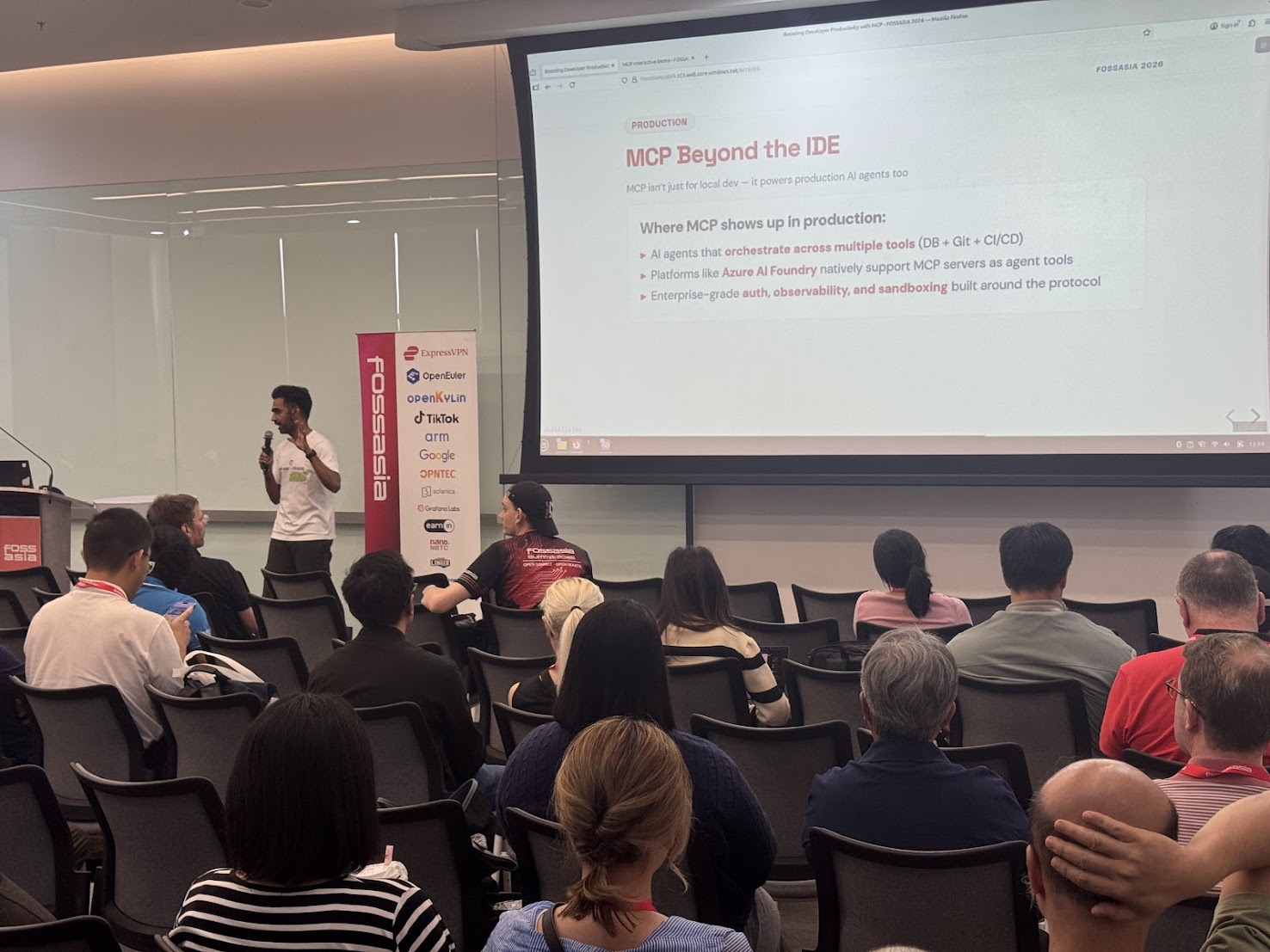
Unlocking Developer Productivity with Model Context Protocol
In this session, I explored how Model Context Protocol (MCP) can improve developer productivity when building modern applications and AI agents. The talk focused on how developers can connect tools, data sources, and services to create more powerful and flexible AI-driven workflows.
Session link: https://eventyay.com/e/88882f3e
Explore the Tools from the Session
If you’re interested in trying out the concepts demonstrated in the talk, check out the following resources:
- Cosmos DB Agent Kit aka.ms/azurecosmosdb-agent-kit
- Cosmos DB MCP Toolkit aka.ms/AzureCosmosDBMCPKit
- Session Slides https://fossasiamcptalk.z23.web.core.windows.net/
These resources provide tools and examples to help developers build AI agents and MCP-powered applications using Azure Cosmos DB.
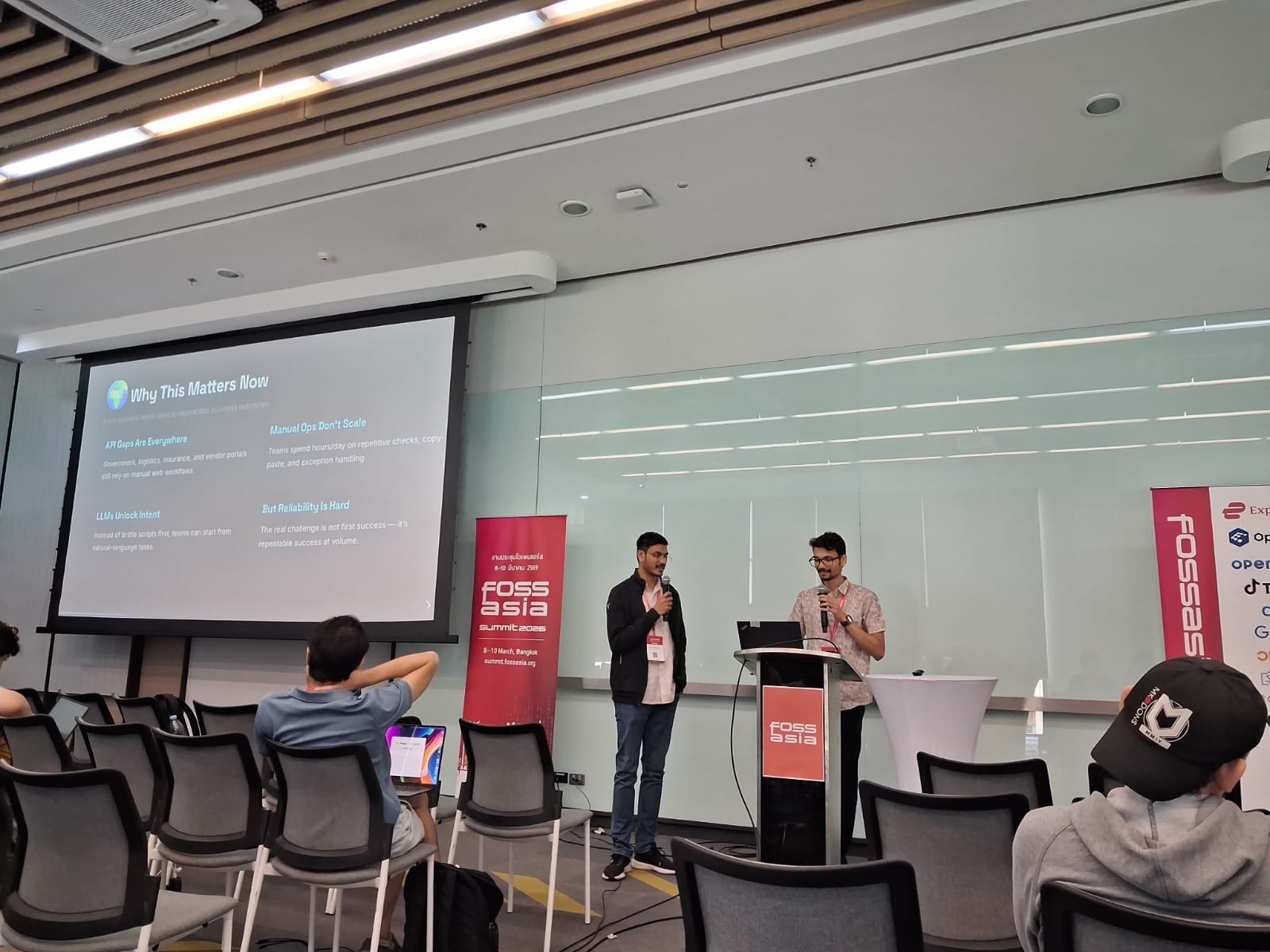
Deploying Open-Source Browser Agents on Kubernetes
My colleague Manik Kandhalwel delivered a session on deploying open-source browser agents on Kubernetes.
The session delivered a production-ready reference architecture for scaling browser agents on Kubernetes covering the full stack from pod-per-session isolation, warm pools, and autoscaling to operational guardrails like TTL reapers, RBAC, and backpressure patterns. A key highlight was positioning DocumentDB (open-source, MIT-licensed, Linux Foundation governed, MongoDB-compatible on PostgreSQL) as the “System Memory” for browser agents the ideal schemaless store for high-velocity BSON traces from ephemeral pods, enabling observability (session replay & debugging), optimization (reducing unnecessary LLM calls via historical trace analysis), governance (auditable compliance records), and product insights (failure hotspots, step durations, workflow ROI). Attendees across dev, PM, SRE, and security roles left with actionable patterns and a clear framework for piloting browser agents in their own systems
Session link: https://eventyay.com/e/88882f3e
See You in 2027
One of the best parts of FOSSASIA is meeting developers face to face and learning from the community building real systems every day. Thank you to everyone who stopped by the booth, shared their questions, and took the time to connect with us. We’re also grateful to the FOSSASIA organizers for having Microsoft as a sponsor and creating a space for open, technical conversations. We’re already looking forward to returning in 2027 and continuing the conversation with the developer community.
About Azure Cosmos DB
Azure Cosmos DB is a fully managed and serverless NoSQL and vector database for modern app development, including AI applications. With its SLA-backed speed and availability as well as instant dynamic scalability, it is ideal for real-time NoSQL and MongoDB applications that require high performance and distributed computing over massive volumes of NoSQL and vector data.
To stay in the loop on Azure Cosmos DB updates, follow us on X, YouTube, and LinkedIn.


0 comments
Be the first to start the discussion.